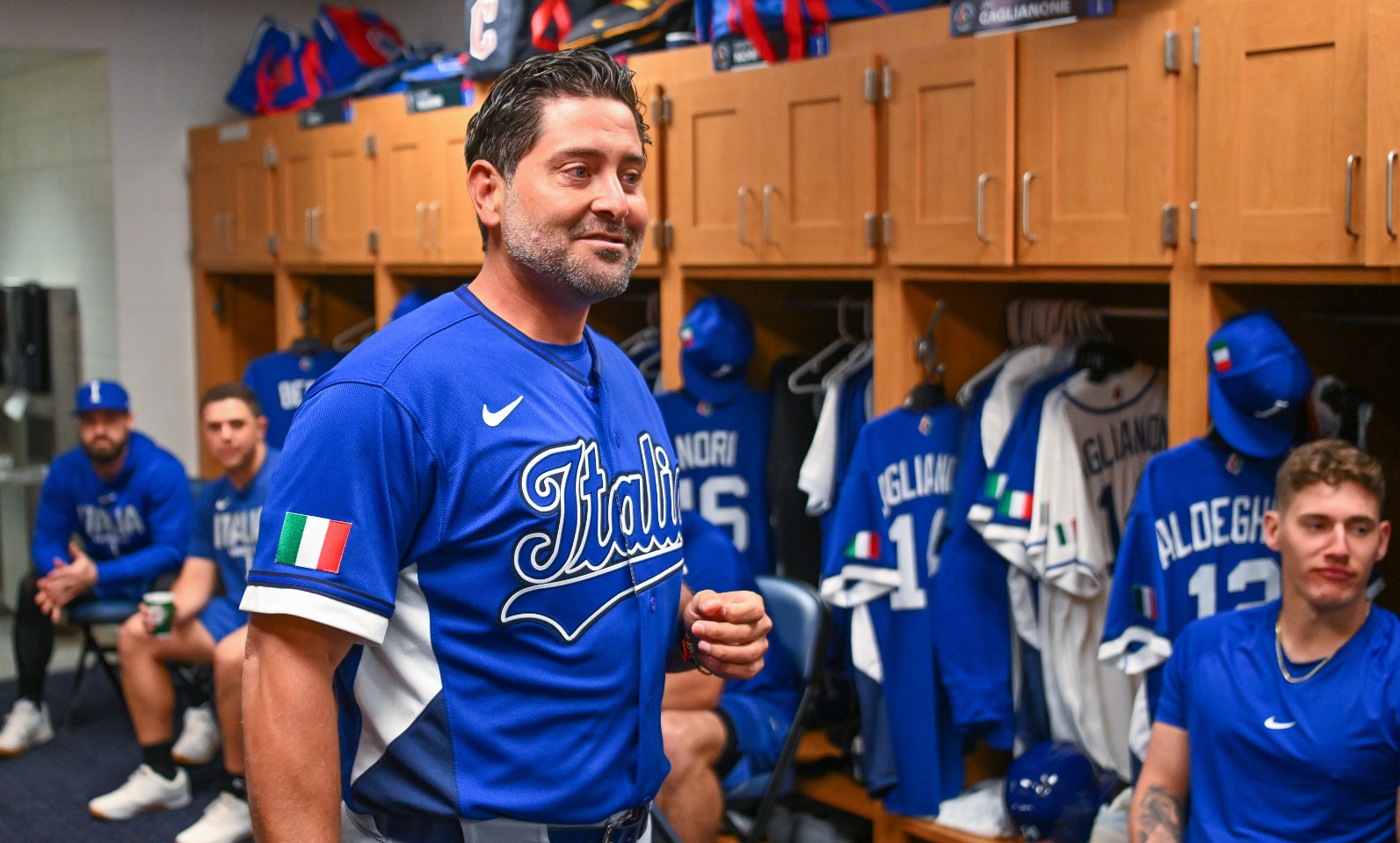
How can the World Baseball Classic help the growth and development of the game in Italy?
It’s great. This is part of the larger mission of the game. In the future, we want more Italians on this team. We want to elevate the level of the game and give them more playing time. That’s the question mark all the time. You get five or six months during spring and summer then you lose everything. You don’t do anything in winter. It’s a problem. So you try to figure out a way to keep the players active in tournaments outside Italy in Asia or the Dominican Republic. But the WBC is good for us now. I love it.
After the two pre-WBC exhibition games against the Chicago Cubs and the Los Angeles Angels, what have you learned about the Team Italy players?
There is talent on this team. They are prospects. And the good part is even if they’re not playing and not in the lineup, every time I walk by they look at me. Like they’re waiting to hear when I might be calling on them. They are very aggressive and run the bases well. We have got speed. My idea and the way I like to play baseball is by attacking, attacking, attacking… A lot of guys that can hit for power, and they can hit for extra bases. But the team is solid, and those kids are real players.
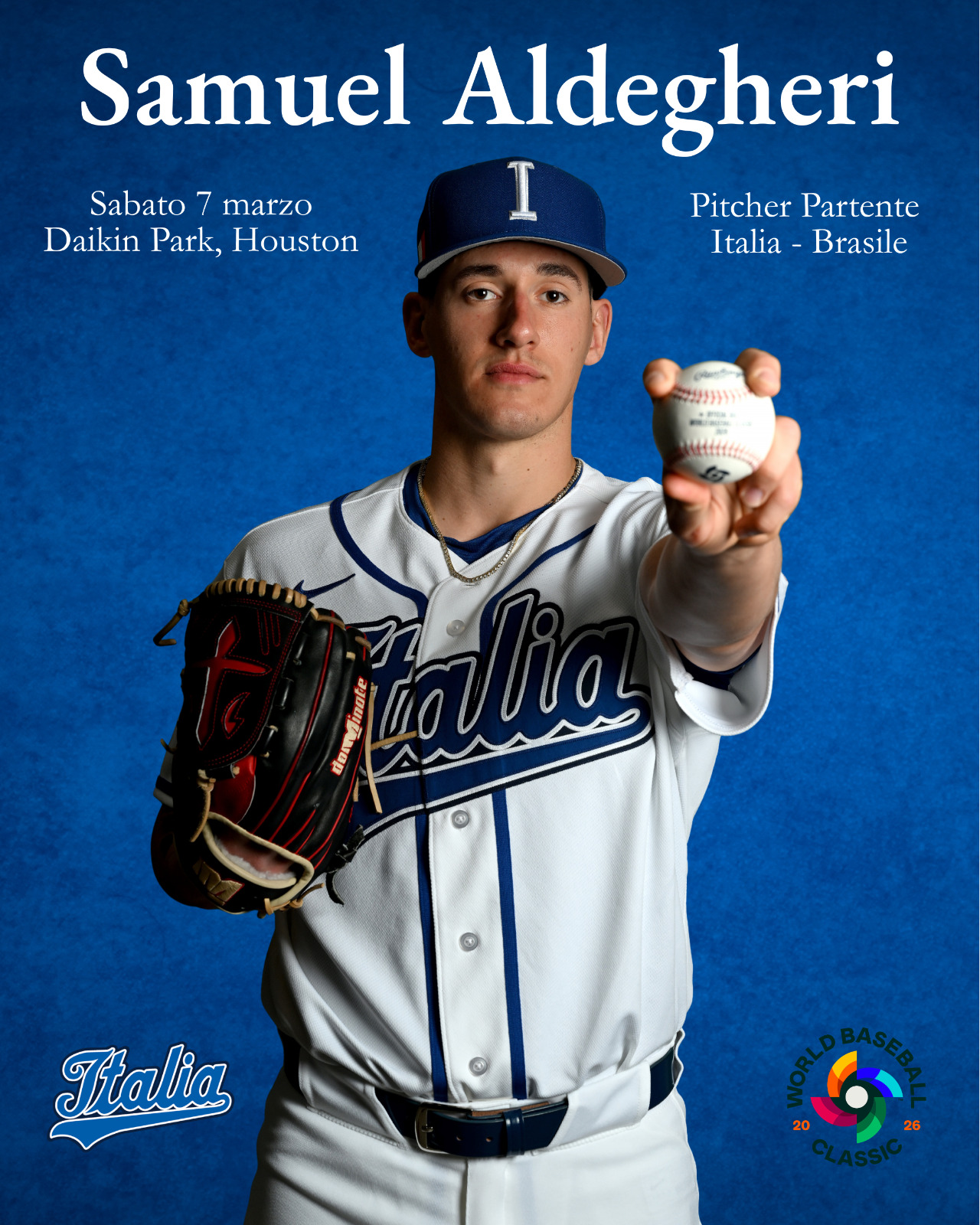
Los Angeles Angeles pitcher Samuel Aldeghieri is an Italian-born and developed player proudly representing his country in the WBC. How has his participation given baseball a boost in Italy?
It means a lot, you know, it means like we’re doing something right. He earned it and is the face of Italian baseball right now. I hope we get more like him playing professionally. Unfortunately, due to injury, we don’t have San Marino’s Alessandro Ercolani, who plays Double-A ball for the Pittsburgh Pirates. I hope we can have more guys like Giaconino Lasarcina, who signed with the Toronto Blue Jays just a few days ago. He is a power guy and very impressive. So we want to get more guys like him here in the U.S. They need to come here and learn how to play competitively to get them to take it to the next level. They may miss home because Italy is beautiful, but they need to play in the states where this sport is great. They have got to be able to be here for a long time.
How can Italian players attending U.S. colleges increase their chances of playing professionally?
The shift over the last four or five years is more college players being taken in the draft. American college baseball has a much higher level of development. We need to take our 16 or 17 year old kids and somehow get into that track. I would love our Italian players to go to college. First because you know, I come from Venezuela, where we got no Plan B. It’s either we get signed and play professionally or you go back home. It’s embarrassing to be sent home because there is no Plan B. I would love Italian players to have a Plan B by learning English and earning their college degree. Then they are also able to play baseball by signing a professional contract at 21 or 22 years old. There are more guys going to college now and it’s a great opportunity. We have a young core of 16 to 17-year-old players in Italy. They are able to sign as a professional so we’re looking forward to getting more young guys on board by signing early so that they can develop quickly.
How can we get more Italian children to learn to play and love baseball?
In Italy it is a challenge to find a kid and tell him “Let’s go play baseball.” So what we are doing is introducing Baseball5 in Elementary School, where kids learn the basics of baseball. They like it and eventually we bring them onto the field to play the game. Baseball is probably the hardest sport. It’s not easy to hit, right? You give a kid a bat, and they start swinging and missing. When they don’t have success, they’re going to quit. Baseball5 is the pathway to bring them to the field. So now we have got a bunch of kids playing baseball and also have little girls playing softball.
Tell us about the success you have had with the Francisco Cervelli/IABF Baseball Academy in Castiglione della Pescaia (Grosseto).
It’s great. I have had an amazing time. We go to tournaments in Europe and last year our team represented Italy at the Pony League World Series in the U.S. The players had a blast. That’s what we’re looking for is to give them opportunities to play at higher levels of the game at a young age. Not only are they playing in Italy or Europe, but they compete abroad in the U.S. and other parts of the world.
Describe your experience during the first year as the manager and leader for Team Italy.
Well, the first year has been a learning year, trying to understand how to make things work successfully in the WBC and beyond. My idea is to make noise. This is the thing, not only just to make some noise, but creating an impact where the people in Italy know what we’re doing. And they start to believe in it because it’s a process. This is not something that you can develop in two years.I am hoping and looking forward to getting a big result here. it’s going to help everything. Whatever you do right here in the WBC, the noise you make, you can feel it deep down in your heart and soul. That’s what we’re trying to do, make noise, and make people believe and understand what we do. Then we can explain to them what we do and keep this movement growing.
What are some of your pitching options in the World Baseball Classic?
We have many pitchers that fill different roles. The challenge in the World Baseball Classic, especially in the first round, is that guys cannot throw back-to-back games as it is early in the year so we have to be able to manage their pitch count. As far as closers, Greg Weissert or Kyle Nicolas are ready. Then you have guys that can give you multiple Innings like Gabriele Quattrini. You saw him pitch really well against the Los Angeles Angels. You know, this guy last year, when you see his numbers and you would think they were a little rough, but his performance at the 2025 European Baseball Championship was one of the best ever and helped us earn a silver medal. His brain works differently. He’s the kind of guy that wants the ball in tough games. So he has earned a roster spot at the WBC. We also have Claudio Scotti, who has played professionally in the minors. He throws hard, 96-97 mph, and is another guy who has earned the right to compete in the WBC. We got options. We just have to let the game tell us what to do. This game is like chess. Sometimes you let the other team score so you can score later.
Team Italy players possess some of the best speed in the World Baseball Classic. Who can make a difference in these games?
I think the only guy that cannot run will run. We have got a lot of speed in Dante Nori, Sam Antonacci and Jakob Marsee. Not only do they have speed, but they know how to use it. They are aggressive and they are waiting. You can see in their eyes. They are waiting for an opportunity to get an extra base. It’s a good thing to have.
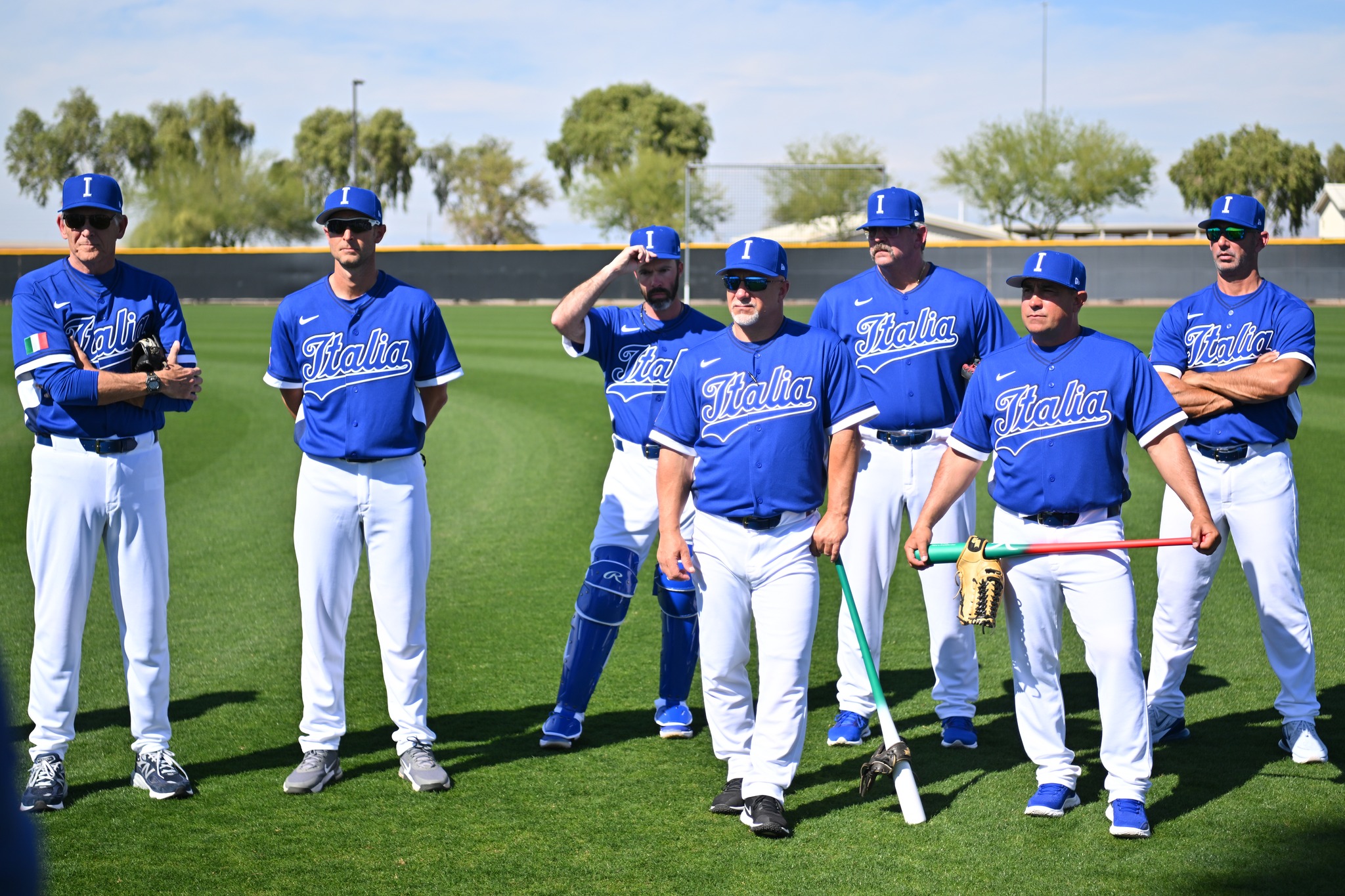
Please elaborate about your Team Italy WBC coaching staff (featuring Jorge Posada, Ron Wotus, Dave Righetti, Frank Menechino, Sal Fasano Alessandro Maestri, Allard Baird, Lipso Nava and Jack Santora).
We have got the people here to help me a lot. We have got an experienced coaching staff that is great. I would love to have this coaching staff manage an MLB team one day. With the staff, it is unbelievable. Jorge Posada is now an honorary Italian. I hear a lot of people saying he is not Italian. That’s a matter of baseball, which doesn’t have a flag. He has always preached baseball and is a proven winner. He has five world championship rings for a reason. You should have seen him in Florida work with the Italian-born and developed players for three days during a pre-WBC Spring Training Camp. He was so passionate about helping players and teaching them how to develop and refine their craft. He was free flowing with instruction and information that they needed. The players may have been talented before, but now they are better than ever because of him.
You are considered by many as a player’s manager. Who trained you to become the manager you are today?
I grew up in what I always say was in the best school in the world, the New York Yankees. They taught me how to do things, especially how to prepare myself for that day to win the game. And watching Joe Torre, Joe Girardi, Jorge Posada, Andy Pettitte, and Mariano Rivera every day gave me an idea and how to become a good manager. Managing is not an easy job. There are a lot of challenges and you have to have your eyes wide open all the time. But the key for the success of a manager is his coaching staff. You have got to have a good coaching staff. On our Team Italy WBC coaching staff, we have a total of 21 World Series Championship rings all together. I was able to work as a San Diego Padres coach under manager Bob Melvin, one of the best I have ever worked with. What I learned from him is he let his coaches do their thing to get the job done. He used to tell me to work in my specialized area and that he would always have my back. He would protect his guys, and that’s what I’m doing right now. Our guys are professional so it’s easy, man. I don’t have to worry about anything. I just need to prepare for battle and execute our game plan to be successful.
 mlbblogger