
San Francisco’s 2010 and 2012 World Championships.


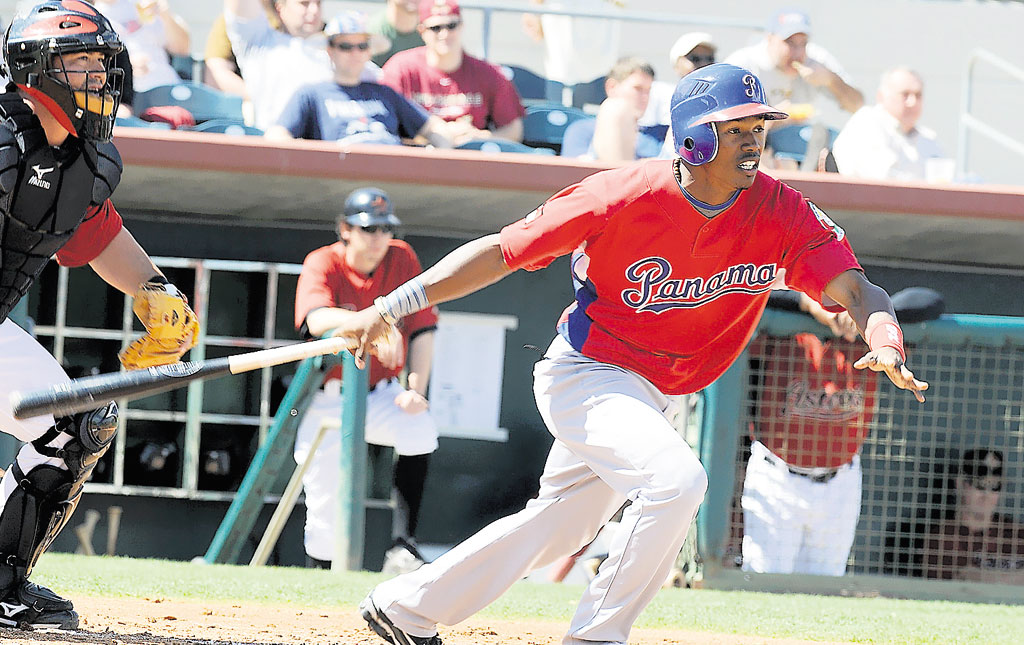

of the few bright spots in Panama’s two losses during the 2009 World Baseball Classic Pool D competition in San Juan, Puerto Rico. In game one against host Puerto Rico, Durango singled, walked twice and stole one base. In Panama’s follow-up contest
in which they were eliminated by the Dominican Republic, he went 2-for-3. Hitting .600 in the 2009 World Baseball Classic, Durango was second in the international games in batting average and on-base percentage. Panama’s 48-year-old manager will use Durango’s ability to get on base, steal a bag or two and ultimately score to win the 2012 WBC Qualifier games beginning November 15th at Panama City, Panama’s Rod Carew Stadium.

to lead the country to greatness by advancing to the 2013 World Baseball Classic. He will not be alone in this special assignment as former MLB outfielder Rubén Rivera (1995-2003) will be there by his side every step of the way. Although his cousin–New York Yankees closer Mariano Rivera–has never participated in the World Baseball Classic, Rubén will be making his third WBC appearance for Panama. Still playing ball and in excellent shape at age 39, Rubén is very much the heart and soul of this Panama squad.
 With over 3.5 million Panamanians cheering on their national baseball heroes in the World Baseball Classic Qualifier, there’s a good chance that the sense of excitement in Panama City will equal that of the recent enthusiasm at the 2012 World Series Champion Giants celebratory parade in the streets of downtown San Francisco. The common link to key both of these teams is Giant coach and Panama manager Roberto Kelly. With his expertise and his roster of very talented players, Panama is destined to party hard after a win of the
WBC Qualifier Final on November 19th. 
Minor League Baseball
Panama’s Carlos “Chooch” Ruiz ready for 2013 Philadelphia Phillies and World Baseball Classic
 Thanks to a clubhouse joke played by pitcher Antonio Alfonseca–who in a 2008 television interview referred to Ruiz as “chucha” (a Colombian slang term for “underarm odor”)–teammates, the media and baseball fans have since referred to the Panamanian MLB All-Star catcher by his beloved nickname “Chooch”. The sweat rebels sacrificed over a century ago which gave Panama independence from Colombia is reminiscent to that of national hero Carlos Ruiz’s in his improbable “I Think I Can” MLB ascent.


When Ruiz shared the news with his schoolteacher mother that he had been offered a $8,000 signing bonus with the opportunity to play in the Dominican Republic to start his professional baseball career in the Phillies organization, Inocenicia Rios was a bit nervous. After all, her 19-year-old son would be dropping out of school and abandoning his college coursework toward a degree in physical education for little money to beat the odds of making it to the Big Leagues at a position he was unfamiliar with.

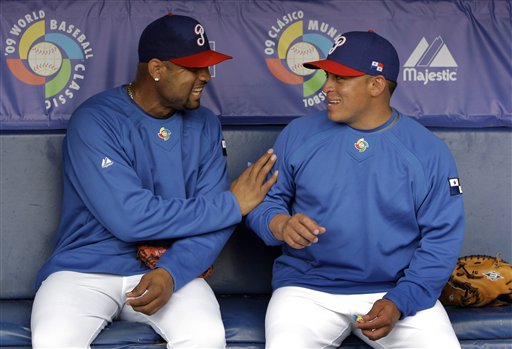

the 20th perfect game in MLB history.

If Philadelphia doesn’t acquire a big right-handed slugger during the offseason, the Phillies may very well use Ruiz again in 2013 as their cleanup hitter.
at Panama City’s Rod Carew Stadium. Host Panama, Nicaragua, Colombia and Brazil compete
in a modified double-elimination tournament with the winner qualifying for the 2013 WBC. The pride of Boquerón–Carlos Ruiz will undoubtedly give host Panama an edge over neighboring Colombia, Brazil, and Nicaragua in the upcoming World Baseball Classic Qualifier on November 15-19 at the newly renovated Rod Carew Stadium in Panama City. If you can’t make it there in person, MLB Network will televise the final Qualifier game live from the Panama City, Panama pool on Monday, November 19th beginning at 5 PM (PST). The WBC Qualifiers, which expanded the competitive field of the tournament from 16 to 28 countries, has already seen Spain and Canada advance to the main tournament.
 The winners from the Panama and Taiwan qualifying pools will join Spain and Canada in the first round WBC competition against Australia, China, Cuba, Dominican Republic, Italy, Japan, Korea, Mexico, Kingdom of the Netherlands, Puerto Rico, United States and Venezuela March 7-10 at Chase Field in Phoenix, Arizona and Salt River Fields at Talking Stick in Scottsdale. Second round WBC games will be held March 12-16 at Marlins Park in Miami, while the WBC Semi-Finals and Final take place March 17-19 at San Francisco’s AT&T Park. MLB Network will televise all 39 games of the 2013 World Baseball Classic. iViva el Béisbol!
Toronto Blue Jays prospect Marcus Knecht brings Can Do Attitude from Canada to Canberra Cavalry
 Detroit’s Octavio Dotel usually wrecks havoc on right-handed hitters like Canadian-born Marcus Knecht, but on April Fools in a 2012 Jays Spring Training game Toronto’s 2010 third-round draft pick had the last laugh by blasting his first Grapefruit League home run off the veteran Dominican bullpen specialist.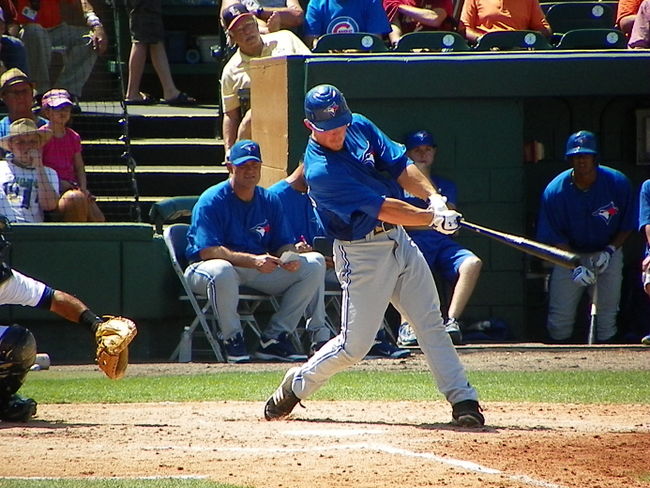
launch a home run off Octavio Dotel in a 2012 Blue Jays Spring Training game on April 1st.
2012 Blue Jays Spring Training exhibition game. (Photo by the Canadian Baseball Network)


The 22-year-old is hoping to continue with his offensive prowess and defensive excellence as a member of the Australian Baseball League’s Canberra Cavalry. Second only to last season’s ABL Champion Perth Heat in team offense and pitching, the Canberra Cavalry narrowly missed the ABL playoffs. With the injection of Knecht’s “Can Do” attitude, Canberra will be charging right out of the gate for a 2013 playoff berth.
Perth Heat add bite to lineup with Canadian import and Arizona Diamondbacks prospect Carter Bell
 Like Sex and the City starlett Kim Cattrall, Carter Bell grew up in the small Vancouver Island, BC city of Courtenay. Opting out of the A-Rod spotlight method with the usual Hollywood fanfare and paparazzi, the 22-year-old Bell chose a lower profile means of pursuing his professional baseball career under the radar by playing for the Perth Heat in the Australian Baseball League.


of accepting a scholarship to play ball for the Oregon State Beavers.
MLB noticed Bell early on when he donned a Team Canada uniform for the first-time at age 17. Representing his country in far away competitions held in Mexico, Japan as well as on his home turf, the BC All-Star chose the 2006 and 2007 NCAA National Champ Oregon State University baseball program to further develop his craft. The decision was sound as he was selected in the 29th round of the 2011 MLB June Amateur Draft and signed by the Arizona Diamondbacks following his junior year at OSU.
 Hitting .270 in 41 games with eight doubles, two triples, one home run and 17 RBI, Bell’s pro debut with the 2011 Single-A Short Season Yakima Bears catapulted him to Single-A Advanced Visalia Rawhide in 2012. In Cal League play, he batted .259 in 81 games with 11 doubles, one triple, four home runs and 36 RBI. The road leading Down Under to the Perth Heat originated back in Oregon, where Bell played for former Perth Heat manager and long-standing Corvallis Knights skipper Brooke Knight after his first year at OSU. In his limited 10 games of 2009 West Coast League action, Bell hit .303 (10-33) with three RBI before suffering a season-ending concussion.
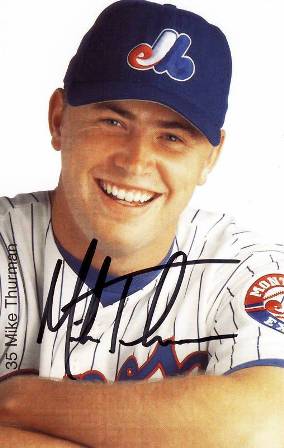
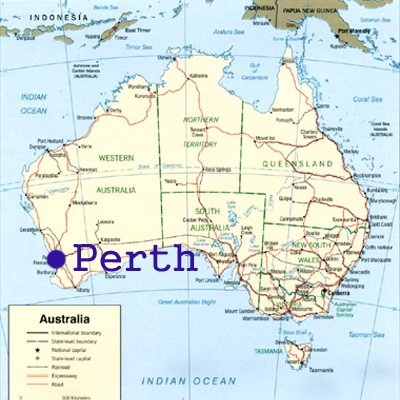
Knight also read Bell the disclaimer and warned him of the Aussie side effects: “I told him that Australia was culturally different as well and when it gets hot in December one can get homesick real fast and start crying out for girlfriends.” Knight feels blessed to have had the opportunity to coach such fine players as Carter Bell in Perth and Corvallis. “With guidance, I have luckily ended up with the right kids. Carter is a solid player. I’m just waiting for him to breakout. He’s got gap power and can hit the ball well the other way (to the opposite field). His power numbers will bump up as they did for import Adam Melker, a St. Louis Cardinals prospect.” Adam was Carter’s teammate on Brooke Knight’s 2009 Corvallis Knights. They will reunite under Knight’s leadership on the Perth Heat in the upcoming 2012 Asia Series on November 8-11 in Busan, South Korea. Melker hit 10 home runs for Double-A Springfield in 2012 as compared to none in 2011. Knight believes in Carter Bell. “He’s got a chance to make a difference. Carter has good range and can play the corners, not to mention he’s a Team Canada All-Star Shortstop.”
the Australian Baseball League’s Perth Heat. (Photo by Ken Weisenberger/Strike3Photos.com)
MLB veteran and Padres Double-A pitching coach Tim Worrell likes Hayden Beard’s competitiveness
 With 14 years of Major League Baseball pitching experience under his belt, it was a no brainer for San Diego’s AA affiliate in San Antonio to call on Tim Worrell to fill the shoes of former Missions’ pitching coach Jimmy Jones, who was summoned to become the new Padres bullpen. Hired by the parent-club San Diego Padres in 2010, Worrell had been working in Peoria, Arizona with the organization’s players in extended spring training and on rehab assignment prior to reporting to the Texas League team. Having to leave his wife and six boys back home in Phoenix to take on pitching coach duties in San Antonio, it wouldn’t be long before Worrell would be adopted by his new baseball family of international pitchers led by Aussie Hayden Beard.

the Baseball World Cup in Panama as well as for
the Australian Baseball League’s Canberra Cavalry. During the 2011-12 Cavalry season, he earned himself ABL Player of the Week honours and a team-leading five wins with a 2.82 ERA. Heading into 2012 Padres Spring Training Camp, Beard looked radiant and as confident as ever. After leading High-A Lake Elsinore Storm to a 2011 Cal League Championship, it was natural for the right-handed hurler to saddle up for a promotion to Double-A San Antonio Missions. Although there were a few bumps in the road during the seemingly rough ride, the Aussie pitcher finished strong with a 6-5 record in just over 119 innings of work. Starting in 19 games, Beard gave his team a chance to win every outing. However, he relished after the All-Star break in his 12 bullpen appearances during which his strikeout totals accelerated to 69.
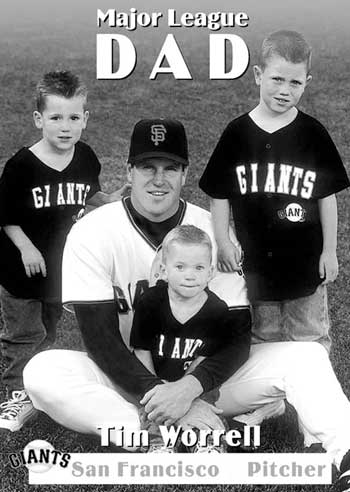 We caught up with family man Tim Worrell in the San Antonio Missions’ dugout recently and discussed how Padres pitching prospect Hayden Beard’s best years may have yet to come.
Roberto: 27-year-old Aussie pitcher Hayden Beard is a late bloomer because he had to sit out for three years due to nerve damage in his arm. The Padres obviously have faith in him by sending him your way in Double-A San Antonio. Having said that you reached the prime of your career at age 31, do you see some parallels between the two of you in showing him that there is light at the end of the tunnel?
Tim Worrell: Yeah, sure. Again, I never try to tell these guys where their careers could finish at. I’d be a dummy to tell them that. First off, he’s got a great live arm and great movement on his pitches. Sometimes he struggles a little bit with control and that obviously puts us in trouble. When we’re behind in the count regularly, it puts the hitters in hitter’s counts. But he’s definitely starting to get some of these approaches knowing that is an area he needs to work on. And that in itself ends up helping to control some of the results that end up happening to us. (You) can’t always control them all, but it does put us in a better position. And he is still working on fine-tuning his game. It wasn’t long ago that we sped him up a little quicker to the plate without giving up quality of stuff so that he could hold runners on first better. So there are definitely physical things we need to do and he needs to do to make his game better. But a lot of it is just believing and trusting his stuff.
Roberto: Watching his roommate Miles Mikolas get the call-up to the Padres, rubbing shoulders with last year’s surprise in the San Diego bullpen, Erik Hamren, and this year’s sensation, Nick Vincent, must have been inspirational for Hayden with the realization that he could be next. Having watched him pitch in Australia and in Lake Elsinore, the fact remains is that Hayden Beard is a great competitor. Now that he is paired up with you in San Antonio, I think it’s an awesome combination. I’m really happy that you guys are really able to work together in developing his craft.
Tim Worrell: Yep. And you brought up probably his number one attribute and that’s his competitiveness, which is probably the most important thing. Because a true competitor never gives in. We have to remind ourselves at times maybe that we are that. But they don’t give in, and they are always looking to get better and always looking to get the job done.
Nick Vincent joins MLB/’08 Long Beach State’s Danny Espinosa, Vance Worley and Bryan Shaw
 When the 2008 Dirtbag reliever was called up to join the Padres in MLB in May, Nick Vincent became the 13th former Long Beach State ballplayer in the major leagues this season and the 42nd
in school history. Since the right-handed hurler was summoned, CSULB is once again on top for the most major leaguers from any college–an honor the team has held in 2010 and 2011.


a fourth-time to the Padres this year, Vincent has been impressive in the bullpen by providing middle relief with a 2-0 record and a 1.83 ERA. 
Padres manager Bud Black said of the reliever. “We like Nick’s stuff and he throws strikes. Nick knows his game. He throws a cutter and fastball to both sides of the plate. His game works. He’s just a little bit more consistent than some of the other guys that have come up. We like how he’s throwing the ball, we like his stuff.
He does a lot of things well.” A cordial and genuinely nice guy, Nick Vincent also has the positive disposition and outlook to make the new ownership of the San Diego Padres proud to see a local boy realize his dream in MLB.
Roberto: How are you feeling after being called up to the major leagues as a Padre?
Nick Vincent: I feel pretty good. It was an unreal experience. I mean the first day I was just in awe. How it happened and all that. And then the second day I actually felt it like ’Wow, you’re in the big leagues. This is what it feels like’ kind of thing. When they told me that I was going back down, I wasn’t too surprised. But that feeling you get in your body from going from Tucson (AAA) to the big leagues is an unreal feeling. I don’t think I have ever felt that feeling before in my life.
Roberto: How important was your college baseball experience in becoming a pro leaguer?
Nick Vincent: I played down at Palomar Junior College down in San Marcos. Played there for three years. I got hurt my first year, and there is where I learned most of my baseball. From high school to that, I learned probably ten times from what I knew about baseball from high school. It was unreal, and then I just carried that on to Long Beach with my numbers and stuff. And just started pitching well out of the bullpen there. The main reason I went to Long Beach is because the pitching coach there: Troy Buckley. I mean he had the best ERA in 2004 or 2005 with (Jered) Weaver, (Neil) Jamison, (Abe) Alvarez…they had all these pitchers. And I talked with one of them, Neil Jameson, because he went to Ramona. He was like: ‘If you want to learn how to pitch, this guy knows his stuff.’ That was the main reason
I went there because I didn’t know if they were going to be a good team or not. I didn’t check into that, but I thought if I wanted to continue pitching then I’m going to go with the best pitching coach.
Roberto: How good can it get to be pitching professionally where you grew up as a kid?
Nick Vincent: I mean San Diego is all the way around probably the best city in California…just because of the weather. There is so much stuff to do. You go two hours, and you’re in the snow. You’re right by the beach. You can go fishing. You can go to the lakes. There is just so much stuff you can do around downtown. I mean you can’t really do that in LA.
 Roberto: How did your family react seeing you in a Padres uniform at PETCO on May 18th?
Nick Vincent: My dad had bought like 80 tickets. I think he only gave out 50. But he ended up bringing the other ones back, and they reimbursed him for those tickets he didn’t use–so that was cool of the Padres. When I warmed up in the seventh inning, I got up to throw and the whole section right by the bullpen–that’s where he had bought all the tickets–erupted. Friends, family, from high school, my brother’s friends, other friends..it was pretty cool!
Roberto: How have you coped with the pressures of staying up in the big leagues?
Nick Vincent: I went up there and learned some stuff. I mean when you go up there when the game starts, it’s all business. There’s not too much messing around..none of that! So that was one of the biggest things I felt. Everyone is pretty serious..like every pitch. You’re watching every pitch. Nervousness…no matter what…that first inning you throw–you’re always going to be nervous no matter what. And as soon as you get through all of that…then that’s when everything will start cooling down. I mean I’m excited. I’ve got to get the ball down, keep pitching better. Be smart of what I ‘m throwing and get the ball down. I was up in Tucson (AAA), and I was leaving the ball up a lot so they told me I was coming down here (AA). You don’t pitch (well) there, you get moved down. That’s just how baseball is.
Roberto: Is your cutter your best pitch?
Nick Vincent: Yeah, I can throw my cutter to both sides of the plate. It has good late life.
Roberto: Is it a dream come true getting drafted and playing Major League Baseball?
Nick Vincent: I mean everyone who gets drafted…that’s where they hope their destiny is. But I mean you got to earn it. So for me I’ve got to come down here and throw strikes and get people out. I mean I would hope to get back there, but at the same time they are not going to be bring me back up if I’m not pitching good. So I’ve got to get back doing my thing, get people out and hopefully…I mean that’s where I want to be (in MLB). If I’m pitching good, that’s where I’ll be. But if I’m not pitching good, then I’ll be down here (in AA). Roberto: Have you always been a pitcher way back to your Little League days?
Nick Vincent: In Little League and stuff, I pitched but not to be like good at it. I just did it because no one else could throw strikes. And I played outfield more back then. High school came along. The JV coach wanted me to be a pitcher so I went ‘okay’ and I started pitching then. Junior and senior year came along, and I just pitched. That’s all I did. So after that, pitching was the only thing that I could go to.
Roberto: Is there a different mindset being a reliever than being a starting pitcher?
Nick Vincent: Yeah, it’s a way different thing. You can’t be a reliever and go out there and try to start and have the same mentality because you’re not going to. You can’t go out there and throw an inning as hard you can and expect to be that good the next inning. So starting and relieving are two different things. I mean I started at junior college. I liked it. I started doing relief at Long Beach, and I liked that too. For me I think I would be more successful as a reliever out of the bullpen because you get that adrenaline going. And like for me, I want to go in with guys on base right after a starter and we’re like winning or something. And you just shut those guys down and don’t give in and take the momentum from the other team.
Roberto: What kind of pre-game preparation and research on the opposition are you doing?
Nick Vincent: I’m not really doing much. If you’ve only got two pitches. you’re going to throw those two pitches no matter what. Just because they can’t hit a change-up, you’re not going to start throwing change-ups because your change-up is not the same as everyone else’s change-up. For me I’m just going to go out there, and I just look where they’re at standing at the plate. I’m kind of studying them throughout the series, but
I mean it only takes one game to figure out what these guys can do, what they want to do with the ball. If the guy wants to go opposite field with it, then that’s where he’s going to hit the ball that way the whole time. And then you have to play the whole field. If the wind is blowing in this way, you can throw pitches that way. You got more chance for error. I just go up there, and I learn from where they’re standing in the box. I trust our catchers too. Our catchers are watching the game more than I am. So I trust them with their knowledge. Roberto: Are you paying much attention to baserunners when you are on the mound?
Nick Vincent: Yeah, you’re always taking note that they are on base, but they’re not taking my concentration off the hitter at all. I mean I’m pretty quick to the plate so if they want to steal and take the chance of getting out…I’ll let the catcher do his job. I don’t throw many balls in the dirt. I’m more of a strike guy. If they want to chance it and run for second base, I’ll let them and let the catcher throw them out. I’m not really too worried about the guys on base.
Roberto: How good of a hitter are you with the bat?
Nick Vincent: I’m not good with the bat. I got one AB last year, and I struck out. When you haven’t hit since high school and you try to go out there, it’s coming like a 100 miles an hour. Or least that’s what it feels like.
Roberto: If Bud Black calls on you to sacrifice, can you at least lay down a bunt?
Nick Vincent: If I had to, I could get that down. Bunting off a machine is way different than bunting off a guy in a game. I know that…
Roberto: Do you have any advice for young baseball players trying to make it in MLB?
Nick Vincent: I mean just go out there and work hard. Prove people wrong, that’s what I’ve done my whole life. They always said I wasn’t going to get drafted because I was too small and didn’t throw hard enough and all that. So that just gives you fire kind of deal.
You go out there and let’s say you’re throwing 85, 86 and you’re getting people out—you’re getting people out! Baseball is a numbers game. Sooner or later they’re going to have to give you a chance. That’s all I have to get back to doing and see what happens from there.
Roberto: Who were some the players that had the greatest influence on you as a pitcher?
Nick Vincent: Back in the 90’s when it was Glavine, Maddux and Smoltz, that starting rotation right there. It seemed like they were on TV every night. Watching them…what Maddox could do with ball, and then Smoltz throwing fastballs by people and Glavine had his change-up. That three starting line-up was like unreal. As a starting rotation, those were probably my favorite guys I liked to watch.
Roberto: Thanks for your time today, and we look forward to seeing you back at PETCO!
Nick Vincent: Thank you and have a good day.
Texas League All-Star Dean Anna poised to lift Padres’ Double-A San Antonio Missions to playoffs
 Utility baseball player Dean Anna is the consummate leader.
A three-sport letterman in baseball, basketball and golf while attending Lincoln-Way East High School in Mokena, Illinois, he chose baseball at John A. Logan College in Carterville and was rewarded by being named All-Great Rivers Athletic Conference during his sophomore year after leading his team in home runs and breaking the school record for RBI. Dean Anna’s leadership continued as a junior transfer at Ball State in Muncie, Indiana–where he led the Cardinals in doubles, triples, walks and runs.

After speaking with Missions’ Dean Anna, we found him to be one of the most humble players in the dugout. His work ethic is unparalleled and his ‘never say die’ approach to the game is commendable. With the Missions needing their clutch player to step up and lead the team to the post-season, Dean Anna is more than capable to take on the role as captain. Batting .282 with 10 home runs and 47 RBI, Anna’s on-base percentage of .392 is among leaders in the entire Texas League. The 25-year-old prospect is certainly exciting to watch, and we expect to see him play his best baseball yet in his quest to help his team repeat.
Dean Anna: The only catching I have done…caught a few bullpens. If the opportunity came, I think that I would have to catch. But I haven’t caught a pitch yet.
Roberto: Would you like to try pitching professionally?
Dean Anna: Yeah, I would love to actually. I have always wanted to try one inning or two just to see how it is out there. Make me feel like I was 10 again pitching.
Roberto: How does playing second base differ from playing shortstop in regards to turning the double play?
Dean Anna: Well, second baseman, there is three different turns, you know. Second base you got a drop step, you got a flip and then you got a side flip. So I mean you just really work on your craft, you know. At first it’s real difficult when you start at second base. Because I started at short(stop) all of my career, and I moved to second when I got to pro ball. And you know I thought it would be easy, but actually it was a little hard because of all the different type of turns for double plays from throwing it from shortstop. The drop step was different, the side flip was different and the underhand flip was different. And you use them in a different type of areas. So you really have to understand what area you’re in for what ball to throw, you know. So that was the big thing. Even to turn double plays when you’re on the bag…you know there’s a way of doing it that way. It seems to look easy but wherever the ball’s taking you–you have got to go to it. And you have got to be quick as possible and get out of there because that runner is getting on you fast. So that’s another thing you have got to have quick hands.
Roberto: When has a baserunner crossed the line to intentionally cause you harm?
Dean Anna: You know what? If a cleat hits you, you know they’re out of hand probably. But it’s hard to tell because you can’t see the runner sliding because you’re focusing on the ball thrown at you. So both of your eyes are following the ball. It’s impossible to look at the runner while the ball is in the air and catch it at the same time. So you’re just hoping, you know. You kind of have a clock in your head so you kind of know when the runner is coming to second base. So you know when to get out of there. But sometimes it’s hard. Sometimes you forget the time of it and how fast the runner is getting on you.

Dean Anna: Yeah, that’s how baseball is played. I mean every pitch matters, you know. There’s a situation on every different pitch. You have got to be on your toes. Sometimes if you are not ready for what that moment is going to bring to you it can cost your team a game, you know. So that’s a big part of baseball, just staying in the game the whole time and having that mental toughness–just knowing everything, what’s going on…
Roberto: As an infielder, do you communicate with your outfielders on the field?
Dean Anna: Yeah, you know, the right fielder and me (second baseman). We talk pretty much with every batter. We kind of know where we are going because I know if he is playing shallow or deep. Especially on guys, right-handed hitters, that maybe stay inside the ball well and hit the ball good to right field. We’ll know that he should be coming in a little shallow. So I kind of know that we’re not going to blow into each other, you know. The tough ones are when the ball is kind of sinks into center, like right center or left center. That means that you have all three players running at it. And that’s when it gets confusing, where the communication gets confusing. But with right field and second base, we’re okay out there. We kind of know where we’re staying.
Roberto: Were you hurt being selected as a late round draft instead of an early pick?
Dean Anna: No, you know, it didn’t bruise my ego at all. I was just happy to get the opportunity to play pro ball. That’s what I have always wanted to do. And you know I was going to give it my best, and I’m doing pretty good right now and stuff like that. I just wanted to have a chance, an opportunity that ‘s all you can ask for in life actually. So I’m just happy for that.
Roberto: Are you ready to be called up to Major League Baseball by the Padres?
Dean Anna: Yeah, I mean I’m definitely ready if they’re ready, you know. But I’m just playing ball and having fun. It’s day-by-day. I mean I have no control over any of that stuff. I wish I was a psychic. Yeah, that would be real nice. That’s fully out of my control. I just take it day-by-day. I play as hard as I can, and you know hopefully good things will happen.
Dean Anna: Oh yeah, we definitely do. I talk to a couple guys like (Blake) Tekkote,
Miles (Mikolas), (James) Darnell. Those guys had a great time, they’re having fun up there. They said it’s an unbelievable experience, you know their first-time, their first game. Hopefully one day I can get the same feeling.
Roberto: Are you prepared for all of the rookie pranks that go along with being in MLB?
Dean Anna: Yeah, hey, if I can get to the big leagues they can prank me everyday (laughter). Yeah, I’ll be the prank guinea pig. I don’t care (laughter).
Roberto: Do you think being five-foot-eleven and 180 pounds puts you at a disadvantage?
Dean Anna: I mean the size for me…it doesn’t really matter. Honestly, I feel like it’s not like football or basketball where you have got to be 6’6”, you got to run a 4.2 forty. Baseball is such a mental game and if you can just read between the lines well. I mean a smart baseball player…that will make you look better. Just being a smart baseball player, I think plays a big role in all that.
Roberto: Don’t you think that being a left-handed hitter has its advantages?
Dean Anna: Yeah, that definitely helps a little bit for sure. Get down the line a little quicker.
Roberto: Having only reached double digits in the stolen bases category early in your professional career, why don’t you steal more bases with the speed that you possess?
Dean Anna: You know…I’m not a big steal guy, but I have real good anticipation like when the ball is hit. I can tell if the ball is going to drop or not without looking. Like I just know that I can probably get (from) first to third with a line drive and know that the fielder is not going to catch the ball. I just got good instincts.
Roberto: Where did you pick up this talent? Did good coaching have anything to do with it?
Dean Anna: Yeah, definitely great coaching helps out…you know. After a while, you just get a feel. You know how the ball sounds off the bat. You know where the ball’s going. You just kind of get a feel for the game when you play for a while and start getting a rhythm. You just kind of know. Roberto: Who did you used to follow before becoming a part of the Padres organization?
Dean Anna: I’m a Midwest guy from the Chicago suburbs. My family is all diehard Cubbie fans. Yeah, it runs through our blood.
Roberto: Do you have your suitcase ready to go if you get called up next month?
Dean Anna: No, my bags are not packed. Honestly, I’m just taking it day-by-day. If that does comes…that opportunity…I would be so happy, you know. I’m just excited to see what happens.
Roberto: Excited to get pranked? What has happened to you so far in the minor leagues?
Dean Anna: When I was in High-A, everyone knows that I don’t like animals and stuff.
You know I’m kind of a city guy so I don’t like all the country stuff and all the fishing and stuff. One guy had a little snake and it was live. So he put it in my pocket in my locker,
right where my phone’s at. So I go to grab my phone, and this little snake pops out of my pocket. I did a back flip down on the floor. So then after that, I almost had a heart attack. And then I ‘m sitting, watching TV. I had my shirt tucked in and one of my teammates opens my shirt and puts the snake down my back. I went crazy! That was kind of funny…
Roberto: With your fear of snakes, did you cringe when you learned that former teammate Miles Mikolas ate a live lizard in the Arizona Fall League bullpen?
Dean Anna: I texted him that same day when I heard and asked him what he was thinking. He said it was funny and good protein intake.
Roberto: What is your biggest baseball taboo?
Dean Anna: I’m a big guy where I don’t want anyone to touch my baseball gloves. I don’t like anyone putting their hands in them.
Roberto: Do you have a pre-game routine that you follow?
Dean Anna: I like to really relax like for an hour. Get off my feet and just relax. Listen to my music. Calm down, you know, relax. Get mentally prepared for the game.
Roberto: What about your routine at-bat and in-between pitches?
Dean Anna: My ritual when I go up to bat…I always do my batting glove thing. Like every pitch I do this one batting glove, I tighten my left one up then my right one up. Then I touch the two outside corners of the home plate. Then I get ready to go. I feel like in baseball you’ve got to be consistent to move up. So everything I do I make sure to do the same way. Just because your brain works that way, you know. Your brain works like if you do the same thing it should trigger something.
four times in the same game?
Dean Anna: If I got the golden sombrero, I would change what I ate that day. Like if I had bad games, I make sure that whatever I ate that day…I wouldn’t eat it the next day. I make sure that I wouldn’t wear the same shoes to the field. Like I’m a superstitious guy a little bit. Just because this game makes you kind of like that.. But when I’m going good I’m eating the same food everyday. I’ll walk the same way. I’ll take the same path. Just because it’s just a mindset thing.
Roberto: What is your personal professional best hitting streak to date?
Dean Anna: I’ve recently had a nine-game hitting streak, and I just didn’t shave for nine days. So I was getting a little scruffy, and then it ended. I mean it didn’t get that bad, but
it was getting bad where people were asking ‘What are you doing?,’ you know. But I wish it could have gone a little longer.
Roberto: Are you happy to have been part of the San Diego farm system?
Dean Anna: The Padres organization is great, you know. I’m happy to be a part of them. Hopefully someday I can get up there and witness that. And have fun with that. It seems great. Everyone says it’s great. So it would be nice. I’ve been out there once when I was
in High-A Lake Elsinore. We actually went out for a game and everything was beautiful. Everything was so nice. Hopefully one day I can play there and get my chance.
Roberto: Did you enjoy your time playing in the Midwest as a member of the Single-A
Fort Wayne TinCaps?
Dean Anna: When I was at Fort Wayne, it was nice because I have family out there that way. So I saw my family a lot.
Roberto: Did the humidity and heat in Indiana prepare you for the weather you are now experiencing this summer in the Texas League?
Dean Anna: Nothing compares to San Antonio heat. Honestly, it’s very hot out here!
Roberto: Sometimes do you flash back to the good old days in California playing for the
Lake Elsinore Storm when it’s over 100 degrees outside at game time in San Antonio?
Dean Anna: Lake Elsinore was not bad at all. The thing that surprised me about Lake Elsinore is that it can get cold out there. I’ve never been out to California since I was in
the Cal League and that was last year. I couldn’t believe how cold is was in the beginning. Because I was like ‘California, is that place cold? Really?’
Roberto: Southern California weather is hard to beat. Wouldn’t you agree?
Dean Anna: Yeah, yeah…it was nice, very nice!
Roberto: How about the beautiful sights there? Now you truly understand what the
Beach Boys meant when they wrote ‘California Girls’?
Dean Anna: (Smiling) Yeah, it makes sense!
Roberto: Thanks for your time and sharing so much with us today.
Dean Anna: It was a great interview. It was fun. It was great—thank you!
Trout, Harper, Brown, Jennings, Revere, Fuentes…
 Although half of MLB.com Jonathan Mayo’s 2011 Top 10 Outfield Prospects have made their splash into Major League Baseball, the remaining five prospects–including former Boston Red Sox 2009 first-round draft pick and current Padres AA-affiliate San Antonio Missions leadoff hitter Reymond Fuentes–have yet to make their grandiose MLB debut despite possessing the five-tools necessary to become successful in the big leagues.
in exchange for Adrian Gonzalez.
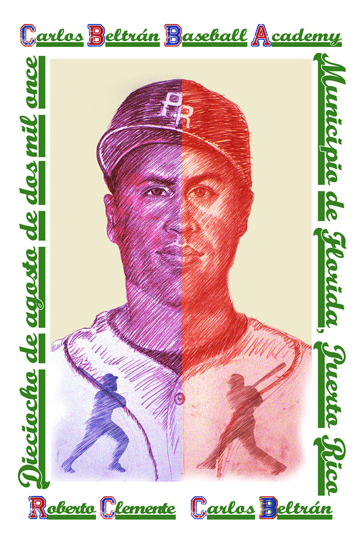
Chosen to represent San Diego as a member of the World Team at the 2011 All-Star Futures Game as well as lead off for the Puerto Rican national team in the 2011 World Cup and Pan American Games, six-foot Reymond Fuentes is looked up to by many aspiring Caribbean ballplayers with the same dream. Having built the Carlos Beltran Baseball Academy in his native Puerto Rico to educate and nurture young athletes, cousin Carlos Beltran in the spirit of legend Roberto Clemente gives back generously to his people–especially when it comes to family. Carlos said, “I’m going to do everything I can to help him out. I work out with him in Puerto Rico, and I invite him to my house, and he’s there way early–so he’s hungry. For being so young, that really impressed me the most–more than his talent. Hopefully he lives up to that, and I can watch him play in the big leagues and maybe play against him one day.”



 We caught up with Fuentes recently in San Antonio at Wolff Stadium after the post-game fireworks, which the youthful Reymond kindly requested to watch before conducting the interview.
Roberto: You look good having put on 15 pounds of muscle during the offseason for additional power without compromising your lightning speed. With teammate Dean Anna having a great 2012 season and sometimes leading off, Missions’ manager John Gibbons has switched up the line-up and placed you in different slots. Do you care where you are placed in the line-up? 
Reymond Fuentes: Anything that
can help with the team win–I will just
do it. Just follow orders from my manager and just play the game that I love and know how to do.
Roberto: As the Missions’ team leader for stolen bases on par for 30-plus in 2012, do you enjoy making the opposing pitcher worry about you when you are on the base paths?
Reymond Fuentes: Why not?
I mean I do my role then they have
to do their role.

Roberto: Having an eagle eye vantage point of all the action on the field, do you like playing center field?
Reymond Fuentes: Center field is awesome. My speed and my range help me a lot. It’s fun just to run down balls and get those hits off the other team. And get them angry a little bit…you know what I mean. It’s a lot of fun tracking balls and making those diving catches is the best! So I love center field, and I wouldn’t change it for anything else.

Roberto: After being involved in the trade that allowed Boston to acquire Adrian Gonzalez from San Diego, was there any love lost when you had to say goodbye to Fenway?
Reymond Fuentes: You know it
was really tough not to see my old teammates from Boston, but I mean being traded for Adrian is a huge step for me. I mean Adrian is an All-Star. He’s a great player. I think it’s a real honor to get traded for him and just join this team, play the game with the same attitude and effort in Boston here.

Roberto: Please tell me about your deep family connections to Major League Baseball.
Reymond Fuentes: Carlos Beltran is my mom’s cousin. We work out in the offseason everyday–hitting, fielding, throwing, catching. He’s a great guy. He taught me a lot on the field and off the field. He’s taught me a lot of stuff about life so I have to thank him. My dad used to play too. He’s been there since I was four years old. He was the first one who gave a bat to me and saw me swing. So I have to thank my dad for staying with me all this time and help me get where I am right now. 

Roberto: How influential was the legendary Roberto Clemente growing up in Puerto Rico?
Reymond Fuentes: Roberto Clemente, God rest his soul, was a terrific, all-time I don’t even know how to describe…he was a great player! A lot of little kids including me looked up to him because the way he played ball, the love he had for the game. It was unexplainable. I love to read his articles because I didn’t get to see him play. But everything I read about him is awesome, and he’s the best of Puerto Rico right now. I used to wear (Clemente’s) number 21 when I was a little kid. Then I couldn’t use it because of some rules in Puerto Rico when they retired his number. So I just decided to go with (number) 15 that Carlos used to wear. So I’m staying right there and just keeping everything within family, you know.

Roberto: With reggaeton blowing up in Puerto Rico, I was surprised that you have a different genre represented in your walk-up song.
Reymond Fuentes: Reggaeton is big in Puerto Rico, but right now I have a salsa—that’s old school music in Puerto Rico. I got this walk-up song from my dad. It’s my dad’s favorite song, and I’m using it right now. I think I’m going back to reggaeton because I mean it makes me move walking up to the plate and just makes me happy.
Roberto: It be long before you make your MLB debut for the SD Padres.
Reymond Fuentes: Thank you. That would be awesome. I’m looking forward to that every single day.

Roberto: Would you like to be called up to MLB next month when the roster expands to 40?
Reymond Fuentes: I would love that. I mean that’s my dream ever since I was a little kid.
I just can’t do anything else, but play my best ball here and just wait for that call.
Roberto: Are you looking forward to facing cousin Carlos Beltran and the St. Louis Cardinals?
Reymond Fuentes: You know what? If I face Carlos, I just want to rob two hits out of him with diving catches in center field. I would just call him the next day and say ‘Hey, you can’t hit it over there.’
Roberto: Thanks for taking time out for us today. Let’s chat again at PETCO in San Diego.
Reymond Fuentes: Absolutely, I mean. It’s a great pleasure to speak with MLBforLife.com and I’ll do it anytime when I can.
Ex-Jays skipper John Gibbons reflects on MLB while managing future stars in Texas League
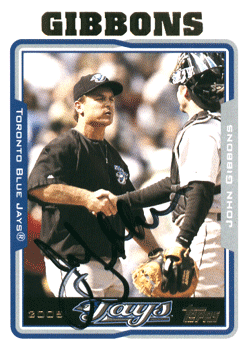
as he is affectionately known as by his players and coaches, lives up to the Urban Dictionary’s slang definition of “being an incredibly awesome person”. The 50-year-old former big league catcher was a first-round selection by the New York Mets in 1980 from MacArthur High School in San Antonio, Texas. Born in Great Falls, Montana and the son of a military veteran who was stationed at Brooks Air Force Base for 13 years, Gibby moved to San Antonio as a third grader and never looked back. As a youth baseball standout noticed by local fans and scouts alike, Gibbons and his father would attend Missions games at V.J. Keefe Stadium to watch Dodger minor leaguers Fernando Valenzuela, Mike Scioscia and Steve Sax. Currently home to the Double-A affiliate for the San Diego Padres and also MiLB’s Minor League Team of the Year in 2011 after winning 94 regular-season games and ultimately
 capturing the Texas League title–the San Antonio Missions now play at Wolff Stadium under first-year manager John Gibbons, who enjoys knowing his middle school son is nearby. Having spent the last three seasons as the Kansas City Royals’ bench coach, Gibbons has interviewed for recent managerial vacancies with the Mariners, Mets and Pirates but in the end remained close to home as the Missions’ skipper. For the one-time MLB manager, a well-traveled baseball mind for more than three decades, the move represented a decision as much about self as sacrifice goes since the San Antonio native and dedicated father need not give up quality family time.

A.J. Burnett, Shaun Marcum, Dustin McGowan and Jesse Litsch, while juggling a starting line-up which included the likes of Vernon Wells, Alex Rios, Scott Rolen, Aaron Hill, Lyle Overbay and Shannon Stewart. The native Texan led Toronto for four-and-a-half seasons and is credited for putting together the third-highest win total in team history (behind Cito Gaston and Bobby Cox) compiling a 305-305 career record–including an 87-75 campaign in 2006 and a second-place finish in the AL East.

in the Toronto Blue Jays bullpen.

Recently named one of the 15 most controversial managers in MLB history, San Diego Padres Vice President of Player Development and International Operations Randy Smith believes hiring Gibbons as the San Antonio Missions Manager was “a no-brainer.” Smith said, “Everyone we talked to gave nothing put positive reviews,”–including positive feedback from one of the players Gibbons scuffled with while in Toronto. Smith declined to provide a name, but said the player “was very complimentary” of Gibbons. Smith commented, “A little fire and passion is not a bad thing. We think we got the right man for the job. It doesn’t hurt that he’s from San Antonio, either. That’s a real plus for the organization, to get someone with his experience. I think that we’re real fortunate to get John to lead that staff.”
San Diego Padres General Manager Josh Byrnes echoed the sentiment calling Gibbons “a great addition to our organization.” Byrnes said, “You get someone with his resume…it’s a shot in the arm for us. His knowledge, calmness and competitiveness have all proven to be standout qualities. We are lucky to have him.” If anyone could vouch for Gibbons’ temperament, it would have to be his long-time friend J.P. Ricciardi, who roomed with him when both were prospects in the New York Mets system during the early 80’s. After throwing in the towel of his professional baseball playing days, Ricciardi transitioned to the front office.
Gibbons recently sat down and answered some questions prior to the All-Star break, at which time his San Antonio Missions were struggling and ended the first-half in the cellar of the Texas League South Standings. Since then, the Missions have regained last year’s championship form and are currently second in the division in the second-half.
Roberto: How are you doing as the new manager for the San Antonio Missions?
John Gibbons: Doing good. you know. We haven’t been playing particularly well, but everyday is a new day, and I always enjoy this group of kinds I have here. When you get a chance to come to the ballpark, make a living doing it, things aren’t all bad.
Roberto: As a catcher, you were the New York Mets first-round selection of the June 1980 First-Year Player Draft after playing at San Antonio’s MacArthur High School and earning All-City and All-District honors. You played in 18 major league games between 1984-86 for the Mets and hit .220 (11-for-50) with four doubles, one home run, two RBI and five runs scored. Having Major League Baseball experience, do you believe that your minor league team benefits from your perspective both as manager and former player?
John Gibbons: Well, what it does is you can relate to what these guys are going through.
I got drafted high, it wasn’t an easy career, it didn’t last forever. You know, I got there but I spent many years down in the minor leagues so I have been through everything these guys are going to go through. I always told myself that when I got into coaching to not forget how tough it was. It’s easy for me to relate to these guys. That 1980 year that I was drafted, the Mets had three first round drafts that year. Darryl Strawberry was number one, Billy Beane, the G.M. for the A’s was 23, and I was 24. So one went on to be a good player, the other went on to be a G.M. and the other one is a coach. So you never know where you are going to end up. Roberto: Playing home in Toronto as the manager of the Blue Jays, you were fortunate enough to stand twice as long in other ballparks for the playing of both national anthems.
John Gibbons: Every night you would hear two. I enjoyed that, but it got to be a little bit long to be honest with you. You know, I loved my time in Toronto. Good people, it’s a lot like an American city, big city. They treated me very well, a majority of them… Some of the them thought, “Here’s a dumb Texan.” At the time, George Bush was in office. Up there a lot of them just liked him, so they tied the two of them together—it seemed like. But it was a lot of fun. I got a chance to manage in the major leagues, and it lasted for almost four years. It’s a thrill I will never forget.
Roberto: Did you and your players have to undergo intensive questioning crossing borders?
John Gibbons: One thing about it, if you’re involved in Major League Baseball, they know pretty much everything about you–just to get there. Even though you hear stories, people say that customs might be a nightmare. But it wasn’t that bad. We’d go through our own little building. They’d get us through customs pretty quick, and we’d just hop on our plane. So you know it could be a hassle sometimes. So I think one or two times we had to ever go through the major terminal like everyone else. And I remember it happened when we had to play the Baltimore Orioles, and maybe it was because we were flying so close to DC might have been the reason. But other than that, Toronto is a beautiful city and they really treated their people good.
Roberto: With young MLB players like Ryan Dempster, Joey Votto and Brett Lawrie along with hot prospects James Paxton and Ryan Kellogg hailing from north of the border, are Canadians making an impact on baseball?
John Gibbons: Oh yeah, one thing about those Canadian players that get into baseball—they are really good players! You look at guys like Larry Walker, Justin Morneau, you know what I mean….guys that make it..Jeff Francis, back years ago with Colorado. They’re pretty dog gone good, you know. It’s definitely a proud country. They’re hockey crazed up there… There’s no doubt about it, but they love their Blue Jays. They’re the only team left. They got one team representing the whole country. They’ve been starved for a winner for a while. They’re waiting for another one to come back. Roberto: How have you adapted your managerial style moving from the American to the National League?
John Gibbons: It’s a totally different game. I got so used to it in the American League over there (in Toronto). You know, in the American League with the DH all you’re really worried about is handling the pitching staff. The game, the offense is what it is, you know. In the National League, a lot of things change, and the pitchers need to hit. It’s a different style of game. In the National League the game kind of dictates and forces you to make moves too…depending on the score, whether you have to get this guy out or pinch hit for him or what have you. So it’s definitely a different breed of baseball. I was fortunate enough to be in the American League East, which arguably and probably was the strongest division in baseball with some powerhouses, Yankees and Red Sox. So I have seen some pretty good line-ups.
I know one thing about this business, you know, pitching and defense win but you also have to be able to slug a little bit too. So it makes good fun.
Roberto: As a young baseball player, did you ever imagine managing in MLB?
John Gibbons: No, one thing I thought regardless of how my career was going to turn out I wanted to get into coaching some day–whether it be at the high school level, professional level. But at the beginning I never thought that I would set my sights on a major league managing job. Then I got a chance to go back to my original organization, the Mets, as a coach and was in their minor-leagues for a few years as a catching instructor. Then I got a chance to manage and really enjoyed it. Had some success with it and one thing led to another. An old roommate, teammate of mine, J.P. Ricciardi ended up getting the general manager job up there in Toronto, you know. He brought me on board. I was a roving coach there for a few years and then he made a few changes and he gave me a shot at managing. So it’s funny how things work out sometimes even things you don’t expect. Roberto: During the first-half of the Missions’ season many of your best prospects have been called up because of excellent play and the San Diego Padres’ MLB-leading disabled list. Do you think this may have cost your team the first-half?
John Gibbons: You know, that’s the name of the game: to get these guys to the Big Leagues. Winning’s one thing, but also a lot of these guys are so young that we can’t lose sight of developing. The ultimate goal is to harness their skills so when they get to the big leagues they’re good all-around solid players. So we got to keep that in perspective.
A number of guys have moved up from this ball club this year, and by that happening it has taken it toll on the team here. But the bottom line is our goal of getting these guys out of here up to the next level and eventually on to the big league team.
Roberto: Your reputation of shuffling line-ups in Toronto has followed you in San Antonio. Why have you switched around your leadoff hitters throughout the season?
John Gibbons: Originally we started out the season with Jaff Decker as the leadoff guy because the big league team up in San Diego wanted to see him in that role because they pictured him maybe in the near future fitting that role. So we started that. He was little bit banged up, and he was struggling a little bit so we jumped Reymond Fuentes up there. He did a pretty solid job there, Ideally that’s what type of player he needs to become and eventually we think he will become. But with Dino (Dean) Anna now…Dino, he’s having a heck of year. He’s like second in the league in on-base percentage. He’s hitting over .300, and he’s really one of the tougher outs in the league. So we bumped him up there in that role to set the table for us. By doing that we just move Rey down to the nine spot, and it’s kind of like we have two leadoff hitters. He’s just further away down there at the bottom, but they both can fill that role for us very nicely. Right now Anna is playing so well, and he’s one of the better players in the league so he earns that spot.

John Gibbons: I tell you what…this kid he keeps getting better and better and he’s got some kind of power. You know he’s the gentle giant (laughter), if you really want to term him correctly. Nate’s a special guy, and he’s having a tremendous year coming off a big year in (Single) A ball for us last year. It’s kind of refreshing, the kind of the individual he really is. He’s very respectful to individuals, the game. He’s always one of the guys who always does the right thing, you know. I hate to think where we would be right now without him. You know, we see him…he’s just going to get better, better and better. When you got that kind of ability with the bat, there’s no telling how far he’s going to go.
Roberto: Recent Texas League All-Star and Home Run Derby Winner Nate Freiman is an octopus defensively who can handle just about anything hit or thrown in the infield. Have you any idea how many errors he has prevented while playing first base?
John Gibbons: You know, it’s funny…as big as he is and that wingspan he’s got. We tell these infielders all the time: “Don’t bounce the ball over there. Hell, throw it as high as you want…he’s going to catch it. You’re getting your errors by bouncing them,” (laughter) which isn’t very smart—right? No, he really has done a tremendous job for us, you know. One thing about Nate, he shows up to work. He shows up to play everyday, and he’s definitely one of our leaders.
Roberto: Any words of advice for those interested in career as a player or coach in MLB?
John Gibbons: Well one thing you know to get on top of this business you have got to work hard. You have got to outwork the other guy. You got to hope for a break, There’s no doubt about it. It’s a tough road so you have got to be dedicated, and you have got to be willing to put in some years. You know, if you want it bad enough, go for it! As far as the coaching end of it, just do what an organization expects. Always try to do the right thing.
Be fair to your guys. The bottom line is we get the most out of these guys and then if you’re at the right place at the right time you might get a shot to manage in the major leagues. You never know…

Aussie Angel pitching prospect Aaron Sookee throws a heavenly slider destined for Anaheim
 One of the most arm demanding pitches in baseball is the slider. The pitch is usually not taught to younger and underdeveloped pitchers unless their arms are physically ready to perfect the pitch. Unfortunately, the slider has caused more elbow injuries than all the other pitches combined. Having said that, when thrown correctly, the slider is one of the most devastating pitches out there. With a new found appreciation for this pitch and the pitchers who throw it, we turn our attention to an Angel pitching prospect that could possibly possess the best slider from his native Australia. Introducing 21-year-old Aaron Sookee

Signed by Los Angeles Angels of Anaheim scout Grant Weir in 2009, Aaron Sookee knew early on that it was a match made in heaven when the Southern California team made an offer he could not refuse. The teenager pitcher had dreamed of playing professional baseball for the LA Angels, who had at the time been a favorite among Australian baseball fans because of the famed Aussie pitcher and former Angel/Blue Sox Rich Thompson.
Working as a late-inning reliever for the Sydney Blue Sox this past ABL season, Sookee made his presence felt by averaging more than one strike out per inning, which is just about the same ratio of two-year Angel minor league campaign (61 strike outs in 59 innings). Heading into his third Angels Spring Training camp, Aaron appeared more confident and more determined than ever to break into Major League Baseball. The following interview took place in mid-March at the Angels Spring Training facility in Tempe, AZ.
Aaron Sookee: I guess growing up we didn’t get a lot of the major league games so you had to look to the local teams in the old ABL. I remember watching Gary White and Dave Nilsson, both catchers but really great players. And then more recently Chris Oxspring and Brad Thomas and just seeing how they go about their business to hopefully make me into a major league pitcher one day.
Roberto: When did the bidding war between MLB teams begin for your seven-year professional baseball contract?
Aaron Sookee: In January 2009 is when it began and a few teams, I think five or six from memory, were competing. But as soon as the Angels made a bid, I knew that I wanted to play for the Angels.
Roberto: Now with Albert Pujols and C.J. Wilson acquired during the offseason, do you think the Angels have the winning combination?
Aaron Sookee: Most definitely, you know what I mean. They should win close to 100 games this year with them two. It should be pretty exciting to watch.
 Roberto: Has playing in the Angels farm system and in the Australian Baseball League during the offseason helped you develop into a confident pitcher?
Aaron Sookee: I have come a long way. I think that’s from playing everyday. There’s a different brand of baseball here because you do play everyday and you have to be ready to grind it out everyday. That’s the main difference between Australian baseball and American baseball.
Roberto: What are your short-term and long-term goals?
Aaron Sookee: I think the first plan or goal of mine is to make the long season team
in the Midwest League for the Cedar Rapids Kernels. Then step-by-step hopefully one day I get to play pro ball.
Roberto: While a member of the ABL’s Sydney Blue Sox, you were being mentored by former MLB pitching teammates Dae-Sung Koo (New York Mets), Chris Oxspring
(San Diego Padres) and Brad Thomas (Detroit Tigers). Was that inspirational to you?
Aaron Sookee: It definitely was…just watching how those guys go about their business.
It was an honour playing alongside them. I learned a lot from all three of them, even though that Koo didn’t speak much English. He can translate through baseball language I guess and then Thom-O and Ox really helped me grow this offseason. Roberto: Why did you choose to become a pitcher instead of another position?
Aaron Sookee: Because I couldn’t hit. That’s basically it…couldn’t hit! (Laughter)
Roberto: There’s hope thanks to the designated hitter.
Aaron Sookee: Yeah right, it came in for a reason. (Laughter)
Roberto: Your pitching arsenal has improved dramatically with the addition of a wicked
slider, which has successfully ended a lot of innings for you. When did you add that pitch
to your repertoire?
Aaron Sookee: (Laughter) It’s come a long way during the offseason…maybe the last calendar year. I’ve been working really hard on it. I just can’t wait to use it this season.
Roberto: With that pitch, are you the Australian version of the Italian slider expert Alessandro Maestri of the Brisbane Bandits?
Aaron Sookee: Yeah, I guess so (laughter). Maestri has carved Sydney a few times…
He’s a true professional in every aspect of the word.  Roberto: Does it feel good when fans ask for your autograph?
Aaron Sookee: It’s very humbling to see that fans appreciate what you do and all the
hard work that you put in because it translates to performance on the field. Yeah, it’s good.
Roberto: Any advice for the youth back home that are considering playing baseball?
Aaron Sookee: Just stick with it. Every time you can throw a ball, throw it and don’t hold back. Don’t leave any stone left unturned and just go after it. Don’t be afraid to play.
That’s the main thing I think.
Roberto: Thanks for taking time out to talk today.
Aaron Sookee: Thank you. It’s been a honour. Thanks for having me.
 mlbblogger