 Growing up a hometown Bronx bomber fan and idolizing Yankee Derek Jeter, 22-year-old Concordia College grad Chris Motta never pictured himself pitching professionally in the Australian Baseball League. However, a twist of fate for this six-foot-two converted right-handed pitcher while training in Florida led the former catcher to the starting rotation for the Canberra Cavalry.

 The young and versatile athlete spent the 2011 summer switching off between catcher and relief pitcher for the the Niagara Power, a faith-based baseball team affiliate of the Fellowship of Christian Athletes with a 40-game schedule that includes competing in the New York Collegiate Baseball League–one of the best summer wood bat leagues in the U.S.–as well as playing against other top-ranked collegiate teams. The hard work is paying off for Motta in the Australian Baseball League as his 3-3 record, 5.83 ERA and 34 strikeouts in his 57.2 innings pitched for the Canberra Cavalry speaks volumes about his true potential. In each of the American’s 12 starts, he has progressively become more dominant.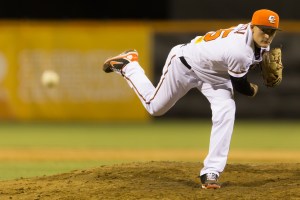

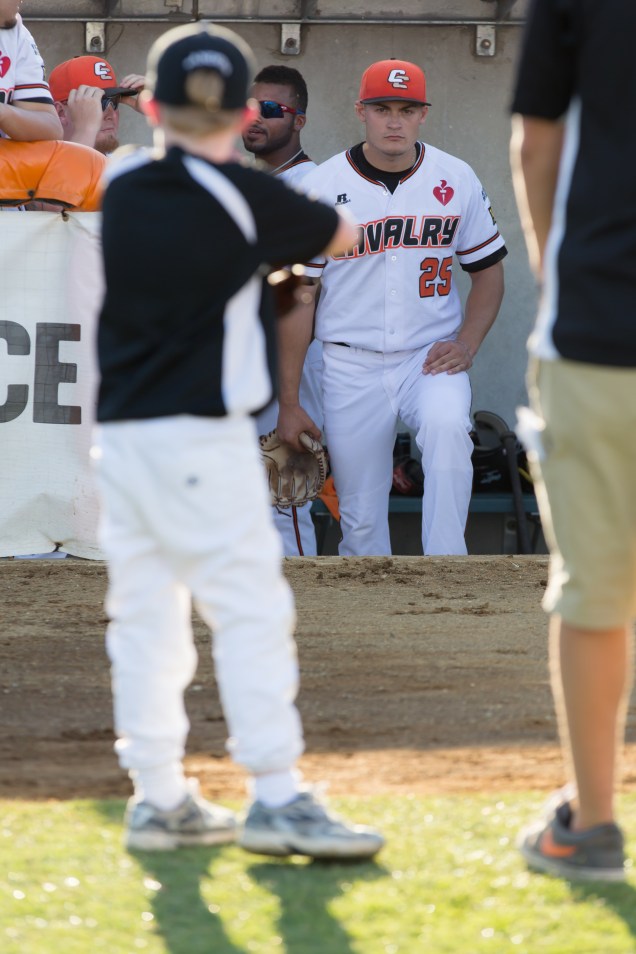
College Baseball
Top 40 Americans in the ABL: #38 Greg Van Sickler of the Perth Heat
 If you can’t beat them, join them. After Baseball Western Australia State All-Star Pitcher Greg Van Sickler held Perth scoreless and struck out five in his four innings of perfection in the Heat’s 3-2 loss to the BWA All-Stars in a Spring Training exhibition game on October 20th, the three-time All-American Van Sickler made quite an impression on the two-time reigning Australian Baseball League champions. So much in fact that Perth wasted little time in calling him up from the Carine Cats, member of the 12-team WA State League, to join the Heat.
 From Virginia to Australia by way of Belgium, Perth Heat pitcher Greg Van Sickler has ventured on the road less traveled in pursuit of his dream in playing baseball professionally. After a stellar season playing for Belgium’s Premier League Namur Angels of the Ligue Francophone Belge de Baseball et Softball, the Virginia native is now on an Aussie baseball odyssey in Perth.


The six-foot-two 23-year-old tipped off his talent early on while playing baseball at Winchester, Virginia’s James Wood High School, where he was named team captain and MVP twice as well as 2007 Northwestern District Player of the Year. Over five years later, Greg Van Sickler finds himself nearly 12,000 miles away from home playing for the defending ABL champs Perth Heat. In his 6.2 innings of bullpen relief, the
Top 40 American has been dominant with seven strikeouts and a 1.35 ERA.

Top 40 Americans in the ABL: #39 Caleb Cuevas of the Sydney Blue Sox
 When Oakland A’s closer Grant Balfour talks, people listen…especially when your father is the Australia Baseball League’s Sydney Blue Sox General Manager! Coming back from Tommy John surgery and beginning his rehab during the 2011-12 offseason, pitcher Caleb Cuevas enlisted Balfour as his workout partner to train with in Clearwater, Florida. The Aussie sent his father, Blue Sox General Manager David Balfour, an email detailing the skills Cuevas possessed. Balfour described the young American pitcher as a “flamethrower”–quite the comment from a reliever who himself lights up the radar gun with triple digits.

me getting back to 100%, but how
I could be an even better pitcher
once I returned completely.”

to make his impression felt while on the Sydney
Blue Sox pitching staff. (Joe Vella /SMP Images)
Although the right-handed hurler officially began his first professional season in the Can-Am League with the 2012 Newark Bears, Cuevas got his first MLB test while on the Coastal Carolina University squad when facing some big guns on the Texas Rangers lineup in an April 2012 exhibition game. Click HERE to watch him take on the likes of Napoli, Borbon, Kinsler, and Andrus. The six-foot-two pitcher was a two-time All-Western Athletic Conference pick at West Henderson High School prior to playing for Louisburg College, the Outer Banks Daredevils and Coastal Carolina.
League play before moving to the Newark Bears bullpen. In his final 14 appearances as a reliever, Cuevas posted a 2.38 ERA over 15.1 innings
of work, allowing 17 hits, six walks and four
earned runs, while striking out 18. Blue Sox
manager Jason “Pops” Pospishil took notice
of his good numbers and immediately thought
how valuable the young import could prove to be
for Sydney while echoing the sentiment shared by Oakland Athletics’ Grant Balfour. “His numbers out
of the bullpen were extremely impressive and he
also has some experience as a starter, so he will
be a flexible piece to add to our pitching staff,”
said Pospishil. The Blue Sox skipper believes that
with Cuevas’ versatility he could play various
pitching roles for Sydney this season. During his
10 ABL appearances and 10.2 innings of relief,
Cuevas has given up opponents ten runs (8.44 ERA).
Top 40 Americans in the ABL: #40 Dustin Loggins of the Canberra Cavalry
 Recent College of the Ozarks graduate Dustin Loggins is the youngest of four Kansas City T-Bones pitchers, who currently serve as the nucleus of the Canberra Calvary pitching staff–including teammates Steven Kent, Brian Grening and Sean Toler. The six-foot-five right-handed Missouri native was named to the 2012 All-Midlands Collegiate Athletic Conference First Team after posting career bests in wins, strikeouts, and ERA during his final season of his four years playing for the Bobcats. Before joining the T-Bones, Loggins pitched 37 1/3 innings and struck out 43 with a 2.89 ERA for the Ozark Generals of the MINK Midwest Summer Collegiate Baseball League.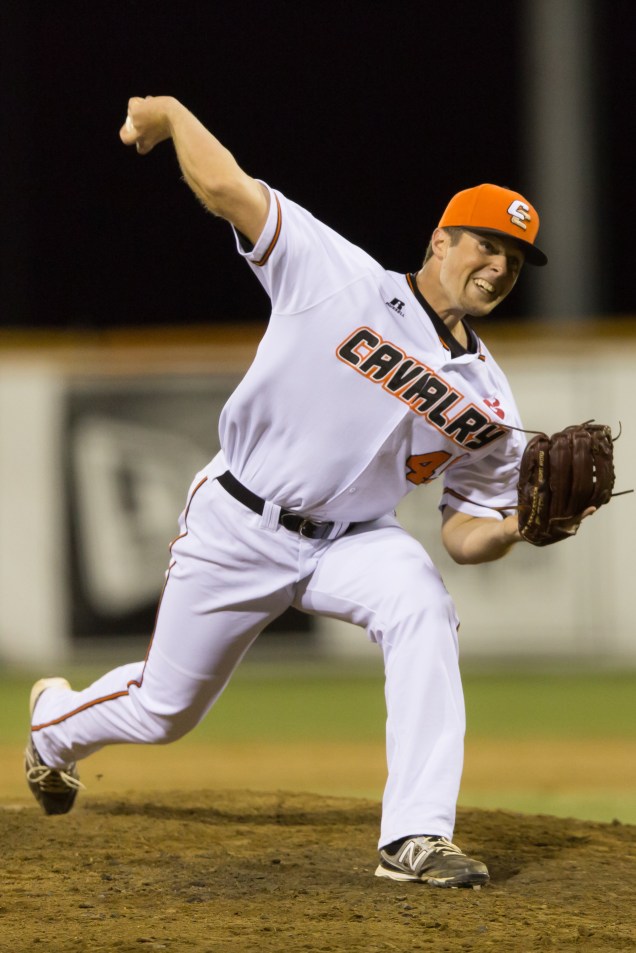
 Converting from a starting pitcher in college to a reliever professionally has helped his velocity touch the mid-90’s. In his 21 ABL relief appearances so far, Loggins has logged 23.1 innings and has struck out 31. With a 4-2 record, 2.31 ERA, and one save under his belt, the 22-year-old will be the Cavalry’s stopper late in games to ultimately halt the ABL reigning champion Perth Heat from a never seen before three-peat.
Toronto Blue Jays prospect Marcus Knecht brings Can Do Attitude from Canada to Canberra Cavalry
 Detroit’s Octavio Dotel usually wrecks havoc on right-handed hitters like Canadian-born Marcus Knecht, but on April Fools in a 2012 Jays Spring Training game Toronto’s 2010 third-round draft pick had the last laugh by blasting his first Grapefruit League home run off the veteran Dominican bullpen specialist.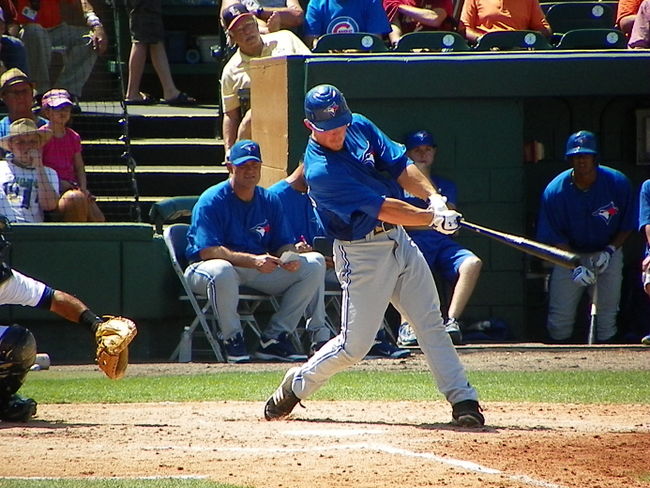
launch a home run off Octavio Dotel in a 2012 Blue Jays Spring Training game on April 1st.
2012 Blue Jays Spring Training exhibition game. (Photo by the Canadian Baseball Network)


The 22-year-old is hoping to continue with his offensive prowess and defensive excellence as a member of the Australian Baseball League’s Canberra Cavalry. Second only to last season’s ABL Champion Perth Heat in team offense and pitching, the Canberra Cavalry narrowly missed the ABL playoffs. With the injection of Knecht’s “Can Do” attitude, Canberra will be charging right out of the gate for a 2013 playoff berth.
Nick Vincent joins MLB/’08 Long Beach State’s Danny Espinosa, Vance Worley and Bryan Shaw
 When the 2008 Dirtbag reliever was called up to join the Padres in MLB in May, Nick Vincent became the 13th former Long Beach State ballplayer in the major leagues this season and the 42nd
in school history. Since the right-handed hurler was summoned, CSULB is once again on top for the most major leaguers from any college–an honor the team has held in 2010 and 2011.


a fourth-time to the Padres this year, Vincent has been impressive in the bullpen by providing middle relief with a 2-0 record and a 1.83 ERA. 
Padres manager Bud Black said of the reliever. “We like Nick’s stuff and he throws strikes. Nick knows his game. He throws a cutter and fastball to both sides of the plate. His game works. He’s just a little bit more consistent than some of the other guys that have come up. We like how he’s throwing the ball, we like his stuff.
He does a lot of things well.” A cordial and genuinely nice guy, Nick Vincent also has the positive disposition and outlook to make the new ownership of the San Diego Padres proud to see a local boy realize his dream in MLB.
Roberto: How are you feeling after being called up to the major leagues as a Padre?
Nick Vincent: I feel pretty good. It was an unreal experience. I mean the first day I was just in awe. How it happened and all that. And then the second day I actually felt it like ’Wow, you’re in the big leagues. This is what it feels like’ kind of thing. When they told me that I was going back down, I wasn’t too surprised. But that feeling you get in your body from going from Tucson (AAA) to the big leagues is an unreal feeling. I don’t think I have ever felt that feeling before in my life.
Roberto: How important was your college baseball experience in becoming a pro leaguer?
Nick Vincent: I played down at Palomar Junior College down in San Marcos. Played there for three years. I got hurt my first year, and there is where I learned most of my baseball. From high school to that, I learned probably ten times from what I knew about baseball from high school. It was unreal, and then I just carried that on to Long Beach with my numbers and stuff. And just started pitching well out of the bullpen there. The main reason I went to Long Beach is because the pitching coach there: Troy Buckley. I mean he had the best ERA in 2004 or 2005 with (Jered) Weaver, (Neil) Jamison, (Abe) Alvarez…they had all these pitchers. And I talked with one of them, Neil Jameson, because he went to Ramona. He was like: ‘If you want to learn how to pitch, this guy knows his stuff.’ That was the main reason
I went there because I didn’t know if they were going to be a good team or not. I didn’t check into that, but I thought if I wanted to continue pitching then I’m going to go with the best pitching coach.
Roberto: How good can it get to be pitching professionally where you grew up as a kid?
Nick Vincent: I mean San Diego is all the way around probably the best city in California…just because of the weather. There is so much stuff to do. You go two hours, and you’re in the snow. You’re right by the beach. You can go fishing. You can go to the lakes. There is just so much stuff you can do around downtown. I mean you can’t really do that in LA.
 Roberto: How did your family react seeing you in a Padres uniform at PETCO on May 18th?
Nick Vincent: My dad had bought like 80 tickets. I think he only gave out 50. But he ended up bringing the other ones back, and they reimbursed him for those tickets he didn’t use–so that was cool of the Padres. When I warmed up in the seventh inning, I got up to throw and the whole section right by the bullpen–that’s where he had bought all the tickets–erupted. Friends, family, from high school, my brother’s friends, other friends..it was pretty cool!
Roberto: How have you coped with the pressures of staying up in the big leagues?
Nick Vincent: I went up there and learned some stuff. I mean when you go up there when the game starts, it’s all business. There’s not too much messing around..none of that! So that was one of the biggest things I felt. Everyone is pretty serious..like every pitch. You’re watching every pitch. Nervousness…no matter what…that first inning you throw–you’re always going to be nervous no matter what. And as soon as you get through all of that…then that’s when everything will start cooling down. I mean I’m excited. I’ve got to get the ball down, keep pitching better. Be smart of what I ‘m throwing and get the ball down. I was up in Tucson (AAA), and I was leaving the ball up a lot so they told me I was coming down here (AA). You don’t pitch (well) there, you get moved down. That’s just how baseball is.
Roberto: Is your cutter your best pitch?
Nick Vincent: Yeah, I can throw my cutter to both sides of the plate. It has good late life.
Roberto: Is it a dream come true getting drafted and playing Major League Baseball?
Nick Vincent: I mean everyone who gets drafted…that’s where they hope their destiny is. But I mean you got to earn it. So for me I’ve got to come down here and throw strikes and get people out. I mean I would hope to get back there, but at the same time they are not going to be bring me back up if I’m not pitching good. So I’ve got to get back doing my thing, get people out and hopefully…I mean that’s where I want to be (in MLB). If I’m pitching good, that’s where I’ll be. But if I’m not pitching good, then I’ll be down here (in AA). Roberto: Have you always been a pitcher way back to your Little League days?
Nick Vincent: In Little League and stuff, I pitched but not to be like good at it. I just did it because no one else could throw strikes. And I played outfield more back then. High school came along. The JV coach wanted me to be a pitcher so I went ‘okay’ and I started pitching then. Junior and senior year came along, and I just pitched. That’s all I did. So after that, pitching was the only thing that I could go to.
Roberto: Is there a different mindset being a reliever than being a starting pitcher?
Nick Vincent: Yeah, it’s a way different thing. You can’t be a reliever and go out there and try to start and have the same mentality because you’re not going to. You can’t go out there and throw an inning as hard you can and expect to be that good the next inning. So starting and relieving are two different things. I mean I started at junior college. I liked it. I started doing relief at Long Beach, and I liked that too. For me I think I would be more successful as a reliever out of the bullpen because you get that adrenaline going. And like for me, I want to go in with guys on base right after a starter and we’re like winning or something. And you just shut those guys down and don’t give in and take the momentum from the other team.
Roberto: What kind of pre-game preparation and research on the opposition are you doing?
Nick Vincent: I’m not really doing much. If you’ve only got two pitches. you’re going to throw those two pitches no matter what. Just because they can’t hit a change-up, you’re not going to start throwing change-ups because your change-up is not the same as everyone else’s change-up. For me I’m just going to go out there, and I just look where they’re at standing at the plate. I’m kind of studying them throughout the series, but
I mean it only takes one game to figure out what these guys can do, what they want to do with the ball. If the guy wants to go opposite field with it, then that’s where he’s going to hit the ball that way the whole time. And then you have to play the whole field. If the wind is blowing in this way, you can throw pitches that way. You got more chance for error. I just go up there, and I learn from where they’re standing in the box. I trust our catchers too. Our catchers are watching the game more than I am. So I trust them with their knowledge. Roberto: Are you paying much attention to baserunners when you are on the mound?
Nick Vincent: Yeah, you’re always taking note that they are on base, but they’re not taking my concentration off the hitter at all. I mean I’m pretty quick to the plate so if they want to steal and take the chance of getting out…I’ll let the catcher do his job. I don’t throw many balls in the dirt. I’m more of a strike guy. If they want to chance it and run for second base, I’ll let them and let the catcher throw them out. I’m not really too worried about the guys on base.
Roberto: How good of a hitter are you with the bat?
Nick Vincent: I’m not good with the bat. I got one AB last year, and I struck out. When you haven’t hit since high school and you try to go out there, it’s coming like a 100 miles an hour. Or least that’s what it feels like.
Roberto: If Bud Black calls on you to sacrifice, can you at least lay down a bunt?
Nick Vincent: If I had to, I could get that down. Bunting off a machine is way different than bunting off a guy in a game. I know that…
Roberto: Do you have any advice for young baseball players trying to make it in MLB?
Nick Vincent: I mean just go out there and work hard. Prove people wrong, that’s what I’ve done my whole life. They always said I wasn’t going to get drafted because I was too small and didn’t throw hard enough and all that. So that just gives you fire kind of deal.
You go out there and let’s say you’re throwing 85, 86 and you’re getting people out—you’re getting people out! Baseball is a numbers game. Sooner or later they’re going to have to give you a chance. That’s all I have to get back to doing and see what happens from there.
Roberto: Who were some the players that had the greatest influence on you as a pitcher?
Nick Vincent: Back in the 90’s when it was Glavine, Maddux and Smoltz, that starting rotation right there. It seemed like they were on TV every night. Watching them…what Maddox could do with ball, and then Smoltz throwing fastballs by people and Glavine had his change-up. That three starting line-up was like unreal. As a starting rotation, those were probably my favorite guys I liked to watch.
Roberto: Thanks for your time today, and we look forward to seeing you back at PETCO!
Nick Vincent: Thank you and have a good day.
Padres add heat to mix with reliever Miles Mikolas, the legendary Lizard King of the San Diego bullpen
 Venice Beach’s Lizard King, an alter ego of Doors lead singer Jim Morrison, imitated a Native American shaman. Since shamans identified strongly with an animal deity, Morrison chose the lizard because of its ability to reinvent itself by constantly shedding its skin and personified his deity by only wearing leather pants. Native cultures shaman guide followers through sacred ceremonies involving the ingestion of peyote to lead worshippers on a spiritual awakening of higher consciousness in the same way Morrison led his loyal audiences through a journey so that they may never think the same way again. Opting to skip the hallucinogens and make believers of those weak at heart in the Peoria Javelinas bullpen during the 2011 Arizona Fall League, new San Diego Padre relief pitcher Miles Mikolas turned Lizard King chose to square up on clubhouse dues by accepting the $250 dare bet wagered by fellow players and ingesting a Mountain Dew marinated cold-blooded reptile.
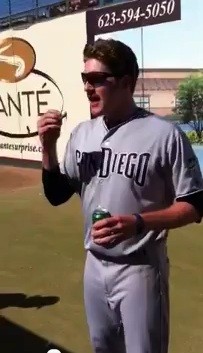
and part-time bullpen shaman Miles Mikolas inspects his live lizard lunch before chasing it down with cold Mountain Dew.

the show with a towering home run
off the left field third tier of the Western Metal Supply Company.
“I settled down and made some really good pitches there toward the end. One bad pitch. Right after Stanton hit the home run I was like, ‘Well, you know, there it is. Welcome to the major leagues.'”

Jupiter High School Warriors.
I think that continued on there in San Antonio. Of all the guys that we looked at, he was the guy that our Minor League people said, ‘He’s the guy.'” The San Diego skipper has liked what he has seen so far from the rookie Mikolas. “That’s a big curveball,” Black said. “His challenge will be to get that in the strike zone. It has good rotation. You can combine that with a low-90s, mid-90s fastball. It’s a nice variation. It’s a nice difference of velocity. But the key is getting the breaking pitch in for a strike, because he’s got enough fastball. There’s no doubt about that.” A few weeks ago, Aussie pitcher Hayden Beard–Mikolas’ roommate at Double-A San Antonio–predicted weeks ago that Miles would be the first member of the Mission pitching staff to break into the Bigs. ‘The Big Dog’ Beard said, “I’m stoked for Miles. It couldn’t happen to a better bloke!” 
 After Jupiter High School baseball, Mikolas played through his junior year at Nova Southeastern University (NSU)–where he ranked fourth all-time with 167 career strikeouts and fifth with 32 games started–before being the seventh round pick by San Diego in the 2009 draft. That year he was one of four NSU players drafted, three of whom have now appeared on a Major League 40-man roster–including Mikolas, J.D. Martinez (Astros) and Mike Fiers (Brewers). After converting from a starter to a reliever, Mikolas quickly moved up the Padres system to the Single-A affilate Fort Wayne TinCaps, where he would become a 2010 Midwest League All-Star after striking out 78 batters in 60 appearances.
The Southern Florida native last season split time between the Single-A Advanced Lake Elsinore Storm and the Double-A San Antonio Missions. He went a combined 4-0 with 21 saves and a 1.38 earned run average. Mikolas was dominant on the mound, striking out 69 in 72 innings of relief. Rumor has it that an unnamed Lake Elsinore Storm pitcher was betting everyone he could hit triple digits but could only hit 99 on the radar gun that year. However, the Lizard King of the bullpen has since touched 100 mph with a spike in velocity. The fearless pitcher and part-time shaman will change our way of thinking of the Padres’ winning ways by keeping hitters uneasy and off balance with his unrelentless heat and signature Mikolas Hammer.
Erik Hamren, Tesoro’s first MLB star, on a Mission to return to the show at San Diego’s PETCO Park

went on to beat the odds in becoming a professional baseball player in MLB for the 2011 San Diego Padres.
Former San Clemente High School baseball star and veteran Tesoro Manager Rick Brail said, “Erik was in the first four-year class at Tesoro High School. He and his family have not only been a part of a baseball program from day one but also a big part of the school’s establishment. Retiring his jersey was a great thing to do because he has and always will be a part of our Tesoro family. It also felt great to recognize a player who was one of hardest workers and always put the team and school before himself. Our school, the community, and baseball program could not be more proud of Erik’s accomplishments on the field and the man he has become out in society.” Having earned three letters in both varsity baseball and football, Hamren perfected his game with every year of experience. He tipped off his athleticism and talent early on in his Tesoro Titan baseball career when he was named to the 2003 North Orange Country Classic All-Tournament Team. The Coto de Caza native followed it up in 2004 with a roster spot on the Southern Cal Cup II – Orange County All-Stars. Hamren finished the 2005 season with three home runs and a .452 batting average, which earned him the Pacific Coast League Co-MVP with Tesoro teammate Nick Nelson. Erik Hamren was a rising star and was heavily recruited to play college ball. He decided to stay in California and attend University of the Pacific.


the Chicago Cubs gave him a tryout and was subsequently selected in the 2008 Amateur Draft.
as he could while pitching for
the Northwoods League Mankato MoonDogs, Erik Hamren could
not resist the temptation of all
the bonuses affiliated with a pro baseball contract and signed
with the Chicago Cubs in 2008.
2.04 ERA in 17 2/3 innings of work under his belt, he then opted to sign with the Cubs. Hamren made three stops in the Chicago Cubs farm system in 2008 and 2009. Hamren had less than two full seasons of pitching experience when he was released by the Cubbies after the 2009 season with Single-A Midwest League Peoria, where he had a 5.98 ERA in 38 games. Determined not to give up on his dream of making it in the Bigs, Erik chose to play in the Independent League to develop his craft in 2010. He pitched in the Indy Northern League in 2010 and put together an 0-2 record with a 3.39 ERA in 44 games playing for the Kansas City T-Bones and Joliet JackHammers. Joliet acquired Hamren in late August for the stretch run in a trade with the Kansas City T-Bones. The right-hander was dominant in seven games for the 2010 JackHammers by posting a 0.84 ERA in 10.2 innings of work, striking out 16 and holding opponents to a .262 batting average. Hamren appeared to have finally felt comfortable pitching and was ready for redemption.
turned things around for Erik Hamren and gave him pitching confidence.
Major League veteran pitcher Tom House was critical in Erik’s transformation and revamping his approach prior to pitching at a MLB tryout camp in November 2010. After seeing the renaissance man in action, the San Diego Padres signed Erik to a minor league contract. Hamren believes it was a full season of independent baseball and working with former Major Leaguer Tom House that helped him reach MLB. Erik said, “Indy ball was the best thing that could have happened to me. It put things in perspective. You have it, and then you lose it. But I got innings, and I got to work. It’s kind of hard to grasp what has happened.” Hamren admitted that he struggled with his command during the first half of the 2010 season, but a ‘House call’ visit with the pro at the All-Star break made all the difference. “House synched me up,” Hamren said. “He kept me really focused and made me really confident. The first half of the season, there were still command issues. Strikes would come and go. But I worked with him and got a little confidence off that.”


ninth inning in San Diego’s 6-2 loss but also ended his
MLB debut memorably by striking out Dodger speedster
Dee Gordon. The Orange County homegrown hero deserved the opportunity after being named 2011 Texas League
Mid-Season All-Star and compiling a stellar 5-0 record with
a 0.98 ERA in 48 games with the Lake Elsinore Storm and San Antonio Missions. During his shortened 2011 minor league campaign in 65 2/3 innings of work, Hamren was relentless. He surrendered a mere 46 hits, while walking
14 and striking out 69. The 25-year-old posted a 4.38 ERA
in 12 1/3 MLB innings last season with the Padres pitching middle relief. “He’s a great story,” said Jason McLeod, the Padres’ vice president and assistant general manager. “He
has a low-90s boring fastball with a swing-and-miss slider.”
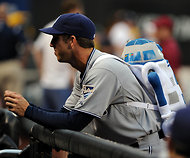
To the delight of Southern California Friar faithful in keeping Hamren a Padre, Hamren cleared waivers and was assigned to Double-A San Antonio. So far in his 13 innings pitched out of the Mission bullpen (0-1, 2.08 ERA with one save and four holds), Erik has surrendered only 6 hits while striking out 19 and holding opponents to a .154 batting average. With continued success in the minor leagues, it is just a matter of time for the South Orange County pitcher to return to PETCO Park.
 Hamren’s journey to Major League Baseball was relatively short, especially considering that he
was pitching in the Independent League in 2010. He possesses what it takes to become a solid contributer to the Padres bullpen and is itching to remain a staple on the San Diego roster. Should the Padres use closer Huston Street as a half-season rental AKA trade bait before the July 31st non-waiver trade deadline, then Hamren will be right on schedule for his annual pilgrimage to PETCO. However, one would expect that at the very latest Erik will rejoin the Padres when active rosters increase from 25 to 40 on September 1st. In the meantime, the trek from Mission San Juan Capistrano to the San Antonio Missions will have to suffice. Just as the swallows return every year to this legendary South Orange County landmark, fireman Erik Hamren will faithfully make his miraculous comeback to MLB in San Diego.
Pericolosi instructs EU, Aussie & American players and coaches how to play fun, competitive baseball


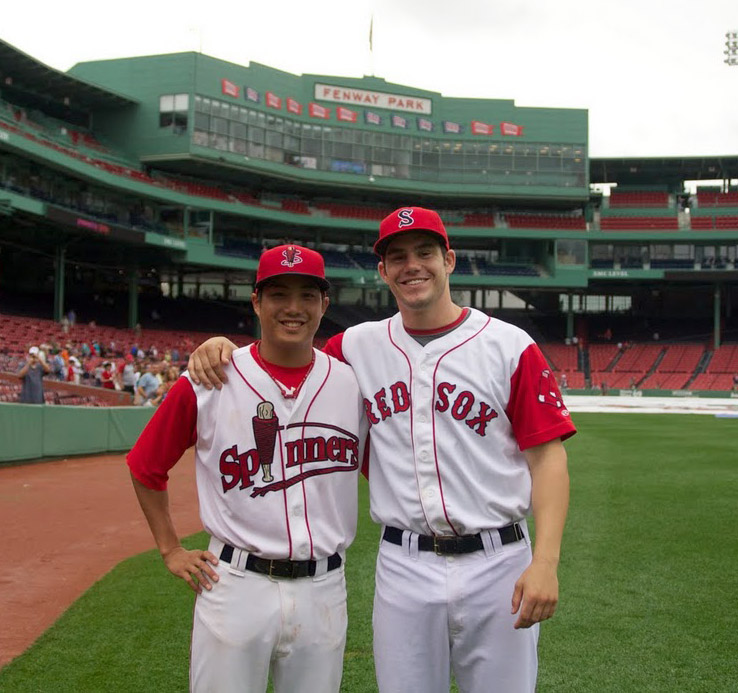
Before coaching at Pomona-Pitzer, Pericolosi was the assistant coach for the Cape Cod Baseball League Brewster Whitecaps and mentored future Major Leaguers Mike Aviles, Chris Dickerson, Tony Gwynn Jr., Taylor Tankersley and Sean White.
He has been one of the most sought after baseball experts in Europe since 2000. Pericolosi coached the Swedish National Baseball Team for two years and spent three summers in Sweden as a MLB International envoy coach. He also spent two additional summers in Sweden as a player/coach for the Leksand Lumberjacks and two years in Belgium as a player/coach for the Brussels Kangaroos. During the summer of 2010, Pericolosi served as a coaching consultant with the San Martino Junior Baseball Club in Italy.
He has since become a magnet in the European Baseball Coaches Association exchange program, an initiative to develop European coaches’ insights in every aspect of the game through collaborative mentoring by experienced American coaches like Pericolosi at some of the best collegiate baseball programs including Pomona-Pitzer. From running team practices to covering coaching mechanics, strategy and philosophy, participants have the opportunity to closely work with host coaches to fine tune their craft. A 2000 graduate of Pomona College–where he played baseball–and a former coach for the Georgia State Panthers, Australian Baseball League CEO Peter Wermuth commented, “Our Pomona-Pitzer head coach, Frank Pericolosi, has a strong international orientation and has taken this initiative (EBCA exchange program). Frank has coached down here in Australia a few times, and we have set up an ABL intern program. But more importantly, he has coached in Europe for many years, and I am excited that he has made Pomona-Pitzer one of the pioneers in the European Baseball Coaches Association exchange program.”
A sabbatical leave from Pomona College in the fall of 2009 would prove to be a blessing for those Aussie athletes who were fortunate enough to be taken under Pericolosi’s wing.
He worked his magic as an assistant coach for Baseball Victoria Geelong Baycats in Australia, where he strengthened the Baycats’ coaching structures and methodology.
in the 27th round of the 2011 MLB amateur draft.
Competing at the highest level in the Victorian State League, the Geelong Baycat coach assisted with all the teams in the club–from children to the most competitive team. Pericolosi also provided instruction at a MLB youth clinic and in addition to serving as an assistant coach with the Victorian U-14 State Team. “Kids play baseball for right reason,” Pericolosi said. “Because it’s fun. For me, the most gratifying thing is to see a player improve and know you were part of that process. Coaches and teachers had a very powerful effect on my development as a person. I would like one of my players to say that about me…”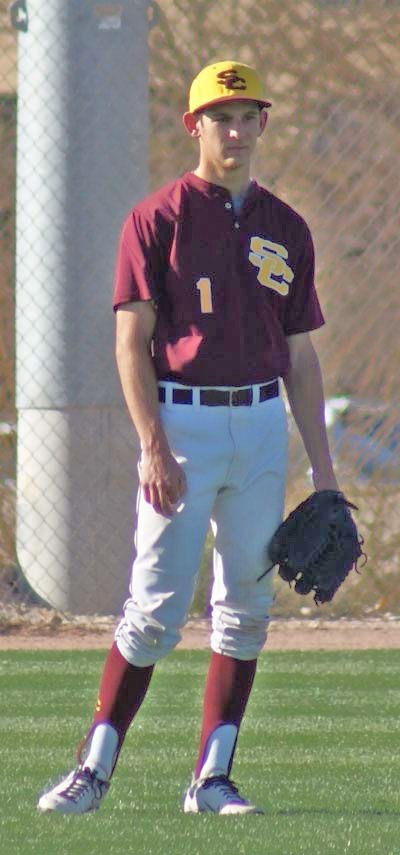
Pericolosi is so popular that prospective players are making significant life-changing decisions based on his reputation of running a first-class collegiate baseball program to accompany the quality education afforded by the prestigious Claremont University Consortium. Kevin Brice, a senior from Salpointe Catholic High School in Tuscon, Arizona, chose to be part of the coach’s Pomona-Pitzer legacy of excellence recently and echoed the sentiment of mixing the best of sound mind and body in Claremont. The future Sagehen (2016) outfielder explained,
“I chose Pomona because of its great academic program and baseball program. It had a welcoming atmosphere when I visited, and it’s hard to turn down playing baseball in Southern California. I really like Coach (Frank) Pericolosi. He seems laid back, honest, and he’s built up a great baseball program. I’m excited to be able to play for him next spring.” Pericolosi is just as fired up as the young slugger in his line-up based on his past baseball statistics. In 30 games last season, Brice hit for a .527 batting average–including 26 RBI, 12 doubles, five triples–and scored 53 runs. Coach Perilcolosi hopes to add him to his long list of success stories of graduates who have gone on to play professional baseball. Serving as an American Baseball Coaches Association Executive, the 36-year-old coach has had a prolific effect on the quality of the players he has mentored and actively engaged in launching professional baseball and business careers.
Coach Pericolsi said, “It’s great for recruiting to have all these guys playing professionally. We can talk to a kid who is a borderline Division I athlete and say that you’ll still have the chance to get drafted or play overseas and get a great education in the process. It’s also great for all those guys to continue playing. They’ll end up in the business world or other things when they’re done, but in the meantime, they get to play a few more years of baseball.” He speaks from first-hand experience as the Connecticut native attended Northwest Catholic High School in West Hartford, where here was named All-State in baseball and honorable mention All-State in football during his senior year. A 1997 graduate of Massachusetts’ Williams College–where he excelled in both collegiate football and baseball–Pericolosi was named All-Conference and All-Region in baseball. In addition, he played two summers for the New England Collegiate Baseball League Middletown Giants. Pericolosi was selected as an All-Star and named to the NECBL All-League team in 1995. He later played in Europe.
Whether player or head coach, Frank Pericolsi has always given his best effort and in return he expects that same level of commitment from everyone around him. The bottom line is that Pericolsi knows how to get the most out of his players. Conversely, it’s no secret that players worldwide have trusted that they can depend on their “living legend” coach to give them their best shot of success on and off the field while having fun in the process.
 mlbblogger