A Wise ‘Tail’ of MLB’s Past and Present “Big Dog”, Cuban Tony Pérez and Australian Hayden Beard

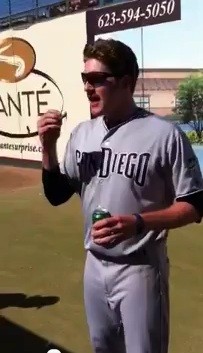
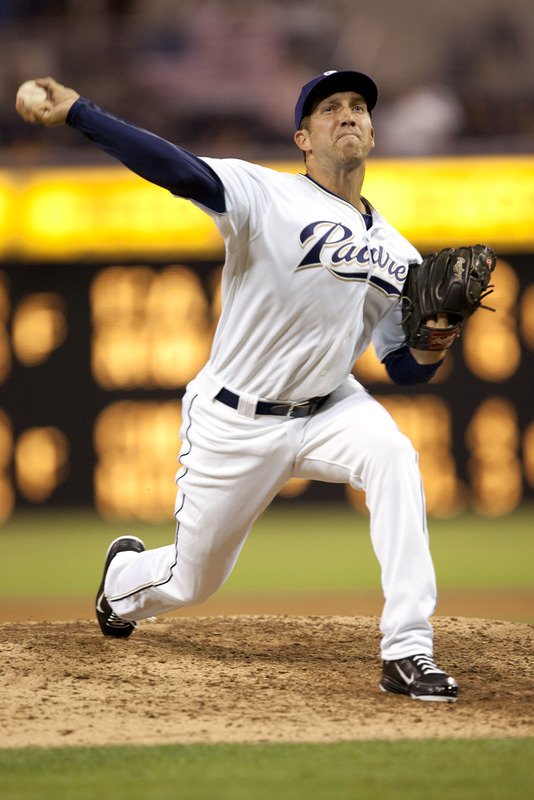
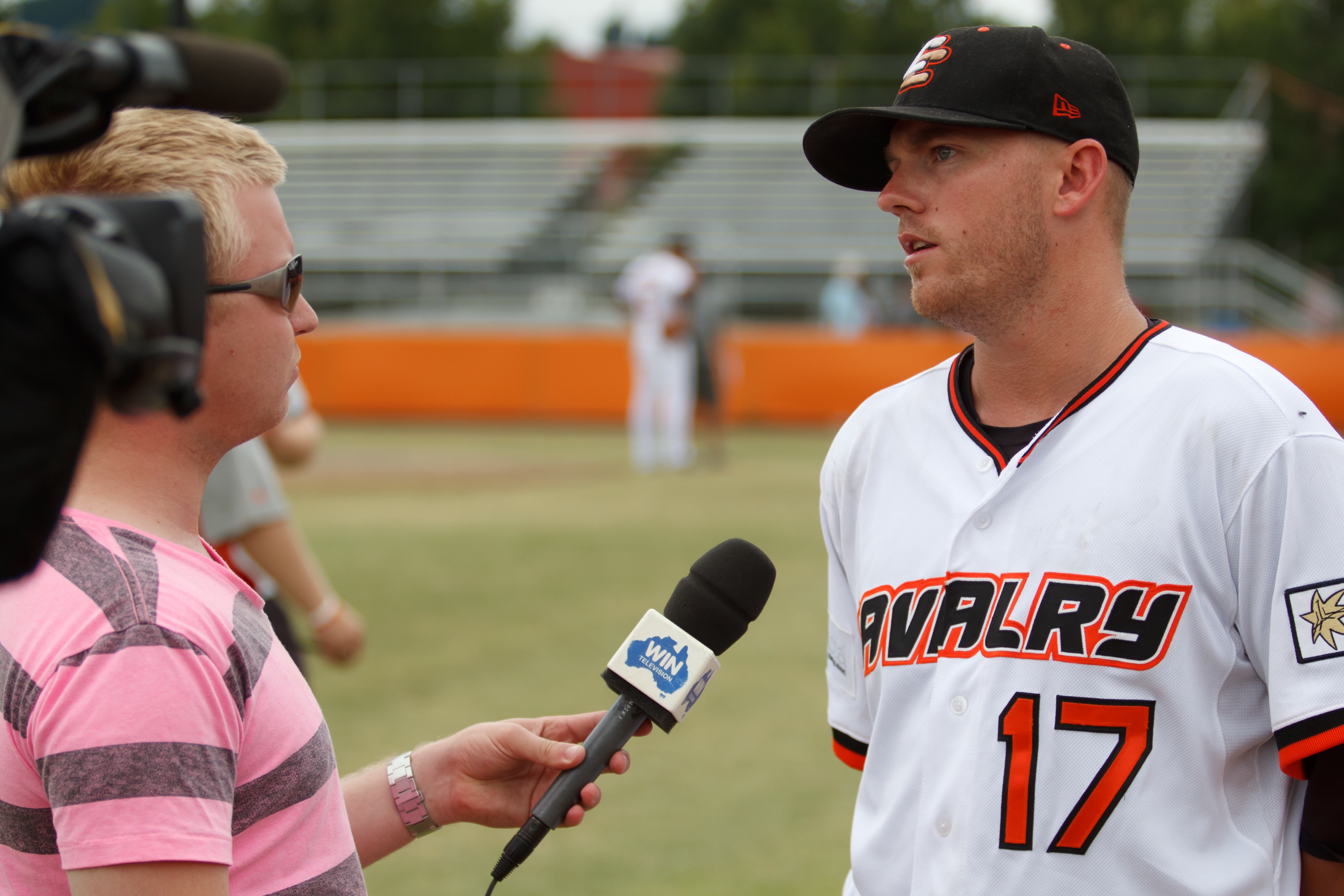
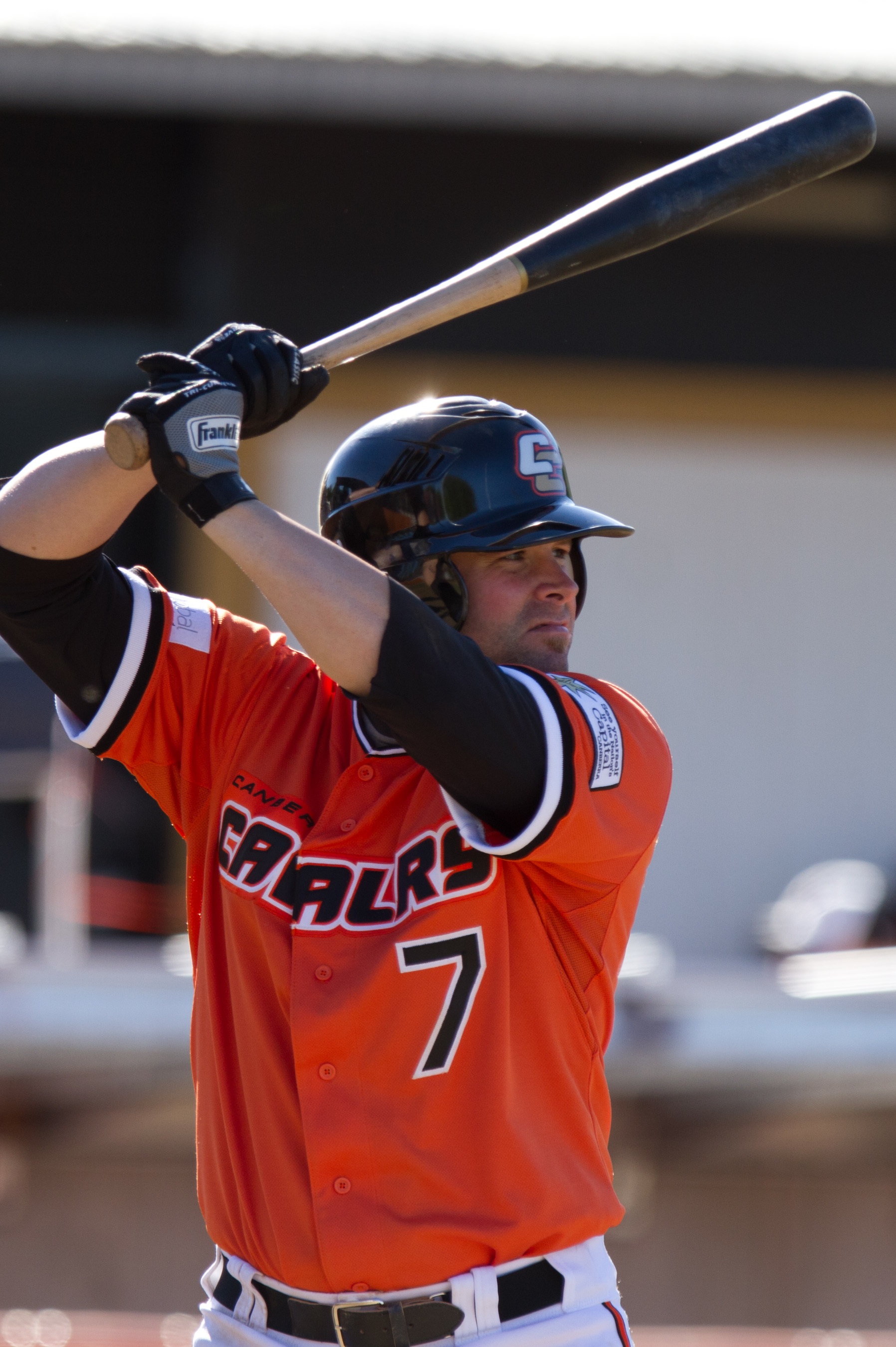
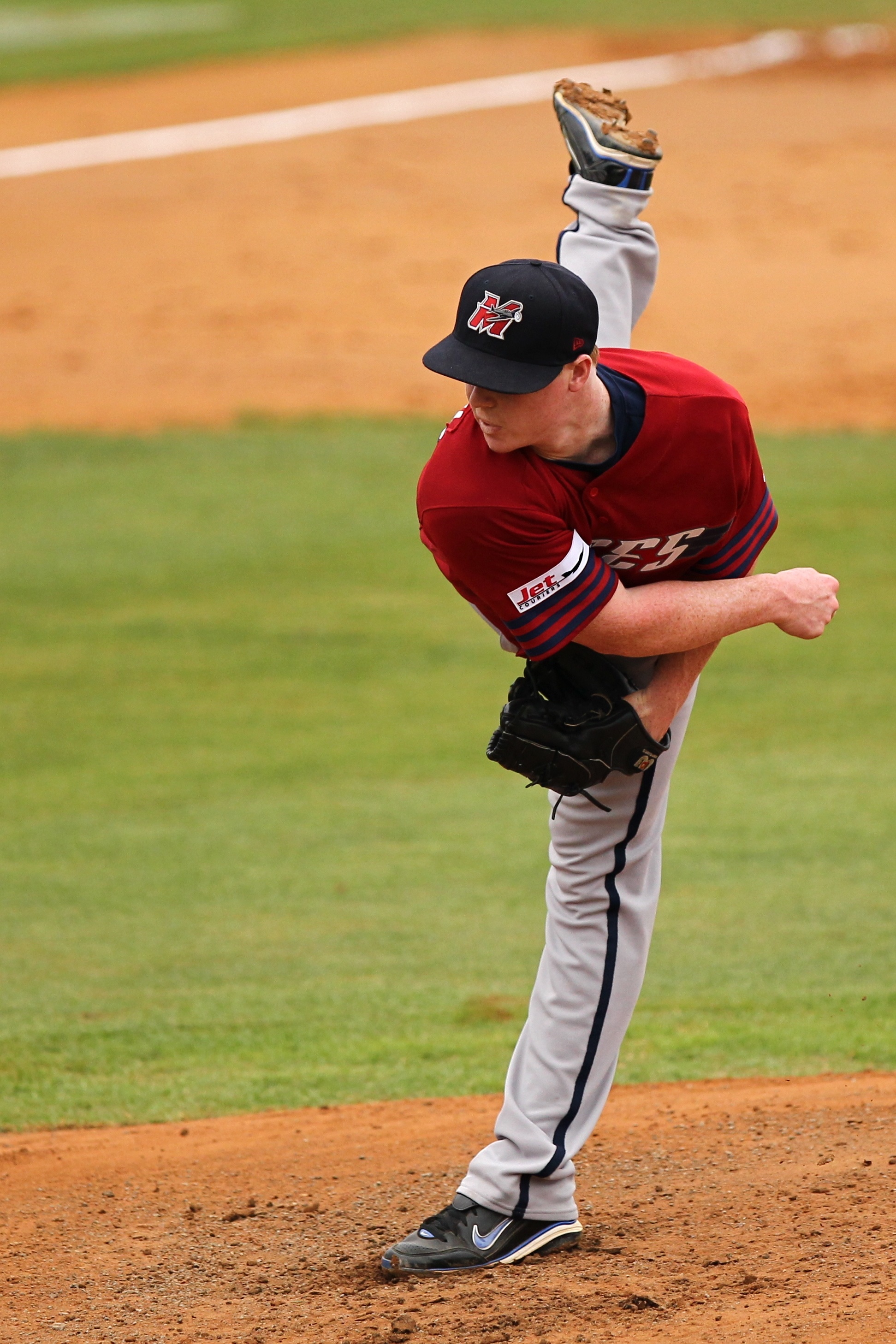
" The Big Dog" Hayden Beard from the Canberra Cavalry is an Australian all-star pitcher in the
San Diego Padres organization. (ABL/Ben Southall/SMP Images)
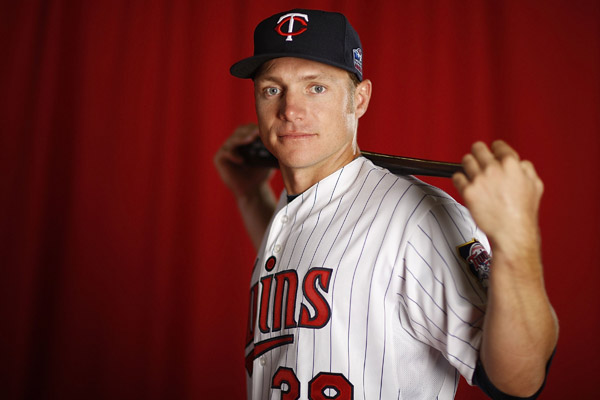
What does Cuban-American baseball legend Tony Pérez have to do with Aussie pitcher Hayden Beard in the San Diego Padres organization? Could it be their professional ties to the Padres? After all, Tony Pérez was named the Most Valuable Player in the Pacific Coast League in 1964 when he played for the San Diego Padres, a minor league club in the Cincinnati Reds organization at the time when Hayden Beard wasn’t even born yet. After hitting .309 with 34 home runs and 107 RBI for the Padres, Pérez was sent up to Major League Baseball late in the 1964 season to become one of the game’s most clutch hitters. Over a decade later his two-out, two-run blast off Boston’s
Bill Lee in the seventh inning of the final game of the 1975 World Series lifted the Cincinnati Reds to their first world championship. Both Pérez and Beard share the same “Big Dog” nickname but for different reasons. Pérez’ teammate Lee May came up with the “Doggie” moniker saying, “He’s the big dog, the top dog … you could always depend on Doggie to drive in the big run.” In Hayden Beard’s case as a pitcher, he is “The Big Dog” on the mound who consistently keeps opponents off-balance and guessing in clutch situations.
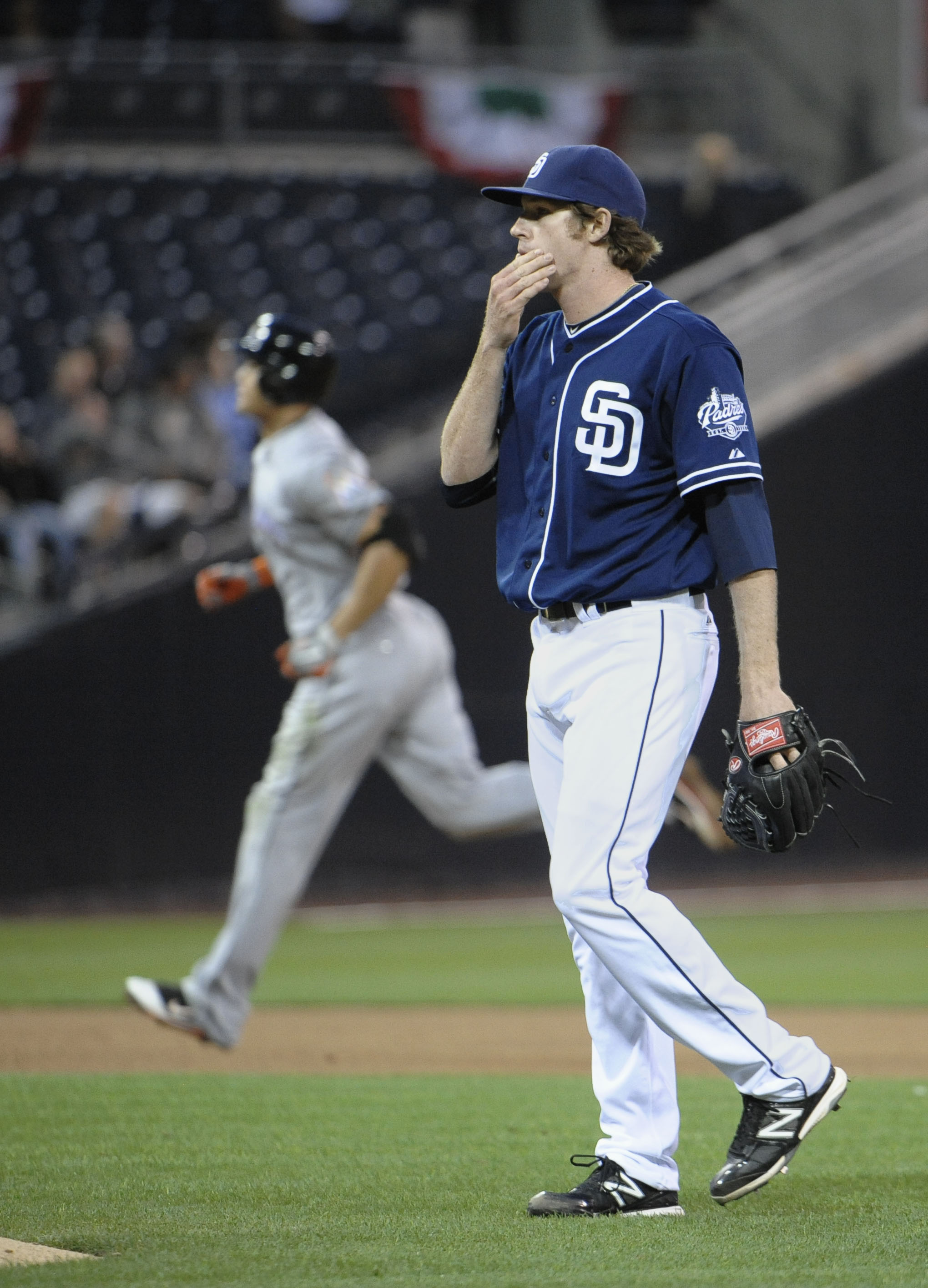
Canberra Cavalry and Padres Double-A affiliate San Antonio pitcher "Big Dog" Hayden Beard
is tracking the scent leading to his Major League Baseball debut at San Diego's PETCO Park and
is only two steps away from making it. (Photo courtesy of ABL / Ben Southall / SMP Images)

”Canberra
Signed by the New York Mets in 2005, Hayden Beard was plagued by injuries early in his career and was shut down from competition for three years. Beard returned home to play for the Canberra Cavalry and pitched two seasons for the Padres Single-A Advanced affiliate Lake Elsinore Storm. After pitching for Team Australia during the 2011 Baseball World Cup in Panama, Beard’s 2011-2012 ABL campaign for the Cavalry earned him ABL Player of the Week and a team-leading five wins with a 2.82 ERA. We caught up with “The Big Dog” Hayden Beard at Padres Spring Training camp in Peoria, Arizona prior to him being sent up to pitch for the San Diego Double-A affiliate San Antonio Missions.
Roberto: Thanks for joining us. How did you get “The Big Dog” nickname?
Hayden Beard: It was a radio broadcaster back in Low A (ball). I asked him to call me the name one day as a bit of joke on the bus on the way to the field, and I threw that night. (Later) we get off the bus, and he replayed the audio of the game. And sure enough he said, “Here comes the pitcher, the Big Dog, and the Big Dog whatever…” And the name just kind of stuck. Unfortunately, it was a self-given nickname. (laughter)
Roberto: Let’s talk Canberra pitching for a moment. Were you happy for Steve Kent being signed by the Kansas City Royals after a stellar 5-1 record with six saves in the ABL?
Hayden Beard: I think with Steve getting that opportunity with the Royals was great, especially (after) the way things ended with the Braves. He had a great year two years ago coming off surgery. Didn’t start so well last year and then to be let go…I think it hit him pretty hard. But in saying that, it gave him maybe a bit more drive than he had before to work harder, to get stronger and be a better pitcher. The work that he did in the ABL was unreal. He was out there everyday working his butt off, doing extra work. Just the progress made for a pitcher was phenomenal. He’s a new guy now. I hope he stays healthy and has a great year. Out of the bullpen, pitchers can fly through the levels. It’s not unrealistic that he could be in the Big Leagues in the next 12 months. [Editor’s note: The Kansas City Royals have since released Steve Kent.]
Roberto: What about the Cavalry’s unsung hero, pitcher Brian Grening averaging a strikeout per inning with an unrestricted limit of 43.2 innings pitched?
Hayden Beard: Grening was definitely our go-to-guy throughout the whole year. If we were in jam or if we needed someone to eat up a couple innings, we’d send “Greno” out there. I’ll tell you what, as far as a pitcher goes, if I could have any pitch from anyone on
the staff, it would his change-up. That thing is unreal. I think that’s why he had the success that he had. He doesn’t have a 95 mph fastball. He doesn’t have the big hammer, but that change-up is just phenomenal. It’s been unfortunate that he hasn’t been picked up by an affiliated team so far this year, but hopefully he goes and plays independent ball. And if someone needs a guy throughout the year, his phone starts ringing and maybe he is back out here.Roberto: Of all the ABL teams, the Canberra Cavalry had the strongest American presence. Why did you have so many U.S. players?
Hayden Heard: I guess we need the Americans on our team because Canberra is the smallest city that has a baseball team, and our baseball population is small. Therefore, our player base from where we can draw players in is quite limited. We don’t have the number
of professionals that Sydney, Perth, especially Victoria, Brisbane have, so we’re always in need of international help. So for us local guys that are on the team, we are all current professionals that have played professional baseball so we have been around Americans
our whole careers. We know a lot about them, and the reality of the situation is once you
all get together and put that same uniform on—you’re a team. And you’re all striving for
the same goals. You are there to win. You’re there to get better. You have to start off, and it’s a little bit weird maybe not knowing everybody. But that will last maybe one or two days. And you’re all baseball-minded. You all love the game, and you’re there because you want
to be there. As far as having that big U.S influence on our team, it’s not a problem at all.
It’s something I look forward to every year. Meeting new guys and making new friends.
It’s good.
Roberto: Kody Hightower was a true competitor. Did you expect him to have the third best batting average (.361) and on-base percentage (.455) in the ABL?
Hayden Beard: What a story he was throughout the year! He’s a guy that rolls out of club ball. I think when they were putting the team together, he wasn’t really looked at as a guy that would be in our starting nine. A few injuries happen, we need a guy. Our manager, Steve Schrenk–a great guy–calls Kody and says, “Would you come away and play with us?” Kody had obligations with his club team in Canberrra that brought him to Australia to play. So it was a little tough to get those guys to come on the road with us, and then they obviously would miss their games that these clubs had paid for them to come out here and play. But Kody, I mean, for someone who had not really been playing professional baseball at a high level to come in and just do what he did there…absolutely raked. You know, he was probably our best hitter. He and Burgamy during that last month of the season were just unreal. Kody stepped up to the plate. The way he did it showed a lot about his character and him as a person. He’s most welcome to come back and play on the team anywhere I play in the world. He could come out here and compete in minor league ball. There’s no doubt in my mind about it. So who knows, maybe a scout saw it and thinks the same thing?
Roberto: That’s exactly why I wrote the article—The Risky Lowdown of MLB’s MIA Kody Hightower. His talents are uncharted and are unrecognized by the international scouts. He’s got the competitive spirit to roll with the punches and play with the big boys.
Hayden Beard: He absolutely does. When he gets between those lines, he’s brutal…he’s a fighter and he wants to win. He sets very high standards for himself, and if he doesn’t reach those goals then he is really hard on himself. I think that is the kind of mentality that you have to have to have success in the game. Kody is a guy that could play anywhere in the world, and I’m sure he’d have success and do what he has done throughout his career.Roberto: Now let’s talk about you. How did the MLB Australian Academy on the Gold Coast prepare you for professional baseball?
Hayden Beard: Without the MLB Australian Academy, there’s no way I would have
been signed. I wouldn’t have gotten the exposure I had without this opportunity. I signed with the Mets. Went over there and went to the instructional league in 2005. Played in 2006. Spring training in 2007 then hurt my elbow and ended up having surgery. Took me out for the season. Never really bounced back after surgery. The arm never responded for whatever reason. Mets didn’t give me a visa for the next two years because I wasn’t healthy so I was no use to them. Then in 2009 I had an opportunity to go to Japan and play on the Australian provincial team. So I went over there for about a six week trip to Japan. The coach called me three weeks out and said, “You know Beardy, we need an arm. Are you healthy?” So I said,”Maybe I’ll get healthy. I’ll give it a go.” So I committed. Got back in the gym, worked hard, started throwing, made the trip, went over there. Threw pretty well. Velocity was back up, you know, 93, 94, 95… And I thought I could have a chance to get back out on the mound, you know. I got home and contacted the Mets. Told them I was good to go. Went and played the Claxton Shield with Adelaide. The Adelaide Bite needed an arm and their manager called me and said, ‘Would you be interested in playing for us.”
I said, “Yes.” Turns out one of the Adelaide coaches is a scout with the Padres. He put in his reports. December comes around, Rule 5 Draft happens. Get a call at three o’clock in the morning–“You’re now a Padre!” And from then it has been taken off flight. Coming over here to the San Diego organization has been unbelievable. It’s like what Corey Adamson said,
it is like a family here. The way you are treated. The way everyone gets on so well. From
the front office right down to the Arizona League. The trainers, the staff, everyone is just fantastic. And I couldn’t think of a better place to be right now. I’m not sure a lot of clubs out there would have given me the opportunity that San Diego has. You know, I ‘m getting pretty old as far as minor league age goes. They’ve kept me around. Obviously, they see something in me. I hope to repay them and have a successful Big League career.
Roberto: Josh Spence would love to have a fellow Aussie teammate down in San Diego.
Hayden Beard: Absolutely, I’ve know Spence. We went to the MLB Academy together in 2005, and now being in the same organization it’s pretty cool. I think the role change from
a reliever to a starter has been huge for me, you know. Went out there in the Australian league, never started before. Started, worked on my secondary pitches, things just took off from there. Right now I’m pitching the best that I have in my life, and hopefully I will try to carry it right through into the season. Have a successful year. Who knows what the boys are going to do upstairs? They might give me a call down.
Roberto: Weren’t you looked upon as the closer for Team Australia?
Hayden Beard: Yeah, I was. That was the initial plan, and then through talking to the Australian coaches and the staff they said my secondary stuff needs work. And it’s tough to get that work out of the bullpen. You know, if you’re not throwing between outings, you get your work in on the mound. Only throwing two pitches out of the bullpen–fastball, slider–both hard pitches, nothing below 85 mph–guys were starting to see it pretty good and hit it hard. And that’s why I switched to the starting role to be able to throw a change-up. Through that I now have four pitches. I have an overhand breaking ball which is down around 79, 80 mph and a change-up around 78. Totally changed the way I pitched, and I guess the success I had in the Australian league is a testament to that, being a different pitcher than I was last year.
Roberto: What about the new Australian Baseball League with its support from Major League Baseball and the growth of the game in Australia since then?
Hayden Heard: I remember the old ABL about 12 or 13 years ago now. When that folded,
I was just a young kid and it was pretty hard. Because I used to love going there with my dad. He’d take me out there, and I’d go chase the foul balls. It was great. But then having no league in Australia to follow and no guys to watch was a little bit hard coming through the baseball ranks as a junior. Now the league is back. The growth we’ve seen in the game has been huge. The kids are walking around the malls wearing Canberra Cavalry hats, wearing Canberra Cavalry t-shirts. We’re averaging 1000 people a game this year. That’s fantastic! The numbers of baseball junior registrations have just skyrocketed. And I think it’s a real testament to the league and the work they have done with Major League Baseball as a partner, trying to get their game out there in Australia and really promote it. And I’m sure if this league sticks around then you’re definitely going to continually see more and more Australian professional baseball players leaving their mark in the Major Leagues.Roberto: Was pitching your number one preference as opposed to playing a different position?
Hayden Beard: No. I never pitched! I was a shortstop until I was 18. Then a Braves scout was at our game to see my buddy who was a Brave at the time. He saw me pitch. We were tied, had to go extra innings and ran out of arms so I was called from shortstop to throw a couple innings. I think I was running up to 87, 88 or something. This is at club baseball back home, and he was the one who first saw me there. It’s Neil Burke, he’s on the coaching staff for the Melbourne Aces. He spoke to the Academy people and said, “This guy has a chance, you know. Give him some time and train him up a little bit.” And they did and a few months later I was a full-time pitcher. Now I’m a professional baseball player. That’s seven, eight years ago now. I don’t have that many innings at all in my arm. I’ve probably only thrown maybe 300 innings total as a pitcher. I’m still raw. I’m getting better everyday. I guess that’s a positive right now.
Roberto: Has Aussie MLB pitchers like Grant Balfour been inspirational to you?
Hayden Beard: He has. Watching him pitch in the playoffs a couple years ago was awesome. Just seeing that there is hope there for Australian guys to come through the systems. Look…Peter Moylan as well with the Braves, another great guy, great impression. He had a burst in the minor leagues, hurt his back, had some surgeries, came back as a 26-year-old. And then to do what he did now..not just a Big League pitcher but a dominant Big League pitcher. That’s impressive!
Roberto: What was your surgery all about?
Hayden Beard: It was a nerve arm issue. One of the nerves in my elbow popped out of where it was supposed to be and was rubbing against a bone. So they just moved the nerve. It had nothing to do with the way I threw the ball. I have real clean mechanics so I really have never had an arm injury sort to speak as far as ligament damage or anything like that. So hopefully this fresh arm will stay fresh for a while longer–knock on wood…Roberto: Is playing baseball a good life?
Hayden Beard: I’m just happy to be here. I love the game. I love doing what I do everyday. I know that I’m fortunate to wake up and come to the ballpark. Back home working a nine to five job makes me really appreciate what we have over here. Something
I think a lot of young guys really don’t understand is how good this opportunity is, how
good a life it is playing baseball. Some young guys might have a bit of a whine, whatever. That it’s tough out here on the field. It’s not tough. Tough is getting up at seven o’clock in the morning, going to work for nine hours a day digging a ditch and then going home at nighttime. I love the game, and I’m happy to be here.
Roberto: Having already led the Lake Elsinore Storm to a Cal League Championship.
Are your Single-A minor league days over?
Hayden Beard: I did throw a lot of innings in the ABL in the offseason so that may count for something, and they might send me straight to Double-A San Antonio. It’s really up to the bosses here. Wherever they send me, I’ll go out and I will pitch my ass off. Work hard everyday and try move up that ladder to get up to the Big Leagues.
Roberto: I would like to see you to go head-to-head with Melbourne Ace and Los Angeles Dodger pitcher Shane Lindsay in the Major Leagues.
Hayden Beard: Absolutely. Shane is a great guy. He’s a tremendous competitor. He’s got
a lot of fire in his belly. I’m sure if anyone is going to get there–it’s going to be him. So I’m with you. I really hope he gets healthy and has a year like he did last year to force their hand to put him in the Big Leagues.
Roberto: Thank you for your time today, and I look forward to “The Big Dog” pitching in his MLB debut at San Diego’s PETCO Park.
Hayden Beard: I’ve still got a lot of arm left in me. Thanks Roberto!

Perth’s Corey Adamson following Aussie Baseball Hall of Fame father’s lead excites Padres’ faithful

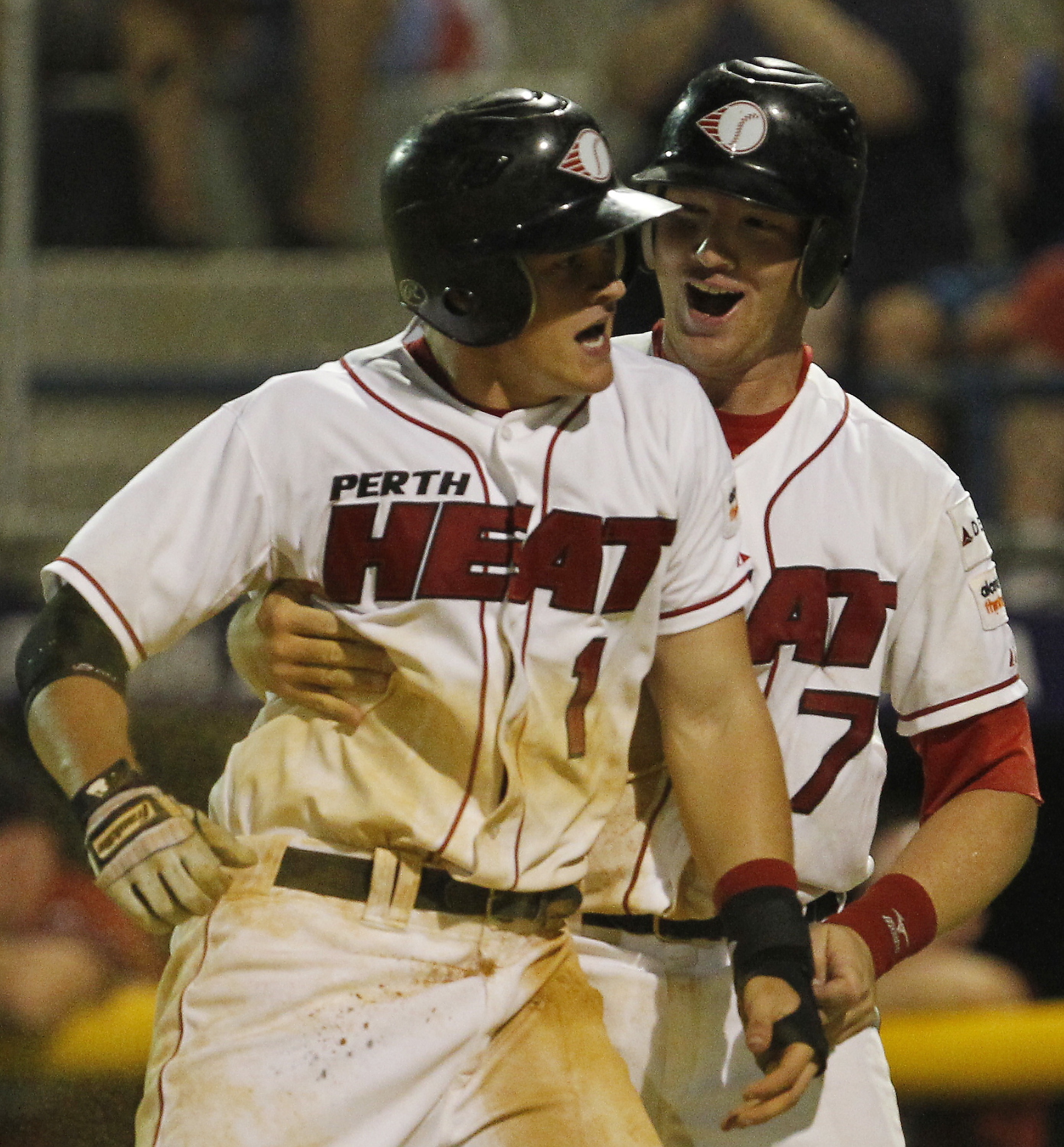
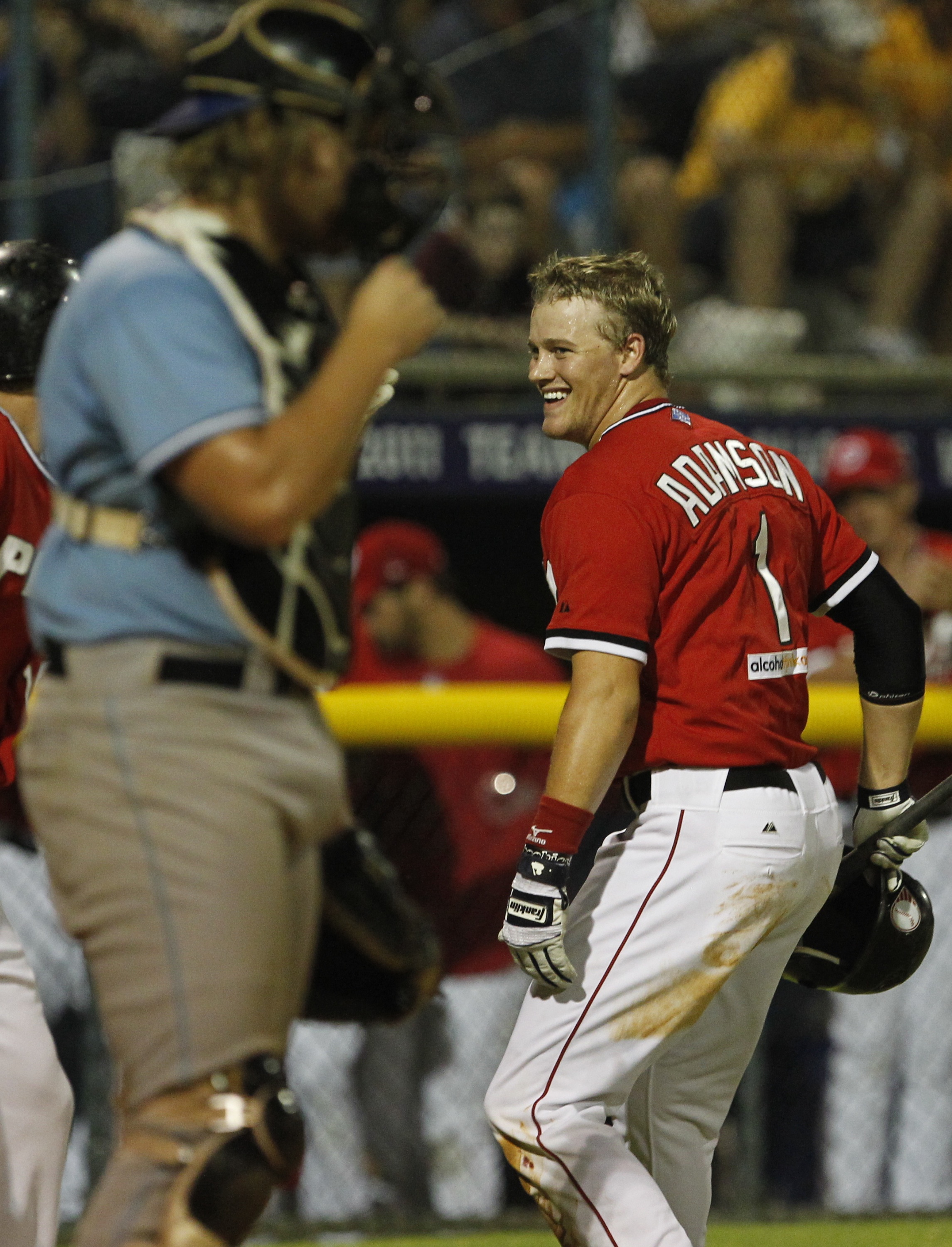
Perth Heat outfielder and San Diego Padres prospect Corey Adamson is currently playing for the Single-A affiliate Fort Wayne TinCaps. (Photo courtesy of the ABL / SMP Images)
Although the most prominent Australian baseball family may be the Nilsson’s, Aussie Baseball Hall of Famer Tony Adamson and his 20-year-old son, San Diego Padres prospect Corey Jon Adamson, may soon rewrite history. During his illustrious career from 1989-1995 for the Perth Heat, the elder Adamson made the most of his 279 appearances by putting up some very impressive numbers: .316 batting average, .606 slugging percentage, 252 RBI and 71 home runs. One tough act to follow as a 1988 Olympian and a Claxton Shield Helms Award Winner, Australian Baseball League star slugger Tony Adamson is undeniably one of Western Australia’s greatest baseball players ever. If anyone can surpass Tony’s huge accomplishments and break into Major League Baseball, it will be his son Corey–who is highly touted as one of the finest five-tool players with plus speed to come out of Australia.
Perth's Corey Adamson wears #1 for a reason. (Photo courtesy of Ben Southall/SMP Images)
Aussie San Diego Padres pitching prospect and rival Canberra Cavalry pitcher "The Big Dog" Hayden Beard believes he and Corey are MLB bound.
“The Big Dog” Hayden Beard, fellow Aussie Padres prospect and rival Canberra Cavalry pitcher, fetched Corey to our interview location last month during Padres Spring Training camp in Peoria, Arizona.
Seven years his senior and a starter for the Double-A affiliate San Antonio Missions, Beard has assumed a sort of mentoring role to Adamson. However, they operate together like Abbott and Costello. “Beardy”, as Adamson affectionately calls him, politely exercised good doggy manners by allowing Corey to take the mike before him because Adamson had to leave first for a minor league exhibition game against the Texas Rangers. However, there was a price to be paid for this courtesy as “The Big Dog” barked out some very witty answers to questions directed to Adamson. Corey often rifled back with even funnier responses. Although the two competed against one another in the Australian Baseball League, it was clear that they truly were MLB teammates with the same dream to make it all the way to San Diego’s PETCO Park.

20-year-old Corey Adamson is one of the Padres' finest work-in-progress.

Roberto: How are things at Padres Spring Training?
Corey Adamson: Feeling really good. This is my third spring training. I signed when I was 16. Came over for a couple weeks when I was 17. Then when
I was 18, 19, and now 20 for my third full season.
Roberto: Life in San Diego is the closest thing to West Coast living in Perth. How is it being a Padre?
Corey Adamson: It’s really good. When I signed
and I went to San Diego, I thought it was like Perth in Western Australia. I really liked the whole atmosphere of it.
Roberto: Congratulations to you and the Perth Heat for back-to-back ABL Championships. Describe your amazing catch seen by millions on TV worldwide.
Corey Adamson: It was really good winning the whole thing with Perth, which was great because we had did it the year before and made it even better. But the catch, Justin Huber, a power-hitter pulled one down the line. I saw it in the air and then I lost it. So I was kind of running blindly to the fence and then picked it up at the last minute. I had to make the slide and cut up my knee and busted it on the fence unfortunately. Other than that it looked cool on TV…I guess (laughter). The response was huge.
As soon as I caught the ball, you could hear the whole place going up and then what you didn’t see in the video is all the pitchers in the bullpen that were going crazy as well and just everyone down the line. It was really cool!

Corey Adamson (standing front and center) celebrates Perth Heat's 2012 ABL Championship victory over the Melbourne Aces. (Photo courtesy of Bohdan Warchomij / Metaphor Images)

After pitching against the Perth Heat in the ABL Championship Series, Melbource Ace pitcher Travis Blackley headed to Giants Spring Training camp in Arizona to prepare for his return to MLB with San Francisco.
Roberto: Was Perth overconfident in the ABL Championship against the Melbourne Aces?
Corey Adamson: The Perth Heat as a team…we’re not the most serious team. We go out.
We have fun and stuff. The Melbourne Aces
are a really good team. They came out and threw their best pitchers. We threw our best guys, and hit for hit we were going with each other. We just had to come through, and we took it in the end. I don’t think we came in too cocky about it, but we came in with confidence like we do with every other series.
Roberto: Did it appear that Melbourne Ace pitcher Travis Blackley was out there to make amends and stop the Heat from repeating?
Corey Adamson: He wasn’t out there just to pitch for himself. He wanted to win. You could see it when he gave up a hit. He was getting angry if he didn’t strike someone out. Or if he gave up a walk he was getting mad about it.
He was out there competing, and I guess we just came through in the end.

Perth Heat's Luke Hughes
Roberto: Did you think that the Perth Heat were vulnerable when Aussie MLB star Luke Hughes got hurt and was not able to play on your team in the ABL Championship?
Corey Adamson: As good as it is having Luke Hughes in the line-up, we felt like we had enough depth in the line-up that we put out there. Not that we didn’t need him, but that we could get by without him–which was good. We still hung his jersey in the dugout. A little bit of good luck so it felt like he was there.
Corey Adamson poses for a 2011 San Diego Padres publicity photo.
Corey Adamson received instruction
from legendary MLB All-Star Rod Carew at the famed MLB Australian Academy.
Roberto: You’re always smiling in a Padres uniform. What’s the secret to your happiness?
Corey Adamson: It’s a great organization, a great place to be in. Even in spring training, it’s like all the coaches care about what you’re doing. All the managers care..it’s not we’re here just for
a business. You know even though it’s a business, it’s more like a family as well. I got to keep hitting well. Wherever they put me, I will play as best I can. I just got to keep working. Go well this spring, this season. And then in the offseason again–just keep getting better. Hopefully, it will be a short trip to the Big Leagues.
Roberto: Who do you aspire to be like in Major League Baseball?
Hayden Beard (interjecting): The Big Dog! (laughter)
Corey Adamson: Definitely not like Beardy at all!!! (even more laughter)
Former Perth U.S. Consul General Ken Chern (center) with Dave Nilsson (left) and Graeme Lloyd (right).
Roberto: How about the MLB players and instructors at the MLB Australian Academy?
Corey Adamson: Through Academy and having Dave Nilsson coach and Graeme Lloyd…that was great. Dave Nilsson was a really good coach. He taught me a lot of stuff and to always aim to be an all-star. One year we
had Rod Carew as our baserunning and outfield coach. I loved the way
he played. He had 18 years of all-star appearances and a bunch of stolen bases. I just loved the way he played the game.

The intensity of Corey Adamson is much appreciated by jubilant teammate Matt Kennelly in
the ABL Championship against Melbourne. (Photo courtesy of Theron Kirkman / SMP Images)
Roberto: Do you feel coming from an emerging baseball market in Australia that you are at a disadvantage competing against players from countries which historically have had success in launching long and lucrative careers in MLB?
Corey Adamson: Coming over from Australia you can really tell that we haven’t had as many swings and reps as the Latin American or American guys. But it just means is that when we get here that we have to try extra hard to play catch up a little bit. And just really knuckle down on focusing what the coaches are telling us to do, exactly what they say.

By working out in the weight room with Padre Kyle Blanks--a six-foot-six, 270 pound muscleman--Corey Adamson hopes to fast track to MLB.
Roberto: What is your interaction with the Padres Major Leaguers like Kyle Blanks?
Corey Adamson: The locker rooms are kind of
split up, but we’re always intertwined at some point whether getting lunch or in the weight room and stuff. I always try to have a couple words with him.
I speak to Blanks a lot whenever he’s walking by or whatever.
Roberto: The guy is a giant! I don’t think I’ve ever seen anybody his stature. What is he, six-foot-six
and 270 pounds?
Corey Adamson: He’s huge. As much as I would like, I don’t think that I’ll ever be able to take the BP(batting practice) that he can take.
Roberto: Are you giving way to him when he wants to use the bench press and you’re next in line?
Corey Adamson: Ah, you know, I think I might be able to push a little more weight than him.
Hayden Beard: (uncontrollable outburst of laughter)
Corey Adamson: He’s a Big Leaguer so he gets first pick of what he would like to do, and I I’ll just do something else.
After leading the Australian Baseball League in hits (67), runs (41), BB (34), BA (.409), OBP (.510), and OPS (1.187), and not being named the ABL MVP, we hereby award Brian Burgamy of the Canberra Cavalry a life-size Carmen Electra Easter bunny booby prize for his earth-shattering 2011-12.

Roberto: What inspired you @coreyadamson to tweet about Easter eggs and Easter bunnies?
Corey Adamson: (Laughter) Me and Beardy went to Walmart to do our taxes one day, and the bloke that did our taxes was just drunk, smashed out of his head. He was really below average at his job so we walked around Walmart for a little bit. Saw that Easter eggs were out, and so we got to have a
couple Easter eggs.
Roberto: If any team was going to take down
the Perth Heat, yet did not qualify for the playoffs but appeared to have shut down your offense throughout the season with their pitching, it was
the Canberra Cavalry. Did they not have the Perth Heat’s number?
Corey Adamson: Yeah, you could say that. They had a really good pitching staff. You know, being
2-for-2 off Hayden Beard was pretty good.
Hayden Beard: (Laughter) Two bloopers.
Corey Adamson: (Laughter) Two first-pitch leanies at his face.
Hayden Beard: (Laughter)
Corey Adamson: Yeah, they (Canberra) were the team to take us down if anyone could.
Roberto: What about Brian Burgamy not getting
the Australian Baseball League Most Valuable Player?
Brian Burgamy came up short in ABL MVP voting.(Photo courtesy of ABL / Ben Southall / SMP Images)
Hayden Beard::((Shaking his head in disbelief)
I know…
Corey Adamson: You know, a .409 batting average
obviously deserves something. But I’m not going to
be the one to take it away from Tim Kennelly. (laughter)
Roberto: Maybe an Easter bunny would be a consolation gift? (laughter)
Corey Adamson: I’ll send one over to him. (laughter)
Roberto: Anything to share with your friends, families, coaches and supporters back home that have great hopes and aspirations for you?
Corey Adamson: Just that you know I’m over here grinding out everyday doing as best as I can to try to get to the Big Leagues as soon as possible. That’s
about it.
Roberto: Thank you for your time. It has been a pleasure visiting with you, and we’ll catch up with you again soon.
Corey Adamson: Thank you very much!
From the West Coast of Australia to the West Coast of California, six-foot-two, 185 pound
Perth Heat outfielder Corey Adamson will head for the expressway leading to his MLB debut
at San Diego's legendary PETCO Park. (Photo courtesy of ABL/Theron Kirkman/SMP Images)

A favourite of Pro Surfer Kelly Slater, The Beautiful Girls from Australia tour Canada and fast become more popular than BC starlet Pamela Anderson

Although these are gorgeous girls from Australia, Mat McHugh and The Beautiful Girls are playing five live concerts in British Columbia, Canada.
The Beautiful Girls are an Aussie band led by Mat McHugh (center), an internationally acclaimed singer/songwriter who also tours solo while not surfing the break
at Sydney's world-class beaches.
Move over former lovers Tommy Lee and Kid Rock because Mat McHugh and The Beautiful Girls have arrived at Pamela Anderson’s old stomping grounds. Whether it be at one of Kelly Slater’s secret surfing spots on the rugged West Coast of Vancouver Island in Tofino or at the site of Shawn White’s 2010 Winter Olympic brilliance in Whistler, The Beautiful Girls are playing there. Weaned on punk rock, reggae and hip hop while growing up and surfing in Sydney’s Northern Beach community of Dee Why, frontman Mat McHugh has filled his cup with a cornucopia of influences after spending extended periods of time away from his peaceful Aussie abode in such diverse places as New York, India and Nepal. A lover of dub and dancehall with an ear for wicked riddims, McHugh has his pulse on the international global beat. The Beautiful Girls’ 2010 “Spooks” release showcased the group’s signature sound of folk, reggae, rock, and roots. Mat said, “Our albums tend to sell over time. they never seem to come out with a bang. We rely on word of mouth and like the feeling of people discovering our music for themselves, which I guess is the opposite of how the media-driven music industry would tend to operate. We are just an independent band that
The Beautiful Girls are bassist
Pauly B, guitarist Mat McHugh
and drummer Bruce Braybrooke.
has to find a foothold with every release. By choice we don’t have a major label budget or marketing plan to help us be established. The only way we can even compete in the circus that is the music industry is by having something to say and saying it as honestly as we can. It’s a constant battle, but I wouldn’t have it any other way because, for the most part, the music industry and it’s style of hyping every ‘next best thing’ makes me sick.” The long drought for a new release from The Beautiful Girls is by design. Mat McHugh has been busy touring nonstop as a solo act after releasing an EP and two full-length efforts, including the new CD entitled “Love Come Save Me”–which is available as a FREE DOWNLOAD at www.lovecomesaveme.com.
McHugh said, “My only goal is to spread love and give something back to the Universe. I would love for anyone that the music reaches to share it and send it out into the World. The power of ‘word of mouth’ is almighty.” In the spirit of giving, all net profit of CDs sold will be donated to the Surfrider Foundation.

The Beautiful Girls enjoy some positive beach vibes.
Currently on tour solo supporting Sublime with Rome in Australia, Mat McHugh is an Aussie one man punky reggae party. “I love the really early dancehall and rocksteady stuff. It’s as crusty and weird as early punk to me. King Tubby, Johnny Osbourne–that’s the more influential side of reggae to me–the originators, who led to the punky stuff like The Specials, The Clash, The Beat,” McHugh said.
World Surfing icon Kelly Slater (center) sang and jammed on traditional Hawaiian ukulele with
The Beautiful Girls at the 2007 Pro Music Festival at Duranbah Beach on Australia's Gold Coast.
Kelly Slater and Eddie Vedder surfing together.
Mat McHugh, Kelly Slater and Eddie Vedder of Pearl Jam are passionate about surfing and music. So it would come as no surprise to see the three of them onstage singing about the sport they love and the special connection they all share with the ocean. Slater and Vedder have been friends for 15 years. Vedder also was very close to the late legendary punk rocker Johnny Ramone. Pearl Jam paid tribute to the Ramones by covering the classic “I Believe in Miracles”, which is one of Slater’s favorite jams.
Born on Vancouver Island and "discovered" after being shown on the BC Lions big screen,
Comox Valley native Pamela Anderson welcomes The Beautiful Girls to her childhood digs.
The Beautiful Girls are happy to be returning to their huge loyal fan base in B.C., Canada.
Dressed in a Labatt beer T-shirt, Pamela Anderson was “discovered” at a football game when her image was transmitted on the British Columbia Lions stadium’s big screen. Fans fell in love with the 22-year-old blonde bombshell, who was signed immediately to become Labatt’s Blue Zone Girl. The Beautiful Girls have had a tough act to follow in swaying the Blue Zone vote their way, but they are well-known for giving their ever growing BC audience intimate sold-out shows like no others. The Beautiful Girls Canadian show schedule is as follows: April 18th from 2:30-5:30 pm with Ash Grunwald opening @ Telus World Ski and Snowboard Festival-Skiers Plaza and later that night at Kokanee FreeRide @ Moe Joe’s Nightclub;
April 19th @ Club 9one9 in Victoria; April 20th @ The Legion Hall in Tofino; and April 21st 7 pm with Ash Grunwald opening @ The Venue in Vancouver. The prolific and bona fide McHugh said, “I want to take this opportunity to deeply thank everybody that has supported me and my music, whether solo or with The Beautiful Girls, throughout the years. You’ll never know how much it means. Please accept this music how it was intended, with love…”
Net profit of Mat McHugh's "Love Come Save Me" CD will be donated to the Surfrider Foundation.

MLBforLife.com named #8 MLB.com Fan Website

The March 2012 results are in for the MLB.com Top 50 Fan Sites, and MLBblogger was named the number eight website. We believe this is a result of our continued coverage of baseball worldwide, and our international readers quest for accurate information on their favorite players. In the last six months, MLBblogger has produced original and engaging stories on the Asia Series, Taiwan All-Star Series, Australian Baseball League All-Star Game, Arizona Fall League, Chinese Professional Baseball League, Korea Baseball Organization, Nippon Professional Baseball League, Australian Baseball League, Italian Baseball League, Federazione Italiana Baseball Softball, Major League Baseball, MLB Italian Baseball Academy, MLB Fan Cave, Minor League Baseball, College Baseball, High School Baseball, Cactus League Spring Training and the Japan Opening Series. Thanks for the support!

Milwaukee Brewers' #8 Ryan Braun was just as happy to hear of the positive MLB.com results!
Melbourne Aces' #8 Brad Harman, who played for the 2008 Philadelphia Phillies, destroyed the single-season Australian Baseball League home run record in 2012 with 15 bombs.

Feeling so blessed to be associated with the great number eight and knowing that baseball is a game of numbers and statistics, we thought that it would be of great interest to dig a little deeper into the number’s historical and cultural significance. The Chinese view the number eight (ba 八) as the most auspicious number because its pronunciation, particularly in southern dialects, is very similar to “prosper” or “wealth” (fa cai 发财). Based on a #8 Hong Kong license plate fetching a handsome $640,000 recently and home street addresses containing multiple number eights still in high feng shui demand, one would believe that property with the number eight is valued greatly in China. It’s no coincidence that the opening ceremony of the Beijing Summer Olympics began promptly at 8:08:08 p.m. For many people, eight is the symbol of harmony and balance. The number symbolizes the ability to make decisions as well as abundance and power. The Pythagoreans called the number eight “Ogdoad” and considered it the “little holy number”. Jews consider eight symbolic of an entity that is one step above the natural order and its limitation, which is why Chanukah lasts eight days.

Aussie Brad Harman with the 2008 Phillies.
Baseball Hall of Famers Yogi Berra, Bill Dickey, Cal Ripken, Jr., Carl Yastrzemski, Willie Stargell, Joe Morgan, and Gary Carter wore the number eight. It’s quite possible that a couple 2012 MLB players donning the #8 silks will soon join these legends–including: Ryan Braun (Brewers), Shane Victorino (Phillies), Jason Bartlett (Padres), Yorvit Torrealba (Rangers), Kurt Suzuki (A’s), David Ross (Braves), Kendrys Morales (Angels), Gerardo Parra (D-Backs), Chris Coghlan (Marlins), Danny Espinosa (Nationals), Desmond Jennings (Rays), Ben Francisco (Jays), Mike Moustakas (Royals), and Jamey Carroll (Twins).
"The Flying Hawaiian" #8 Shane Victorino joins the 2008 World Series Championship dogpile.

So who will win the 2012 Major League Baseball World Series?
If you like the number eight, then there are three possible live candidates. Last month’s Vegas.com future odds to win it all had the Boston Red Sox, Texas Rangers, and Los Angeles Angels of Anaheim at 8-to-1 odds. Then again you could spend all your money on a license plate… Good luck wherever you invest!

Dodger owner Johnson knows the Aussie Magic of Albuquerque Isotope pitching ace Shane Lindsay

Former LA Laker legend and new LA Dodger owner Earvin "Magic" Johnson will have to wait
patiently like the rest of us True Blue Dodger Fans for Melbourne pitcher Shane Lindsay to get healthy and up-to-speed before lighting up area radar guns with his atomic splitting fastball.
Shane Lindsay will start the 2012 season with Dodgers Triple-A affiliate Albuquerque Isotopes. (Photo courtesy of Rick Scuteri-US PRESSWIRE)
It’s a warm day outside the gate of the players’ entrance to Camelback Ranch.
As the players enter in their SUVs with radios blaring and bling flashing in typical Hollywood style, they simply nod to the semi-retired security guard working the players’ gate entrance prior to driving in one-by-one. However, when Aussie Shane Lindsay approaches, a modest smile and a cordial “g’day” is offered.
After parking his vehicle, the fashionably-conscious Lindsay exudes confidence. Despite not having thrown one pitch for the Dodgers and being reassigned to the Dodgers Triple-A affiliate Albuquerque Isotopes, Shane remains optimistic that he will be making his debut in a True Blue uniform at Chavez Ravine shortly. The 27-year-old Lindsay made his MLB debut for the Chicago White Sox in September 2011, and the LA Dodgers took notice.
Shane Lindsay made his MLB debut on September 2, 2011 pitching in relief against AL MVP Justin Verlander in
front of a sold-out Comerica Park.
Shane Lindsay pitched one inning as a reliever at Comerica Park that night and allowed no hits with a strike out and a walk. The six-foot-one, two hundred five-pounder made three other relief appearances before the end of the 2011 season. Lindsay elected free agency in October 2011, and agent Paul Kinzer reported in November that his client had signed with the Los Angeles Dodgers. Shane said, “We were in discussions for a while. We had talked to around ten different teams. I sort of left it in the agent’s hands (to choose) the best suitoring situation and what he felt. That’s kind of his job I guess. So far it’s been good, you know. Obviously I haven’t played for them yet or even thrown a pitch, but I like it so far. It’s a bit slow of what I had hoped it to be. I unfortunately suffered a setback–a strained lat muscle right before Spring Training–and it sidelined me for a majority of it so far. So we’ll see how it comes up in the end.” Lindsay has been working hard to be ready for the start of the 2012 Albuquerque Isotopes season and for his eventual call up to the LA Dodgers.
From Browns to Dukes and eventually Isotopes,
ABQ baseball history dates back over 120 years.

Despite being injured, Lindsay has nothing but praise for the Dodger franchise. “You don’t ever want to be hurt,” Shane continued. “But as far as places to be hurt and the treatment and stuff…I don’t think you can beat this. (They are a) very forward thinking organization and very modern in the way they go about things. So love it so far and hopefully it will be a longtime stay.” With the recent announcement of the group led by Magic Johnson taking over Dodger ownership, Lindsay remains upbeat. He commented, “It’s an organization with a lot of heritage, a very prestigious organization. I’m just really excited of it all. I’m sure there are big changes on the horizon, and hopefully it’s a very exciting change.”
Fellow Aussie Trent Oeltjen is elated to have Shane Lindsay in the LA Dodger organization.
Lindsay joins another Australian in the Dodger organization, Trent Oeltjen. Shane spoke of their friendship and the warm reception he received at Dodger camp in Glendale, Arizona. “We’ve lived together and been mates for a longtime now. (During) a few different Spring Trainings, he has stayed with us. We’ve become close over the years. It’s been very good for the both of us to sort of play together. I think he’s excited as I am…I know his wife is too. So it’s good to have another Aussie, and everybody here has been fantastic–very friendly, very outgoing.” Australia has produced over 330 players who have signed professional contracts with Major League Baseball (MLB) clubs and boasts more MLB contracted players than talent pools from China and its province in Taiwan, Japan, Korea and Cuba. Australia set a country-best record in 2011 with nine Aussie major leaguers.
When Lindsay was asked what Big League goals he has set himself for 2012, he responded confidently: “Establish myself at the major league level and prove to everybody else what I know I can do. I’m just trying to contribute in whatever way I can and help us get towards that World Series Championship. It’s what everybody’s goal is…” Magic Johnson along with new co-owner Mark Walter share the same sentiment as Lindsay and the Dodgers based on what he told the Los Angeles Times back in December while pursing the franchise. Johnson said, “The first thing I asked Walter was, ‘Do you want to win, and do you want to put money in?’ He said, ‘Absolutely’ … He told me three times, ‘All I want to do is get to the World Series.'” Aussie pitcher Shane Lindsay has an uphill battle ahead of him to get a World Series ring. He conceded, “Obviously from a statistical standpoint, the biggest setback is the walks and the issues that we’ve had. But there is a lot more to it. And anybody that sort of knows me I’m trying to take pride in getting it down. We’ve done a lot of work over the last 18 months with mechanics, and I hope to just build on that this year. Being able to repeat my delivery with a very consistent mental approach will yield consistent results on the field too.”
Homer Simpson will welcome Shane Lindsay to Isotope country. The team’s name was voted on in an online survey of readers of the Albuquerque Tribune. Officially, there is a tie-in to New Mexico’s history with nuclear energy, but really it’s about the episode of “The Simpsons” where Homer goes on a hunger strike to prevent the Springfield Isotopes from moving to Albuquerque.
Homer Simpson lives at Isotopes Park.

However, the Albuquerque Isotopes prevailed in the end, and The Simpsons have found a home there too. Life-sized figures of Homer and Marge grace the main concourse, a mural of Homer haunts the ‘Topes clubhouse and all sorts of other whimsical tributes to America’s favorite cartoon family are discovered throughout the ballpark. The Simpsons have had their share of airtime, but now all eyes are on pitcher Shane Lindsay. He is known as an aggressive reliever with an electric fastball in the mid-to-upper 90s and a wild delivery. Throwing with extreme intensity, no pitch delivery is ever the same. Shane Lindsay has a sharp curveball that freezes hitters and results in less than desirable at-bats. Not afraid to throw his fastball inside, Lindsay lives on the edge and provides high drama every outing on the mound.
As a pitcher for the Colorado Rockies minor league affiliate Modesto Nuts, Shane Lindsay was rushed to the hospital to have eight screws and a metal plate surgically implanted in his left hand after being attacked outside a California restaurant in May of 2008.

Shane Lindsay has received a lot of media attention for all the wrong reasons after being labeled “wild”. While outside a California restaurant in late May of 2008, Lindsay and a member of his Colorado Rockies Single-A Advanced Minor League affiliate Modesto Nuts host family were attacked. The end result was a trip to the local hospital, where eight screws and a metal plate were surgically implanted in his left hand. Lindsay reflected, “It’s just was one of those situations where (it was the) wrong place, wrong time. It definitely could have been avoided had I just not been there. I’m not a troublemaker. I don’t instigate. I’m not out there trying to disrespect anybody or anything like that. But unfortunately in this world, things…instances happen. It was a terrible day in my life, and hopefully I learned a lot from that.” Shaking off rumors that he was the Aussie version of Derek Jeter, Shane was asked if their was any validity to him dating Los Angeles party girl Lindsay Lohan. Shane chuckled with laughter then replied: “Definitely not true. I’ve
never met the girl.” But when pressured to find out if he would invite her to the Dodger locker room, he caved in laughing and admitted: “Sure, why not?”
In Jeter-like fashion he added, “Anyone is welcome.”
Shane Lindsay pitched for the 2011-12 Melbourne Aces in the Australian Baseball League.
Ace pitcher Shane Lindsay was dominant in the ABL knowing that his command was on the improve.
Lindsay has been working diligently during the offseason so that he is granted access to the 2012 Dodger Clubhouse. Pitching for his hometown Melbourne Aces in the Australian Baseball League, Shane was able to stretch out as a starter and solidify his mechanics. Ace manager Phil Dale, who also coaches the Australian National team, praised Lindsay for his strength and his boost to the team. “He’s what you call a power arm,” said Dale. “It’s like a Brett Lee in bowling. He’s one of the fast bowlers, but what the baseballers call power pitchers.” Lindsay enjoyed his time in the ABL. He said, “It was a fantastic opportunity for me personally. It allowed me to go home from the White Sox–where we were really breaking ground on mechanics stuff and approach to the game–and it gave me a platform to work on it. Phil Dale was good enough to allow me to start and get a lot of repetitions in and a lot of different things. I felt like I achieved a lot. My numbers were not fantastic, but at the end of the day we’re trying to achieve certain goals. I think I achieved them, and I can’t wait to show that I have.” Seemingly scripted for the entertainment capital of the world, the timing is perfect for Isotope relief pitcher Shane Lindsay to show his best stuff in Albuquerque so that he is able to steal the Magic show and go prime time in Los Angeles.

An espresso not sold at Starbucks, Italian slugger Alex Liddi jolts Seattle Mariners with power buzz

Don't be surprised when Cafe Liddi is served at a Starbucks near you.
In what coincidently appears to be a part of an international cultural exchange, the first Italian-born and-raised professional baseball player to beat the odds and successfully make it all the way to Major League Baseball in 2011–Seattle Mariners utility infielder
Alex Liddi–may have inspired the first Seattle-born coffee maker to venture into the Italy’s competitive playing field with the opening of retail locations in Milano, Venezia, Roma and Napoli. If that isn’t enough caffeine to combat jet lag, a double shot of Italian international baseball ambassadors–Alessandro Maestri (the first Italian-born and-raised player to have reached AA ball in MLB) along with Alex Liddi–are headed to Japan. Coming off a successful stint as the 2012 ABL Fan Choice in the Australian Baseball League, Maestri–the former Chicago Cub minor leaguer–has signed a contract to pitch for the Kagawa Olive Guyners, while Alex and the Mariners battle the Oakland A’s on March 28th and 29th in a two-game Japan Opening Series to launch the 2012 MLB season.
A double shot of Italy's finest ballplayers--Alessandro Maestri and Alex Liddi--invade Japan.
Both graduates of the Federazione Italiana Baseball Softball (FIBS)-operated Major League Baseball International European Academy at the Olympic Training Center in Tirrenia, Italy, Maestri and Liddi have mentored a whole new generation of Italian youth who aspire to play baseball internationally. Six Italian-born players have appeared in the major leagues, but all of them immigrated to North America during childhood, according to Riccardo Schiroli, communications manager for the Federazione Italiana Baseball Softball and co-author of Azzuri on the Diamond: Characters and Stories. Liddi, however, was born in Sanremo, Italy, and played amateur baseball there before signing with MLB.
Italy's most eligible bachelor, Alex Liddi is loved by loyal baseball fans worldwide.

Alex Liddi has become so popular worldwide that there is an Alex Liddi Fan Club on Facebook. Why shouldn’t they be excited after the 23-year-old bachelor absolutely made the most of his 2012 Mariners Spring Training campaign by showcasing his defensive versatility at first and third base in addition to cranking out some very impressive offense: .429 BA/.500 OBP/.714 SLG/1.214 OPS. He led the M’s in hits (15) and doubles (7) plus his 10 RBI were only one shy of team-leading Jesus Montero (11). Liddi said, “I hit for power, but RBI–that’s my job! I’m supposed to drive in runs.” Seattle manager Eric Wedge looks to give more opportunities for the powerful 6-foot-4, 230 pound Italian slugger as a utility infielder and a secret weapon off the bench. The Mariner skipper remained optimistic before boarding his flight to Tokyo and commented, “The more versatile he is, the more quickly we might find a spot for him.”
With three home runs, three doubles and six RBI
in just 40 at-bats, Alex Liddi was nothing short
of spectacular in his MLB debut in September 2011
for the U.S. Pacific Northwest's Seattle Mariners.

Having athleticism in his blood helped Liddi early on. His father, Augustine, played baseball and taught Alex the game. His mother, Flavia, played softball at a competitive level and inspired her son to love baseball at age three. In 2004, Liddi played for the Italian National Junior Team in the World Junior Championship. Signed in 2005 by Mariners’ international scout Wayne Norton and Mario Mazzotti, one of the team’s European scouts, Liddi competed in Italy up until the time of signing a professional contract at age 17.
He went on to play for the Italian National Team in the 2006 Intercontinental Cup, the 2007 European Championship and the 2009 World Championship. Alex was also a member of the Italian National Team in the World Baseball Classic (WBC) in 2009, when he hit .375 under the guidance of hitting coach and MLB All-Star great Mike Piazza.

Infielder Alex Liddi will be switching off from his
third base position to first base in the M's line-up.
Having already played on three consecutive MLB All-Star Futures games, Alex Liddi knew in his heart that it was just a matter of time before he would join the game’s elite in Major League Baseball. It really hit home that he was ready for the Big Leagues after successfully squaring off with many MLB pitchers in the WBC. “Playing in the World Baseball Classic in 2009 was really good for my confidence,” said Liddi. “It showed
me that I was good enough to play against some of the best. After that,
I felt like I belonged here.”
Although his 2011 Minor League season for the Triple-A Tacoma Rainiers was stellar with 30 home runs, 104 RBIs, 121 runs scored, 32 doubles and 61 walks, Liddi had his share of strike outs. However, in his second spring in Major League camp, Liddi made some adjustments at the plate with a lower leg kick. After working with M’s hitting coach Chris Chambliss, Liddi’s swing appears to have shortened–which results in him making more contact. Alex Liddi has more raw power and a better eye for walks than his main competitor–Kyle Seager–for the third base back-up job behind utiltyman Chone Figgins, who will seemingly play anywhere to accommodate Liddi’s hot bat in the Mariners’ line-up.

Overall, Liddi could not be happier with his progress at M’s camp. “Things have been really good here,” Liddi said. “I feel like I’ve improved on my contact. That’s what it’s all about. My goal is to be a .300 hitter and drive in some runs.
I don’t really care about home runs.
I care about RBI. I’m still working on it. I’m getting better.” Saying ‘sayonara’ to the Field of Dreams in Arizona and ‘ciao’ to the Land of the Rising Sun in Japan, Liddi has embarked on a remarkable journey of perseverance, dedication and validation in his first full season in MLB. Let’s enjoy the show! Buona fortuna Alex!!

Mineo: legendary historical landmark of Sicily or Italy’s finest catch exported to the Chicago Cubs?

A panoramic view of the archaeological site of Rocchicella di Mineo, ancient Palikè, the location
of the most important sanctuary of Sicily's indigenous Sikel people in the eastern part of the
island with Mount Etna, Europe's largest active volcano, towering over Catania seen far away
The Siculi (Sikeloi; Sicels; Sikels) were the native inhabitants of the eastern regions (including Mineo) of Sicily south of the Italian Peninsula over 10,000 years ago. The island of Sicily takes its name from the indigenous Siculi people. With its strategic location at the center of the Mediterranean, Sicily is rich in its history of conquest and empire. It is a melting pot of cultures with over a dozen ethnic groups whose warriors and merchants walked her shores. Although the other two indigenous societies of the Sicanians and Elymians assimilated easily with the Greeks, the Sicels constituted a highly developed society that the Greeks respected profoundly. Despite conflict and its desire to remain autonomous, it took several centuries for the Sicels to completely assimilate and amalgamate with their Greek neighbors. Except for the Romans, the Sicels were the only predominantly Italic people to settle in Sicily in large numbers as colonists.
Italy leads all European countries in its number of immigrants to America. Beginning in the late 1800’s, poverty and natural disasters drove Italians out–especially in Il Mezzogiorno, the southern and poorest provinces of Italy. As late as 1900, the illiteracy rate in southern Italy was 70 percent. The Italian government was dominated by northerners, and southerners were hurt by high taxes and unfair tariffs on the north’s industrial goods. Southerners suffered from exploitation by people of the same nationality and religion.
Piazza DiMaggio commemorated the legendary son of an Italian immigant, Joe DiMaggio, who lived the American Dream of playing baseball and the tens of thousands of Italian immigrants who came to America through the Taylor St. U.S. port of entry seeking a new life in the heart of Chicago's Little Italy during the early part of the Twentieth Century.

Self-reliant on only themselves for mere survival, southerners had an allegiance to la famiglia (the family) and l’ordine della famiglia (the rules of family behavior and responsibility). Suffering from a scarcity of cultivatable land, soil erosion and deforestation as well as a lack of coal and iron ore needed by industry, life in the South was difficult. Southern Italy was ravaged in the early 20th century when Mount Vesuvius and Mount Etna erupted and buried towns nearby. In 1908 an earthquake and tidal wave that swept through the Strait of Messina between Sicily and the Italian mainland killed more than 100,000 people in the city of Messina alone. For many Italian immigrants, fleeing to the United States was not to be interpreted as a rejection of their homeland. Instead, it defended the Italian way of life because the money sent home helped to preserve the traditional order. Rather than seeking permanent homes, they desired an opportunity to work for a living and aspired to save enough money to return to a better life in the country of their birth. Unable to earn enough to support their families in their native Italy, they were migratory laborers. The majority were young men–aged 18 to 25–who planned to work, save their money and return home. Hoping their absence would not be too long, they left behind their parents, young wives and kids.
Fast forward a century later and native Italian athletes are still clinging to their roots and culture despite being lured by U.S. professional sports to homogenize into the American lifestyle. The first Italian-born baseball player awarded a MLB contract was pitcher Alessandro Maestri. Signed by Chicago Cubs scout Bill Holmberg, Maestri never pitched at Wrigley Field–even though he was a Minor Leaguer with a wicked Major League slider. However, the Cubs struck gold in 2010 when Holmberg signed then 16-year-old Italian catching prospect Alberto Mineo to a contract.
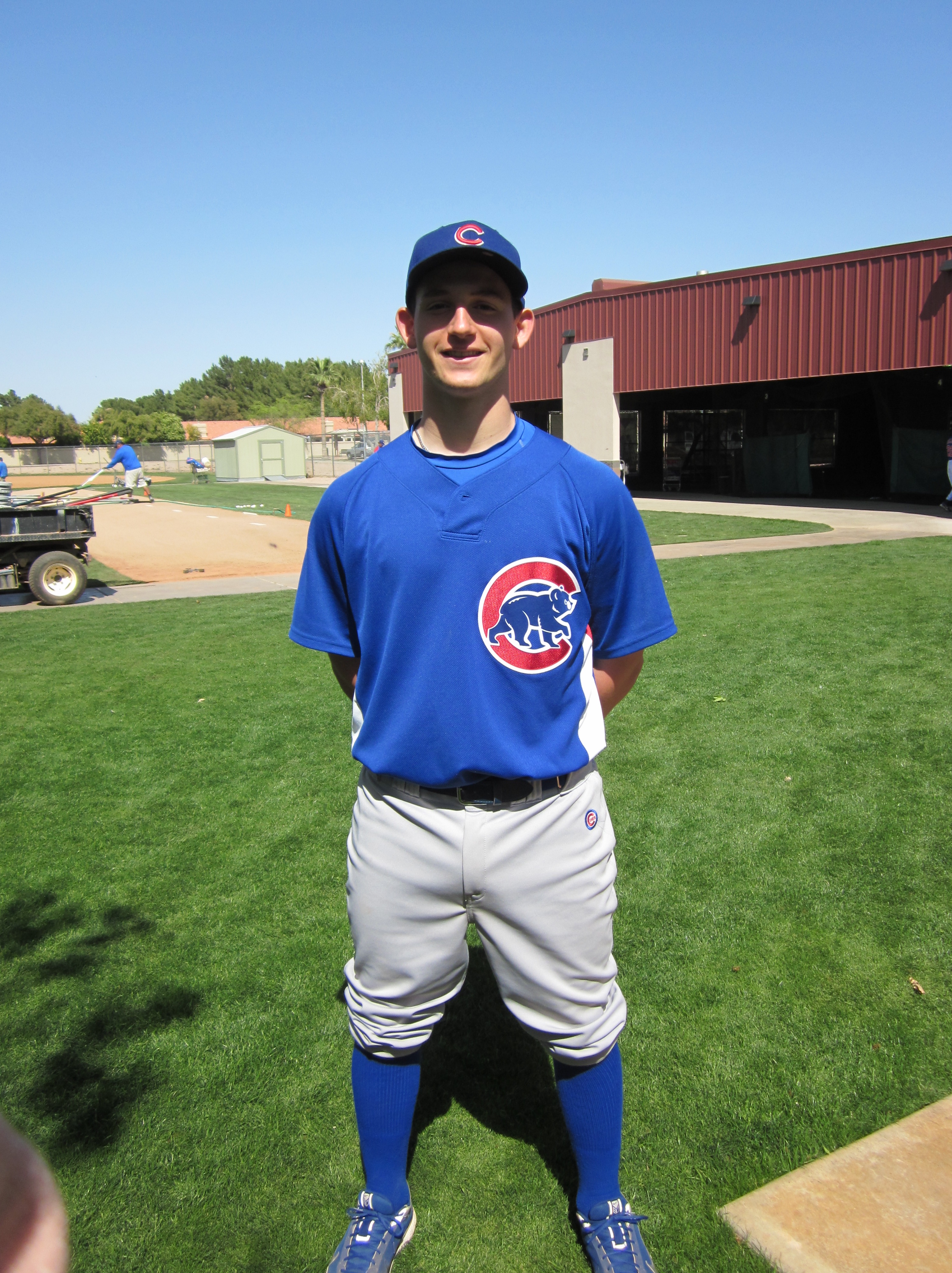
Chicago Cubs Italian catching prospect Alberto Mineo at 2012 Spring Training in Mesa, Arizona
Catcher Alberto Mineo calms his pitcher down and discusses strategy to get the next batter out.
Now ranked 58th behind #1 Cubbie Starling Castro in the Chicago Cubs Top Players Under 25 Organizational List, catcher Alberto Mineo has his eyes set on making it all the way to Wrigley. The defensive standout with excellent catch-and-throw skills said, “The part that I like most about being a catcher is throwing runners out at second.” The 5-foot-11, 170 pounder has strong hands and forearms which assist his receiving skills and defensive instincts. Blessed with outstanding arm strength and a quick ball transfer exchange, Mineo looks comfortable behind the plate. Exuding confidence as a first-rate catcher, opponents will need to exercise caution on the bases.
Left-handed hitting slugger Alberto Mineo
played for Team Italia at the 18 Under Junior World Championship in Thunder Bay, Canada

Holmberg watched Mineo develop into a natural talent from age 10 and knew early on he was special. Alberto was mature enough to accept feedback and listened to Holmberg and Maestri’s sound advice. He commented, “Both of them, they would always say to me ‘Work hard everyday because there is somebody somewhere else that is working hard to get to the Big Leagues’ and I started believing that I could sign with an American team.” Exercising good plate discipline, Mineo is a patient hitter who jumps on a pitcher’s mistake. “I always think as a hitter that I must wait for my pitch until I get two strikes,” Alberto explained. The left-handed hitting Mineo can demolish the ball with his technically sound swing, and once on base he can demonstrate great speed for a catcher.
Cubs prospect Alberto Mineo has speed on the bases and is very quick with his glove defensively.

After being signed by Bill Holmberg–who also is the pitching coach for the Italian National team and operates the Major League Baseball International European Academy at the Olympic Training Center in Tirrenia, Italy–Ronchi dei Legionari New Black Panthers catcher Alberto Mineo began his professional career in the month-long MLB Australian Academy Summer League, where he became friends with Los Angeles Angeles of Anaheim promising pitching prospect
Alex DaSilva–who later moved up the competitive ladder to play for the Australian Baseball League (ABL)
2012 Runner-Up Melbourne Aces. Mineo played well in Australia (.270 batting average, 1 HR) as did his Italian mentor Alex Maestri, who was so popular that he won the 2012 ABL Fan Choice Award.
Catcher Alberto Mineo has all the tools to follow fellow MLB International European Academy graduate Alex Liddi of the Seattle Mariners and become the second Italian-born player in the Big Leagues.

The ABL’s first Italian pitcher/catcher combo with Maestri and Mineo could become reality if Alberto has his way. Mineo commented, “I had a nice experience in Australia, where I met a lot of great players that I still remain in contact with via facebook. I would really like to play with Alex in the ABL.” The dynamic duo could possibly make their debut in the near future as members of the Italian National team under the guidance and direction of pitching coach Bill Holmberg and former Major League Baseball All-Star hitting coach Mike Piazza. Mineo has played as a member of several Italian National teams at various levels– including the 18 Under Junior World Championship in Thunder Bay, Canada. Italian National team catcher Francisco Cervelli of the New York Yankees now has Mineo as back-up.
Mineo said, “I don’t feel the pressure to be the next Italian to make it in MLB. I just want to have fun and enjoy this amazing experience that I’m living right now. But it would be really nice to play with Alex Liddi on the Italian National team…”
Lady Liberty of a Cubbie kind stands tall and proud in the city of Chicago.

Alberto had an exceptional Cubs 2011 Arizona Instructional League four-game campaign with a
.500 batting average, .556 on-base percentage and .500 slugging percentage. “The Cubs Instructional League was an awesome experience. I really like
to practice with Casey Kopitzke, the catching coordinator. I think he’s really good,” Mineo said.
“So far Cubs Spring Training is going very well. I like to work hard on the field and in the gym. It’s the best place you can go if you love this sport. A couple days ago Kerry Wood, Ryan Dempster and Rodrigo Lopez came to the complex to talk to us about the right way to get to the Big Leagues, but my favorite Cubs player is still Marlon Byrd. Inspired to play baseball at age five by his father and become a catcher three years later, Alberto followed American baseball religiously. “My favorite player has always been Derek Jeter. Now it is Joe Mauer. I really like how he plays, and I also think that he’s a very professional guy,” Mineo said.
Wrigley Field, National Historic Landmark and home of the Chicago Cubs since 1916, is the second oldest ballpark in the Major Leagues and the oldest standing National League ballpark.
Although there had been a long-time association of Italians being die-hard Cubbie fans,
the connection got even stronger when the late and great Hall of Fame Cubs broadcaster Harry Caray–whose real Italian last name was Carabina–signed on to the super station WGN Network in 1982. Although he passed on to baseball heaven in 1998, his legacy is still alive and well today as the legendary Caray’s Italian Steakhouse remains a Chicago restaurant icon. Now with Alberto Mineo in the Cubs organization, Italians in Chicago and beyond should rejoice and be thankful for their ancestors’ sacrifices years ago for the opportunities bestowed upon us in 2012. In the case of the young catching prospect Mineo–not only does he possess the natural skills necessary to become a professional ballplayer–
but he has the unconditional love and support of a dedicated team of international coaches, players, fans and family to be a true Italian baseball ambassador worldwide. Forza Italia!

Italian Cubbie fans of all shapes and sizes await Alberto Mineo's imminent arrival at Wrigley Field.

Grosseto set to experience MLB Italian Renaissance

Italian landmark, the Grosseto Cathedral
Tuscany is regarded as the true birthplace of the Italian Renaissance and home to many influential legends in the history of arts and science–including Petrarch, Dante, Botticelli, Michelangelo, Niccolo Machiavelli, Leonardo da Vinci, Galileo Galilei, Amerigo Vespucci, Luca Pacioli and Puccini. The province of Grosseto lies in southern Tuscany and possesses a rich artistic heritage as well as a small and fascinating center of medieval and Renaissance material and archeological sites that preserve Roman and Etruscan treasures.

Baseball in Italy got its first break in the late 19th century when two American naval ships, the USS Lancaster and the USS Guinnebaug, arrived in the Tuscan port of Livorno. The American servicemen held their first baseball game on January 23, 1884 at the Campo d’Osservazione AKA Observation Field. Enthusiastic crowds cheered on the players, and the games garnered enough interest in the media to include coverage by Livorno’s newspaper, La Gazzetta Livornese. With an eager international following in Italy, early baseball pioneer Albert Goodwill Spalding served as a ‘Goodwill’ ambassador of the sport and held tournaments in Florence, Naples, and Rome in 1889. In an effort to unite forces with the allied Italian Army during World War I, the American Army taught Italian soldiers the sport and held baseball games between the two armies.

Any inter-war following was soon decimated upon the rise of Benito Mussolini’s fascist regime, which banned baseball for its American influence. Baseball experienced an Italian Renaissance post-World War II under the leadership of Ottino and Graziani, when the Lega Italiana Softball and the Lega Italiana Baseball leagues were created. The first professional baseball game between two Italian teams was held on June 27, 1948 in front of 2000 fans at Giurati stadium in Milan. These two leagues would eventually evolve into what is known today as the Federazione Italiana Baseball Softball (FIBS), the governing body of baseball in Italy.

The Italian Baseball League (IBL) was founded in 1948 and is comprised of teams from Bologna, Parma, Nettuno, Rimini, Godo, Novara and Grosseto as well as the culturally Italian yet independent country San Marino. These eight teams compete in a 42-game season. Each team is allowed to have up to four non-Italian citizens, and each team must have at least six Italian citizen baseball players on the field at any given time. Former American players have found a second home in the IBL, including Jay Palma–the 1980 sixth-round draft pick of the New York Mets and current coach for the Novara United team.
Pitcher Mike Hartley believes Italy will rally round a winning team as manager of Grosseto.
Perhaps the most interesting catch for the Italian Baseball League is the recently signed 50-year-old Grosseto manager Mike Hartley. The former San Diego Grossmont College ace and Major League pitcher was in his late twenties when he made his MLB debut with the Los Angeles Dodgers on September 10, 1989 and went on to play for the Phillies, Twins, Red Sox and Orioles. In his six Major League seasons, he made 202 appearances and complied a 19-13 record with a 3.70 ERA. Hartley also pitched successfully internationally in Japan for the Chiba Lotte Marines in 1994 and for Nettuno (Serie A1) in Italy in 1998. His coaching skills were just as impressive as he led the German club Heidenheim Heidekoepfe to a national championship in 2009 and the European Champions Cup Finals in 2010. In addition, Hartley coached the Croatian national team back to the 2011 European Championship (A Pool). The new Grosseto manager commented, “At higher levels, I coach to win and I hate to lose. At lower levels, the focus is on development. In short, work hard, believe in yourself and respect the game of baseball.”
Grosseto will benefit with the addition of former MLB pitcher Mike Smith on the mound and as pitching coach.

Michael Anthony Smith was signed by the Toronto Blue Jays in the 5th round of the 2000 amateur draft at the end of his college career at the University of Richmond. He pitched in 14 games for the Blue Jays in 2002 including six starts. The Minnesota Twins acquired Smith from the Philadelphia Phillies during the 2005-2006 offseason, but he was not called up to the Major Leagues until August 2, 2006. Smith played for the 2009 Brother Elephants team in Taiwan’s Chinese Professional Baseball League (CPBL).
He led the 2010 Brockton Rox of the Can-Am League in wins (12) and ERA (2.87) in 125.1 innings. He was also named to the 2010 Cam-Am All-Star Team, along with Rox teammate and newly signed Grosseto catcher Chris Grossman. Smith went 8-5 with a 3.99 ERA in 94.2 innings during his 2011 Brockton Rox pitching campaign. The 34-year-old MLB veteran will prove to be a valuable asset for the Tuscan squad both as regular starting pitcher as well as mentor and pitching coach for the talented roster of Grosseto hurlers.
Having played for the St. Louis Cardinals organization, Grosseto catcher Chris Grossman is a huge boost to any pitcher's confidence and mental stamina.
Standing at 6-foot-5 and weighing 235 pounds, Grosseto catcher Chris Grossman will intimidate any hitter approaching the batter’s box with his mere physical presence. Having played for the last three-plus seasons for the Brockton Rox, the 31-year-old former Cal Berkeley star is a pitcher’s best friend for having a brilliant mind and an innate sense for knowing how to call a game behind the dish. Former Brockton pitcher and pitching coach (and new Grosetto pitcher and pitching coach) Mike Smith said, “It definitely makes things easier having him catch you. He knows the hitters that have been in the league. He knows how to pitch them and get them out. He is pretty smart about setting up hitters. From a pitching standpoint, you don’t have to worry about what pitch you have to throw. He knows how to set them up, and that is one less thing that you have to worry about. Chris also has a great arm. You know if you can’t hold the guy on, he is able to throw him out. He is always willing to go out there no matter how he feels. He wants to play every day.” The durable catcher hit .296 in 2009 and .313 in 2010 with a career-high 57 RBI, which earned him spot on the Can-Am League All-Star team. A reliable contact hitter who can choose his spots to hit for power,
Chris Grossman
Grossman can be a manager’s secret weapon strategically with men on base for his excellent hit-and-run potential. Having hit over .300 in the first half of the 2011 season, Chris led in the team in walks (36) and stole 17 bases in 93 games. Former MLB player and current Brockton Rox manager Bill Buckner said, “I have been happy with the way that Chris has played. He is a smart player and base runner.” Having tasted the life of a pro Minor League player while a member of the St. Louis Cardinals organization, Grossman would like to get another opportunity to break into the Big Leagues. He echoed, “I am still hoping to get the chance. Meanwhile, I am enjoying what I am doing and being around guys that enjoy playing the game. It is a lot of fun.”
Switch-hitting shortstop Jay Pecci adds spark to a Grosseto team charged with MLB experience.

35-year-old switch-hitting shortstop Jay Pecci has wanted to play in Italy for nearly a decade when he tried out in January of 2005 for the Italian national team that played in the inaugural World Baseball Classic. Although he had hit a home run and a single
in his final scrimmage game, Pecci was cut from the Italian team before the international competition.
Pecci recalled, “It was real close. I felt like I was on
the bubble.” The versatile athlete has always had a knack for high drama going back to college when
Pecci walked on to the Stanford baseball team and impressed enough to become a everyday starter.
A 1998 All-Conference player, Pecci led Stanford to
the 1995 and 1997 College World Series and boasted one of the all-time best College World Series batting averages after going 10-for-17 (.588). At Stanford
he played with MLB success stories Jody Gerut,
Joe Borchard, Chad Hutchinson and eventual Gary SouthShore RailCats teammate Tony Cogan.
Gary SouthShore RailCats All-time leader in hits and at bats, Jay Pecci was the 2008 Northern League
All-Star Game MVP and ranks in the top five in nearly every offensive category in Northern League history.
Originally selected by the Oakland Athletics in the 11th round of the 1998 Major League Entry Draft out of Stanford, Pecci played four seasons in the Oakland A’s system–including a stint at Double-A Midland in 2001. The Novato, California native was claimed the following season by the Seattle Mariners in the Minor League phase of the Rule 5 Draft. He advanced all the way to Triple-A Tacoma before the end of the 2003 season. Pecci finished 2003 as a San Francisco Giants farmhand and spent the entire 2004 season with the Double-A Norwich Navigators in the Eastern League.
Grosseto shortstop Jay Pecci demostrates his acrobatics and athleticism everyday on the field.

Pecci came close to early retirement in 2004 when he fractured his skull and broke his jaw colliding with a Norwich teammate while chasing a flyball in Trenton, New Jersey. Having his jaw wired shut for a month, Pecci was determined in making a comeback. He remarked, “I thought at that point, I wouldn’t let that be my last game in baseball.” In his 15-year pro career, nothing came close to his personal best 2008 campaign with the Indy League Gary SouthSide RailCats. Pecci set the RailCats single-season hits record (115) that season and hit a career-best .317 batting average and .474 slugging percentage along with 26 doubles and nine home runs. He homered in the Northern League All-Star Game in 2008 and earned Most Valuable Player honors after hitting the game-winning home run in the ninth inning of the decisive Game Four of the Northern League Semifinals. Following the 2008 season, Pecci earned his first Post-Season All-Star commendation from the league as the circuit’s top shortstop. An agile and seasoned veteran ballplayer with well over 1000 games of experience, Jay Pecci will give Grosseto a competitive edge in the IBL.
A proven expert in teaching the fundamentals of pitching, hitting, fielding, base running, and game strategy, Grosseto hitting coach Jefferson Infante draws from his experience as a minor leaguer and assistant scout for the Kansas City Royals as well as collegiate coach.
Grosseto hitting coach Jefferson Infante played baseball at Dewitt Clinton High School in the Bronx, where he earned All-City honors and played the all-star senior game at Yankee Stadium. After high school, Jeff played in the Dominican Republic in a recruiting league against professional teams before accepting an athletic scholarship to play at Louisberg College and leading his squad to the National Junior College Athletic Association World Series. MLB scouts took notice of Infante while playing for Ramapo College, where he was named to the All-Conference team and earned All-American Honors. Jeff was drafted as a catcher by the Kansas City Royals in 2004. He went on to play for three years in the Royals farm system for Idaho Falls, and later signed an Indy League contract with the St. Joseph’s Black Snakes in Missouri. Although Jeff’s professional baseball playing career would come to an abrupt ending when he sustained a shoulder injury, he remained in the game as an invaluable coach to collegiate players. As the assistant baseball coach at Baruch College in Manhattan, Infante’s ability to convey information to players and make the game simpler has paid off as Baruch has made three championship appearances and won the 2009 championship title.
Grosseto hitting coach Jeff Infante is the nephew of New York Yankees bench coach Tony Pena (shown here standing to the right of Yankees manager Joe Girardi in the Yankee dugout).
With over 10 years of baseball instructional experience, Infante has been sought after to serve as personal training coach for some of New York’s finest. While offering private baseball instruction for the Cooperstown Athletics Sports Performance Training Facility in Manhattan, five of Jeff’s private alums have gone onto playing professional baseball within the last few years. Coupled with the injection of manager Mike Hartley and pitching coach Mike Smith, Infante and the new blood on Grosseto’s coaching staff now have the ability to positively impact the team’s bright future ahead. Finishing 13 games behind 2011 IBL Champion San Marino last season, the newly revamped and much improved Grosseto squad will be a top contender in Europe as a result of the 2012 MLB Italian Renaissance in Tuscany.

Italian coaching, cuisine, and culture make Italy world-class for MLB hopefuls and European scouts

Baseball in Italy received a Major League surprise last month when an unannounced MLB manager graced the 436 registered attendees with his presence at the Italian Coaches Convention Dinner at Castelnuovo de Garda (Verona). Tampa Bay manager Joe Maddon, a first-generation Italian-American whose father was born in Italy, was overjoyed by the warm reception received at the gala dinner which pays tribute to the coaches that make a difference in the internationalization of baseball in Italy. Madden exclaimed, “I feel at home here, because in the small city in Pennsylvania where I live there is a big Italian community.”

Tampa Bay Rays skipper Joe Maddon embraces his Italian roots.

His grandparents original surname was Madonnini, but after emigrating from the Region of Abruzzo to America
their last name was shortened. Maddon continued, “It is always a pleasure for me to visit Italy. I am proud of my heritage.” The Rays were very well represented in Italy as Maddon brought along members of his coaching staff to lead instructional clinics for the delegation of Europe’s best coaches.

Italian National team coach Mike Piazza (shown here as coach of Team U.S.A.) and Seattle Mariners Alex Liddi (shown here playing for Team World) in the 2011 All-Star Futures Game
Alex Liddi became Italy’s first successful export to MLB and the Seattle Mariners on September 7, 2011.

Riccardo Fraccari, president of the Federation of Italian Baseball and Softball (FIBS), spoke of Alex Liddi becoming the first Italian-born and developed player to play Major League Baseball and its great significance to baseball in Italy. He said, “Alex’s story is really the tip of the iceberg, and we really need to take into account the daily work of the coaches in Italy who are the base of the movement.” Liddi was signed by the Seattle Mariners after being selected to attend the inaugural MLB International European Academy in 2005 and in September 2011 became the first graduate of the MLB International European Academy to play in the Major Leagues.

Italian National team coach Bill Holmberg encourages New York Yankee catcher Francisco Cervelli sitting next to Alex Liddi during the World Baseball Classic.
Like a fine Italian wine, MLB / FIBS Italian Academy Director and Field Coordinator Bill Holmberg has been getting better with age by improving the quality of Italian baseball and coaching Europe’s finest players since landing in Italy in 1989.

Bill Holmberg is one such coach that FIBS President Fraccari was referring to in his compelling speech. Holmberg has been living under the radar since 1989, when he came to Italy to serve as manager and technical director of the Godo baseball club for 12 years. He later became the pitching coach for San Marino as well as the Italian Junior and Senior National teams. Coach Holmberg was named Director and Field Coordinator of the MLB Italian Academy nearly a decade ago and has been instrumental in signing the best homegrown talent as a former international scout for the Chicago Cubs. Everyday he tirelessly trains the cream of the crop at an elite sports academy in the quaint beach community of Tirrenia near the Italian cultural iconic city of Pisa. Alessandro Maestri, the former Chicago Cub minor leaguer and recent Brisbane Bandit / 2012 Australian Baseball League (ABL) Fan Favorite Award recipient, was signed by Holmerg in 2006, when he became the first Italian-born pitcher ever signed by a Major League Baseball team.

In 2006 Chicago Cub European Scout Bill Holmberg signed Cesena’s Alessandro Maestri,
the first Italian-born pitcher signed to a MLB contract. (Scott Powick / SMP Images / ABL)
Italian National team pitcher Alessandro Maestri showed the world that he could compete against baseball’s elite in the World Baseball Classic.

Chicago Cub scout Holmberg knew early on that Alessandro was something special when he saw the young Italian play baseball for the first time. Holmberg said, “Alex can do whatever he wants to. He’s got the temperament and composure. He’s hit 95 mph, and his slider is at 86 or 87. He competes as hard as anyone out there.” Maestri still to this day works under the guidance and direction of Coach Holmberg. The Cesena, Italy
native made World Baseball Classic headlines in 2006 when his first offering to the Dominican Republic’s Moises Alou was rocketed out of the park for a home run. Despite the rocky start, he would not allow another earned run in his 4.2 combined innings in both the 2006 and 2009 World Baseball Classics.

Alessandro Maestri as a Cub minor leaguer

Maestri demonstrated great promise in the Midwest and Florida State leagues as a two-time All-Star. As as starter and relief pitcher in the Chicago Cubs minor league system for five seasons, he racked up a 24-17 record with a 3.75 ERA and 19 saves. The right hand throwing pitcher put away hitters with his evasive slider–which was once voted as the best slider thrown by anyone in the entire franchise. Maestri made his preseason MLB debut against the Oakland A’s during Cubs Spring Training in Phoenix on April 1, 2009 when Cub manager Lou Pinella summoned him out of the bullpen. Maestri struck out Orlando Cabrera and then he sized up against slugger Jason Giambi–who was lucky to squeak out a single through the hole. MLB All-Star

Closer Alessandro Maestri was not afraid to show his winning Italian spirit by striking out Jayson Nix to beat Team U.S.A. for the first time in 21 years on November 9, 2007 during the 2007 Baseball World Cup.

Matt Holliday was caught looking at a third strike slider for the second out, and Eric Chavez went down swinging at his Italian slider in the dirt to end Maestri’s almost perfect outing. Nearly three years later, Alessandro is still as dominant as ever as witnessed by his numbers in the most recent 2011-12 ABL season. As the workhorse and ace of the Brisbane Bandit pitching staff, Maestri led his team in wins (4) and proved to be one of the best pitchers in the league. He finished third in the ABL in innings pitched (63.2) and in strikeouts (53), fourth in the ABL in WHIP (1.16) and sixth in the ABL in ERA (3.25). In Round Eight of the regular season, he earned the Pitcher of the Week award after pitching a stellar complete game two-hitter against the Canberra Cavalry. Based on his most recent form, Maestri is worthy of a second look by international scouts to make his long-awaited MLB debut. He will always be a competitor who lives on the edge to bail his team out of pressure situations.

MLB / FIBS Academy Director
Bill Holmberg is committed to producing Italy’s finest athletes.

Of the frequent MLB-sponsored instructional clinics throughout Europe, none has had the impact of MLB / FIBS Academy host Coach Holmberg’s annual three and a half week summer invitational Major League Baseball International European Academy at the Olympic Training Center in Tirrenia. Designed to provide promising junior teenage players with both the environment and the instruction to reach their full potential, the European Academy brings together around 50 or more of the brightest young playing talent in Europe and Africa with the best in Major League coaching and instruction. The Academy seeks to provide a path for elite players from this region to improve their skills in preparation for the rigors of professional and international baseball. In addition to helping these bright young stars develop their skills, the Academy enables MLB Clubs to scout the best future talent. Holmberg explained, “It’s a pretty good place to see all the best players in Europe at one time. We’ve had between 18 and 20 scouts that have watched the games this past year.”
The Tirrenia baseball camp, which began in 2005, has much to do with MLB’s accelerated rate of signing the European elite to professional contracts based on the fact that the numbers have more than tripled from 2005 (2.33 average) to 2011 (9.0 average). So far 49 Academy graduates from ten countries (45 players from Europe and 4 players from Africa) have signed professional contracts with 19 different Major League Baseball franchises. Holmberg commented, “We’re not the Dominican Republic yet, but I think we might be sneaking up on Australia.”

Heat fireman Jacob Clem comes to the rescue of ABL Champ Perth and flushes Melbourne Aces

Heat pitcher Jacob Clem deserved MVP status after surrendering only two earned runs in over 15 innings of work--including the decisive game three of the 2012 ABL Championship--against the Melbourne Aces. (Theron Kirkman /SMP Images)
Nostradamus could have predicted the end of the Melbourne Aces season when Perth sidearm specialist Jacob Clem went head-to-head against fellow American and MLB veteran Jason Hirsh on November 13th. For nine innings the Aces were blindsided and shell shocked by the six-foot-four Burlington, Washington native, who threw a complete game in which he allowed only six hits and one earned run. Up until the final week of the regular ABL season, Clem (2-1, 3.91 ERA) was used sparingly when he was needed most. Former MLB World Series reliever and current Perth Heat Pitching Coach Graeme Lloyd knew exactly what he was doing when Clem was inserted in the ninth inning of a tied game against the Sydney Blue Sox on January 20th. Not only would this outing serve as a final tune-up entering the postseason for Clem, but also reestablish his critical role as the defending champion Heat’s saving grace in battles of long relief. He pitched seven stellar innings on the mound and gave up just two hits. Clem eventually earned the win after 2011-12 ABL MVP Tim Kennelly hit a walk-off home run in the 15th inning.
In his final home start for the 2011 Washington Huskies, pitcher Jacob Clem fired a six-hit
shutout over the American collegiate powerhouse and eighth ranked Arizona State Sun Devils.
Perth Heat's Jacob Clem looks up at a ball hit in the ABL Championship. (Theron Kirkman/SMP Images)
History would repeat itself in the Heat’s most critical moment of the season in the deciding game three
of the Australian Baseball League Championship Series against the Melbourne Aces last Sunday at
Perth’s Babagallo Ballpark. At the end of the day, two members of last season’s Washington Husky baseball senior class–Geoff Brown and Jacob Clem—along with Heat relievers Brenden Wise and Jack Frawley would ultimately determine if the ABL defending champions would repeat in the final do-or-die contest that would last 13 innings and turn out to be an enduring manager’s no holds barred strategic tug-of-war chess match.

Senior Jacob Clem made the transition from reliever to starter and pitched over 70 innings in 17 appearances with 10 starts and two complete game shutouts.
The irony of Jacob Clem in a Perth Heat uniform is still hard to believe. It took an injury to Heat pitcher Ben Moore, last year’s ABL Championship Series MVP and 2011-12 Round One ABL Pitcher of the Week, for Rockingham Rams import Jacob Clem–fresh out of college at the University of Washington–to be called up to the Heat as Moore’s replacement. Who would have guessed that last year’s playoff MVP would be substituted by what many insiders consider to be this year’s ABL Championship Series Most Valuable Performance by 24-year-old Jacob Clem? In the final and decisive game three, it appeared on paper that Perth starting pitcher Geoff Brown–who also happens to be the Huskies’ all-time pitching appearances leader–with his perfect 5-0 record and 1.88 ERA would dominate the pesky Melbourne Aces by himself. However, Brown was chased out of the game only after 1.2 innings. Jacob Clem came firing from the bullpen, despite having little time to warm up and bail his University of Washington Husky college buddy out of a jam and keep the Heat alive.
The internationally televised Australian Baseball League Championship Series was a perfect MLB showcase for Perth Heat saviour Jacob Clem.
(Scott Powick / SMP Images / ABL)

Once again, the tried and tested Clem–who had previously attacked the Aces’ Achilles heel in a complete game victory in November–would rise to the occasion and successfully hold his vulnerable opponent for 6.1 innings while only allowing one earned run and four hits. Coupled with another five innings of shutout pitching by Heat relievers Brenden Wise and Jack Frawley, the Mount Vernon-born Jacob Clem made the difference between Perth keeping and relinquishing the throne of the ABL Championship. The Heat would prevail at the end of a tightly contested
game that went on for 13 pressure-packed innings until James McOwen scored from third on a wild pitch.
MLB pitcher Jamie Moyer and Bellingham Bells pitching coach Jim Clem offer sound advice.
Son of Jim Clem—who was the longtime baseball coach for Burlington-Edison High School and is currently the pitching coach for the West Coast League Summer Collegiate Bellingham Bells baseball squad–and younger brother of Zach Clem–who was a two-time All-Pac-10 outfielder playing at the University of Washington for four years from 2003-2006 with the likes of Tim Lincecum, Brent Lillebridge and Sean White as well as a minor leaguer in the Milwaukee Brewers franchise before a series of concussions ended his career,
Future Hall of Famer Ken Griffey Jr. playing for the Bellingham Mariners.

Jacob was surrounded by baseball fever all of his life. While playing for his father at Burlington-Edison as a high school senior, he was named the Skagit Valley Herald’s 2006 player of the year as well as to the first-team Washington All-State and All-Northwest League after a respectable 7-2 record with a 1.22 ERA and three saves. In 63 innings of work, Clem struck out 70 batters. He was equally impressive at the plate with a .354 batting average, five home runs and 26 RBI. While still in high school, Jacob led his summer league Burlington Sox to the league, district, state and regional titles. He was selected as the MVP of the state American Legion tournament and the American Legion Division I Player of the Year after going 10-1 on the mound, while batting .421 with 22 doubles, five homers and 43 RBI. Clem redshirted his first season at the University of Washington and played summer ball for the Bellingham Bells, a city deeply entrenched in a long baseball tradition along with an eager and loyal following in the Pacific Northwest.
From 1973 through 1976, the Bellingham team was an affiliate for the Los Angeles Dodgers, and later from 1977 through 1994 became the minor league affiliate of the Seattle Mariners. During this time, the squad was called the Bellingham Mariners, or “Baby M’s.” Perhaps the franchise’s most notable claim to fame came in 1987 when Ken Griffey Jr. hit his first professional home run wearing a Bellingham uniform. Other names that have come through Bellingham include Edgar Martinez, Omar Vizquel, Raul Ibanez, Dave Valle, Bud Black, Derek Lowe, Joe Nathan, Russ Ortiz, Mike Scioscia, Rick Sutcliffe and Mark Langston. Bellingham was the San Francisco Giants affiliate in 1995 and 1996 before eventually becoming the permanent home to the West Coast League Summer Collegiate Bellingham Bells with strong ties to Major Leaguers Jamie Moyer and Dave Valle. While playing for the University of Washington, Jacob Clem spent his summers in California with the Palm Springs Power and in Oregon with the Bend Elks. After a season-ending injury in 2008, the right-handed pitcher came back strong during his 2009 campaign. He was named Academic All-Pac-10 Honorable Mention after not allowing an earned run in seven of nine pitching appearances. Clem took it to the next level during his junior year by making 30 relief appearances and earning All-Pac-10 Honorable Mention as a result of stifling Pac-10 opponents to a .211 batting average (second-lowest in the league) and posting a 3.14 ERA (fourth-best in the conference). As a senior, he demonstrated outstanding command by walking only 15 while striking out 45 batters (averaging 5.42 strike outs per nine innings pitched). Jacob graduated in 2011 with a Husky career 3.86 ERA and an 8-10 record. Clem recently signed a professional baseball contract with the Independent Frontier League Traverse City Beach Bums. Director of Baseball Operations Jason Wuerfel is optimistic that his new pitcher will make a major impact in the East Division of the Frontier League. He said, “Clem is a big, strong, versatile righty that could help us in a lot of different roles. He was one of the Pac-10’s top closers his junior season, but also excelled as a starting pitcher his senior year. He went down to Australia this off-season and pitched at their highest level of baseball, facing a lot of current Double-A and Triple-A prospects. With that experience under his belt, he has the chance to be one of the top rookie pitchers…”
As a former Minor League pitcher for the New York Mets and Houston Astros organization manager, Beach Bum pitching coach and manager Gregg Langbehn realizes the importance of a strong pitching staff more than most. He has been working particularly hard this off-season with Director of Baseball Operations Jason Wuerfel to sign as many pitchers for spring camp as possible. He may have just found his diamond in the rough with the signing of Jacob Clem. Despite Nostradamus’ dim prediction for 2012, the Washington state native and Perth Heat unheralded hero has aligned himself in a very good position to get the recognition he so wholeheartedly deserves with a future MLB contract.