Team Italy is thrown a curveball in the 2013 WBC

Although Italian Prime Minister Monti was promised by U.S President Obama that America would help Italy in times of need, the World Baseball Classic scheduling committee has not offered Team Italy any concessions with their unorthodox and unreasonable schedule which no other team in the competition must undergo.
Although ex-Italian Prime Minister Monti was promised by U.S President Obama that America would help Italy in times of need, the World Baseball Classic scheduling committee has not offered Team Italy any concessions with their unorthodox and unreasonable schedule which no other country in the competition must undergo.
Despite the defending European Champs having traveled the greatest distance to compete in Pool D of the World Baseball Classic (which begins Thursday, March 7th and includes perennial favorite USA, Mexico and Canada) in addition to being the only team required to tax its arsenal of talented pitchers after being scheduled to play five games in five days beginning Tuesday with a pre-WBC exhibition warm-up against American League West Division Champion Oakland A’s, resilient Team Italy will be walking a tightrope in light of reduced WBC pitch limits (65 in the first round, 80 in the second round, and 95 in the semi-finals and finals) to overcome the adverse working conditions reminiscent to the plight of their ancestral forefathers who emigrated to America at the end of the 19th century. Although Team Italy’s exhibition games against the Athletics on Tuesday and Mike Scioscia’s Los Angeles Angels of Anaheim on Wednesday will not count in the tournament’s stringent pitch limits, it will have serious repercussions
on the arms of the Italian pitching staff. ita_uni_300x300

Italy manager Marco Mazzieri and pitching coach
Bill Holmberg sat down prior to a scrimmage against
a team of spirited Seattle Mariners prospects at the
Peoria Sports Complex in Arizona and provided a very
candid snapshot of their team’s compromised chances
of beating the odds and advancing to the second round
of the highly-touted competition in the following interview.

Team Italy manager Marco Mazzieri has gained the respect of the European baseball community and the Italian people--especially his dedicated players and coaching staff who share in his belief of hard work and fellowship.
Team Italy manager Marco Mazzieri has gained the respect of the European baseball community as well as the Italian people–especially his dedicated players and coaching staff who share in his belief of hard work and fellowship. (Photo courtesy of FIBS)
Team Italy pitching coach and Italian Baseball Academy Director Bill Holmberg
Italy pitching coach and Italian MLB Academy Director Bill Holmberg possesses one of the
most intelligent baseball minds in the game.

Roberto: Is Team Italy ready to battle Mexico, Canada and USA in the 2013 World Baseball Classic?
Marco Mazzieri: We’ll be ready when the games start. We’re right now just trying to tune up all the guys and waiting for our MLB players to come down and join us. We know they’ll all be excited to go. So we’re pretty excited about this.
Bill Holmberg: I like our team a lot.
I think we’re going to have a very solid pitching staff, and our position players
of course are very good. I think we have a very, very good chance to go to the next round.
Roberto: Having to listen to a lot of disrespect from the media who consider Italy a novelty and a doormat for other teams, do you enjoy being the underdog and having to endure constant scrutiny?
Marco Mazzieri: I think it’s our destiny to be the underdogs all the time. We were the underdogs four years ago against Team Canada, and we beat them. The next thing we know we didn’t have hotel rooms because nobody expected us to win. We had to move to another hotel. I mean last September we were supposed to lose against the Dutch in the European Championship. They were celebrating the 100th anniversary of their federation and it was like 35 years that we had not beat them on their own soil. And we beat them! So I think we got used to being the underdog, but we don’t complain. We’re going to use all of this to get the guys even more excited and more ready to go. I think they will do a good job.
We expect everybody to have no fear.

Team Italy's motto for the 2013 WBC
Team Italy’s motto for the 2013 WBC
“We can beat anybody. We beat the U.S.
already once in 2007 during the World Cup
in Chinese Taipei. They had Evan Longoria, Colby Ramus, Andy LaRoche, and Brian
Bixler. They had a great pitching staff.
They only lost that one game, but we
were the team that beat them. Again,
we respect everybody a lot, but there’s
going to be no fear at all.”

2013 WORLD BASEBALL CLASSIC
ITALY MANAGER MARCO MAZZIERI
Team Italy ace Alex Maestri was a fan favorite in 2011-12 while pitching in the Australian Baseball League.
Former Chicago Cubs minor leaguer and current Team Italy ace Alex Maestri
was a fan favorite in 2011-12 while pitching in the Australian Baseball League.

Roberto: Former Chicago Cubs minor league pitcher Alessandro Maestri was named as the recipient of the 2011 Australian Baseball League Fan Choice Award after decimating hitters with his wicked slider pitching for the Brisbane Bandits. He has since been having a strong campaign for Japan’s Orix Buffaloes, the same team that recently signed former St. Louis Cardinals pitcher Brandon Dickson as well as former outfielder/catcher for the Cleveland Indians/New York Mets/2009 Team Italy Vinny Rottino. Any words on Alex?
Bill Holmberg: Alex is a really, really good pitcher. And you know at times he’s great.
He’s shown in the past that he has been able to throw well for us, and we’re looking
forward to having him on the mound real soon during the WBC series.

Roberto: Former Baltimore Orioles prospect John Mariotti has been stellar for the defending Can-Am League Champion Québec Capitales for the past two years. How did you find this outstanding Canadian Italian pitcher?
Bill Holmberg: John has been around and spoke with Marco a couple years ago. He had been talking with the Italian Baseball Federation and Marco for a few years so we’re very lucky to have John. John is a sinkerball pitcher that really helped us at the European Championship, and I imagine he’s going to help us even more during the World Baseball Classic.

Roberto: Team Italy has the luxury of having one of MLB’s premier closers, Pittsburgh Pirates’ Jason Grilli, ready and willing to do what he does best in shutting teams down with the lead late in any game. You must feel good about that?
Bill Holmberg: I’m very happy to have Jason and to be honest with you I’m happy to
have every one of our pitchers. I believe all of them can be situational where they come in and close the door on any team we are going to play. Of course, you are going to have to execute. We’re going to try to scout as well as we can and give them the best possible plan before the game. From there, all they have to do is execute.

Roberto: Matt Torra, a former 2005 first-round draft by the Arizona Diamondbacks and current Washington Nationals’ MLB hopeful, is also a very capable pitcher for Team Italy.
Bill Holmberg: Matt has thrown well. We’ve had one live batting practice session,
and he’s going to be throwing today. I was extremely happy the way he threw the BP.
He throws strikes. He keeps the ball down. He’s a smart kid. He knows how to pitch.

Roberto: The ambidextrous Pat Venditte from the New York Yankees organization is a pitching staff’s best friend and a hitter’s worst nightmare. Although recent surgery on his right shoulder labrum has limited him to throwing as a lefty for the World Baseball Classic,
do you think he will contribute as Team Italy’s secret weapon?
Bill Holmberg: Pat threw a short side, and I think he’s going to be extremely nasty. I’ve seen him on youtube, and if that is the same way he throws on the mound during a game then we’re pretty lucky.

Roberto: Any thoughts on San Francisco Giants’ Triple-A catcher Tyler LaTorre and Minnesota Twin’s backstop Drew Buter?
Marco Mazzieri: We’re very happy with our catchers as well. Tyler LaTorre has been
with us in the European Championship. He did a terrific job handling the pitching staff.
Drew Butera is so excited. I talked with him last night, and he can’t wait to be here.
He’s going to give us a pretty experienced catcher. With the pitchers that we have,
we are looking forward to it.

Roberto: Tyler LaTorre has caught San Francisco Giants’ Ryan Vogelsong and Sergio Romo. Vogey is reportedly scheduled to pitch for Team USA against Italy, and Romo will be the closer for Team Mexico. Did you know that you have a built-in scouting report on your roster?
Bill Holmberg: I didn’t know that. We’re getting information from everywhere. We’re getting information from guys that are playing in the Mexican Leagues. Of course, John Mariotti is Canadian so we’re trying to get as much information as we possibly can.
We’ll take it from anywhere. So Roberto if you have some information to give us, I’d be happy to accept it.
Roberto: If you put a Team Italia jersey on my back, I will happily sit in the dugout and scout on your behalf (laughter)…

Roberto: Los Angeles Angels of Anaheim prospect Alexander Burkard is a reserve pitcher from Caracas, Venezuela. He is in your back pocket if you need him in a pinch.
Bill Holmberg: He’s a great kid, a terrific kid. He’s six-foot-eight, just a terrific kid. He threw the other day. He didn’t do as well as we’d hoped, but I’m sure with a little bit of work in the bullpen as we did today he’s going to be a lot better next time out.
Roberto: Bill, how does it feel being a contributing member of this eclectic Team Italy coaching staff?
Bill Holmberg: I love the guys who are on this staff. To be honest with you, I’m very privileged to be on Marco’s staff. We have a great group of guys, and we just get along very well. It’s tremendous to come out here. This is not work. This is coming out here and having a good time. We laugh a little bit. We work real hard, and at the end of the day we’re happy with what we do.

Roberto: When you heard that Chicago Cubs’ Anthony Rizzo was playing for Team Italy,
you must have felt like your chances to advance in the WBC had increased.
Marco Mazzieri: That was good because at one point it looked like the USA team was going to call him up. So we were kind of afraid that we couldn’t get him. We’re happy to have him. We’re looking forward to it. But we have another guy that we really like a lot–Chris Colabello. He’s in Big League camp with the Twins along with Alex Liddi (Mariners) and Chris Denorfia (Padres). I think we have a pretty good heart of the lineup.

Roberto: Chris Colabello has been shadowing Minnesota Twins four-time all-star first baseman Justin Morneau and tearing the leather off the ball in Spring Training. His father Lou played for Italy in the 1984 Olympics.
Bill Holmberg: I’ve known Chris for maybe 20 years because he used to come over to Italy with his dad. His dad pitched in the Italian Baseball League. His mom is Italian. Chris is just
a great kid. He loves to come over and play for us. We enjoy having him. We like him. He’s
a very energetic, tremendous kid.

Roberto: Los Angeles Dodgers second baseman Nick Punto has a World Series ring after having played under Tony La Russa for the St. Louis Cardinals. How has his energy helped Team Italy?
Marco Mazzieri: Nick is a terrific guy. We met him four years ago for the World Baseball Classic. We didn’t know him. We’ve been in touch with him throughout the years, and he can’t wait to be here as well. Again, here’s a guy with tremendous experience. A big clubhouse guy trying to keep everybody up and ready. But overall honestly I don’t like to talk much about individual single players, single names. I think we have tremendous chemistry in the clubhouse. That’s what we’re about. It’s important. As we showed four years ago, these guys played as a team from day one. It’s not going to be like an all-star team where everybody is kind of like showcasing themselves. This is going to be about winning ballgames and be together and doing the little things. We’re going to do that.

Roberto: Any feedback on the lesser-known Milwaukee Brewers/Italy shortstop Jeff Bianchi?
Bill Holmberg: I don’t know him as well as Marco does. I know he’s in the Big Leagues
and he can’t be that bad. So hopefully he’ll come to play. I know he was a high draft choice with the Royals. We also have another infielder who played with us in Holland during the European Championship–Tony Granato. He’s extremely solid, a great team player guy.
He plays his ass off every time he goes out.
Roberto: Anthony Granato is the heart and soul of Team Italy. He represents La Squadra Azzurri’s “Never Say Die” approach to the game.

Marco Mazzieri: Very much so. I think he really made a difference on our team since he joined us three years ago. As a matter of fact, we won two European Championships. We went to Chinese Taipei in 2010 and claimed the Bronze Medal. And he really made a huge difference for this team. Not only for his play, but he is a leader out on the field. And he shows it. He’s not the type of guy who’s going to talk a lot. He’s going to show it by example and lead by example in the way he goes about his business.

Roberto: Italians are gaining massive respect in Europe as witnessed by Team Spain’s decision to hire Italian manager Mauro Mazzotti. Could you imagine seeing two Italian managed European teams playing head-to-head after advancing to the second round?
Marco Mazzieri: It would be nice, but let me tell you that we’re thinking about ourselves right now. It might be a little selfish. If they make it, we’re happy for them. But at this time we’re just mission focused, and we want to be the team that advances for sure. We’re going to do everything possible to be there.

Roberto: Didn’t Mazzotti sign Alex Liddi? Bill, why didn’t you sign him like you did for the Italian-born Alberto Mineo as the Chicago Cubs international scout?
Bill Holmberg: I wish I would have signed him back then. Mauro Mazzotti had a hand in that, but Wayne Norton was also involved. I know that. I would have liked to have signed Alex. If he had come to our Italian Academy to work with Marco for at least a year, I think he would have gotten a lot more money. Hindsight is always 20/20. He’s done well for himself in the meantime.

Roberto: San Diego Padres’ Chris Denorfia is a diamond in the rough. What a score for Italy!
Marco Mazzieri: Again like Nick Punto four years ago, he came along and showed tremendous leadership. Won’t give up. We’re very proud and happy to have him back
again for the 2013 World Baseball Classic. He’s a great guy. He works hard and he’ll be playing a good center field. Along with those other guys, it’s going to a solid lineup.
Roberto: Have you decided on the WBC pitching rotation for Team Italy?
Marco Mazzieri: We’re going to decide after we play these four scrimmage games until March 3rd and then we’re going to decide who’s the hottest guy. Pretty much if I am allowed to say is that we are the only team in this bracket that is scheduled to play five games in a row with two exhibition games. It’s not to complain, but I don’t think it’s fair on our pitching staff…honestly. With all the pitching limitations and everything, why are we the only team with five games in a row? Everybody else is getting a day off in the middle, and we’re not. Again, we’re going to use our weakness as our strength at this point. We just want to go out and prove everybody wrong.hardhatlunchboxRoberto: What makes Team Italy so resilient?
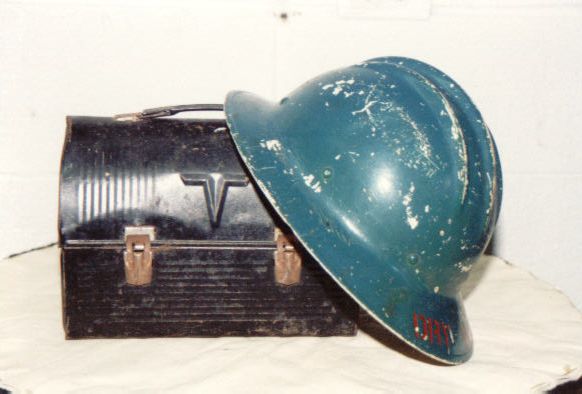
Bill Holmberg: We’re a hard hat, lunch pail type of team. We’re blue collar from the beginning to the end. No obstacle is too great for us. We are not afraid. We fear no one. Bottom line is like what Marco said before…whatever comes, comes. We’re going to play
our cards as they are dealt. And that’s it, and we’re going to be happy doing it.
Roberto: Let’s beat Mexico, Canada and USA so that we can advance to round two in Miami.
Bill Holmberg: That’s our plan.
Roberto: Thanks for your time gentlemen. Buona fortuna!

Marlins Park will host WBC Second Round, Pool 2 action.
Marlins Park will host WBC Second Round, Pool 2 action from March 12 through March 16, 2013.

2009 Team Italy coach Tom Trebelhorn reflects on the global aspect of the World Baseball Classic

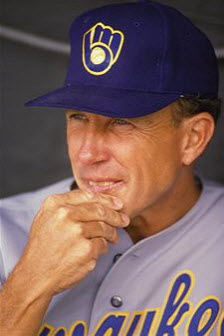
Tom Trebelhorn managed the 1986-1991 Milwaukee Brewers and the Chicago Cubs in 1994.
Tom Trebelhorn managed the 1986-1991 Milwaukee Brewers
and the Chicago Cubs in 1994.
Italians have often been criticized for using their
hands when they speak, but 2009 Team Italy coach Tom Trebelhorn (who is of German descent) has
been chastised by Cubbie fans for speaking his mind. To the dismay of the Chicago faithful, the former
MLB manager was awarded the #1 quote in Bleacher Report‘s “Best Baseball Quotes of All Time” (which includes memorable quotes from Italian American Baseball Hall of Fame Legends Joe DiMaggio and
Phil Rizzuto). However, Trebelhorn would much
prefer being remembered in baseball history for
his invaluable contribution in preparing the Italian team for the 2009 World Baseball Classic. “I think
the global aspect of baseball is very exciting,” said
the seasoned 65-year-old baseball veteran. He loves the international platform that the World Baseball Classic provides. Trebelhorn commented, “It gives
the game terrific exposure. To be able to hopefully
help the Italian Baseball Federation in their attempts
to enrich baseball as a sport in Italy is intriguing.”
Birds eye view of the Italy and Canada 2009 WBC game at Toronto's Roger Centre.
Bird’s-eye view of the 2009 WBC game between Italy and Canada at Toronto’s Roger Centre.
'09 World Baseball Classic
’09 World Baseball Classic
Every minute with the Italians in the 2009 World Baseball Classic at Rogers Centre was special for Trebelhorn. “A great experience. The team played with a lot of passion and heart,”
he said in retrospect to Italy’s 6-2 upset and elimination of
host Canada. “That was an embarrassment to them.” Named 1986 Manager of the Year by Baseball America after posting
an impressive 91-71 in his first season as the Milwaukee Brewers’ skipper, Trebelhorn managed the Brew Crew through 1991. After managing the 1994 Chicago Cubs, he signed on as coach for the Baltimore Orioles and remained with the franchise for 12 years. An unlikely alliance between the O’s and the Italian League’s Grosseto Baseball Club began after Baltimore County and the Italian Province of Grosseto became Sister Counties.
Grosseto's Sister City relationship with Baltimore County was instrumental in bringing together Grosseto native and Italy manager Marco Mazzieri and Baltimore Orioles coach Tom Trebelhorn.
The Sister Counties relationship between Baltimore and Grosseto blossomed as a result of the friendship between Orioles coach Trebelhorn and Grosseto native/Italian manager Mazzieri.
Team Italy manager Marco Mazzieri
Italian manager Marco Mazzieri
The late and great Orioles vice president of operations
Syd Thrift announced in 2001 that Grosseto Baseball
Club manager Marco Mazzieri and several of his players were invited to Orioles’ Spring Training to observe team workout and training methods. He said, “We believe
this will help advance the game of baseball in Italy and throughout Europe. I’ve been to Grosseto and have
seen the enthusiasm they have for the game of baseball.” Italian manager Mazzieri and O’s coach Trebelhorn were two sound baseball minds from different sides of the Atlantic, and their common love for the game brought them together around the same time every year. They became close friends in no time and looked forward to their annual reunion. Trebelhorn said, “I used to have
him come to spring training and work with us in Florida.”italy_wbc_press_release2009_WBC When Federazione Italiana Baseball Softball (FIBS) President Riccardo Fraccari revealed that Mazzieri would be manager for Team Italy in the 2009 World Baseball Classic, the Italian baseball icon knew he needed some reinforcement with extensive MLB experience behind him. Upon hearing
of his appointment Mazzieri said, “I am really happy and not overconfident.
I am aware of the fact that I need to rely on the experience of a coach who has spent time in the Big Leagues.” Mazzieri summoned Trebelhorn. “He got the job as the head guy and asked if I would help him out,” said Trebelhorn nonchalantly. As the saying goes:
“A friend in need is a friend indeed.”italy_usa_friendship

Texas League All-Star Dean Anna poised to lift Padres’ Double-A San Antonio Missions to playoffs

Utility baseball player Dean Anna is the consummate leader.
A three-sport letterman in baseball, basketball and golf while attending Lincoln-Way East High School in Mokena, Illinois, he chose baseball at John A. Logan College in Carterville and was rewarded by being named All-Great Rivers Athletic Conference during his sophomore year after leading his team in home runs and breaking the school record for RBI. Dean Anna’s leadership continued as a junior transfer at Ball State in Muncie, Indiana–where he led the Cardinals in doubles, triples, walks and runs.

Missions’ Dean Anna
The Padres took notice and selected the versatile five-foot-eleven right-handed fielder/left-handed batter in the 26th round of the 2008 MLB Amateur Draft. Since then the Midwesterner has proven worthy in the Padres minor leagues by catapulting his teams to three championship titles in Fort Wayne (2009), Lake Elsinore (2011) and San Antonio (2011). Having played in three 2012 Padres Spring Training games before being sent back to San Antonio to defend the reigning Texas League Champion Missions, super utilityman Dean Anna is making a difference in the team’s nightly do-or-die must win scenario to make the playoffs since six of the Missions’ remaining handful of games are against second-half leader Corpus Christi Hooks, who are ahead of San Antonio by nine games.

After speaking with Missions’ Dean Anna, we found him to be one of the most humble players in the dugout. His work ethic is unparalleled and his ‘never say die’ approach to the game is commendable. With the Missions needing their clutch player to step up and lead the team to the post-season, Dean Anna is more than capable to take on the role as captain. Batting .282 with 10 home runs and 47 RBI, Anna’s on-base percentage of .392 is among leaders in the entire Texas League. The 25-year-old prospect is certainly exciting to watch, and we expect to see him play his best baseball yet in his quest to help his team repeat.

Dean Anna led the Fort Wayne TinCaps to the 2009 Midwest League Championship.
Roberto: I understand you have played every position on the field but catcher, correct?
Dean Anna: The only catching I have done…caught a few bullpens. If the opportunity came, I think that I would have to catch. But I haven’t caught a pitch yet.
Roberto: Would you like to try pitching professionally?
Dean Anna: Yeah, I would love to actually. I have always wanted to try one inning or two just to see how it is out there. Make me feel like I was 10 again pitching.
Roberto: How does playing second base differ from playing shortstop in regards to turning the double play?
Dean Anna: Well, second baseman, there is three different turns, you know. Second base you got a drop step, you got a flip and then you got a side flip. So I mean you just really work on your craft, you know. At first it’s real difficult when you start at second base. Because I started at short(stop) all of my career, and I moved to second when I got to pro ball. And you know I thought it would be easy, but actually it was a little hard because of all the different type of turns for double plays from throwing it from shortstop. The drop step was different, the side flip was different and the underhand flip was different. And you use them in a different type of areas. So you really have to understand what area you’re in for what ball to throw, you know. So that was the big thing. Even to turn double plays when you’re on the bag…you know there’s a way of doing it that way. It seems to look easy but wherever the ball’s taking you–you have got to go to it. And you have got to be quick as possible and get out of there because that runner is getting on you fast. So that’s another thing you have got to have quick hands.
Roberto: When has a baserunner crossed the line to intentionally cause you harm?
Dean Anna: You know what? If a cleat hits you, you know they’re out of hand probably. But it’s hard to tell because you can’t see the runner sliding because you’re focusing on the ball thrown at you. So both of your eyes are following the ball. It’s impossible to look at the runner while the ball is in the air and catch it at the same time. So you’re just hoping, you know. You kind of have a clock in your head so you kind of know when the runner is coming to second base. So you know when to get out of there. But sometimes it’s hard. Sometimes you forget the time of it and how fast the runner is getting on you.
San Antonio Missions’ infielder Dean Anna turns a double play.
Roberto: How difficult is it to remain engaged in the game when you play nine innings night after night? After all, isn’t baseball a game that can change instantly with one single pitch?
Dean Anna: Yeah, that’s how baseball is played. I mean every pitch matters, you know. There’s a situation on every different pitch. You have got to be on your toes. Sometimes if you are not ready for what that moment is going to bring to you it can cost your team a game, you know. So that’s a big part of baseball, just staying in the game the whole time and having that mental toughness–just knowing everything, what’s going on…
Roberto: As an infielder, do you communicate with your outfielders on the field?
Dean Anna: Yeah, you know, the right fielder and me (second baseman). We talk pretty much with every batter. We kind of know where we are going because I know if he is playing shallow or deep. Especially on guys, right-handed hitters, that maybe stay inside the ball well and hit the ball good to right field. We’ll know that he should be coming in a little shallow. So I kind of know that we’re not going to blow into each other, you know. The tough ones are when the ball is kind of sinks into center, like right center or left center. That means that you have all three players running at it. And that’s when it gets confusing, where the communication gets confusing. But with right field and second base, we’re okay out there. We kind of know where we’re staying.
Roberto: Were you hurt being selected as a late round draft instead of an early pick?
Dean Anna: No, you know, it didn’t bruise my ego at all. I was just happy to get the opportunity to play pro ball. That’s what I have always wanted to do. And you know I was going to give it my best, and I’m doing pretty good right now and stuff like that. I just wanted to have a chance, an opportunity that ‘s all you can ask for in life actually. So I’m just happy for that.
Roberto: Are you ready to be called up to Major League Baseball by the Padres?
Dean Anna: Yeah, I mean I’m definitely ready if they’re ready, you know. But I’m just playing ball and having fun. It’s day-by-day. I mean I have no control over any of that stuff. I wish I was a psychic. Yeah, that would be real nice. That’s fully out of my control. I just take it day-by-day. I play as hard as I can, and you know hopefully good things will happen.
Ex-Mission and current Padre reliever Miles Mikolas holds up his championship ring for the fans.
Roberto: Do you stay in touch with all of your teammates who have made it to MLB?
Dean Anna: Oh yeah, we definitely do. I talk to a couple guys like (Blake) Tekkote,
Miles (Mikolas), (James) Darnell. Those guys had a great time, they’re having fun up there. They said it’s an unbelievable experience, you know their first-time, their first game. Hopefully one day I can get the same feeling.
Roberto: Are you prepared for all of the rookie pranks that go along with being in MLB?
Dean Anna: Yeah, hey, if I can get to the big leagues they can prank me everyday (laughter). Yeah, I’ll be the prank guinea pig. I don’t care (laughter).
Roberto: Do you think being five-foot-eleven and 180 pounds puts you at a disadvantage?
Dean Anna: I mean the size for me…it doesn’t really matter. Honestly, I feel like it’s not like football or basketball where you have got to be 6’6”, you got to run a 4.2 forty. Baseball is such a mental game and if you can just read between the lines well. I mean a smart baseball player…that will make you look better. Just being a smart baseball player, I think plays a big role in all that.
Roberto: Don’t you think that being a left-handed hitter has its advantages?
Dean Anna: Yeah, that definitely helps a little bit for sure. Get down the line a little quicker.
Roberto: Having only reached double digits in the stolen bases category early in your professional career, why don’t you steal more bases with the speed that you possess?
Dean Anna: You know…I’m not a big steal guy, but I have real good anticipation like when the ball is hit. I can tell if the ball is going to drop or not without looking. Like I just know that I can probably get (from) first to third with a line drive and know that the fielder is not going to catch the ball. I just got good instincts.
Roberto: Where did you pick up this talent? Did good coaching have anything to do with it?
Dean Anna: Yeah, definitely great coaching helps out…you know. After a while, you just get a feel. You know how the ball sounds off the bat. You know where the ball’s going. You just kind of get a feel for the game when you play for a while and start getting a rhythm. You just kind of know. Roberto: Who did you used to follow before becoming a part of the Padres organization?
Dean Anna: I’m a Midwest guy from the Chicago suburbs. My family is all diehard Cubbie fans. Yeah, it runs through our blood.
Roberto: Do you have your suitcase ready to go if you get called up next month?
Dean Anna: No, my bags are not packed. Honestly, I’m just taking it day-by-day. If that does comes…that opportunity…I would be so happy, you know. I’m just excited to see what happens.
Roberto: Excited to get pranked? What has happened to you so far in the minor leagues?
Dean Anna: When I was in High-A, everyone knows that I don’t like animals and stuff.
You know I’m kind of a city guy so I don’t like all the country stuff and all the fishing and stuff. One guy had a little snake and it was live. So he put it in my pocket in my locker,
right where my phone’s at. So I go to grab my phone, and this little snake pops out of my pocket. I did a back flip down on the floor. So then after that, I almost had a heart attack. And then I ‘m sitting, watching TV. I had my shirt tucked in and one of my teammates opens my shirt and puts the snake down my back. I went crazy! That was kind of funny…
Roberto: With your fear of snakes, did you cringe when you learned that former teammate Miles Mikolas ate a live lizard in the Arizona Fall League bullpen?
Dean Anna: I texted him that same day when I heard and asked him what he was thinking. He said it was funny and good protein intake.
Roberto: What is your biggest baseball taboo?
Dean Anna: I’m a big guy where I don’t want anyone to touch my baseball gloves. I don’t like anyone putting their hands in them.
Roberto: Do you have a pre-game routine that you follow?
Dean Anna: I like to really relax like for an hour. Get off my feet and just relax. Listen to my music. Calm down, you know, relax. Get mentally prepared for the game.
Roberto: What about your routine at-bat and in-between pitches?
Dean Anna: My ritual when I go up to bat…I always do my batting glove thing. Like every pitch I do this one batting glove, I tighten my left one up then my right one up. Then I touch the two outside corners of the home plate. Then I get ready to go. I feel like in baseball you’ve got to be consistent to move up. So everything I do I make sure to do the same way. Just because your brain works that way, you know. Your brain works like if you do the same thing it should trigger something.
Dean Anna celebrates with his teammates after a walk-off home run blast by Jason Hagerty.
Roberto: The golden sombrero is not a good thing in baseball. Have you ever struck out
four times in the same game?
Dean Anna: If I got the golden sombrero, I would change what I ate that day. Like if I had bad games, I make sure that whatever I ate that day…I wouldn’t eat it the next day. I make sure that I wouldn’t wear the same shoes to the field. Like I’m a superstitious guy a little bit. Just because this game makes you kind of like that.. But when I’m going good I’m eating the same food everyday. I’ll walk the same way. I’ll take the same path. Just because it’s just a mindset thing.
Roberto: What is your personal professional best hitting streak to date?
Dean Anna: I’ve recently had a nine-game hitting streak, and I just didn’t shave for nine days. So I was getting a little scruffy, and then it ended. I mean it didn’t get that bad, but
it was getting bad where people were asking ‘What are you doing?,’ you know. But I wish it could have gone a little longer.
Roberto: Are you happy to have been part of the San Diego farm system?
Dean Anna: The Padres organization is great, you know. I’m happy to be a part of them. Hopefully someday I can get up there and witness that. And have fun with that. It seems great. Everyone says it’s great. So it would be nice. I’ve been out there once when I was
in High-A Lake Elsinore. We actually went out for a game and everything was beautiful. Everything was so nice. Hopefully one day I can play there and get my chance.
Roberto: Did you enjoy your time playing in the Midwest as a member of the Single-A
Fort Wayne TinCaps?
Dean Anna: When I was at Fort Wayne, it was nice because I have family out there that way. So I saw my family a lot.
Roberto: Did the humidity and heat in Indiana prepare you for the weather you are now experiencing this summer in the Texas League?
Dean Anna: Nothing compares to San Antonio heat. Honestly, it’s very hot out here!
Roberto: Sometimes do you flash back to the good old days in California playing for the
Lake Elsinore Storm when it’s over 100 degrees outside at game time in San Antonio?
Dean Anna: Lake Elsinore was not bad at all. The thing that surprised me about Lake Elsinore is that it can get cold out there. I’ve never been out to California since I was in
the Cal League and that was last year. I couldn’t believe how cold is was in the beginning. Because I was like ‘California, is that place cold? Really?’
Roberto: Southern California weather is hard to beat. Wouldn’t you agree?
Dean Anna: Yeah, yeah…it was nice, very nice!
Roberto: How about the beautiful sights there? Now you truly understand what the
Beach Boys meant when they wrote ‘California Girls’?
Dean Anna: (Smiling) Yeah, it makes sense!
Roberto: Thanks for your time and sharing so much with us today.
Dean Anna: It was a great interview. It was fun. It was great—thank you!

Erik Hamren, Tesoro’s first MLB star, on a Mission to return to the show at San Diego’s PETCO Park

2005 Tesoro High School graduate Erik Hamren
went on to beat the odds in becoming a professional baseball player in MLB for the 2011 San Diego Padres.
Since starting a baseball program from scratch over a decade ago when Southern California’s Capo Unified School District opened the doors of Tesoro High School in Las Flores, Varsity Baseball Manager Rick Brail has successfully prepared athletes with dreams and aspirations of playing professionally in Major League Baseball. When 2005 Tesoro graduate Erik Hamren made his MLB debut for the San Diego Padres in 2011, Coach Brail was so proud of his protégé that the school retired Hamren’s jersey #25 at a ceremony during half-time of a Tesoro basketball game in January.
For becoming its first MLB player, Erik Hamren's #25 jersey was retired by Tesoro High School.

Former San Clemente High School baseball star and veteran Tesoro Manager Rick Brail said, “Erik was in the first four-year class at Tesoro High School. He and his family have not only been a part of a baseball program from day one but also a big part of the school’s establishment. Retiring his jersey was a great thing to do because he has and always will be a part of our Tesoro family. It also felt great to recognize a player who was one of hardest workers and always put the team and school before himself. Our school, the community, and baseball program could not be more proud of Erik’s accomplishments on the field and the man he has become out in society.” Having earned three letters in both varsity baseball and football, Hamren perfected his game with every year of experience. He tipped off his athleticism and talent early on in his Tesoro Titan baseball career when he was named to the 2003 North Orange Country Classic All-Tournament Team. The Coto de Caza native followed it up in 2004 with a roster spot on the Southern Cal Cup II – Orange County All-Stars. Hamren finished the 2005 season with three home runs and a .452 batting average, which earned him the Pacific Coast League Co-MVP with Tesoro teammate Nick Nelson. Erik Hamren was a rising star and was heavily recruited to play college ball. He decided to stay in California and attend University of the Pacific.

Erik Hamren at the University of Pacific
Coach Brail added, “Erik always had a ton of talent on the baseball field, but it wasn’t until his senior year that he finally put it all together. He fully committed himself to baseball, (his studies) in the classroom, and physical fitness. After that the game came easy for him, and he was named MVP of our league his senior year as an outfielder and part-time pitcher. His transition to a full-time pitcher happened in college like many players. He was struggling at the plate and decided to convert to a full-time pitcher. It was seamless because he could throw 90 mph plus. It was just a matter of gaining confidence and experience.” After only nine at-bats at Pacific in his first year, Hamren returned home to pitch for Saddleback College and lend a helping hand to Coach Brail’s elite Tesoro Titans baseball team.
Erik Hamren made only 10 pitching appearances for the Saddleback College Gauchos before
the Chicago Cubs gave him a tryout and was subsequently selected in the 2008 Amateur Draft.
Despite holding out for as long
as he could while pitching for
the Northwoods League Mankato MoonDogs, Erik Hamren could
not resist the temptation of all
the bonuses affiliated with a pro baseball contract and signed
with the Chicago Cubs in 2008.
A converted pitcher who had been picked up in the 37th round of the 2008 MLB June Amateur Draft by the Chicago Cubs after the team liked what it saw during a tryout, Hamren didn’t sign his first professional contract until after making 15 pitching appearances in the Northwoods League for the Mankato MoonDogs during the summer of 2008. With one win, six saves and a
2.04 ERA in 17 2/3 innings of work under his belt, he then opted to sign with the Cubs. Hamren made three stops in the Chicago Cubs farm system in 2008 and 2009. Hamren had less than two full seasons of pitching experience when he was released by the Cubbies after the 2009 season with Single-A Midwest League Peoria, where he had a 5.98 ERA in 38 games. Determined not to give up on his dream of making it in the Bigs, Erik chose to play in the Independent League to develop his craft in 2010. He pitched in the Indy Northern League in 2010 and put together an 0-2 record with a 3.39 ERA in 44 games playing for the Kansas City T-Bones and Joliet JackHammers. Joliet acquired Hamren in late August for the stretch run in a trade with the Kansas City T-Bones. The right-hander was dominant in seven games for the 2010 JackHammers by posting a 0.84 ERA in 10.2 innings of work, striking out 16 and holding opponents to a .262 batting average. Hamren appeared to have finally felt comfortable pitching and was ready for redemption.
MLB veteran pitcher Tom House
turned things around for Erik Hamren and gave him pitching confidence.

Major League veteran pitcher Tom House was critical in Erik’s transformation and revamping his approach prior to pitching at a MLB tryout camp in November 2010. After seeing the renaissance man in action, the San Diego Padres signed Erik to a minor league contract. Hamren believes it was a full season of independent baseball and working with former Major Leaguer Tom House that helped him reach MLB. Erik said, “Indy ball was the best thing that could have happened to me. It put things in perspective. You have it, and then you lose it. But I got innings, and I got to work. It’s kind of hard to grasp what has happened.” Hamren admitted that he struggled with his command during the first half of the 2010 season, but a ‘House call’ visit with the pro at the All-Star break made all the difference. “House synched me up,” Hamren said. “He kept me really focused and made me really confident. The first half of the season, there were still command issues. Strikes would come and go. But I worked with him and got a little confidence off that.”
Reliever Erik Hamren got the save Wednesday for the Padres Double-A affiliate San Antonio Missions.
Coach Brail commented, “Erik was blessed with a ton of baseball ability. He had all five of the major baseball tools. It was just a matter of maturity and trusting himself on the field. Once he learned to relax and focus on the things he had control over, the game got easier for him. I’m a Erik Hamren believer and fan. He has overcome adversity his whole career and with his tremendous work ethic. I know nobody will out work him, and he is only going to get better.” Coach Brail knows that it will be an uphill battle for Hamren to return back to the Big Leagues from his current post at San Diego Padres Double-A affiliate San Antonio Missions. It’s the same place where he was when he received a Big League call-up at 1:30 in the morning on July 31, 2011 after the Padres traded relief pitcher Mike Adams to the Texas Rangers. Hamren made his splash into Major League Baseball at PETCO Park the next day on August 1st against Southern California National League West rival Los Angeles Dodgers.

Erik Hamren congratulated by his catcher after a job well done for the Padres in 2011.
The six-foot-one, 195-pound righty pitched a scoreless
ninth inning in San Diego’s 6-2 loss but also ended his
MLB debut memorably by striking out Dodger speedster
Dee Gordon. The Orange County homegrown hero deserved the opportunity after being named 2011 Texas League
Mid-Season All-Star and compiling a stellar 5-0 record with
a 0.98 ERA in 48 games with the Lake Elsinore Storm and San Antonio Missions. During his shortened 2011 minor league campaign in 65 2/3 innings of work, Hamren was relentless. He surrendered a mere 46 hits, while walking
14 and striking out 69. The 25-year-old posted a 4.38 ERA
in 12 1/3 MLB innings last season with the Padres pitching middle relief. “He’s a great story,” said Jason McLeod, the Padres’ vice president and assistant general manager. “He
has a low-90s boring fastball with a swing-and-miss slider.”

San Diego rookie reliever Erik Hamren shouldering a backpack featuring R2-D2 of “Star Wars”.
Hamren had high hopes that a successful run at 2012 Padres Spring Training would warrant a slot in the San Diego opening day bullpen. Unfortunately, he was designated for assignment on April 5th by the Padres.
To the delight of Southern California Friar faithful in keeping Hamren a Padre, Hamren cleared waivers and was assigned to Double-A San Antonio. So far in his 13 innings pitched out of the Mission bullpen (0-1, 2.08 ERA with one save and four holds), Erik has surrendered only 6 hits while striking out 19 and holding opponents to a .154 batting average. With continued success in the minor leagues, it is just a matter of time for the South Orange County pitcher to return to PETCO Park.

Hamren’s journey to Major League Baseball was relatively short, especially considering that he
was pitching in the Independent League in 2010. He possesses what it takes to become a solid contributer to the Padres bullpen and is itching to remain a staple on the San Diego roster. Should the Padres use closer Huston Street as a half-season rental AKA trade bait before the July 31st non-waiver trade deadline, then Hamren will be right on schedule for his annual pilgrimage to PETCO. However, one would expect that at the very latest Erik will rejoin the Padres when active rosters increase from 25 to 40 on September 1st. In the meantime, the trek from Mission San Juan Capistrano to the San Antonio Missions will have to suffice. Just as the swallows return every year to this legendary South Orange County landmark, fireman Erik Hamren will faithfully make his miraculous comeback to MLB in San Diego.

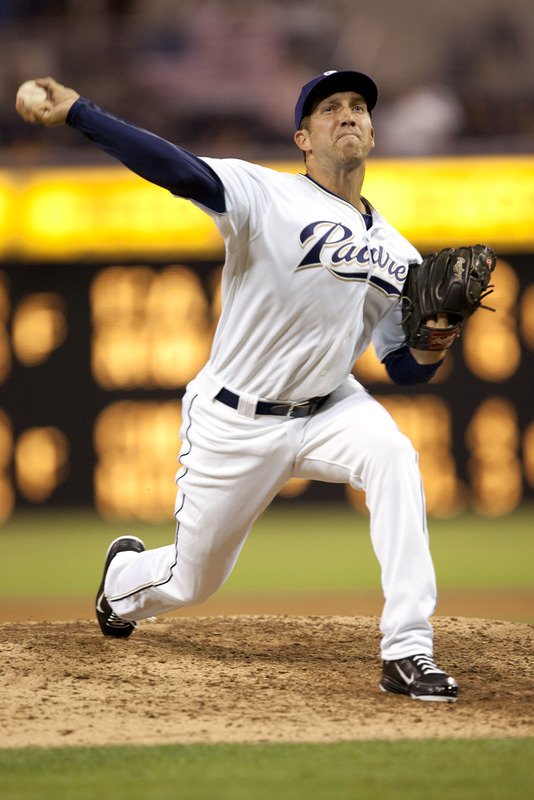
Erik Hamren held the Dodgers scoreless in his MLB debut at PETCO Park on August 1, 2011.

Mineo: legendary historical landmark of Sicily or Italy’s finest catch exported to the Chicago Cubs?

A panoramic view of the archaeological site of Rocchicella di Mineo, ancient Palikè, the location
of the most important sanctuary of Sicily's indigenous Sikel people in the eastern part of the
island with Mount Etna, Europe's largest active volcano, towering over Catania seen far away
The Siculi (Sikeloi; Sicels; Sikels) were the native inhabitants of the eastern regions (including Mineo) of Sicily south of the Italian Peninsula over 10,000 years ago. The island of Sicily takes its name from the indigenous Siculi people. With its strategic location at the center of the Mediterranean, Sicily is rich in its history of conquest and empire. It is a melting pot of cultures with over a dozen ethnic groups whose warriors and merchants walked her shores. Although the other two indigenous societies of the Sicanians and Elymians assimilated easily with the Greeks, the Sicels constituted a highly developed society that the Greeks respected profoundly. Despite conflict and its desire to remain autonomous, it took several centuries for the Sicels to completely assimilate and amalgamate with their Greek neighbors. Except for the Romans, the Sicels were the only predominantly Italic people to settle in Sicily in large numbers as colonists.
Italy leads all European countries in its number of immigrants to America. Beginning in the late 1800’s, poverty and natural disasters drove Italians out–especially in Il Mezzogiorno, the southern and poorest provinces of Italy. As late as 1900, the illiteracy rate in southern Italy was 70 percent. The Italian government was dominated by northerners, and southerners were hurt by high taxes and unfair tariffs on the north’s industrial goods. Southerners suffered from exploitation by people of the same nationality and religion.
Piazza DiMaggio commemorated the legendary son of an Italian immigant, Joe DiMaggio, who lived the American Dream of playing baseball and the tens of thousands of Italian immigrants who came to America through the Taylor St. U.S. port of entry seeking a new life in the heart of Chicago's Little Italy during the early part of the Twentieth Century.

Self-reliant on only themselves for mere survival, southerners had an allegiance to la famiglia (the family) and l’ordine della famiglia (the rules of family behavior and responsibility). Suffering from a scarcity of cultivatable land, soil erosion and deforestation as well as a lack of coal and iron ore needed by industry, life in the South was difficult. Southern Italy was ravaged in the early 20th century when Mount Vesuvius and Mount Etna erupted and buried towns nearby. In 1908 an earthquake and tidal wave that swept through the Strait of Messina between Sicily and the Italian mainland killed more than 100,000 people in the city of Messina alone. For many Italian immigrants, fleeing to the United States was not to be interpreted as a rejection of their homeland. Instead, it defended the Italian way of life because the money sent home helped to preserve the traditional order. Rather than seeking permanent homes, they desired an opportunity to work for a living and aspired to save enough money to return to a better life in the country of their birth. Unable to earn enough to support their families in their native Italy, they were migratory laborers. The majority were young men–aged 18 to 25–who planned to work, save their money and return home. Hoping their absence would not be too long, they left behind their parents, young wives and kids.
Fast forward a century later and native Italian athletes are still clinging to their roots and culture despite being lured by U.S. professional sports to homogenize into the American lifestyle. The first Italian-born baseball player awarded a MLB contract was pitcher Alessandro Maestri. Signed by Chicago Cubs scout Bill Holmberg, Maestri never pitched at Wrigley Field–even though he was a Minor Leaguer with a wicked Major League slider. However, the Cubs struck gold in 2010 when Holmberg signed then 16-year-old Italian catching prospect Alberto Mineo to a contract.
Chicago Cubs Italian catching prospect Alberto Mineo at 2012 Spring Training in Mesa, Arizona
Catcher Alberto Mineo calms his pitcher down and discusses strategy to get the next batter out.
Now ranked 58th behind #1 Cubbie Starling Castro in the Chicago Cubs Top Players Under 25 Organizational List, catcher Alberto Mineo has his eyes set on making it all the way to Wrigley. The defensive standout with excellent catch-and-throw skills said, “The part that I like most about being a catcher is throwing runners out at second.” The 5-foot-11, 170 pounder has strong hands and forearms which assist his receiving skills and defensive instincts. Blessed with outstanding arm strength and a quick ball transfer exchange, Mineo looks comfortable behind the plate. Exuding confidence as a first-rate catcher, opponents will need to exercise caution on the bases.
Left-handed hitting slugger Alberto Mineo
played for Team Italia at the 18 Under Junior World Championship in Thunder Bay, Canada

Holmberg watched Mineo develop into a natural talent from age 10 and knew early on he was special. Alberto was mature enough to accept feedback and listened to Holmberg and Maestri’s sound advice. He commented, “Both of them, they would always say to me ‘Work hard everyday because there is somebody somewhere else that is working hard to get to the Big Leagues’ and I started believing that I could sign with an American team.” Exercising good plate discipline, Mineo is a patient hitter who jumps on a pitcher’s mistake. “I always think as a hitter that I must wait for my pitch until I get two strikes,” Alberto explained. The left-handed hitting Mineo can demolish the ball with his technically sound swing, and once on base he can demonstrate great speed for a catcher.
Cubs prospect Alberto Mineo has speed on the bases and is very quick with his glove defensively.

After being signed by Bill Holmberg–who also is the pitching coach for the Italian National team and operates the Major League Baseball International European Academy at the Olympic Training Center in Tirrenia, Italy–Ronchi dei Legionari New Black Panthers catcher Alberto Mineo began his professional career in the month-long MLB Australian Academy Summer League, where he became friends with Los Angeles Angeles of Anaheim promising pitching prospect
Alex DaSilva–who later moved up the competitive ladder to play for the Australian Baseball League (ABL)
2012 Runner-Up Melbourne Aces. Mineo played well in Australia (.270 batting average, 1 HR) as did his Italian mentor Alex Maestri, who was so popular that he won the 2012 ABL Fan Choice Award.
Catcher Alberto Mineo has all the tools to follow fellow MLB International European Academy graduate Alex Liddi of the Seattle Mariners and become the second Italian-born player in the Big Leagues.

The ABL’s first Italian pitcher/catcher combo with Maestri and Mineo could become reality if Alberto has his way. Mineo commented, “I had a nice experience in Australia, where I met a lot of great players that I still remain in contact with via facebook. I would really like to play with Alex in the ABL.” The dynamic duo could possibly make their debut in the near future as members of the Italian National team under the guidance and direction of pitching coach Bill Holmberg and former Major League Baseball All-Star hitting coach Mike Piazza. Mineo has played as a member of several Italian National teams at various levels– including the 18 Under Junior World Championship in Thunder Bay, Canada. Italian National team catcher Francisco Cervelli of the New York Yankees now has Mineo as back-up.
Mineo said, “I don’t feel the pressure to be the next Italian to make it in MLB. I just want to have fun and enjoy this amazing experience that I’m living right now. But it would be really nice to play with Alex Liddi on the Italian National team…”
Lady Liberty of a Cubbie kind stands tall and proud in the city of Chicago.

Alberto had an exceptional Cubs 2011 Arizona Instructional League four-game campaign with a
.500 batting average, .556 on-base percentage and .500 slugging percentage. “The Cubs Instructional League was an awesome experience. I really like
to practice with Casey Kopitzke, the catching coordinator. I think he’s really good,” Mineo said.
“So far Cubs Spring Training is going very well. I like to work hard on the field and in the gym. It’s the best place you can go if you love this sport. A couple days ago Kerry Wood, Ryan Dempster and Rodrigo Lopez came to the complex to talk to us about the right way to get to the Big Leagues, but my favorite Cubs player is still Marlon Byrd. Inspired to play baseball at age five by his father and become a catcher three years later, Alberto followed American baseball religiously. “My favorite player has always been Derek Jeter. Now it is Joe Mauer. I really like how he plays, and I also think that he’s a very professional guy,” Mineo said.
Wrigley Field, National Historic Landmark and home of the Chicago Cubs since 1916, is the second oldest ballpark in the Major Leagues and the oldest standing National League ballpark.
Although there had been a long-time association of Italians being die-hard Cubbie fans,
the connection got even stronger when the late and great Hall of Fame Cubs broadcaster Harry Caray–whose real Italian last name was Carabina–signed on to the super station WGN Network in 1982. Although he passed on to baseball heaven in 1998, his legacy is still alive and well today as the legendary Caray’s Italian Steakhouse remains a Chicago restaurant icon. Now with Alberto Mineo in the Cubs organization, Italians in Chicago and beyond should rejoice and be thankful for their ancestors’ sacrifices years ago for the opportunities bestowed upon us in 2012. In the case of the young catching prospect Mineo–not only does he possess the natural skills necessary to become a professional ballplayer–
but he has the unconditional love and support of a dedicated team of international coaches, players, fans and family to be a true Italian baseball ambassador worldwide. Forza Italia!

Italian Cubbie fans of all shapes and sizes await Alberto Mineo's imminent arrival at Wrigley Field.

Italian coaching, cuisine, and culture make Italy world-class for MLB hopefuls and European scouts

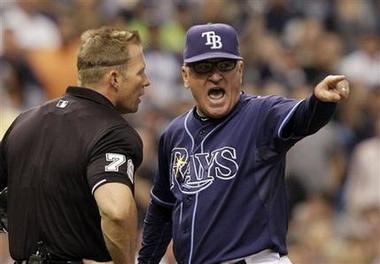
Baseball in Italy received a Major League surprise last month when an unannounced MLB manager graced the 436 registered attendees with his presence at the Italian Coaches Convention Dinner at Castelnuovo de Garda (Verona). Tampa Bay manager Joe Maddon, a first-generation Italian-American whose father was born in Italy, was overjoyed by the warm reception received at the gala dinner which pays tribute to the coaches that make a difference in the internationalization of baseball in Italy. Madden exclaimed, “I feel at home here, because in the small city in Pennsylvania where I live there is a big Italian community.”

Tampa Bay Rays skipper Joe Maddon embraces his Italian roots.

His grandparents original surname was Madonnini, but after emigrating from the Region of Abruzzo to America
their last name was shortened. Maddon continued, “It is always a pleasure for me to visit Italy. I am proud of my heritage.” The Rays were very well represented in Italy as Maddon brought along members of his coaching staff to lead instructional clinics for the delegation of Europe’s best coaches.

Italian National team coach Mike Piazza (shown here as coach of Team U.S.A.) and Seattle Mariners Alex Liddi (shown here playing for Team World) in the 2011 All-Star Futures Game
Alex Liddi became Italy’s first successful export to MLB and the Seattle Mariners on September 7, 2011.

Riccardo Fraccari, president of the Federation of Italian Baseball and Softball (FIBS), spoke of Alex Liddi becoming the first Italian-born and developed player to play Major League Baseball and its great significance to baseball in Italy. He said, “Alex’s story is really the tip of the iceberg, and we really need to take into account the daily work of the coaches in Italy who are the base of the movement.” Liddi was signed by the Seattle Mariners after being selected to attend the inaugural MLB International European Academy in 2005 and in September 2011 became the first graduate of the MLB International European Academy to play in the Major Leagues.

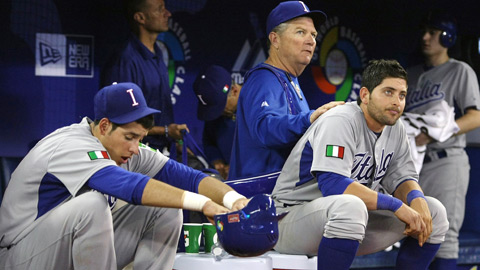
Italian National team coach Bill Holmberg encourages New York Yankee catcher Francisco Cervelli sitting next to Alex Liddi during the World Baseball Classic.
Like a fine Italian wine, MLB / FIBS Italian Academy Director and Field Coordinator Bill Holmberg has been getting better with age by improving the quality of Italian baseball and coaching Europe’s finest players since landing in Italy in 1989.

Bill Holmberg is one such coach that FIBS President Fraccari was referring to in his compelling speech. Holmberg has been living under the radar since 1989, when he came to Italy to serve as manager and technical director of the Godo baseball club for 12 years. He later became the pitching coach for San Marino as well as the Italian Junior and Senior National teams. Coach Holmberg was named Director and Field Coordinator of the MLB Italian Academy nearly a decade ago and has been instrumental in signing the best homegrown talent as a former international scout for the Chicago Cubs. Everyday he tirelessly trains the cream of the crop at an elite sports academy in the quaint beach community of Tirrenia near the Italian cultural iconic city of Pisa. Alessandro Maestri, the former Chicago Cub minor leaguer and recent Brisbane Bandit / 2012 Australian Baseball League (ABL) Fan Favorite Award recipient, was signed by Holmerg in 2006, when he became the first Italian-born pitcher ever signed by a Major League Baseball team.

In 2006 Chicago Cub European Scout Bill Holmberg signed Cesena’s Alessandro Maestri,
the first Italian-born pitcher signed to a MLB contract. (Scott Powick / SMP Images / ABL)
Italian National team pitcher Alessandro Maestri showed the world that he could compete against baseball’s elite in the World Baseball Classic.

Chicago Cub scout Holmberg knew early on that Alessandro was something special when he saw the young Italian play baseball for the first time. Holmberg said, “Alex can do whatever he wants to. He’s got the temperament and composure. He’s hit 95 mph, and his slider is at 86 or 87. He competes as hard as anyone out there.” Maestri still to this day works under the guidance and direction of Coach Holmberg. The Cesena, Italy
native made World Baseball Classic headlines in 2006 when his first offering to the Dominican Republic’s Moises Alou was rocketed out of the park for a home run. Despite the rocky start, he would not allow another earned run in his 4.2 combined innings in both the 2006 and 2009 World Baseball Classics.

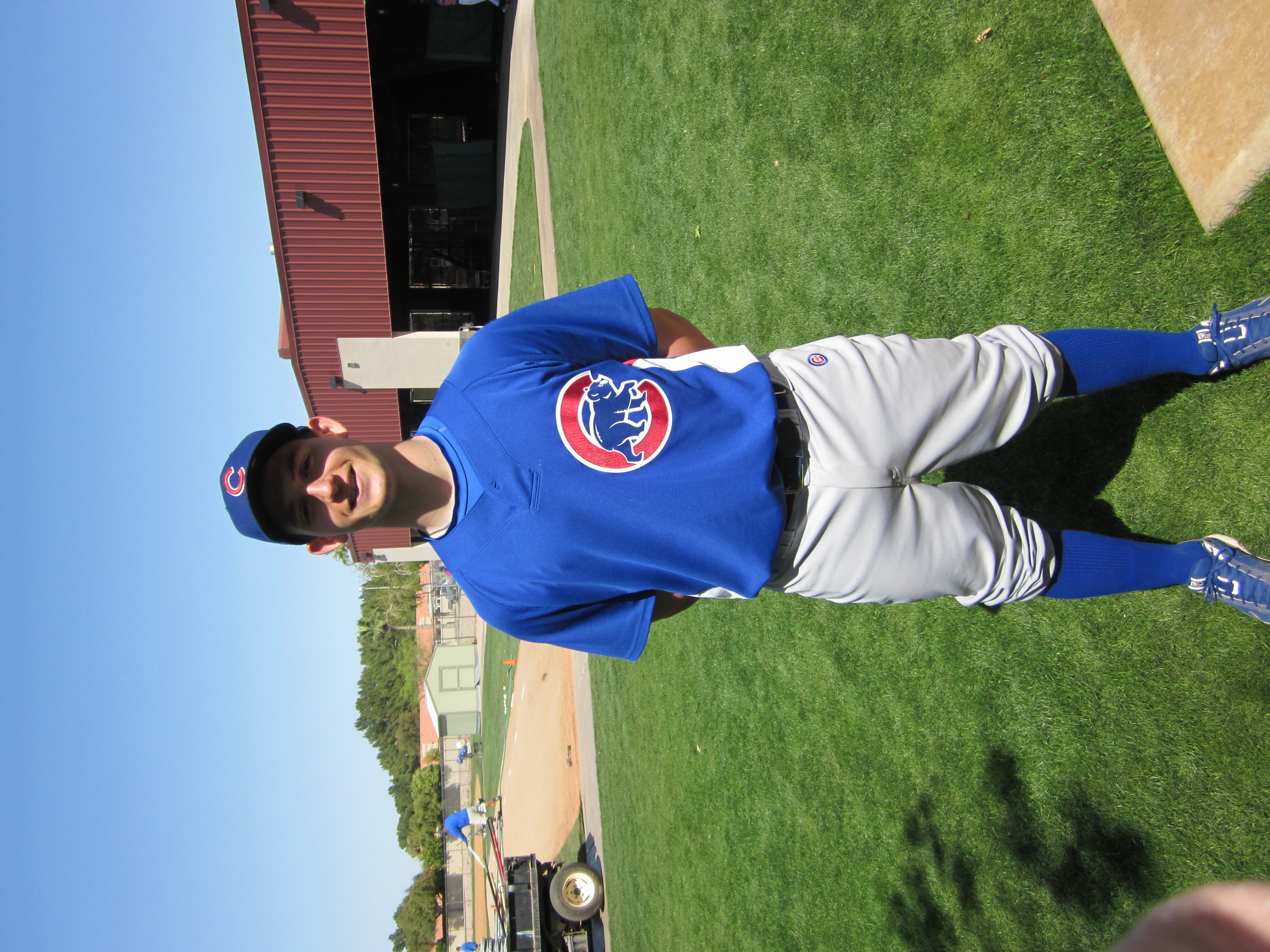
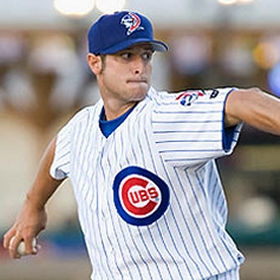
Alessandro Maestri as a Cub minor leaguer

Maestri demonstrated great promise in the Midwest and Florida State leagues as a two-time All-Star. As as starter and relief pitcher in the Chicago Cubs minor league system for five seasons, he racked up a 24-17 record with a 3.75 ERA and 19 saves. The right hand throwing pitcher put away hitters with his evasive slider–which was once voted as the best slider thrown by anyone in the entire franchise. Maestri made his preseason MLB debut against the Oakland A’s during Cubs Spring Training in Phoenix on April 1, 2009 when Cub manager Lou Pinella summoned him out of the bullpen. Maestri struck out Orlando Cabrera and then he sized up against slugger Jason Giambi–who was lucky to squeak out a single through the hole. MLB All-Star

Closer Alessandro Maestri was not afraid to show his winning Italian spirit by striking out Jayson Nix to beat Team U.S.A. for the first time in 21 years on November 9, 2007 during the 2007 Baseball World Cup.

Matt Holliday was caught looking at a third strike slider for the second out, and Eric Chavez went down swinging at his Italian slider in the dirt to end Maestri’s almost perfect outing. Nearly three years later, Alessandro is still as dominant as ever as witnessed by his numbers in the most recent 2011-12 ABL season. As the workhorse and ace of the Brisbane Bandit pitching staff, Maestri led his team in wins (4) and proved to be one of the best pitchers in the league. He finished third in the ABL in innings pitched (63.2) and in strikeouts (53), fourth in the ABL in WHIP (1.16) and sixth in the ABL in ERA (3.25). In Round Eight of the regular season, he earned the Pitcher of the Week award after pitching a stellar complete game two-hitter against the Canberra Cavalry. Based on his most recent form, Maestri is worthy of a second look by international scouts to make his long-awaited MLB debut. He will always be a competitor who lives on the edge to bail his team out of pressure situations.

MLB / FIBS Academy Director
Bill Holmberg is committed to producing Italy’s finest athletes.

Of the frequent MLB-sponsored instructional clinics throughout Europe, none has had the impact of MLB / FIBS Academy host Coach Holmberg’s annual three and a half week summer invitational Major League Baseball International European Academy at the Olympic Training Center in Tirrenia. Designed to provide promising junior teenage players with both the environment and the instruction to reach their full potential, the European Academy brings together around 50 or more of the brightest young playing talent in Europe and Africa with the best in Major League coaching and instruction. The Academy seeks to provide a path for elite players from this region to improve their skills in preparation for the rigors of professional and international baseball. In addition to helping these bright young stars develop their skills, the Academy enables MLB Clubs to scout the best future talent. Holmberg explained, “It’s a pretty good place to see all the best players in Europe at one time. We’ve had between 18 and 20 scouts that have watched the games this past year.”
The Tirrenia baseball camp, which began in 2005, has much to do with MLB’s accelerated rate of signing the European elite to professional contracts based on the fact that the numbers have more than tripled from 2005 (2.33 average) to 2011 (9.0 average). So far 49 Academy graduates from ten countries (45 players from Europe and 4 players from Africa) have signed professional contracts with 19 different Major League Baseball franchises. Holmberg commented, “We’re not the Dominican Republic yet, but I think we might be sneaking up on Australia.”

Food for thought: Pitcher Alex Maestri–Italy’s first export to MLB imported by ABL’s Brisbane Bandits

When asked about preparations for his Italian squad in the 2009 World Baseball Classic, the best hitting catcher in Major League Baseball (MLB) history and Team Italy hitting coach Mike Piazza replied, “We’ll have the best food.” All joking aside, Pizza commented: “You’ve got talent in Italy, think of Alex Maestri and Alex Liddi… To help talented kids you need to get them to play more games. Look at me, I didn’t really improve until I was given the possibility to play every day.”

Alessandro Maestri was the first Italian-born pitcher signed by Major League Baseball in 2006.

The 26-year-old Alex Maestri made MLB history as the first Italian born pitcher to be signed by a major league club–the Chicago Cubs–in 2006. Three years later another historical milestone in baseball would take place when the Italian prospect would finally compete on the Major League level. Thinking that it was yet another day on the bench or perhaps a really good April Fools prank, April 1, 2009 would go down as a very Big League day for Alessandro Maestri. Upon reporting to a Cubs Spring Training game in Phoenix against the Oakland Athletics, Maestri was informed that he would making his first preseason Major League pitching debut, which many would consider to have been “textbook”
and as good as it could ever be.

The setting was perfect under a pleasant 71 degree warm Arizona sun for Maestri to take over for Cubs starter Carlos Zambrano and Luis Vizcaino in the fifth inning. Little did Maestri know that he would come face-to-face with some of Major League Baseball’s most feared hitters. His first strike out victim was Orlando Cabrera, who was caught looking at a fastball on the outside corner. Next up with slugger Jason Giambi, who managed to squeak out a single through the hole. Following was Matt Holliday, nicknamed “Big Daddy” for his towering six-foot-four stature and his muscular physique. Maestri dug down deep and mesmerized the intimidating Major League All-Star with a called third strike slider for out number two. The selective Eric Chavez worked the count full before swinging and faltering to Maestri’s wicked slider in the dirt for his third strikeout. Upon returning to the dugout, legendary Cubs skipper Lou Pinella congratulated the young Italian hurler.

As as starter and relief pitcher in the Chicago Cubs minor league system for five seasons, Maestri racked up a 24-17 record with a 3.75 ERA and 19 saves. A two-time minor league All-Star, the right hand throwing pitcher put away hitters with his evasive slider–which was once voted as the best slider thrown by anyone in the entire organization. Representing his native Italy in the 2006 and 2009 World Baseball Classic (WBC), Maestri dominated hitters. In the 2009 WBC, Maestri held opponents scoreless in his two plus innings–during which he got Miguel Cabrera to ground out on a fielder’s choice and Magglio Ordonez to strike out.

Since joining the Brisbane Bandits in the Australian Baseball League (ABL) this month, Maestri has been brilliant. In his first two ABL victories against the Canberra Calvary and the Sydney Blue Sox, he threw over 10 innings of scoreless ball and struck out 11. Add to that total another 8 K’s he put down on his most recent indecision versus the Melbourne Aces on November 18th, and Maestri has tallied 19 strike outs in just over 17 innings pitched. With the ABL’s fifth lowest ERA (1.56), the five-foot-eleven Italian has dished out almost nothing but zeros across the box scores. Look for Maestri to battle teammate Yohei Yanagawa–Japan’s 2011 Nippon Professional Baseball League Champion Fukuoka Southbank Hawks reliever, who has struck out 20 as a Bandits starter in over 16 innings–and Canberra Cavalry’s Michael McGuire–a six-foot-seven, 240 pound 2008 First-Year Player Draftee by the Cleveland Indians from the University of Delaware and currently a Philadelphia Phillies minor league starting pitcher, who now leads the ABL with 21 strike outs in 13 plus innings of work–to battle it out until the end for the title of 2011-12 ABL Strike Out King.

When the ABL season concludes in late January, Alex Maestri is scheduled to head to O’Flallon, Missouri to pitch for the 2010 Frontier League Champion River City Rascals after being acquired in a trade last month with the Lincoln Saltdogs–2009 American Association of Independent Professional Baseball Champions. Heralded as the premier Italian born baseball champion of Major League Baseball, Maestri has fast become a favorite in the Australian Baseball League’s appetite for imports as a leader of the Brisbane Bandits.