 Growing up a hometown Bronx bomber fan and idolizing Yankee Derek Jeter, 22-year-old Concordia College grad Chris Motta never pictured himself pitching professionally in the Australian Baseball League. However, a twist of fate for this six-foot-two converted right-handed pitcher while training in Florida led the former catcher to the starting rotation for the Canberra Cavalry.

 The young and versatile athlete spent the 2011 summer switching off between catcher and relief pitcher for the the Niagara Power, a faith-based baseball team affiliate of the Fellowship of Christian Athletes with a 40-game schedule that includes competing in the New York Collegiate Baseball League–one of the best summer wood bat leagues in the U.S.–as well as playing against other top-ranked collegiate teams. The hard work is paying off for Motta in the Australian Baseball League as his 3-3 record, 5.83 ERA and 34 strikeouts in his 57.2 innings pitched for the Canberra Cavalry speaks volumes about his true potential. In each of the American’s 12 starts, he has progressively become more dominant.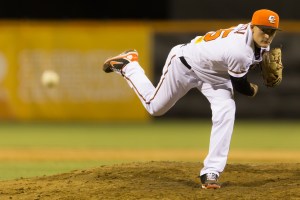

Top 40 Americans in the ABL: #35 Gabriel Suarez of the Adelaide Bite and 2013 WBC Qualifier Spain

 Minor league journeyman Gabriel Suarez, whose grandfather was of Spanish descent, was one of the reasons why Spain won the recent 2012 World Baseball Classic Qualifier in Jupiter, Florida to move on to the 2013 WBC in March. Going 6-for-12 with a .667 slugging percentage and .647 on-base percentage during the four-game tournament, Suarez was a pleasant surprise for underdog España.
Selected by the Montreal Expos in the 26th round of the 2004 MLB June Amateur Draft out of Phoenix’s South Mountain Community College, the Denver-born Gabriel Suarez has played in the minor leagues with stints in the independent and international baseball leagues since turning pro. The 28-year-old Adelaide Bite outfielder has played every position but catcher in his career.

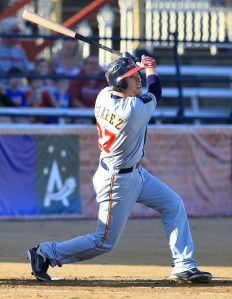
his way back into the minor leagues by way of independent league baseball. Currently playing
for the 2012-13 Adelaide Bite, Suarez has put together a .235 batting average with one double, four RBI and one stolen base. At the completion of his Aussie baseball expedition in the ABL, Suarez will be focused on the World Baseball Classic. After winning the WBC Qualifier in Florida to advance to the 2013 World Baseball Classic, Spain’s second baseman Gabriel Suarez was already thinking about what was next. “We’re looking forward,” said Suarez. “Dream come true. We came here for this.” Spain overcame the odds with little time to prepare and beat a talented Israel team in the WBC Qualifier Final to earn the right to play against Pool C host Puerto Rico along with powerhouses Venezuela and Dominican Republic in San Juan beginning March 7, 2013.
Team Espana after getting it done at the qualifiers to move onto the @wbcbaseball 2013 twitter.com/GabeOSuarez/st…
— Gabriel Suarez (@GabeOSuarez) February 6, 2013

Australian lifestyle suits Top 40 American in the ABL: #36 Kevin Reese of the Melbourne Aces
 Ace pitcher Kevin Reese, who will on his home away from home turf as part of the World Team pitching staff in the 2012 ABL
All-Star Game at Melbourne Ballpark, would probably not think twice about crediting the Aussie lifestyle for his recently rejuvenated confidence and positive outlook. “I have to pay tribute to the Australian lifestyle, where everybody is very laid back,” Reese said.
“The biggest thing I learned out here was to trust your ability because you’re always one pitch away. There was a relaxed mindset
with runners on base. It’s nothing new that the coaches haven’t told me. It just kind of clicked. The lifestyle rolled into baseball.”
After being named to the 2010 Frontier League All-Star Team pitching for the Traverse City Beach Bums and blowing away opponents in the Baseball Victoria Summer League as the Malvern Braves’ import, the 27-year-old right-hander earned the right to be the 2011 Melbourne Aces’ Opening Day starter. Asked to return for an encore and pitch during the 2012-13 ABL season, the Pennsylvania native is a lot better than his 2-5 record and 3.81 ERA reflects. 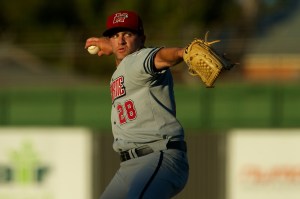
Currently ninth in the ABL with 51 strikeouts during his 59 innings of work and 11 starts, Reese is highly regarded by Melbourne Ace manager Phil Dale. Following an unlucky loss to the Canberra Cavalry on December 13th, Dale said: “He still gave us a chance, it was a quality start and from him that is all we can ask for.” The six-foot pitcher was one of 11 members of the Melbourne Aces chosen for 2012 ABL All-Star game. Reese suited up for the World All-Stars–which included players from the United States, Korea and Japan–and faced Team Australia. The former East Stroudsburg South High School, Blair Academy and Lafayette College standout played for the Atlantic League’s Somerset Patriots in 2011 and the Camden Riversharks in 2012. Notable Riversharks in the ABL have included Mike McGuire and Brian Burgamy from the 2011-12 Canberra Cavalry and Sean Jarrett from 2011-12 Brisbane Bandits. Click HERE to see Reese, McGuire, Burgamy and Jarrett talk about their Aussie experience in this video produced by Alexis Brudnicki (@baseballalexis). Reese filled every role in the Camden Riversharks pitching staff. He started out in the long relief role, helping to save the bullpen when starters couldn’t go deep into ball games. Later he was added to the rotation, allowing the starters an extra day of rest with six men in the rotation. Then after he was put back into the bullpen, Reese was immediately called on to fill Sean Jarrett’s spot in the rotation when he went on the disabled list and proved to be invaluable for the remainder of the season.
Perhaps Reese’s best Melbourne Ace pitching moment came in possible elimination game
two of the best-of-three 2012 ABL Championship Series against the Perth Heat on February 11th. Entering the do-or-die game in the 11th inning with the score tied at 2-2, the American hurler tossed three scoreless innings to get the victory as the Aces scored the winning run in the top of the 13th to force a game three contest. Unfortunately, Melbourne came up short 7-6 and lost to the defending champion Heat in the series’ deciding game on the following day. This season the Aces hope to turn the tables and bring home the ABL championship to Victoria. There is a feeling in Australia that the best has yet to come for Kevin Reese, and he will come through in the clutch again when everything is on the line
for the 2012-13 Melbourne Aces.
Garth Brooks’ favorite Top 40 American in the ABL: #37 Chuck Lofgren of the Brisbane Bandits
 Prior to joining the Brisbane Bandits, the closest lefty pitcher Chuck Lofgren ever came to Australia was in 2010 when Aussie teammate Trent Oeltjen from the Nashville Sounds, Triple-A affiliate for the Milwaukee Brewers, introduced him to Vegemite. It was during this time period that the Wild Wild West California Country boy, who always wears boots on days that he pitches, got a chance to meet his idol Garth Brooks at the superstar’s Teammates for Kids Foundation Fundraiser at the Country Music Hall of Fame in Nashville. Brooks later summoned Lofgren from his sixth row seat at the Country Music Hall of Fame’s Ford Theater to join the band onstage.

and his band in Nashville after many years of playing in minor league cover bands.
 Click HERE to see his live performance. “Besides being drafted, that was the best thing I ever did,” said Lofgren, who plays a Seagull six-string guitar in a Country music cover band. “When you’re playing tiny mom and pop shops and dive bars, it’s a lot different than getting up there with him.” It’s been a long road for the former 2004 Cleveland Indians fourth round draft pick, who was heralded in the Baseball America 2006 Handbook “as one of the top lefthanders in the minors.” The Baseball America 2008 edition speculated that Lofgren “could make his big league debut later in the year.” However, his MLB debut eluded him after an extended stay at Triple-A Columbus did not warrant a call-up.
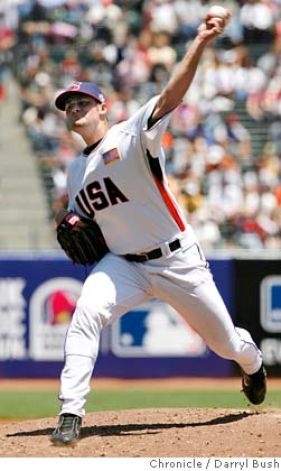
The South Bay native grew up watching his favorite player, Will “The Thrill” Clark, play at nearby Candlestick Park, and it was always a childhood dream to play for the San Francisco Giants. It was a family affair for Lofgren as his father was a 35-year veteran of the San Francisco Police Department and worked on-field security near the dugout during Giants games. He signed as a minor league free agent with the Giants’ organization in 2010. Lofgren pitched in 2011 at Single-A San Jose, Double-A Richmond and Triple-A Fresno–posting a 5-3 record with a 4.31 ERA, 1.45 WHIP, 6.8 K/9 rate, and 5.2 BB/9 rate. The Giants were looking for more from their local cowboy so Lofgren dug deep to his baseball roots when he was a successful two-way player and made the transition from lefty pitcher to first baseman and outfielder with his bat.
As a teenager, he was named to the AFLAC All-American High School Baseball Classic in 2003 for his precise pitching and consistent hitting after three consecutive years as a two-way player for the USA Baseball team in Mexico (Gold Medal Winners), Venezuela and Curacao, Netherlands Antilles. When Lofgren was drafted by Cleveland in 2004, he was so good offensively that his contract allowed him to pitch and hit. Unfortunately, a home plate collision quickly ended his hitting career as the Tribe did not want their star pitching prospect getting hurt. Yet, after eight years of pitching in the minor leagues Lofgren was willing to lay it all on the line as a hitter for the San Francisco Giants when he re-signed as a minor league free agent for the 2012 season. If current free agent Rick Ankiel had successfully made the transition from pitcher to hitter in MLB, why couldn’t Lofgren do the same? The six-foot-four, 220 pounder was encouraged by the support of the Giants’ front office–especially Vice President Bobby Evans, who reportedly liked Lofgren’s swing and wanted to work with him.
San Francisco trimmed down its roster in preparation of 2012 Spring Training and had to part ways with
the once-heralded baseball prospect. In a classy response to his release, Chuck Lofgren (@chuckylof) tweeted: “Got released today by the Giants always thankful for the opportunity from the team that I grew up watching and loving. One door closes…” Although not a Major League Baseball club, American Association of Independent Professional Baseball’s Amarillo Sox happily opened the door for the multi-talented player. Since it is a rarity in baseball to find a starting pitcher who can serve as the team’s designated hitter on most pitching off days, Lofgren was a welcome addition to the 2012 Amarillo Sox roster. In his 200 at-bats, Lofgren compiled a .245 batting average with eight doubles, two triples, three homers, 32 walks and 25 RBI. Making 20 starts and working 119.2 innings, the veteran pitcher compiled a 4-6 record with a 4.36 ERA.

start on December 7th against the Perth Heat yielded 11 strikeouts
and was by far his best outing yet. Lofgren said, “Coming out you always want to face Perth. You hear that they’re the team to beat.” The 26-year-old American import went 6.2 innings and limited the reigning ABL champion Heat to just one earned run, seven hits and one walk. Lofgren may just have to sing Garth Brooks’ “Much Too Young (To Feel This Damn Old)” again for MLB as a reminder that he still has a lot of game left in him despite being written-off prematurely.
Top 40 Americans in the ABL: #38 Greg Van Sickler of the Perth Heat
 If you can’t beat them, join them. After Baseball Western Australia State All-Star Pitcher Greg Van Sickler held Perth scoreless and struck out five in his four innings of perfection in the Heat’s 3-2 loss to the BWA All-Stars in a Spring Training exhibition game on October 20th, the three-time All-American Van Sickler made quite an impression on the two-time reigning Australian Baseball League champions. So much in fact that Perth wasted little time in calling him up from the Carine Cats, member of the 12-team WA State League, to join the Heat.
 From Virginia to Australia by way of Belgium, Perth Heat pitcher Greg Van Sickler has ventured on the road less traveled in pursuit of his dream in playing baseball professionally. After a stellar season playing for Belgium’s Premier League Namur Angels of the Ligue Francophone Belge de Baseball et Softball, the Virginia native is now on an Aussie baseball odyssey in Perth.


The six-foot-two 23-year-old tipped off his talent early on while playing baseball at Winchester, Virginia’s James Wood High School, where he was named team captain and MVP twice as well as 2007 Northwestern District Player of the Year. Over five years later, Greg Van Sickler finds himself nearly 12,000 miles away from home playing for the defending ABL champs Perth Heat. In his 6.2 innings of bullpen relief, the
Top 40 American has been dominant with seven strikeouts and a 1.35 ERA.

Top 40 Americans in the ABL: #39 Caleb Cuevas of the Sydney Blue Sox
 When Oakland A’s closer Grant Balfour talks, people listen…especially when your father is the Australia Baseball League’s Sydney Blue Sox General Manager! Coming back from Tommy John surgery and beginning his rehab during the 2011-12 offseason, pitcher Caleb Cuevas enlisted Balfour as his workout partner to train with in Clearwater, Florida. The Aussie sent his father, Blue Sox General Manager David Balfour, an email detailing the skills Cuevas possessed. Balfour described the young American pitcher as a “flamethrower”–quite the comment from a reliever who himself lights up the radar gun with triple digits.

me getting back to 100%, but how
I could be an even better pitcher
once I returned completely.”

to make his impression felt while on the Sydney
Blue Sox pitching staff. (Joe Vella /SMP Images)
Although the right-handed hurler officially began his first professional season in the Can-Am League with the 2012 Newark Bears, Cuevas got his first MLB test while on the Coastal Carolina University squad when facing some big guns on the Texas Rangers lineup in an April 2012 exhibition game. Click HERE to watch him take on the likes of Napoli, Borbon, Kinsler, and Andrus. The six-foot-two pitcher was a two-time All-Western Athletic Conference pick at West Henderson High School prior to playing for Louisburg College, the Outer Banks Daredevils and Coastal Carolina.
League play before moving to the Newark Bears bullpen. In his final 14 appearances as a reliever, Cuevas posted a 2.38 ERA over 15.1 innings
of work, allowing 17 hits, six walks and four
earned runs, while striking out 18. Blue Sox
manager Jason “Pops” Pospishil took notice
of his good numbers and immediately thought
how valuable the young import could prove to be
for Sydney while echoing the sentiment shared by Oakland Athletics’ Grant Balfour. “His numbers out
of the bullpen were extremely impressive and he
also has some experience as a starter, so he will
be a flexible piece to add to our pitching staff,”
said Pospishil. The Blue Sox skipper believes that
with Cuevas’ versatility he could play various
pitching roles for Sydney this season. During his
10 ABL appearances and 10.2 innings of relief,
Cuevas has given up opponents ten runs (8.44 ERA).
Top 40 Americans in the ABL: #40 Dustin Loggins of the Canberra Cavalry
 Recent College of the Ozarks graduate Dustin Loggins is the youngest of four Kansas City T-Bones pitchers, who currently serve as the nucleus of the Canberra Calvary pitching staff–including teammates Steven Kent, Brian Grening and Sean Toler. The six-foot-five right-handed Missouri native was named to the 2012 All-Midlands Collegiate Athletic Conference First Team after posting career bests in wins, strikeouts, and ERA during his final season of his four years playing for the Bobcats. Before joining the T-Bones, Loggins pitched 37 1/3 innings and struck out 43 with a 2.89 ERA for the Ozark Generals of the MINK Midwest Summer Collegiate Baseball League.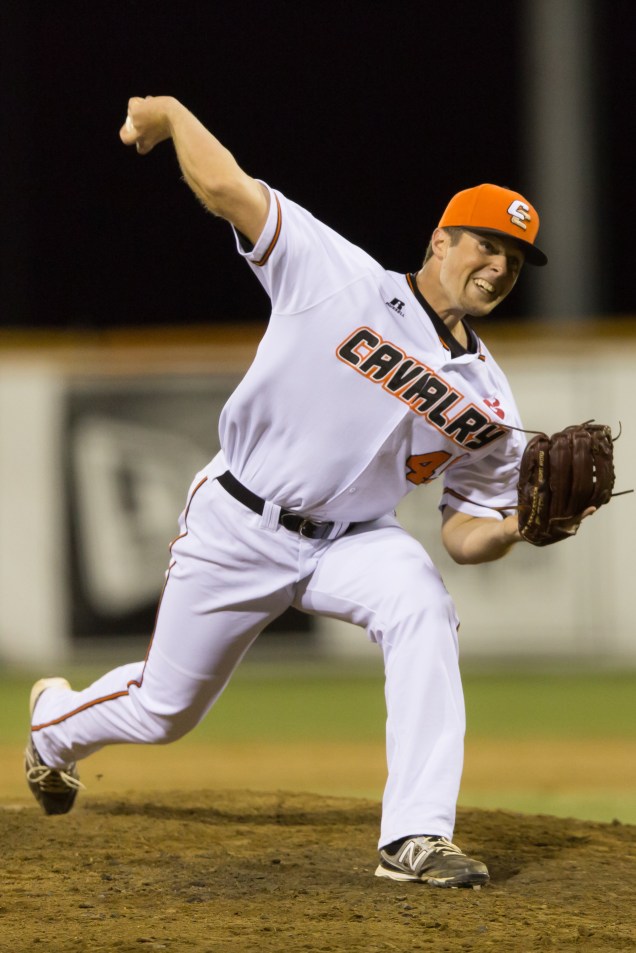
 Converting from a starting pitcher in college to a reliever professionally has helped his velocity touch the mid-90’s. In his 21 ABL relief appearances so far, Loggins has logged 23.1 innings and has struck out 31. With a 4-2 record, 2.31 ERA, and one save under his belt, the 22-year-old will be the Cavalry’s stopper late in games to ultimately halt the ABL reigning champion Perth Heat from a never seen before three-peat.
Prelude to the Top 40 Americans in the ABL: MLB success story of Houston Astros’ Brandon Barnes
 Last December MLBblogger profiled the Top 20 Americans playing in the ABL, which was considered a holiday present to the homesick yet aspiring MLB prospects. The prized imports shared the good cheer with friends and family in the U.S.A. while playing during the offseason in Australia to fulfill their dreams of reaching the big leagues.


Back by popular demand this holiday season, MLBblogger now presents an expanded Top 40 Americans in the ABL format to the delight of even more players and their most loyal fans abroad. Visit MLBforLife.com often for updates on all the imports. Americans Zachary Arneson, Jeremy Barnes, Anthony Claggett, Cody Clark, Zachary Fuesser, Brian Grening, Tyler Herr, Kody Hightower, K.C. Hobson, Jonathon Jones, Jack Murphy, Zach Penprase, Kevin Reese, Chris Smith, Carlo Testa, and Virgil Vasquez were named World All-Stars and are playing host Australia in the Second Annual ABL All-Star Game on December 16th.
Giants’ Roberto Kelly manages Team Panama with fast track to World Baseball Classic in March 2013

San Francisco’s 2010 and 2012 World Championships.


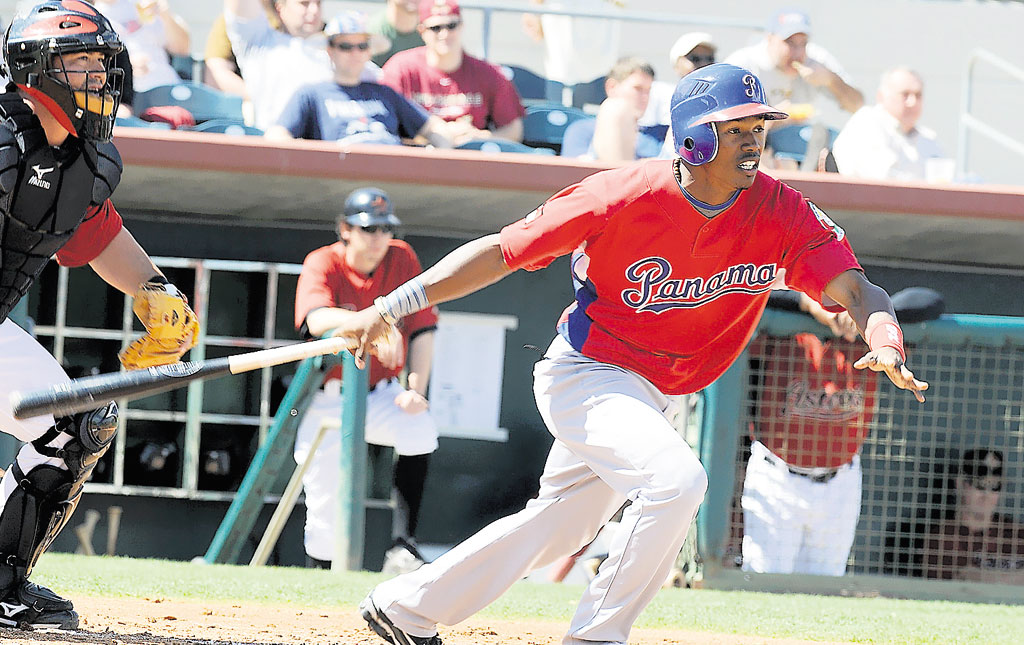

of the few bright spots in Panama’s two losses during the 2009 World Baseball Classic Pool D competition in San Juan, Puerto Rico. In game one against host Puerto Rico, Durango singled, walked twice and stole one base. In Panama’s follow-up contest
in which they were eliminated by the Dominican Republic, he went 2-for-3. Hitting .600 in the 2009 World Baseball Classic, Durango was second in the international games in batting average and on-base percentage. Panama’s 48-year-old manager will use Durango’s ability to get on base, steal a bag or two and ultimately score to win the 2012 WBC Qualifier games beginning November 15th at Panama City, Panama’s Rod Carew Stadium.

to lead the country to greatness by advancing to the 2013 World Baseball Classic. He will not be alone in this special assignment as former MLB outfielder Rubén Rivera (1995-2003) will be there by his side every step of the way. Although his cousin–New York Yankees closer Mariano Rivera–has never participated in the World Baseball Classic, Rubén will be making his third WBC appearance for Panama. Still playing ball and in excellent shape at age 39, Rubén is very much the heart and soul of this Panama squad.
 With over 3.5 million Panamanians cheering on their national baseball heroes in the World Baseball Classic Qualifier, there’s a good chance that the sense of excitement in Panama City will equal that of the recent enthusiasm at the 2012 World Series Champion Giants celebratory parade in the streets of downtown San Francisco. The common link to key both of these teams is Giant coach and Panama manager Roberto Kelly. With his expertise and his roster of very talented players, Panama is destined to party hard after a win of the
WBC Qualifier Final on November 19th. 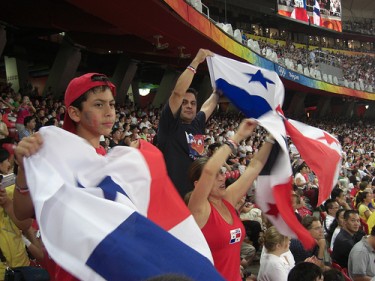
Panama’s Rubén Tejada may be small in stature but a big factor in decisive World Baseball Classic

Despite being labeled “The Rookie” for his his small size dating back to his childhood living across the street from Panama’s Omar Torrijos Herrera Stadium, Mets shortstop Rubén Tejada has big league intelligence and baseball embedded in his DNA. The Santiago de Veraguas native wants victory for his country. Host Panama battles neighboring Colombia, Brazil, and Nicaragua in the upcoming World Baseball Classic Qualifier  beginning November 15th at Panama City’s renovated Rod Carew Stadium. “The only reason we are here is to win and clinch a spot on the Classic,” Tejada said. “The main thing is move on to the Classic, and God willing, everything will go our way. I come with more experience, so hopefully everything will come out as planned.”


the tendency to swing early at-bat.


 mlbblogger