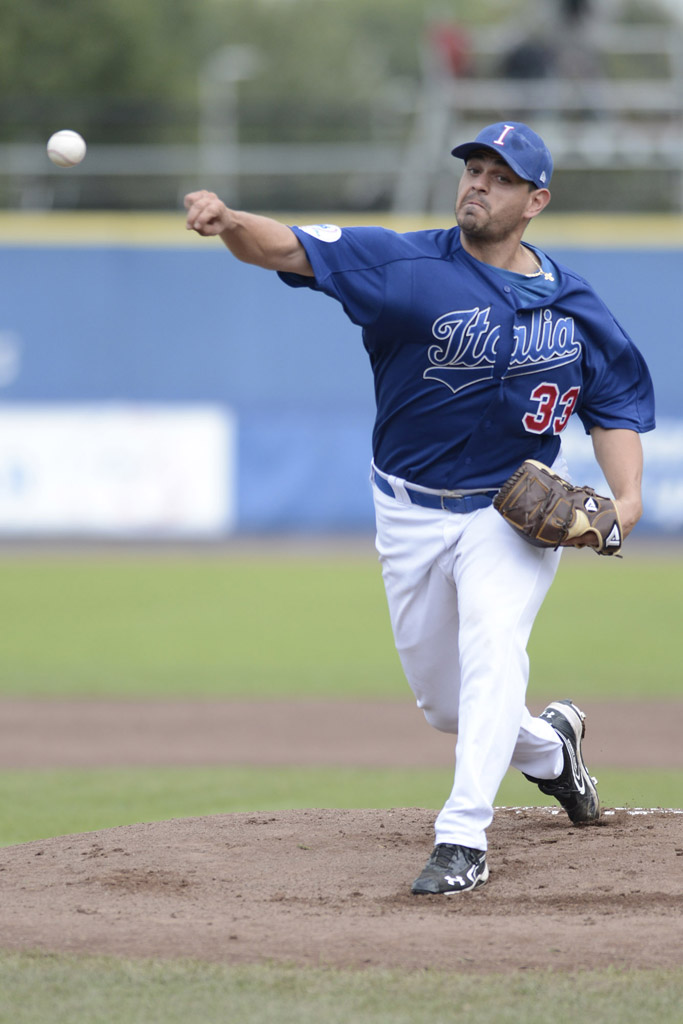
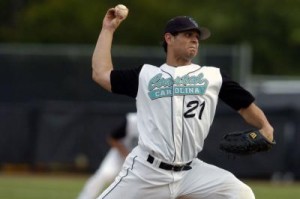
In the 2012 European Championship final, Team Italia winning pitcher John Mariotti limited the Netherlands to three hits and two runs (one earned) while striking out six in six innings of work.Italian players celebrate after successfully defending the throne and winning its third consecutive European Championship and 10th title win in history since 1958.Having been previously drafted twice by the Los Angeles Angels of Anaheim after graduating from Toronto’s Chaminade College School in 2003 and again in 2004 while attending Florida’s Gulf Coast Community College, the third time was the charm for the Baltimore Orioles as their 18th round 2007 draft pick John Mariotti. He signed on the dotted line and began his pro ball career after leading the nationally-ranked Coastal Carolina University Chanticleers to Big South Conference prominence and compiling an impressive 13-2 career record.Coastal Carolina University pitching ace John Mariotti led the Chanticleers to the top in 2006 and 2007.
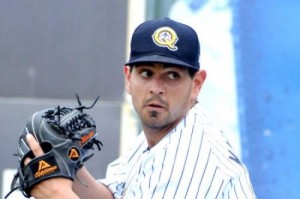
The six-foot-one right hander made his professional debut in 2007 with Orioles’ Short-Season Single-A Aberdeen and posted a 2-2 record with a 1.46 ERA. He spent his entire 2008 campaign at Single-A Delmarva. Mariotti began the 2009 season at Single-A Advanced Frederick and moved up to Double-A Bowie, where he started 13 games and compiled a 3.44 ERA. The Orioles’ farmhand was back at Frederick in 2010, when he made 41 appearances out of the bullpen and chalked up three saves.Italo-Canadian John Mariotti now pitches closer to home for the Québec Capitales, winners of their fourth consecutive Can-Am League Championship title in 2012.Québec Capitales’ starting pitcher John Mariotti has found his groove in the Independent Can-Am League. The Woodbridge, Ontario MiLB expat was a welcome addition to the 2011 Québec Capitales‘ starting pitching rotation. Mariotti went 11-1 in the regular season with 2.74 ERA in 108.1 innings of work before going undefeated in the postseason with a 1.98 ERA. The Philadelphia Phillies came calling for Mariotti as he was signed to a minor league contract and invited to 2012 Spring Training. The hype was short-lived, and he retreated to comfy Les Capitales de Québec, where he tallied a 10-1 record in 98.1 innings with a 4.03 ERA in 2012.
Representing the “Azzuri” Team Italy, John Mariotti will face Mexico, USA and Canada in the 2013 WBC
at Chase Field (Phoenix, AZ) and Salt River Fields
at Talking Stick (Scottsdale, AZ) beginning March 7th. Under the leadership of manager Marco Mazzieri, pitching coach Bill Holmberg, hitting coach Mike Piazza, third base coach Alberto D’Auria and first base coach Claudio Vecchi, Team Italy remained undefeated (9-0) in the 2012 European Championship by outscoring opponents 45-4 during the first five games of Pool A competition and then continued with their winning ways by outscoring others 18-6 in the remaining four games of the medal round. By defeating the Netherlands twice back-to-back on their home turf during the final two days of the 2012 European Championship, Team Italy demonstrated its resilience against a squad which was the biggest surprise of the 2009 World Baseball Classic. Remember the Dutch defeated the Dominican Republic twice and moved on to the second round of play.
Let’s put the Italian victory over the Netherlands in the 2012 European Championship into perspective. By the Dutch winning the 2011 World Cup after upsetting a talented Cuban team in the finals, does that make Italy the new elite class of European baseball and the spoiler in the upcoming 2013 World Baseball Classic? With John Mariotti’s winning spirit, Italy has got a real shot.
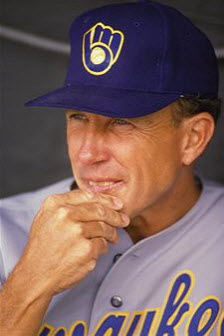
Tom Trebelhorn managed the 1986-1991 Milwaukee Brewers
and the Chicago Cubs in 1994.Italians have often been criticized for using their
hands when they speak, but 2009 Team Italy coach Tom Trebelhorn (who is of German descent) has
been chastised by Cubbie fans for speaking his mind. To the dismay of the Chicago faithful, the former
MLB manager was awarded the #1 quote in Bleacher Report‘s “Best Baseball Quotes of All Time” (which includes memorable quotes from Italian American Baseball Hall of Fame Legends Joe DiMaggio and Phil Rizzuto). However, Trebelhorn would much
prefer being remembered in baseball history for
his invaluable contribution in preparing the Italian team for the 2009 World Baseball Classic. “I think
the global aspect of baseball is very exciting,” said
the seasoned 65-year-old baseball veteran. He loves the international platform that the World Baseball Classic provides. Trebelhorn commented, “It gives
the game terrific exposure. To be able to hopefully
help the Italian Baseball Federation in their attempts
to enrich baseball as a sport in Italy is intriguing.”Bird’s-eye view of the 2009 WBC game between Italy and Canada at Toronto’s Roger Centre.’09 World Baseball ClassicEvery minute with the Italians in the 2009 World Baseball Classic at Rogers Centre was special for Trebelhorn. “A great experience. The team played with a lot of passion and heart,”
he said in retrospect to Italy’s 6-2 upset and elimination of
host Canada. “That was an embarrassment to them.” Named 1986 Manager of the Year by Baseball America after posting
an impressive 91-71 in his first season as the Milwaukee Brewers’ skipper, Trebelhorn managed the Brew Crew through 1991. After managing the 1994 Chicago Cubs, he signed on as coach for the Baltimore Orioles and remained with the franchise for 12 years. An unlikely alliance between the O’s and the Italian League’s Grosseto Baseball Club began after Baltimore County and the Italian Province of Grosseto became Sister Counties.The Sister Counties relationship between Baltimore and Grosseto blossomed as a result of the friendship between Orioles coach Trebelhorn and Grosseto native/Italian manager Mazzieri.Italian manager Marco Mazzieri The late and great Orioles vice president of operations
Syd Thrift announced in 2001 that Grosseto Baseball
Club manager Marco Mazzieri and several of his players were invited to Orioles’ Spring Training to observe team workout and training methods. He said, “We believe
this will help advance the game of baseball in Italy and throughout Europe. I’ve been to Grosseto and have
seen the enthusiasm they have for the game of baseball.” Italian manager Mazzieri and O’s coach Trebelhorn were two sound baseball minds from different sides of the Atlantic, and their common love for the game brought them together around the same time every year. They became close friends in no time and looked forward to their annual reunion. Trebelhorn said, “I used to have
him come to spring training and work with us in Florida.” When Federazione Italiana Baseball Softball (FIBS) President Riccardo Fraccari revealed that Mazzieri would be manager for Team Italy in the 2009 World Baseball Classic, the Italian baseball icon knew he needed some reinforcement with extensive MLB experience behind him. Upon hearing
of his appointment Mazzieri said, “I am really happy and not overconfident.
I am aware of the fact that I need to rely on the experience of a coach who has spent time in the Big Leagues.” Mazzieri summoned Trebelhorn. “He got the job as the head guy and asked if I would help him out,” said Trebelhorn nonchalantly. As the saying goes: “A friend in need is a friend indeed.”
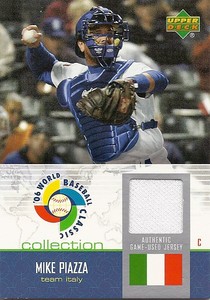
Mike Piazza played for Team Italy
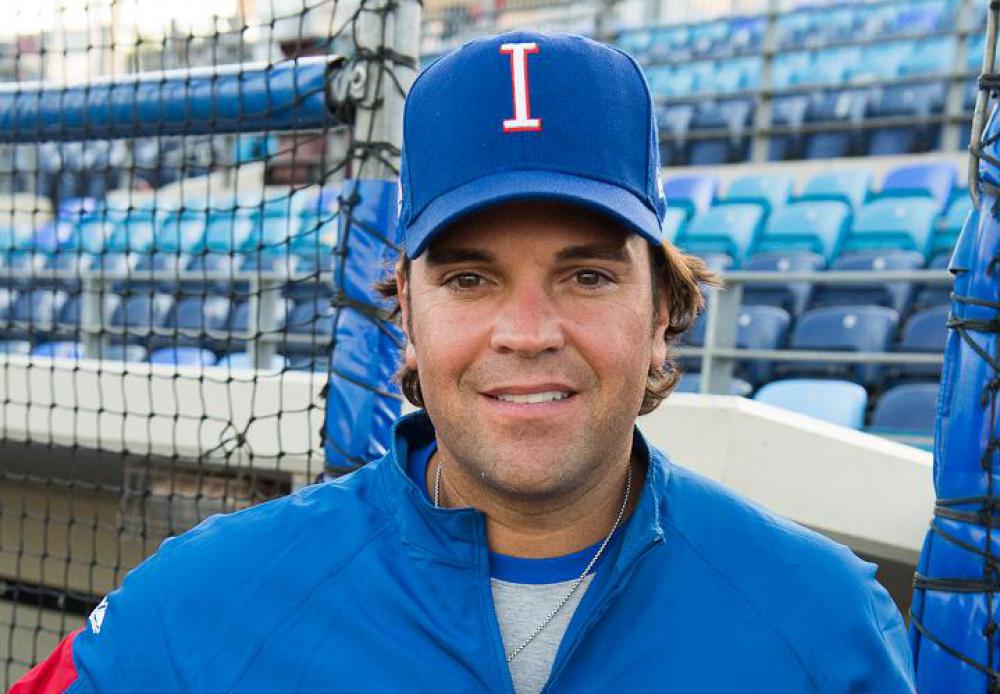
in the 2006 World Baseball Classic.Mike Piazza’s double and Jason Grilli’s near-perfect 4.2 innings of pitching, which prompted a standing ovation from the sold-out crowd at Lake Buena Vista’s Walt Disney World Resort in Florida during Team Italy’s 10-0 win over Australia in the first round of the 2006 World Baseball Classic, may have something to do with it. Perhaps the perks of being an Italian ballplayer including the sweet aroma of the delicious post-game Sicilian cuisine-inspired victory celebrations in the club house was appetizing enough for Piazza to make what seemingly could become a lifetime commitment to one’s country of ancestry. With over five years of service to date under his belt, the one-time Marlin and current Team Italy hitting coachMike Piazza is a big catch for the Federazione Italiana Baseball Softball (FIBS) by inspiring a whole new generation of Italian athletes and furthering baseball’s reach in Europe. “The biggest thing for me is trying to promote the game in Europe,” Piazza said.Mike Piazza celebrates with Team Italy after the Italians beat the Netherlands to win their third consecutive European Championship since 2010.
Like a gondolier in Venezia, Piazza is singing songs of praise for the World Baseball Classic. He said, “I believe in it. I think it’s great. I hope someday down the line it turns into a world-class, World Cup-type thing. I think that’s in conjunction with the way the game is evolving and changing. One of my personal mottos is: ‘If you are going to do it, don’t do it halfway.’ If they’re going to really make a concerted effort to develop the Classic, truly make it a world event.”
2013 World Baseball Classic Pool D play begins on March 7th when Italy battles Mexico at Salt River Fields at Talking Stick in Scottsdale. The Italians return March 8th to take on Canada. Team Italy travels to Chase Field in Phoenix on March 9th to face Team USA. The winner and runner-up of Pool D will advance to the second round of a modified-double elimination tourney. Italy hopes to make it to the WBC Finals at AT&T Park in San Francisco, CA.The two teams will play the winner and runner-up of Pool C (which includes Venezuela, the Dominican Republic, Spain and host Puerto Rico) beginning March 12th at Marlins Park in Miami. The winner and runner-up of the stiff competition will move on to the WBC Championship Round starting March 17th at AT&T Park in San Francisco. Not only does Piazza believe in the WBC, but he also has faith in Italian baseball. Having already coached Team Italy to two of its three consecutive European Championships and hinting of a WBC title, he said: “Our dream one day is to have this team be a champion.”
A panoramic view of the archaeological site of Rocchicella di Mineo, ancient Palikè, the location
of the most important sanctuary of Sicily's indigenous Sikel people in the eastern part of the
island with Mount Etna, Europe's largest active volcano, towering over Catania seen far awayThe Siculi (Sikeloi; Sicels; Sikels) were the native inhabitants of the eastern regions (including Mineo) of Sicily south of the Italian Peninsula over 10,000 years ago. The island of Sicily takes its name from the indigenous Siculi people. With its strategic location at the center of the Mediterranean, Sicily is rich in its history of conquest and empire. It is a melting pot of cultures with over a dozen ethnic groups whose warriors and merchants walked her shores. Although the other two indigenous societies of the Sicanians and Elymians assimilated easily with the Greeks, the Sicels constituted a highly developed society that the Greeks respected profoundly. Despite conflict and its desire to remain autonomous, it took several centuries for the Sicels to completely assimilate and amalgamate with their Greek neighbors. Except for the Romans, the Sicels were the only predominantly Italic people to settle in Sicily in large numbers as colonists.
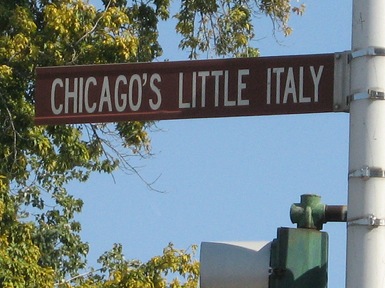
Italy leads all European countries in its number of immigrants to America. Beginning in the late 1800’s, poverty and natural disasters drove Italians out–especially in Il Mezzogiorno, the southern and poorest provinces of Italy. As late as 1900, the illiteracy rate in southern Italy was 70 percent. The Italian government was dominated by northerners, and southerners were hurt by high taxes and unfair tariffs on the north’s industrial goods. Southerners suffered from exploitation by people of the same nationality and religion.Piazza DiMaggio commemorated the legendary son of an Italian immigant, Joe DiMaggio, who lived the American Dream of playing baseball and the tens of thousands of Italian immigrants who came to America through the Taylor St. U.S. port of entry seeking a new life in the heart of Chicago's Little Italy during the early part of the Twentieth Century.
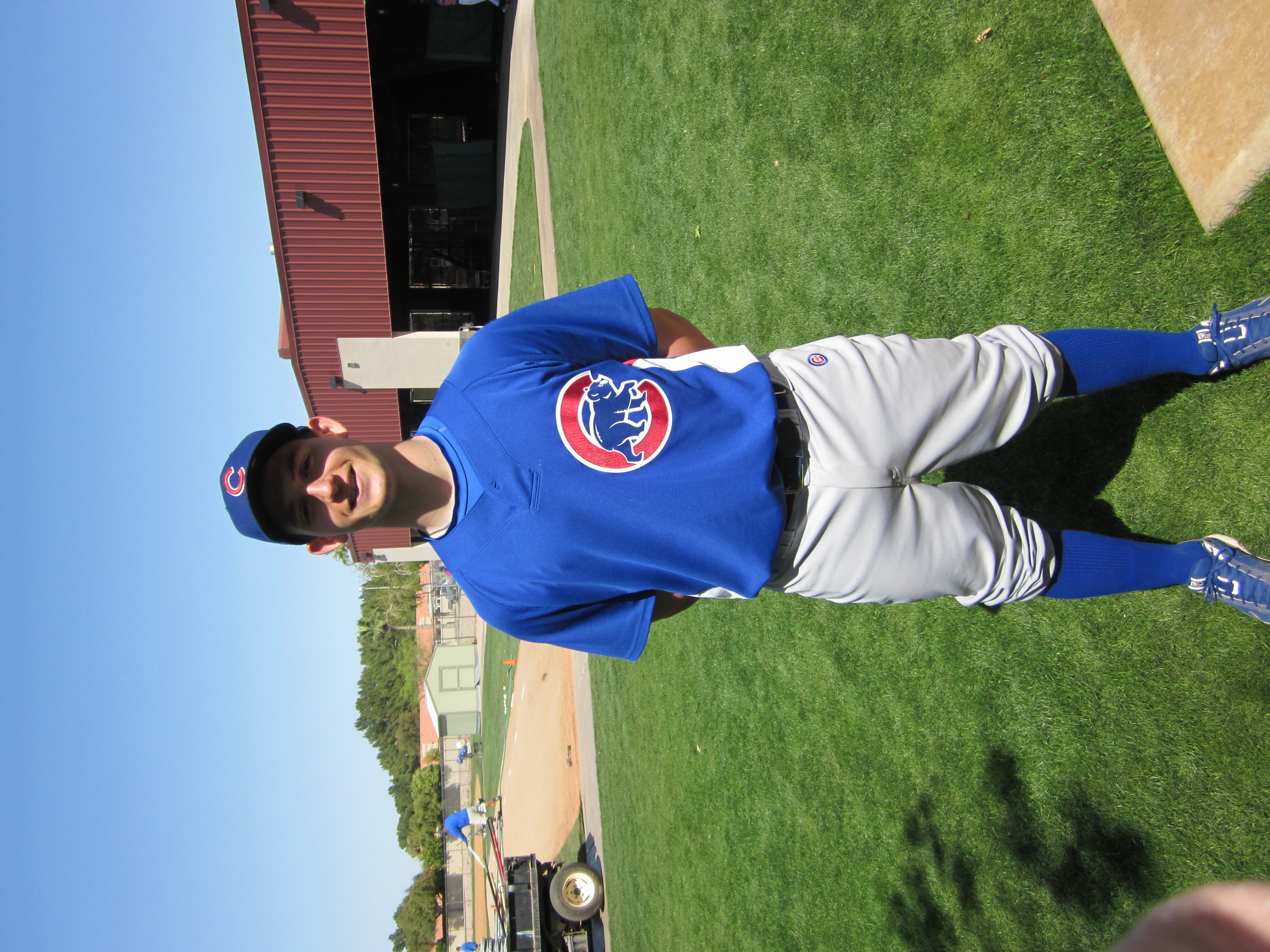
Self-reliant on only themselves for mere survival, southerners had an allegiance to la famiglia (the family) and l’ordine della famiglia (the rules of family behavior and responsibility). Suffering from a scarcity of cultivatable land, soil erosion and deforestation as well as a lack of coal and iron ore needed by industry, life in the South was difficult. Southern Italy was ravaged in the early 20th century when Mount Vesuvius and Mount Etna erupted and buried towns nearby. In 1908 an earthquake and tidal wave that swept through the Strait of Messina between Sicily and the Italian mainland killed more than 100,000 people in the city of Messina alone. For many Italian immigrants, fleeing to the United States was not to be interpreted as a rejection of their homeland. Instead, it defended the Italian way of life because the money sent home helped to preserve the traditional order. Rather than seeking permanent homes, they desired an opportunity to work for a living and aspired to save enough money to return to a better life in the country of their birth. Unable to earn enough to support their families in their native Italy, they were migratory laborers. The majority were young men–aged 18 to 25–who planned to work, save their money and return home. Hoping their absence would not be too long, they left behind their parents, young wives and kids. Fast forward a century later and native Italian athletes are still clinging to their roots and culture despite being lured by U.S. professional sports to homogenize into the American lifestyle. The first Italian-born baseball player awarded a MLB contract was pitcher Alessandro Maestri. Signed by Chicago Cubs scout Bill Holmberg, Maestri never pitched at Wrigley Field–even though he was a Minor Leaguer with a wicked Major League slider. However, the Cubs struck gold in 2010 when Holmberg signed then 16-year-old Italian catching prospect Alberto Mineo to a contract.Chicago Cubs Italian catching prospect Alberto Mineo at 2012 Spring Training in Mesa, ArizonaCatcher Alberto Mineo calms his pitcher down and discusses strategy to get the next batter out.Now ranked 58th behind #1 Cubbie Starling Castro in the Chicago Cubs Top Players Under 25 Organizational List, catcher Alberto Mineo has his eyes set on making it all the way to Wrigley. The defensive standout with excellent catch-and-throw skills said, “The part that I like most about being a catcher is throwing runners out at second.” The 5-foot-11, 170 pounder has strong hands and forearms which assist his receiving skills and defensive instincts. Blessed with outstanding arm strength and a quick ball transfer exchange, Mineo looks comfortable behind the plate. Exuding confidence as a first-rate catcher, opponents will need to exercise caution on the bases.Left-handed hitting slugger Alberto Mineo
played for Team Italia at the 18 Under Junior World Championship in Thunder Bay, Canada
Holmberg watched Mineo develop into a natural talent from age 10 and knew early on he was special. Alberto was mature enough to accept feedback and listened to Holmberg and Maestri’s sound advice. He commented, “Both of them, they would always say to me ‘Work hard everyday because there is somebody somewhere else that is working hard to get to the Big Leagues’ and I started believing that I could sign with an American team.” Exercising good plate discipline, Mineo is a patient hitter who jumps on a pitcher’s mistake. “I always think as a hitter that I must wait for my pitch until I get two strikes,” Alberto explained. The left-handed hitting Mineo can demolish the ball with his technically sound swing, and once on base he can demonstrate great speed for a catcher.Cubs prospect Alberto Mineo has speed on the bases and is very quick with his glove defensively.
After being signed by Bill Holmberg–who also is the pitching coach for the Italian National team and operates the Major League Baseball International European Academy at the Olympic Training Center in Tirrenia, Italy–Ronchi dei Legionari New Black Pantherscatcher Alberto Mineo began his professional career in the month-long MLB Australian Academy Summer League, where he became friends with Los Angeles Angeles of Anaheim promising pitching prospect Alex DaSilva–who later moved up the competitive ladder to play for the Australian Baseball League (ABL)
2012 Runner-Up Melbourne Aces. Mineo played well in Australia (.270 batting average, 1 HR) as did his Italian mentor Alex Maestri, who was so popular that he won the 2012 ABL Fan Choice Award. Catcher Alberto Mineo has all the tools to follow fellow MLB International European Academy graduate Alex Liddi of the Seattle Mariners and become the second Italian-born player in the Big Leagues.
The ABL’s first Italian pitcher/catcher combo with Maestri and Mineo could become reality if Alberto has his way. Mineo commented, “I had a nice experience in Australia, where I met a lot of great players that I still remain in contact with via facebook. I would really like to play with Alex in the ABL.” The dynamic duo could possibly make their debut in the near future as members of the Italian National team under the guidance and direction of pitching coach Bill Holmberg and former Major League Baseball All-Star hitting coach Mike Piazza. Mineo has played as a member of several Italian National teams at various levels– including the 18 Under Junior World Championship in Thunder Bay, Canada. Italian National team catcher Francisco Cervelli of the New York Yankees now has Mineo as back-up.
Mineo said, “I don’t feel the pressure to be the next Italian to make it in MLB. I just want to have fun and enjoy this amazing experience that I’m living right now. But it would be really nice to play with Alex Liddi on the Italian National team…”Lady Liberty of a Cubbie kind stands tall and proud in the city of Chicago.
Alberto had an exceptional Cubs 2011 Arizona Instructional League four-game campaign with a
.500 batting average, .556 on-base percentage and .500 slugging percentage. “The Cubs Instructional League was an awesome experience. I really like
to practice with Casey Kopitzke, the catching coordinator. I think he’s really good,” Mineo said.
“So far Cubs Spring Training is going very well. I like to work hard on the field and in the gym. It’s the best place you can go if you love this sport. A couple days ago Kerry Wood, Ryan Dempster and Rodrigo Lopez came to the complex to talk to us about the right way to get to the Big Leagues, but my favorite Cubs player is still Marlon Byrd. Inspired to play baseball at age five by his father and become a catcher three years later, Alberto followed American baseball religiously. “My favorite player has always been Derek Jeter. Now it is Joe Mauer. I really like how he plays, and I also think that he’s a very professional guy,” Mineo said.Wrigley Field, National Historic Landmark and home of the Chicago Cubs since 1916, is the second oldest ballpark in the Major Leagues and the oldest standing National League ballpark. Although there had been a long-time association of Italians being die-hard Cubbie fans,
the connection got even stronger when the late and great Hall of Fame Cubs broadcaster Harry Caray–whose real Italian last name was Carabina–signed on to the super station WGN Network in 1982. Although he passed on to baseball heaven in 1998, his legacy is still alive and well today as the legendary Caray’s Italian Steakhouse remains a Chicago restaurant icon. Now with Alberto Mineo in the Cubs organization, Italians in Chicago and beyond should rejoice and be thankful for their ancestors’ sacrifices years ago for the opportunities bestowed upon us in 2012. In the case of the young catching prospect Mineo–not only does he possess the natural skills necessary to become a professional ballplayer–
but he has the unconditional love and support of a dedicated team of international coaches, players, fans and family to be a true Italian baseball ambassador worldwide. Forza Italia!
Italian Cubbie fans of all shapes and sizes await Alberto Mineo's imminent arrival at Wrigley Field.



 Let’s put the Italian victory over the Netherlands in the 2012 European Championship into perspective. By the Dutch winning the 2011 World Cup after upsetting a talented Cuban team in the finals, does that make Italy the new elite class of European baseball and the spoiler in the upcoming 2013 World Baseball Classic? With John Mariotti’s winning spirit, Italy has got a real shot.