By purchasing tickets from us to Angels Fan Appreciation Day versus Seattle on September 22,
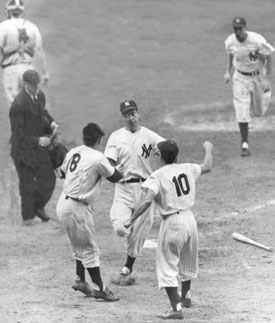
you support our efforts to bring the Italian Americans at Bat Exhibition to Orange County.Joe DiMaggio is featured prominently in the critically-acclaimed Italian Americans at Bat. The pressure will be on when the Angels host MLB’s first Italian-born-and-developed player–Alex Liddi and the Seattle Mariners at Angel Stadium on Sunday, September 22. The postseason will be around the corner, and the LA Angels will be in the hunt for an October playoff berth. This will not just be another game for the Halos as they will be playing every contest with a sense of urgency and
a do-or-die attitude. Looking at the 2013 Angels Promotional Calendar, September 22nd is also Angel Team Photo and Fan Appreciation Day–when lucky fans have traditionally come home with loads of freebies including: vacations to five-star resorts, airline tickets, Angels Suites and Group Night tickets, amusement park passes, fitness club memberships, pool tables, BBQ grills, flatscreen TVs, BluRays, iPods, Flip Video Cams and even new tires. The incomparable DiMaggio brothers: Vince DiMaggio, Joe DiMaggio and Dom DiMaggio
Join us on September 22 for Fan Appreciation Day September 22nd takes on more significance as it marks the start of our fundraising efforts to bring the Museo Italo Americano of San Francisco’s craftfully-curated Italian Americans at Bat: From Sand Lots to the Major Leagues Exhibit one step closer to Orange County in 2014. The exhibit documents not only the important role that Italian Americans have played in “America’s favorite pastime”, but also the role that baseball played in the assimilation of Italians into American culture. The great DiMaggio brothers are among the coveted stars featured in the exhibition.Everyone gets an Angels Team Photo on 9/22/13.
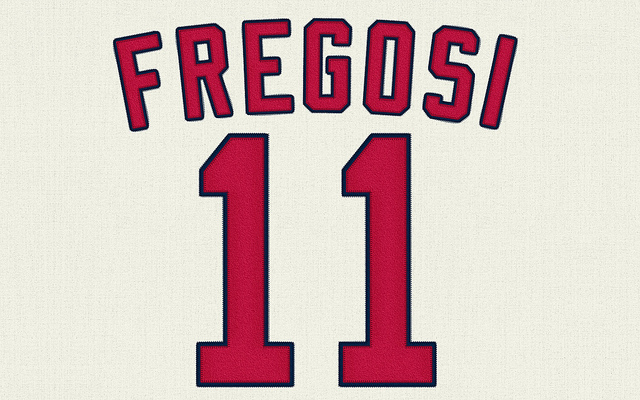
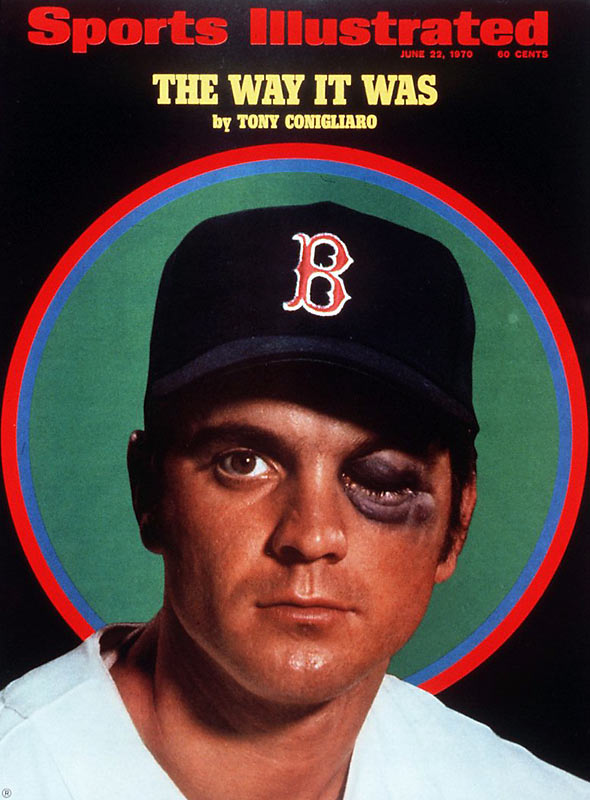
The Angels have had its share of Italian Americans on its roster in the past. Two prominent players who resonated in the hearts of hardcore Angels fans–Jim Fregosi and Tony Conigliaro–are included in the celebrated Italian Americans at Bat Exhibit. Fregosi became the Angels’ first budding star during the team’s initial eleven seasons of play from 1961-71. He led the American League in double plays twice, won the 1967 Gold Glove Award and set a franchise record with 70 career triples. Fregosi went on to manage the Angels at age 36 and guided the team to its first-ever postseason appearance in 1979. Conigliaro played for the Angels in 1971 but was never the same MLB All-Star after being hit by a tragic fastball thrown by Angels’ pitcher Jack Hamilton in 1967.
Italian American Chris Iannetta caught Jared Weaver’s no-hitter on May 2, 2012 in Anaheim.
Italian-born Alex Liddi of the Seattle Mariners brings his big bat to Anaheim on September 22nd. The modern day Italian Americans in MLB include Angels’ catcher, Chris Iannetta. His parents, Maria and Domenic, both moved from villages near Naples to the East Coast as children. Raised in Rhode Island, Chris still has strong ties to his relatives living in Italy. Iannetta had the opportunity to honor his heritage and play for Team Italy in the 2009 World Baseball Classic. When a roster spot opened up on the Team USA roster after Joe Mauer was unable to participate in the international tournament due to injury, he declined the Italian invitation and opted to play for Team USA instead. Ineligible to play in the 2013 WBC because of the amount of time he spent on the disabled list in 2012, Iannetta did not have to make the difficult decision of which team to play for this past March. The 30-year-old veteran, who proudly identifies with Italian American heritage, watched Team Italy with interest and pride in the WBC. “They played really well. It was fun to watch,” said Iannetta.Show your colors by purchasing a ticket from us to Angels Fan Appreciation Day on September 22nd. Part of the reason Team Italy was so fun to watch was because of Mariners’ Alex Liddi. The Italian infielder played stellar defense and wrecked havoc on opposing pitchers in the WBC. Now in this third season for Seattle, Liddi is the face of European baseball in MLB. See him live in action against the Angels on September 22nd and help bring Italian Americans at Bat to Orange County by purchasing your tickets from us at 949-870-5987.Jim Fregosi, one of only five Angels to have their number retired, had his jersey retired in 1998.
Sanremo, Italy’s Alex Liddi is among the 35 baseball players of Italian descent that proudly line the streets of San Diego’s Little Italy at the start of every MLB season.In 2011 Seattle Mariners’ Alex Liddi was the first Italian-born-and-raised player to reach the Major Leagues. Although San Diego can lay claim to Team Italy’s lead off hitter/LA Dodgers infielder Nick Punto as their own born-and-raised MLB hero, Sanremo–a popular Italian Riviera resort town between Genoa and the French border–is the proud home of WBC teammate/Seattle Mariners third baseman Alex Liddi. Alex was literally weaned on baseball by his father, Agostino, and his mother, Flavia. Agostino’s parents left Italy shortly after World War II to work as tailors in America.
While attending Beverly Hills High School, Agostino Liddi played baseball before repatriating to Italy after graduation. It was there that he met his future wife, Flavia, who played softball competitively in Italy.
You could say that Alex was a truly a baseball baby since it was reported that Flavia played first base for the first three months of her pregnancy carrying Alex. When Alex was old enough to play, his mother coached his baseball teams. As a teenager, his father drove him long distances to compete in games throughout Italy. With the addition of their two sons, Thomas and Alex, the couple shared their love of the game to transform the Liddi’s into the archetypal Italian baseball family.Alex Liddi’s mother, Flavia, traveled all the way from Sanremo to support her son playing for the Italian national team during the 2013 World Baseball Classic in Phoenix and Miami.Alex Liddi is congratulated by Italy teammates after hitting an RBI double off Jered Weaver and a two-run homer off Jerome Williams in an exhibition game against the LA Angels of Anaheim on March 6, 2013. Alex Liddi was honored last year by the Federazione Italiana Baseball Softball (FIBS) for his valuable contributions to the game. FIBS president Riccardo Fraccari called
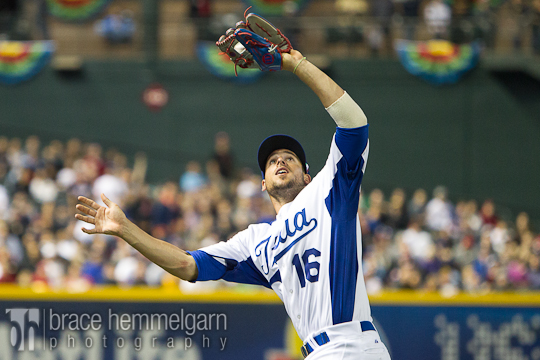
Liddi “the real ambassador of Italian baseball” after he became the first player from Italy to play in the Major Leagues since 1954 and the first-ever Italian-developed player in MLB. Liddi, the face of European baseball, has the opportunity to spur the growth of baseball back home by playing at the sport’s highest level. By watching Liddi on MLB.tv and reading the nightly box scores, young Italian athletes are now inspired to think that playing Major League Baseball is a viable option.Italia’s Alex Liddi catches a fly ball against Team USA during the 2013 World Baseball Classic.Seattle Mariners fans can’t wait for Alex Liddi’s return. Currently at Triple-A Tacoma with Team Italia pitcher Brian Sweeney, Alex Liddi is playing with conviction
in anticipation of his return to the Mariners for his third consecutive season. Now leading the Rainiers in home runs (8), runs (34), and RBI (32), the sheer power of Italian
24-year-old Liddi will be a welcome addition to the Seattle lineup when MLB rosters expand to 40 players in September. The European baseball ambassador was kind enough to sit down for an interview at the 2013 World Baseball Classic in Phoenix.
Roberto: You were signed in 2005 by Mariners’ scout Wayne Norton and current WBC Team Spain manager Mauro Mazzotti. Isn’t that a good sign for Italian baseball when two Italian managers, Italy’s Marco Mazzieri and Spain’s Mauro Mazzotti, are leading two of Europe’s finest ballplayers in the WBC?
Alex Liddi: Yeah, I’m happy for him that he is able to participate in the World Baseball Classic with another team. I wish him the best.
Roberto: Has the journey with the Seattle Mariners organization been a good experience so far?
Alex Liddi: Yeah, I enjoy my time in Seattle and in the minor league system. I think that it’s a pretty good system. I’ve enjoyed my years playing with them. I’ve got to thank them for giving me a chance to play in the big leagues. So I’m really thankful.Where it all began for Alex Liddi at Mariners Spring Training Headquarters in Peoria, Arizona
Roberto: You began your professional career in 2006 with the Peoria Mariners and then were then promoted to Single-A Wisconsin. You remained there until 2008 at which time you were batting .313 and enjoyed an eight-game hitting streak when you nearly hit .500! That must have been memorable?
Alex Liddi: Yeah. At every level you go, you try to make adjustments. I was trying to show them that I could play in the states.
Roberto: In 2009 playing for Single-A Advanced High Desert, you led the California League with a .345 batting average, 23 home runs, and 104 RBI. You were selected as a Cal League All-Star. In addition, you were awarded the Cal League MVP, Topps Cal League Player of the Year, Mariners Minor League Player of the Year and MLB.com Mariners Organization Player of the Year. What an accomplishment!
Alex Liddi: Yeah, it we kind of my break out year. We had a good team that year so it was a little easier for me to put out good numbers plus it was a good hitter-friendly park. But that gave me the confidence, and it gave me the chance to keep going for the rest of that year. All these things combined made me have a really good year.
Roberto: How did it feel playing on Team Canada at the Toronto’s Rogers Centre in the 2009 World Baseball Classic and beating the home team on their own turf?
Alex Liddi: Yeah, it was a good time for me. It was probably one of the biggest memories of my life, of my career. I had the chance to beat Canada at the highest level of competition. It will always be something that I will bring with me. I am happy that I was there.
Roberto: In 2011 you were invited to your first Spring Training camp with the Seattle Mariners. It was special because you hit back-to-back grand slams in consecutive games and produced impressive numbers: .385 batting average and a .429 on-base percentage. Your stellar 2011 campaign at Triple-A Tacoma (30 home runs, 104 RBI, 121 runs scored, 32 doubles and 61 walks) led you to your MLB debut with the Seattle Mariners on September 7. 2011. When you got to the big leagues, you hit three home runs and drove in six RBI in 40 at-bats while playing 15 games as a September call-up. Did you ever have to pinch yourself to make sure you were not dreaming anymore and come to the realization
that you were actually a big leaguer?
Alex Liddi: Yeah, for sure. I remember that I had a good spring, but I was still young.
So I had to go back down to Triple-A and develop myself a little more. But then it was getting really close to when the roster expanded to 40 in September, and I was getting really pumped. I maybe had the chance to get called up. Somebody would say ‘yes’
that I was going to get called up and somebody else would say ‘no’. Until they called
me and told me that I was getting called up. It was kind of like all the dreams came true, and it was a big day for me.
Roberto: You also played in the 2011 All-Star Futures Game. That must have been an
eye-opener playing in the front of the MLB media under the watchful eye of a worldwide televised audience.
Alex Liddi: It was a real honor. I would have never expected that to have come to me.
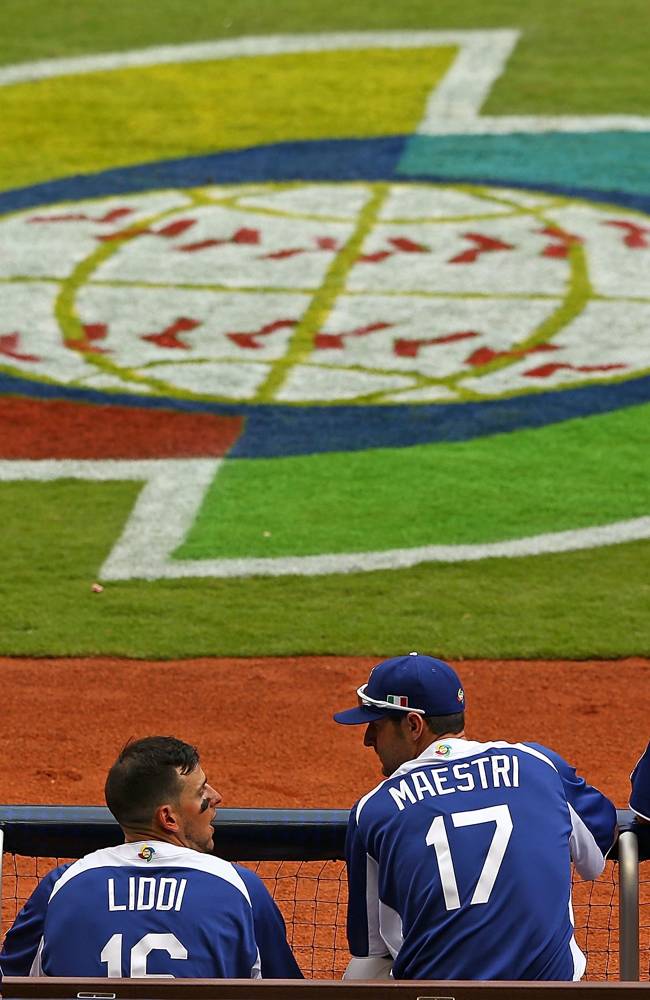
I was really happy to go there. It was really fun.Italian National team coach Mike Piazza (shown here as coach of Team USA) and Seattle Mariners’ Alex Liddi (shown here playing for Team World) in the 2011 All-Star Futures GameAlex Liddi and Alessandro Maestri talk strategy in the Italia dugout.Roberto: You have a special bond with Alessandro Maestri, the first Italian-born-and-raised pitcher to be signed by MLB. He also waves the Italian baseball flag internationally just as you do. Let’s talk about your friendship and what makes him a competitor.
Alex Liddi: First of all, I have a lot of respect for him
as a person and as a player. He’s a really good friend
of mine and probably one of my best friends. He’s one
of those guys who always works hard and fights for everything. He never got anything easy in his life and always had to fight for it. That’s why I give him a lot of respect as a person. Plus he’s a really good pitcher with really good stuff. It was a shame when he got released by the Cubs, but at the same time I remember when I called him to tell him to keep his head up. I thought he could have pitched in the big leagues for sure, and I
still think he can. And then he got a chance to pitch in Japan and make it to the big leagues there. I’m really proud of him. Hopefully, he will have a long career.
Roberto: He actually was selected as the inaugural Fan Choice Award in the Australian Baseball League when he pitched for the Brisbane Bandits in 2011. Wherever he decides
to play, he always makes a major impact.
Alex Liddi: He has charisma. He has a really good attitude on and off the field that makes him a complete player. Good tools, good person, good teammate…so all these things combined together make him a really good player.
Roberto: What is different about Team Italia in the 2013 WBC from the previous team in 2009. What is different in the chemistry which makes the team such a dominant player in this year’s World Baseball Classic?
Alex Liddi: Last time in the World Baseball Classic we had a good team, but this time we have been playing together more. I mean we already know Chris Denorfia, Nick Punto, Anthony Rizzo–I’ve known Rizzo for a couple years now. He’s been a friend of mine since I have been playing against him for a long time. The other guys have been playing together for a while now so the team is really together now. Instead of the other teams, they might bigger names but they have never played together like we do.
Roberto: You could have a bunch of big names on a lineup card, but at the end of the day you look at the box score and the team with the biggest desire to win the game will actually succeed.
Alex Liddi: I think we showed them already that we came here to win. We’re not joking and you can see it on our face…our enthusiasm on the field. We’re playing hard right now. We’re playing real baseball so everybody has to be careful.
Frank Catalanotto proved to be
an invaluable Team Italia coach.Roberto: You are going out there playing nine one-inning games every contest, opponents should not take Team Italia lightly.
Alex Liddi: We’re playing as a team. Everybody can come up with the big hit. Nobody has got to do too much. Everybody’s got other people’s back, you know. We keep playing like this, and we’ll do a lot of damage.
Roberto: Having a stellar coaching staff which includes future Hall of Famer Mike Piazza and Frank Catalanotto, it must have a tremendous impact on your entire approach to baseball.
Alex Liddi: For sure. I mean when you have a chance to have coaches like Mike Piazza and Frank Catalanotto—guys who have been in the big leagues for a long time—it makes it fun just to be around those guys. You’re able to ask them questions and learn from them so that’s another big part of the team right there too. Roberto: How proud are you being an Italian playing Major League Baseball and providing hope for Italian athletes that they too can play baseball professionally?
Alex Liddi: I’m really proud to have accomplished being the first Italian-born-and-raised player in the big leagues. It was something that I was always looking forward to coming up through the minors. That was my goal ever since getting signed. Getting closer to it, I could actually understand what it meant. As I got closer, and I was really excited about it. There was no pressure for me. It’s something I’m happy about that happened to me–getting to the big leagues. I’m really thankful to everybody for giving me the opportunity.
Roberto: I love what you represent to Team Italia, your family, friends and fans.
Alex Liddi: I respect this game, and I respect my family. You always got to remember where you come from. So I will always be there for my friends, and a lot of my friends are my fans too. They’re there for me so I got to be there for them. The fans are what make
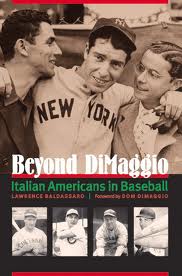
the game fun. So you have got to be thankful for the fans. I really appreciate the fans. Without the fans, this game would be nothing… Now available in paperback through Univ. of Nebraska Press.Although we won’t see Alex Liddi play in San Diego this year, we can still enjoy his banner in Little Italy. You will be pleasantly surprised by the number of Italian American baseball players that grace the streets of America’s finest city. You will find Team Italia hitting coach Mike Piazzawith 2013 World Baseball Classic players Nick Punto, Chris Denorfia, Anthony Rizzo, Chris Colabello and Jason Grilli in Little Italy. Other Italian American heroes on display include the likes of Jason Giambi, Barry Zito, Craig Biggio, Rich Aurilla, Gary Gaetti, Frank Viola, Rick Botallico, Ron Santo, Sal Bando, Tony Conigliaro, Pete Falcone, Roy Campanella, Rico Petrocelli, Tommy Lasorda, Bart Giamatti, Joe Pepitone, Joe Garagiola, Yogi Berra, Joe Torre, Frank Torre, Joe DiMaggio, Dom DiMaggio, Frank Crosetti, Phil Rizzuto, Nicholas Dallassandro, Charles Strada, Phil Cavaretta, and Babe Pinelli. To learn more about Italian American players in Major League Baseball, pick up a copy of Lawrence Baldassaro’s Beyond DiMaggio: Italian Americans in Baseball.
Italian American pitcher Barry ZitoWho would have guessed that at least 454 Italian
Americans have played baseball in the majors
since 1897? The San Francisco Bay Area produced many of baseball’s pioneers and originated the
sandlot playing field in the 1860s. In fact, the
earliest West Coast games were played downtown
on a sandlot where San Francisco City Hall stands today–nearly a century before the Giants and
Dodgers arrived in 1958. So it’s most appropriate Italian Americans at Bat: From Sand Lots
to the Major Leagues, a lavish documentary
exhibition of baseball memorabilia celebrating
the vast contributions of Italians Americans to
baseball, be on display for FREE in Reno, Nevada
at the magnificent Arte Italia through May 19th.
Located at 442 Flint Street, Arte Italia is open
Thursday through Sunday from noon to 5 PM
(www.arteitaliausa.com). The chronologically-
arranged exhibition was originally curated by
the Museo Italo Americano, the Italian American Museum of San Francisco, which explains why
there is a strong emphasis on Bay Area teams. However, it plays out perfectly for the climactic
finish to the showcase: an autographed cap
and jersey worn by 2012 World Champion
San Francisco Giants’ lefty starter Barry Zito,
who won the opener of the 2012 World Series.Ed Abbaticchio was probably the first person with an Italian last name to play professionally when he broke into the major leagues in 1897.
The exhibit’s co-curator, writer and historian Lawrence DiStasi of Bolinas, has loved the game since rooting for the New York Yankees as a child and playing baseball in the streets of Connecticut. In addition to writing all the text panels for the exhibition, DiStasi weaves together ideas, stories and statistics to depict the Italian American experience. There is a timeline of the years 1845 to 2012, which includes historical points of baseball and Italian immigration into the United States–and most importantly when those two histories intersect. The exhibition highlights several decades: the early days of redefining cultural stereotypes, transcending national barriers in the 30s and 40s, improbable triumphs of the 50s, 60s and 70s, the pride of the modern era, and a dominant presence in the Hall of Fame. Joe DiMaggio is the coveted star of the exhibition, and his 56-game hitting streak in 1941 is accented by DiStasi’s text panels which document each hit recorded in the “Dimag-o-Log” that SF Chronicle ran in the Sporting Green every day. Joe DiMaggio, along with his brothers–
Dom and Vince, Tony Lazzeri, Frank Crosetti, Babe Pinelli, Ernie Lombardi, Rugger Ardizoia, Billy Martin and Jim Fregosi are among the celebrated Italian American players with strong baseball roots to the Bay Area. San Francisco-born Francesco Pezzolo changed his name to Ping Bodie to avoid bias and ridicule for Italian last names.Undoubtedly Italian Americans have made important contributions to the game, but
perhaps just as poignant is the profound
effect baseball has had on the Americanization of Italians. Faced with Italian-born parents who opposed his participation in pro baseball and regarded the sport as juvenile as well as not the wisest career choice–Ed Abbaticchio, probably the first person with an Italian surname to play professionally in 1897, was offered a hotel by his father if he would stop playing baseball. Despite the temptation, the ballplayer refused the bribe and pursued his passion for the game. However, some could not withstand the pressure and caved in to discriminatory bias and the constant ridicule sports writers bestowed upon Italian names. Among them was Francesco Pezzolo, who chose a California mining town as his name-sake and became Ping Bodie–the big league center fielder who played from 1911 to 1921.
Overcoming cultural bias throughout his career, Joe DiMaggio was the first Italian American to be inducted into the Baseball Hall of Fame in 1955.Italian Americans at Bat: From Sand Lots to the Major Leagues traverses the U.S. cultural landscape and documents an ethnic group’s rise from adversity by celebrating its triumphs in breaking into a sport dominated by English, Irish and German immigrants. However, even the game’s greatest stars had to contend with deep-rooted prejudices and stereotypical misnomers. A May 10, 1939 Life magazine cover story on Joe DiMaggio was laced with gross innuendos: “Instead of olive oil or smelly bear grease he keeps his hair
slick with water. He never reeks of garlic and prefers chicken chow mein to spaghetti.”After Japan bombed Pearl Harbor on December 7, 1941, the United States declared war
and began targeting those of German, Italian or Japanese descent. The Italians were the largest immigrant group in the U.S. at the time and about 600,000 of the country’s five million Italian immigrants who had not yet naturalized were forced to register as enemy aliens. Required to carry photo ID booklets and surrender flashlights, shortwave radios, guns, binoculars, cameras and other “contraband,” Italian enemy aliens were subject to FBI raids and nightly house arrest with a curfew from 8 PM to 6 AM. Noncitizens could not travel more than five miles from home without a permit. Lawrence DiStasi, author of “Una Storia Segreta: The Secret History of Italian American Evacuation and Internment during World War II”, reports that 10,000 Italians in California were evacuated, mostly from coastal areas and sites near power plants, dams and military installations. Ironically, the half-million Italian Americans serving in the U.S. armed forces at the time of the crackdown were the largest ethnic group in the military. Of the 257 Italians put in internment camps for up to two years, 90 were from California. Fishing boats were seized, and thousands of fishermen lost their jobs. In San Francisco, 1,500 people–including Joe DiMaggio’s parents–were idled. “The opportunity to showcase the adversity and accomplishments of legendary Italian American baseball players is one we welcome and relish,” said Kristen Avansino, President and Executive Director of Arte Italia. “For them, it was a way to integrate into the American way of life,” added Arte Italia Program Director Annie Turner. The exhibition brings home
the message that baseball allowed Italian Americans to assimilate into popular culture:
“This most American of sports became a quick way to counter that negative immigrant identity as an outsider.” Phil Rizzuto, Yogi Berra, Rocky Colavito, Roy Campenella, Ron
Santo, Carl Furillo, Joe Caragiola, Sal Maglie, Tony Conigliaro, Tommy Lasorda, Joe Torre, Tony La Russa, Mike Scioscia, Ken Caminiti, Craig Biggio, Mike Piazza, Mike Napoli and
former Commissioner of Major League Baseball Bart Giamatti are just some of the legendary Italian American baseball ambassadors that have etched their names into U.S. sports history forever.Italian Americans at Bat: From Sand Lots to the Major Leaguepays tribute to their contributions, and those of over 400 others who have left their unique imprint
on the game. Currently on display in Arte Italia’s upstairs Michelangelo and Leonardo
da Vinci galleries are vintage jerseys, a plethora of memorabilia–including classic baseball cards and autographed baseballs, press clippings of career milestones, an interactive
touch screen computer database featuring memoirs, stats, and career highlights of
Italian American players and 14 World Series Championship managers as well as
over 200 archival photographs of some of the greatest moments in baseball history.In celebration of the upcoming April 2013 paperback release of his book “Beyond DiMaggio: Italian Americans in Baseball” (University of Nebraska Press) author and 2006 World Baseball Classic Team Italy interpreter Lawrence Baldassaro visited the Italian Americans at Bat Exhibition.The 2013 World Baseball Classic Championship Round begins March 17th at AT&T Park in San Francisco, CA. With game one of the WBC Semifinals beginning Sunday evening, March 17 at San Francisco’s AT&T Park, fans have plenty of time to see the Italian Americans at Bat Exhibition at Arte Italia. You might even find Team Italy downstairs eating an inspirational pre-game meal prepared by Master Chef Paolo Sari, who has created three distinct regional menus reflecting the culinary traditions of Joe DiMaggio (Sicilia), Tony Lazzeri (Toscana) and Frank Crosetti (Lombardia). Buon appetito! Forza Italia!! Forza Azzurri…
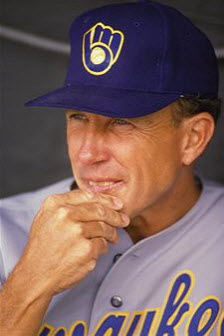
Tom Trebelhorn managed the 1986-1991 Milwaukee Brewers
and the Chicago Cubs in 1994.Italians have often been criticized for using their
hands when they speak, but 2009 Team Italy coach Tom Trebelhorn (who is of German descent) has
been chastised by Cubbie fans for speaking his mind. To the dismay of the Chicago faithful, the former
MLB manager was awarded the #1 quote in Bleacher Report‘s “Best Baseball Quotes of All Time” (which includes memorable quotes from Italian American Baseball Hall of Fame Legends Joe DiMaggio and Phil Rizzuto). However, Trebelhorn would much
prefer being remembered in baseball history for
his invaluable contribution in preparing the Italian team for the 2009 World Baseball Classic. “I think
the global aspect of baseball is very exciting,” said
the seasoned 65-year-old baseball veteran. He loves the international platform that the World Baseball Classic provides. Trebelhorn commented, “It gives
the game terrific exposure. To be able to hopefully
help the Italian Baseball Federation in their attempts
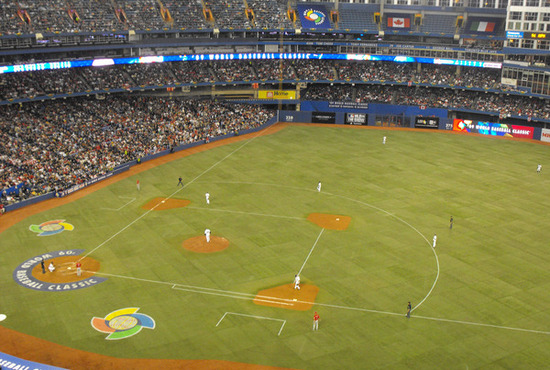
to enrich baseball as a sport in Italy is intriguing.”Bird’s-eye view of the 2009 WBC game between Italy and Canada at Toronto’s Roger Centre.’09 World Baseball ClassicEvery minute with the Italians in the 2009 World Baseball Classic at Rogers Centre was special for Trebelhorn. “A great experience. The team played with a lot of passion and heart,”
he said in retrospect to Italy’s 6-2 upset and elimination of
host Canada. “That was an embarrassment to them.” Named 1986 Manager of the Year by Baseball America after posting
an impressive 91-71 in his first season as the Milwaukee Brewers’ skipper, Trebelhorn managed the Brew Crew through 1991. After managing the 1994 Chicago Cubs, he signed on as coach for the Baltimore Orioles and remained with the franchise for 12 years. An unlikely alliance between the O’s and the Italian League’s Grosseto Baseball Club began after Baltimore County and the Italian Province of Grosseto became Sister Counties.The Sister Counties relationship between Baltimore and Grosseto blossomed as a result of the friendship between Orioles coach Trebelhorn and Grosseto native/Italian manager Mazzieri.Italian manager Marco Mazzieri The late and great Orioles vice president of operations
Syd Thrift announced in 2001 that Grosseto Baseball
Club manager Marco Mazzieri and several of his players were invited to Orioles’ Spring Training to observe team workout and training methods. He said, “We believe
this will help advance the game of baseball in Italy and throughout Europe. I’ve been to Grosseto and have
seen the enthusiasm they have for the game of baseball.” Italian manager Mazzieri and O’s coach Trebelhorn were two sound baseball minds from different sides of the Atlantic, and their common love for the game brought them together around the same time every year. They became close friends in no time and looked forward to their annual reunion. Trebelhorn said, “I used to have
him come to spring training and work with us in Florida.” When Federazione Italiana Baseball Softball (FIBS) President Riccardo Fraccari revealed that Mazzieri would be manager for Team Italy in the 2009 World Baseball Classic, the Italian baseball icon knew he needed some reinforcement with extensive MLB experience behind him. Upon hearing
of his appointment Mazzieri said, “I am really happy and not overconfident.
I am aware of the fact that I need to rely on the experience of a coach who has spent time in the Big Leagues.” Mazzieri summoned Trebelhorn. “He got the job as the head guy and asked if I would help him out,” said Trebelhorn nonchalantly. As the saying goes: “A friend in need is a friend indeed.”
A panoramic view of the archaeological site of Rocchicella di Mineo, ancient Palikè, the location
of the most important sanctuary of Sicily's indigenous Sikel people in the eastern part of the
island with Mount Etna, Europe's largest active volcano, towering over Catania seen far awayThe Siculi (Sikeloi; Sicels; Sikels) were the native inhabitants of the eastern regions (including Mineo) of Sicily south of the Italian Peninsula over 10,000 years ago. The island of Sicily takes its name from the indigenous Siculi people. With its strategic location at the center of the Mediterranean, Sicily is rich in its history of conquest and empire. It is a melting pot of cultures with over a dozen ethnic groups whose warriors and merchants walked her shores. Although the other two indigenous societies of the Sicanians and Elymians assimilated easily with the Greeks, the Sicels constituted a highly developed society that the Greeks respected profoundly. Despite conflict and its desire to remain autonomous, it took several centuries for the Sicels to completely assimilate and amalgamate with their Greek neighbors. Except for the Romans, the Sicels were the only predominantly Italic people to settle in Sicily in large numbers as colonists.
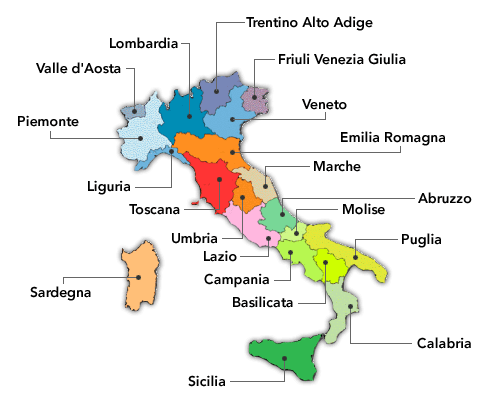
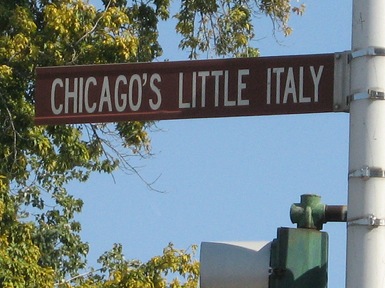
Italy leads all European countries in its number of immigrants to America. Beginning in the late 1800’s, poverty and natural disasters drove Italians out–especially in Il Mezzogiorno, the southern and poorest provinces of Italy. As late as 1900, the illiteracy rate in southern Italy was 70 percent. The Italian government was dominated by northerners, and southerners were hurt by high taxes and unfair tariffs on the north’s industrial goods. Southerners suffered from exploitation by people of the same nationality and religion.Piazza DiMaggio commemorated the legendary son of an Italian immigant, Joe DiMaggio, who lived the American Dream of playing baseball and the tens of thousands of Italian immigrants who came to America through the Taylor St. U.S. port of entry seeking a new life in the heart of Chicago's Little Italy during the early part of the Twentieth Century.
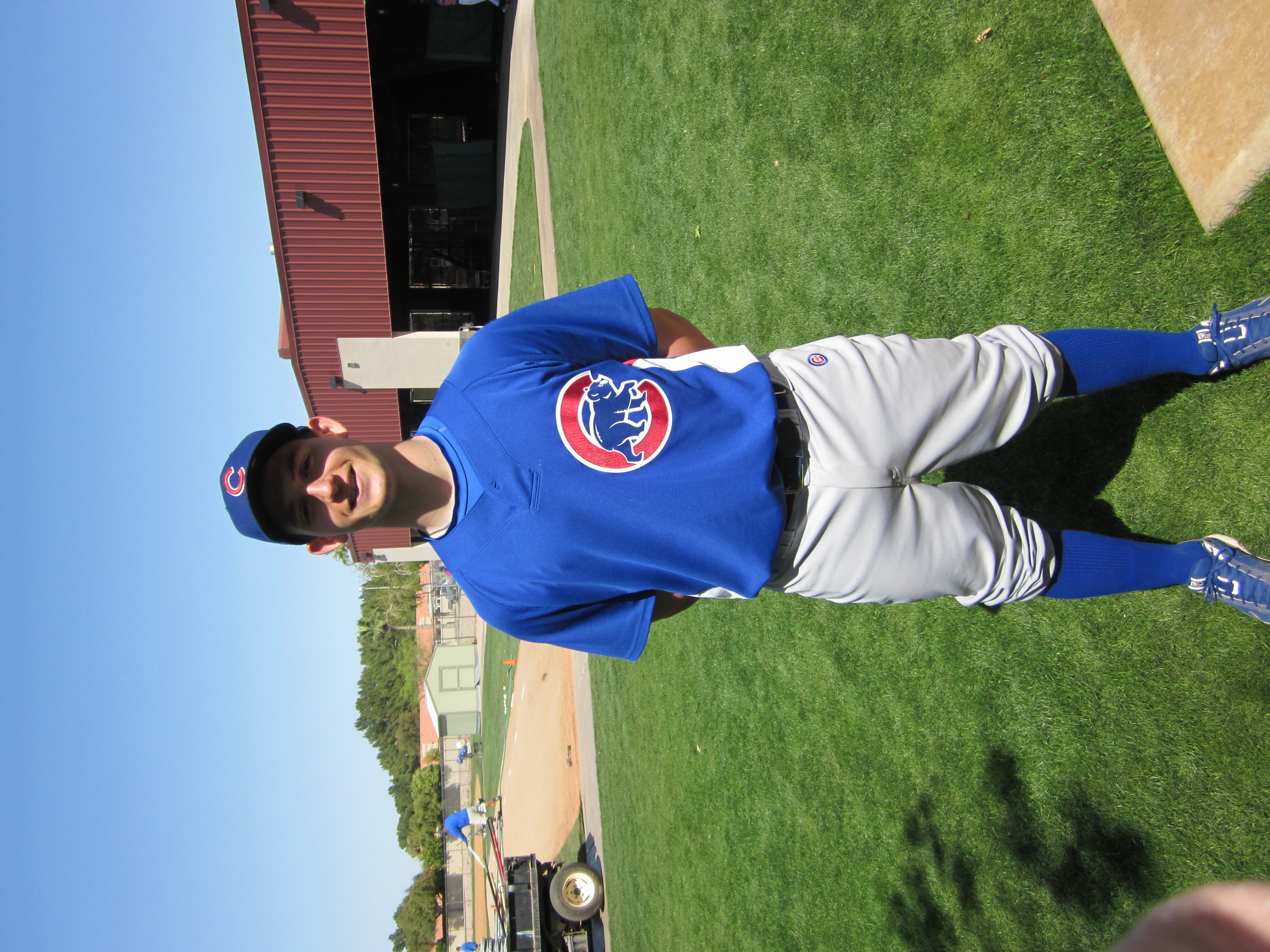
Self-reliant on only themselves for mere survival, southerners had an allegiance to la famiglia (the family) and l’ordine della famiglia (the rules of family behavior and responsibility). Suffering from a scarcity of cultivatable land, soil erosion and deforestation as well as a lack of coal and iron ore needed by industry, life in the South was difficult. Southern Italy was ravaged in the early 20th century when Mount Vesuvius and Mount Etna erupted and buried towns nearby. In 1908 an earthquake and tidal wave that swept through the Strait of Messina between Sicily and the Italian mainland killed more than 100,000 people in the city of Messina alone. For many Italian immigrants, fleeing to the United States was not to be interpreted as a rejection of their homeland. Instead, it defended the Italian way of life because the money sent home helped to preserve the traditional order. Rather than seeking permanent homes, they desired an opportunity to work for a living and aspired to save enough money to return to a better life in the country of their birth. Unable to earn enough to support their families in their native Italy, they were migratory laborers. The majority were young men–aged 18 to 25–who planned to work, save their money and return home. Hoping their absence would not be too long, they left behind their parents, young wives and kids. Fast forward a century later and native Italian athletes are still clinging to their roots and culture despite being lured by U.S. professional sports to homogenize into the American lifestyle. The first Italian-born baseball player awarded a MLB contract was pitcher Alessandro Maestri. Signed by Chicago Cubs scout Bill Holmberg, Maestri never pitched at Wrigley Field–even though he was a Minor Leaguer with a wicked Major League slider. However, the Cubs struck gold in 2010 when Holmberg signed then 16-year-old Italian catching prospect Alberto Mineo to a contract.Chicago Cubs Italian catching prospect Alberto Mineo at 2012 Spring Training in Mesa, ArizonaCatcher Alberto Mineo calms his pitcher down and discusses strategy to get the next batter out.Now ranked 58th behind #1 Cubbie Starling Castro in the Chicago Cubs Top Players Under 25 Organizational List, catcher Alberto Mineo has his eyes set on making it all the way to Wrigley. The defensive standout with excellent catch-and-throw skills said, “The part that I like most about being a catcher is throwing runners out at second.” The 5-foot-11, 170 pounder has strong hands and forearms which assist his receiving skills and defensive instincts. Blessed with outstanding arm strength and a quick ball transfer exchange, Mineo looks comfortable behind the plate. Exuding confidence as a first-rate catcher, opponents will need to exercise caution on the bases.Left-handed hitting slugger Alberto Mineo
played for Team Italia at the 18 Under Junior World Championship in Thunder Bay, Canada
Holmberg watched Mineo develop into a natural talent from age 10 and knew early on he was special. Alberto was mature enough to accept feedback and listened to Holmberg and Maestri’s sound advice. He commented, “Both of them, they would always say to me ‘Work hard everyday because there is somebody somewhere else that is working hard to get to the Big Leagues’ and I started believing that I could sign with an American team.” Exercising good plate discipline, Mineo is a patient hitter who jumps on a pitcher’s mistake. “I always think as a hitter that I must wait for my pitch until I get two strikes,” Alberto explained. The left-handed hitting Mineo can demolish the ball with his technically sound swing, and once on base he can demonstrate great speed for a catcher.Cubs prospect Alberto Mineo has speed on the bases and is very quick with his glove defensively.
After being signed by Bill Holmberg–who also is the pitching coach for the Italian National team and operates the Major League Baseball International European Academy at the Olympic Training Center in Tirrenia, Italy–Ronchi dei Legionari New Black Pantherscatcher Alberto Mineo began his professional career in the month-long MLB Australian Academy Summer League, where he became friends with Los Angeles Angeles of Anaheim promising pitching prospect Alex DaSilva–who later moved up the competitive ladder to play for the Australian Baseball League (ABL)
2012 Runner-Up Melbourne Aces. Mineo played well in Australia (.270 batting average, 1 HR) as did his Italian mentor Alex Maestri, who was so popular that he won the 2012 ABL Fan Choice Award. Catcher Alberto Mineo has all the tools to follow fellow MLB International European Academy graduate Alex Liddi of the Seattle Mariners and become the second Italian-born player in the Big Leagues.
The ABL’s first Italian pitcher/catcher combo with Maestri and Mineo could become reality if Alberto has his way. Mineo commented, “I had a nice experience in Australia, where I met a lot of great players that I still remain in contact with via facebook. I would really like to play with Alex in the ABL.” The dynamic duo could possibly make their debut in the near future as members of the Italian National team under the guidance and direction of pitching coach Bill Holmberg and former Major League Baseball All-Star hitting coach Mike Piazza. Mineo has played as a member of several Italian National teams at various levels– including the 18 Under Junior World Championship in Thunder Bay, Canada. Italian National team catcher Francisco Cervelli of the New York Yankees now has Mineo as back-up.
Mineo said, “I don’t feel the pressure to be the next Italian to make it in MLB. I just want to have fun and enjoy this amazing experience that I’m living right now. But it would be really nice to play with Alex Liddi on the Italian National team…”Lady Liberty of a Cubbie kind stands tall and proud in the city of Chicago.
Alberto had an exceptional Cubs 2011 Arizona Instructional League four-game campaign with a
.500 batting average, .556 on-base percentage and .500 slugging percentage. “The Cubs Instructional League was an awesome experience. I really like
to practice with Casey Kopitzke, the catching coordinator. I think he’s really good,” Mineo said.
“So far Cubs Spring Training is going very well. I like to work hard on the field and in the gym. It’s the best place you can go if you love this sport. A couple days ago Kerry Wood, Ryan Dempster and Rodrigo Lopez came to the complex to talk to us about the right way to get to the Big Leagues, but my favorite Cubs player is still Marlon Byrd. Inspired to play baseball at age five by his father and become a catcher three years later, Alberto followed American baseball religiously. “My favorite player has always been Derek Jeter. Now it is Joe Mauer. I really like how he plays, and I also think that he’s a very professional guy,” Mineo said.Wrigley Field, National Historic Landmark and home of the Chicago Cubs since 1916, is the second oldest ballpark in the Major Leagues and the oldest standing National League ballpark. Although there had been a long-time association of Italians being die-hard Cubbie fans,
the connection got even stronger when the late and great Hall of Fame Cubs broadcaster Harry Caray–whose real Italian last name was Carabina–signed on to the super station WGN Network in 1982. Although he passed on to baseball heaven in 1998, his legacy is still alive and well today as the legendary Caray’s Italian Steakhouse remains a Chicago restaurant icon. Now with Alberto Mineo in the Cubs organization, Italians in Chicago and beyond should rejoice and be thankful for their ancestors’ sacrifices years ago for the opportunities bestowed upon us in 2012. In the case of the young catching prospect Mineo–not only does he possess the natural skills necessary to become a professional ballplayer–
but he has the unconditional love and support of a dedicated team of international coaches, players, fans and family to be a true Italian baseball ambassador worldwide. Forza Italia!
Italian Cubbie fans of all shapes and sizes await Alberto Mineo's imminent arrival at Wrigley Field.





















 mlbblogger