A heartfelt tribute to Italian American Baseball Family hero Larry Baldassaro

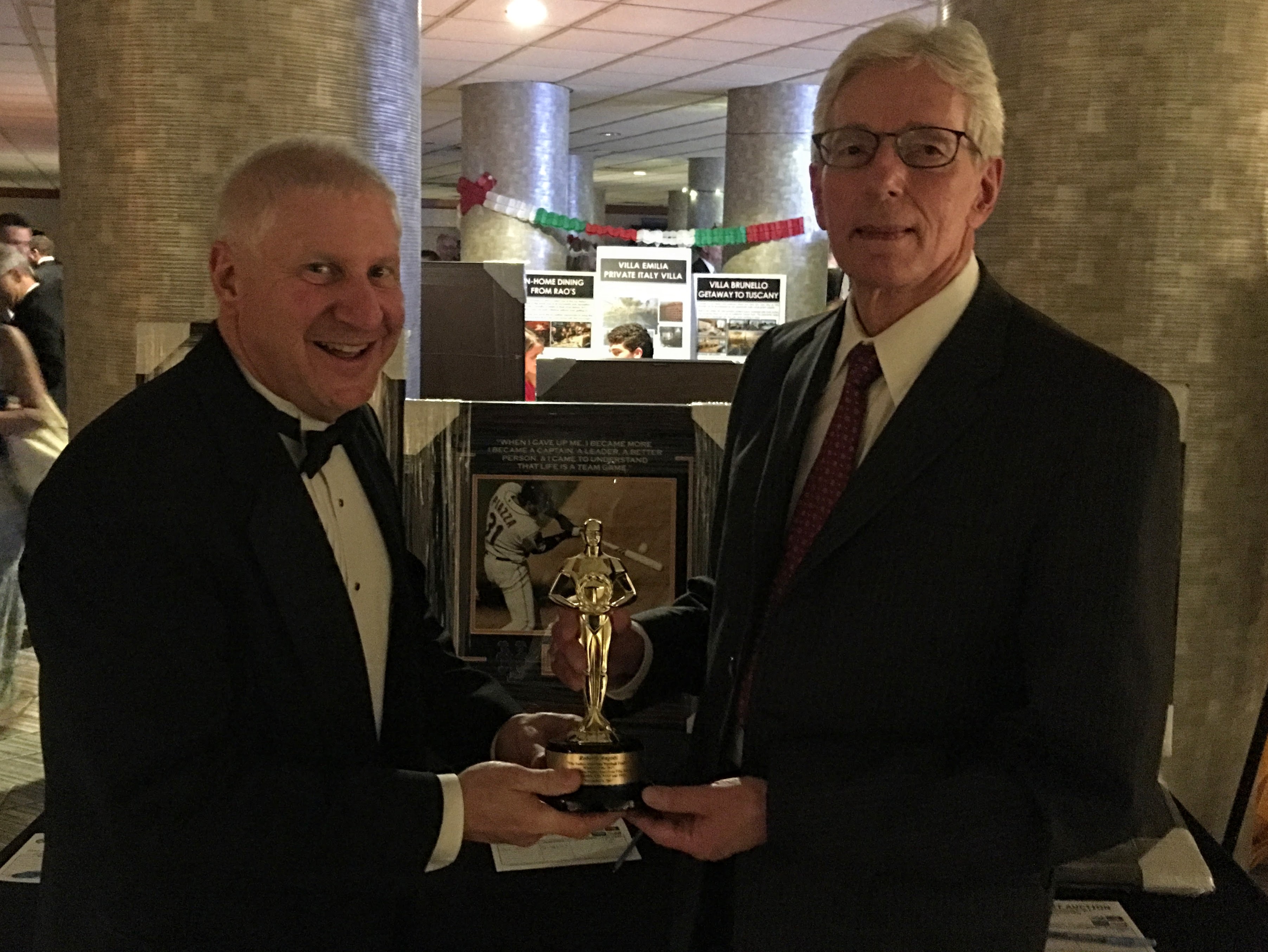
Italian American Baseball Family filmmaker Roberto Angotti and baseball historian Professor Lawrence Baldassaro won the Russo Brothers Italian American Film Forum Award at the National Italian American Foundation 42nd Anniversary Gala in Washington, D.C.

In honor of the late and great Larry Baldassaro (June 25, 1943 — September 8, 2026), we pay tribute to the unsung hero of the National Italian American Foundation Russo Brothers Film Forum award-winning Italian American Baseball Family. Throughout the hour-long documentary, which is based on Professor Lawrence Baldassaro’s Beyond DiMaggio: Italian American in Baseball, the renowned-author is prominently featured in the film as he takes viewers on guided history lesson on how Italians assimilated into American popular culture through the game and highlighted the many Italian Americans’ contributions to baseball.

The grandson of Italian immigrants, Lawrence Baldassaro grew up in Chicopee, Massachusetts, where he played high school, American Legion, and semi-pro baseball as a devoted fan of Ted Williams and the Boston Red Sox. Baldassaro was a professor emeritus of Italian and former director of the Honors College at the University of Wisconsin–Milwaukee. He circled back into the game by writing about it for the Milwaukee Brewers – and eventually recognized a void he could fill. He said, “I discovered at that time, very little had been written about Italian Americans in baseball, in spite of an incredible history that goes back to the 1920s.”
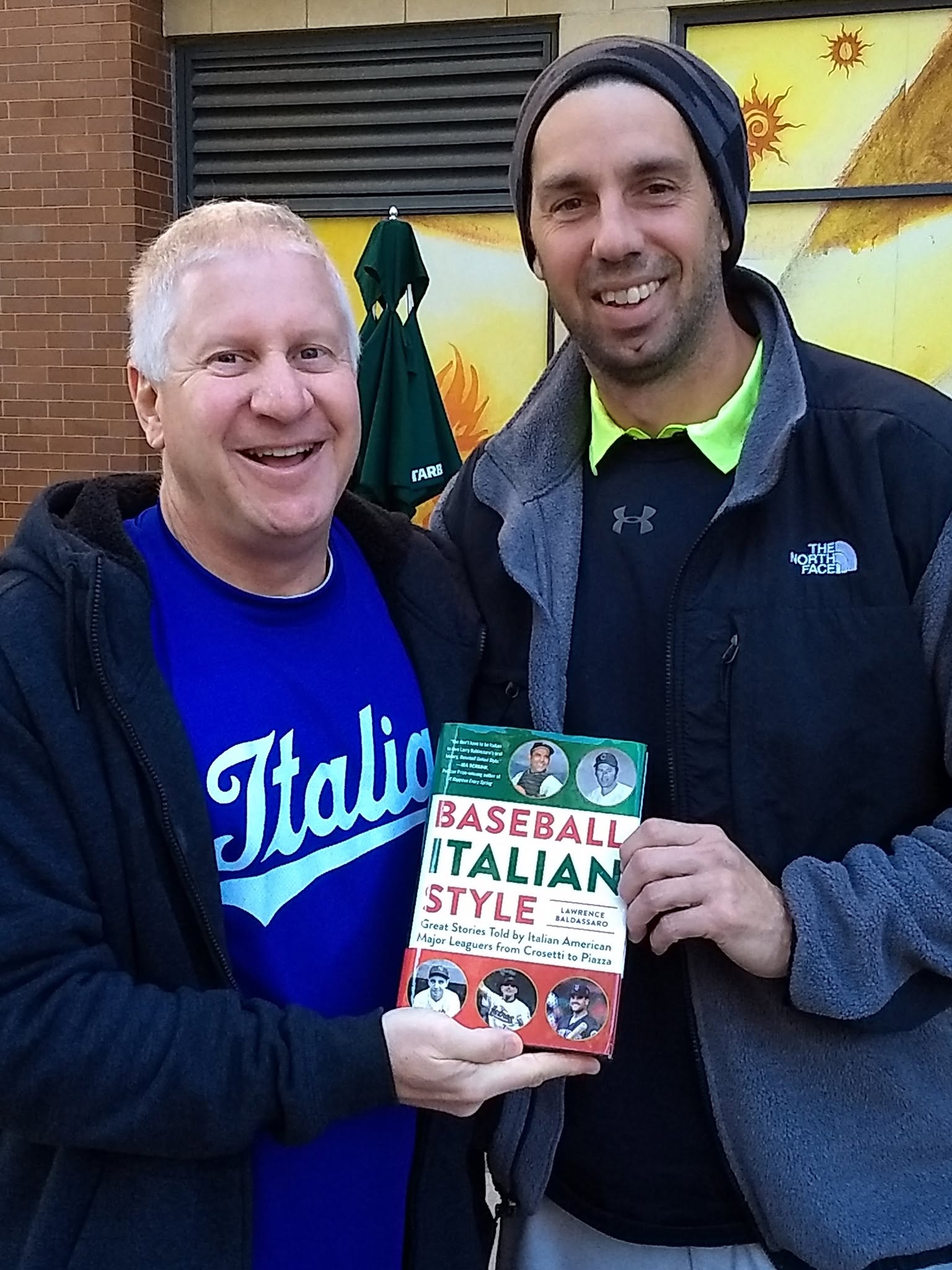
Roberto Angotti and Chris Colabello (interviewed and featured in Italian American Baseball Family) with a signed copy of Baseball Italian Style by Professor Lawrence Baldassaro

Immediately following the release of his book, Beyond DiMaggio: Italian American in Baseball, in 2011, Professor Lawrence Baldassaro was awarded the Leonardo da Vinci Award of Excellence by the Order Sons of Italy in America Grand Lodge of Illinois and Wisconsin. His follow-up, Baseball Italian Style: Great Stories Told by Italian American Major Leaguers from Crosetti to Piazza (2018), used first-person accounts from Italian-American baseball players. Baldassaro’s interviews were conducted from 1993-2017 and included conversations with players from a variety of different generations. Not only did these audio recordings provide a look at the human side of the game, but they also examined the many ways in which life as a big leaguer changed over time. Included in the invaluable collection are eight Hall of Famers: Yogi Berra, Craig Biggio, Tony La Russa, Tommy Lasorda, Mike Piazza, Phil Rizzuto, Ron Santo, and Joe Torre. Also featured is MVP award winner Ken Caminiti, MLB All-Stars Anthony Rizzo, Joey Votto, and Barry Zito as well as coaches, managers, umpires, and front-office executives.His final book, Tony Lazzeri: Yankees Legend and Baseball Pioneer, earned him a 2022 SABR Baseball Research Award for “outstanding research projects that have significantly expanded our knowledge or understanding of baseball.”
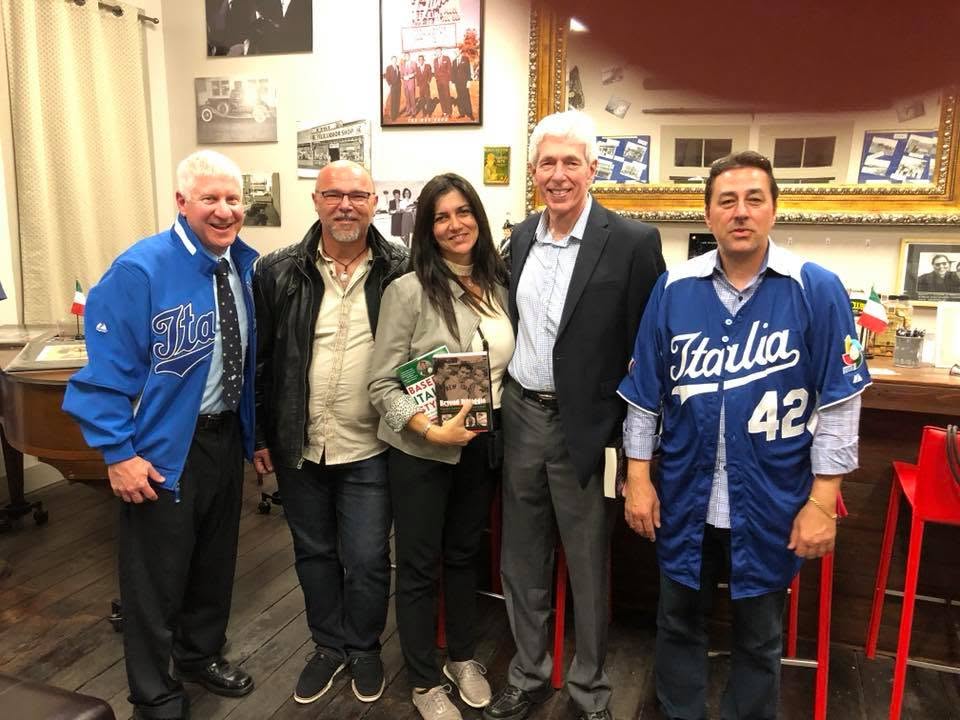
Roberto Angotti, Pier Piancastelli, Loredana Auletta, Larry Baldassaro, and Tom Cesarini at Amici House following a screening of Italian American Baseball Family and a presentation by Professor Baldassaro in San Diego’s Little Italy

Baldassaro was also the editor of Ted Williams: Reflections on a Splendid Life, The Ted Williams Reader, and co-editor of The American Game: Baseball and Ethnicity. In addition to writing about baseball, he published essays on Italian literature, film and politics in American and Italian journals and served on the Executive Council of the Dante Society of America. Perhaps one of his greatest joys was serving as interpreter for Team Italy in the inaugural 2006 World Baseball Classic. He will forever live in the hearts of many here in America and abroad. He had a profound influence and impact on the lives of thousands, including mine…grazie mille Larry! We will never forget our mentor. Forza #Italia!!!

Italian American Baseball Family with Italian subtitles was submitted by Federazione Italiana Baseball Softball (FIBS) and later selected as a finalist for the FICTS (Fédération Internationale Cinéma Télévision Sportifs) Worldwide Championship of Television, Cinema, Sport, Culture and Communication in Milan, Italy

“Italian Americans at Bat” is a must-see before attending the 2013 WBC Finals in San Francisco

Italian American pitcher Barry Zito
Who would have guessed that at least 454 Italian
Americans have played baseball in the majors
since 1897? The San Francisco Bay Area produced many of baseball’s pioneers and originated the
sandlot playing field in the 1860s. In fact, the
earliest West Coast games were played downtown
on a sandlot where San Francisco City Hall stands today–nearly a century before the Giants and
Dodgers arrived in 1958. So it’s most appropriate Italian Americans at Bat: From Sand Lots
to the Major Leagues
, a lavish documentary
exhibition of baseball memorabilia celebrating
the vast contributions of Italians Americans to
baseball, be on display for FREE in Reno, Nevada
at the magnificent Arte Italia through May 19th.
Located at 442 Flint Street, Arte Italia is open
Thursday through Sunday from noon to 5 PM
(www.arteitaliausa.com). The chronologically-
arranged exhibition was originally curated by
the Museo Italo Americano, the Italian American Museum of San Francisco, which explains why
there is a strong emphasis on Bay Area teams. However, it plays out perfectly for the climactic
finish to the showcase: an autographed cap
and jersey worn by 2012 World Champion
San Francisco Giants’ lefty starter Barry Zito,
who won the opener of the 2012 World Series.
Ed Abbaticchio, probably the first person with an Italian surname to play professionally broke into Major League Baseball in 1897.
Ed Abbaticchio was probably the first person with an Italian last name to play professionally when he broke into the major leagues in 1897.

The exhibit’s co-curator, writer and historian Lawrence DiStasi of Bolinas, has loved the game since rooting for the New York Yankees as a child and playing baseball in the streets of Connecticut. In addition to writing all the text panels for the exhibition, DiStasi weaves together ideas, stories and statistics to depict the Italian American experience. There is a timeline of the years 1845 to 2012, which includes historical points of baseball and Italian immigration into the United States–and most importantly when those two histories intersect. The exhibition highlights several decades: the early days of redefining cultural stereotypes, transcending national barriers in the 30s and 40s, improbable triumphs of the 50s, 60s and 70s, the pride of the modern era, and a dominant presence in the Hall of Fame. Joe DiMaggio is the coveted star of the exhibition, and his 56-game hitting streak in 1941 is accented by DiStasi’s text panels which document each hit recorded in the “Dimag-o-Log” that SF Chronicle ran in the Sporting Green every day. Joe DiMaggio, along with his brothers–
Dom and Vince, Tony Lazzeri, Frank Crosetti, Babe Pinelli, Ernie Lombardi, Rugger Ardizoia, Billy Martin and Jim Fregosi are among the celebrated Italian American players with strong baseball roots to the Bay Area.
San Francisco-born Francesco Pezzolo changed his name to Ping Bodie to escape ridiclule for Italian surnames.
San Francisco-born Francesco Pezzolo changed his name to Ping Bodie to avoid bias and ridicule for Italian last names.
Undoubtedly Italian Americans have made important contributions to the game, but
perhaps just as poignant is the profound
effect baseball has had on the Americanization of Italians. Faced with Italian-born parents who opposed his participation in pro baseball and regarded the sport as juvenile as well as not the wisest career choice–Ed Abbaticchio, probably the first person with an Italian surname to play professionally in 1897, was offered a hotel by his father if he would stop playing baseball. Despite the temptation, the ballplayer refused the bribe and pursued his passion for the game. However, some could not withstand the pressure and caved in to discriminatory bias and the constant ridicule sports writers bestowed upon Italian names. Among them was Francesco Pezzolo, who chose a California mining town as his name-sake and became Ping Bodie–the big league center fielder who played from 1911 to 1921.

Italian American Joe DiMaggio was subjected to bias throughout his career.
Overcoming cultural bias throughout his career, Joe DiMaggio was the first Italian American to be inducted into the Baseball Hall of Fame in 1955.
Italian Americans at Bat: From Sand Lots to the Major Leagues traverses the U.S. cultural landscape and documents an ethnic group’s rise from adversity by celebrating its triumphs in breaking into a sport dominated by English, Irish and German immigrants. However, even the game’s greatest stars had to contend with deep-rooted prejudices and stereotypical misnomers. A May 10, 1939 Life magazine cover story on Joe DiMaggio was laced with gross innuendos: “Instead of olive oil or smelly bear grease he keeps his hair
slick with water. He never reeks of garlic and prefers chicken chow mein to spaghetti.”
UNA STORIA SEGRETAAfter Japan bombed Pearl Harbor on December 7, 1941, the United States declared war
and began targeting those of German, Italian or Japanese descent. The Italians were the largest immigrant group in the U.S. at the time and about 600,000 of the country’s five million Italian immigrants who had not yet naturalized were forced to register as enemy aliens. Required to carry photo ID booklets and surrender flashlights, shortwave radios, guns, binoculars, cameras and other “contraband,” Italian enemy aliens were subject to FBI raids and nightly house arrest with a curfew from 8 PM to 6 AM. Noncitizens could not travel more than five miles from home without a permit. Lawrence DiStasi, author of “Una Storia Segreta: The Secret History of Italian American Evacuation and Internment during World War II”, reports that 10,000 Italians in California were evacuated, mostly from coastal areas and sites near power plants, dams and military installations. Ironically, the half-million Italian Americans serving in the U.S. armed forces at the time of the crackdown were the largest ethnic group in the military. Of the 257 Italians put in internment camps for up to two years, 90 were from California. Fishing boats were seized, and thousands of fishermen lost their jobs. In San Francisco, 1,500 people–including Joe DiMaggio’s parents–were idled. tonyconigliaro “The opportunity to showcase the adversity and accomplishments of legendary Italian American baseball players is one we welcome and relish,” said Kristen Avansino, President and Executive Director of Arte Italia. “For them, it was a way to integrate into the American way of life,” added Arte Italia Program Director Annie Turner. The exhibition brings home
the message that baseball allowed Italian Americans to assimilate into popular culture:
“This most American of sports became a quick way to counter that negative immigrant identity as an outsider.” Phil Rizzuto, Yogi Berra, Rocky Colavito, Roy Campenella, Ron
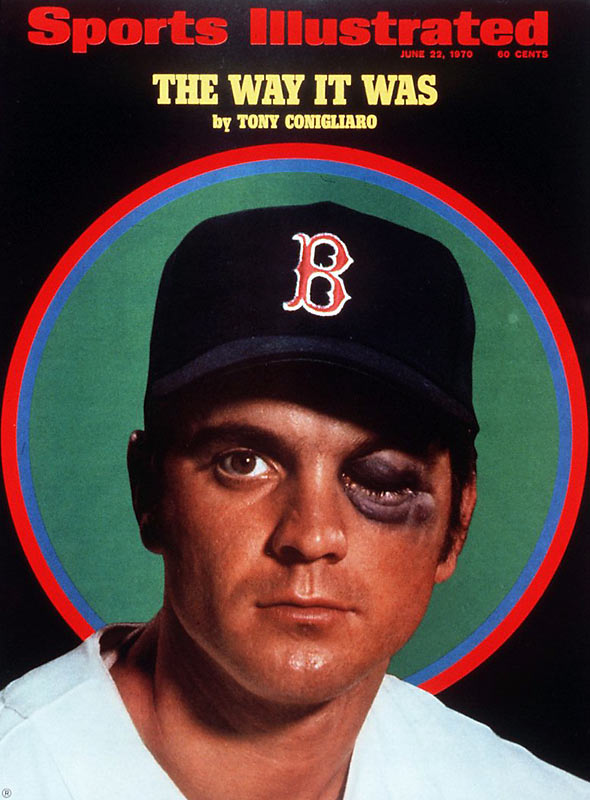
Santo, Carl Furillo, Joe Caragiola, Sal Maglie, Tony Conigliaro, Tommy Lasorda, Joe Torre, Tony La Russa, Mike Scioscia, Ken Caminiti, Craig Biggio, Mike Piazza, Mike Napoli and
former Commissioner of Major League Baseball Bart Giamatti are just some of the legendary Italian American baseball ambassadors that have etched their names into U.S. sports history forever. Italian Americans at Bat: From Sand Lots to the Major League pays tribute to their contributions, and those of over 400 others who have left their unique imprint
on the game. Currently on display in Arte Italia’s upstairs Michelangelo and Leonardo
da Vinci galleries are vintage jerseys, a plethora of memorabilia–including classic baseball cards and autographed baseballs, press clippings of career milestones, an interactive
touch screen computer database featuring memoirs, stats, and career highlights of
Italian American players and 14 World Series Championship managers as well as
over 200 archival photographs of some of the greatest moments in baseball history.
In celebration of the upcoming April 2013 paperback release of his book "Beyond DiMaggio" author and 2006 WBC Team Italy interpreter Lawrence Baldassaro visited the Italian American at Bat Exhibition.
In celebration of the upcoming April 2013 paperback release of his book “Beyond DiMaggio: Italian Americans in Baseball” (University of Nebraska Press) author and 2006 World Baseball Classic Team Italy interpreter Lawrence Baldassaro visited the Italian Americans at Bat Exhibition.
The 2013 World Baseball Classic Championship Round begins March 17th at AT&T Park in San Francisco.
The 2013 World Baseball Classic Championship Round begins March 17th at AT&T Park in San Francisco, CA.
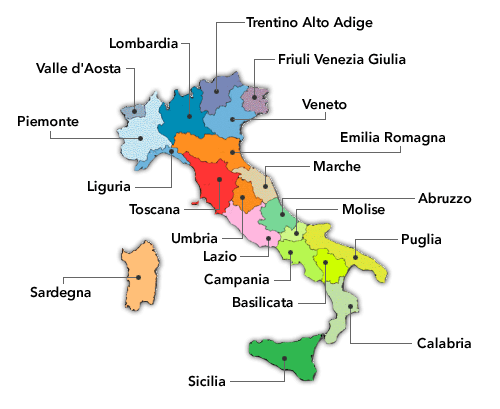
With game one of the WBC Semifinals beginning Sunday evening, March 17 at San Francisco’s AT&T Park, fans have plenty of time to see the Italian Americans at Bat Exhibition at Arte Italia. You might even find Team Italy downstairs eating an inspirational pre-game meal prepared by Master Chef Paolo Sari, who has created three distinct regional menus reflecting the culinary traditions of Joe DiMaggio (Sicilia), Tony Lazzeri (Toscana) and Frank Crosetti (Lombardia). Buon appetito! Forza Italia!! Forza Azzurri…Italy_Map