
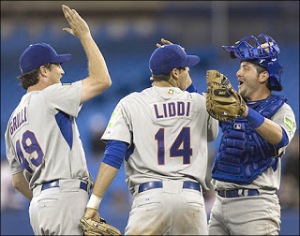
some sound advice to Anthony Granato in the 2010 European Baseball Championship Finals.
Rediscovering his ancestry in Italy and helping to make baseball relevant there are big priorities for the 12-time MLB All-Star. However, Piazza won’t deny his American upbringing. “I do not pretend to say what is not true,” he admitted. “I grew up as an American boy. Now, getting older, I understand the value of my heritage and I want to give some-thing back to Italy. I just got back from Italy, and I am doing a lot of research on my family roots from Sicily. During your baseball career, you really can’t focus on things like that because you are concentrating on playing. I’m not trying to reinvent my identity and say I’m doing the reverse Christopher Columbus thing.”
The all-time leading catcher with 427 home runs (.308 batting average) over his 16-year career and future Baseball Hall of Famer was coached by some of MLB’s best. The proud Team Italy coach Piazza said, “When I was coming up with the Dodgers I learned from Reggie Smith, and he was a direct disciple of Ted Williams. I really benefitted a lot from good coaching, so I feel I can impart my knowledge, and that is my way of giving back to the game. You can tell, obviously with our success and winning two European Championships since I’ve been there, it works…”
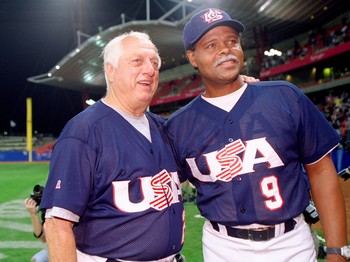
from 1999 to 2008. Piazza hopes to emulate Smith’s coaching excellence with Team Italy. He said, “The players really listen, and it’s fun for me. I get a lot of joy from doing that. I’m not a huge ‘change a guy’ type of coach, I keep it simple. I’m not very autocratic. I don’t try to pound my system into guys. To me, hitting is personal.”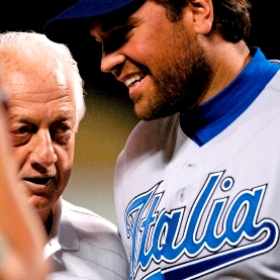
like many other Italians near the turn of the 20th century, came here from the Abruzzi region south of Rome seeking relief from the rough winters and hard terrain. However, unlike Lasorda–who wore the red, white and blue–Mike Piazza gives back to “La Squadra Azzurri” Team Italy as a fitting tribute to his grandfather Rosario from Sicilia and faces Team USA in the 2013 World Baseball Classic at Chase Field in Phoenix on March 9th. 
Mike Piazza
“Italian Americans at Bat” is a must-see before attending the 2013 WBC Finals in San Francisco

Americans have played baseball in the majors
since 1897? The San Francisco Bay Area produced many of baseball’s pioneers and originated the
sandlot playing field in the 1860s. In fact, the
earliest West Coast games were played downtown
on a sandlot where San Francisco City Hall stands today–nearly a century before the Giants and
Dodgers arrived in 1958. So it’s most appropriate Italian Americans at Bat: From Sand Lots
to the Major Leagues, a lavish documentary
exhibition of baseball memorabilia celebrating
the vast contributions of Italians Americans to
baseball, be on display for FREE in Reno, Nevada
at the magnificent Arte Italia through May 19th.
Located at 442 Flint Street, Arte Italia is open
Thursday through Sunday from noon to 5 PM
(www.arteitaliausa.com). The chronologically-
arranged exhibition was originally curated by
the Museo Italo Americano, the Italian American Museum of San Francisco, which explains why
there is a strong emphasis on Bay Area teams. However, it plays out perfectly for the climactic
finish to the showcase: an autographed cap
and jersey worn by 2012 World Champion
San Francisco Giants’ lefty starter Barry Zito,
who won the opener of the 2012 World Series.
The exhibit’s co-curator, writer and historian Lawrence DiStasi of Bolinas, has loved the game since rooting for the New York Yankees as a child and playing baseball in the streets of Connecticut. In addition to writing all the text panels for the exhibition, DiStasi weaves together ideas, stories and statistics to depict the Italian American experience. There is a timeline of the years 1845 to 2012, which includes historical points of baseball and Italian immigration into the United States–and most importantly when those two histories intersect. The exhibition highlights several decades: the early days of redefining cultural stereotypes, transcending national barriers in the 30s and 40s, improbable triumphs of the 50s, 60s and 70s, the pride of the modern era, and a dominant presence in the Hall of Fame. Joe DiMaggio is the coveted star of the exhibition, and his 56-game hitting streak in 1941 is accented by DiStasi’s text panels which document each hit recorded in the “Dimag-o-Log” that SF Chronicle ran in the Sporting Green every day. Joe DiMaggio, along with his brothers–
Dom and Vince, Tony Lazzeri, Frank Crosetti, Babe Pinelli, Ernie Lombardi, Rugger Ardizoia, Billy Martin and Jim Fregosi are among the celebrated Italian American players with strong baseball roots to the Bay Area.

perhaps just as poignant is the profound
effect baseball has had on the Americanization of Italians. Faced with Italian-born parents who opposed his participation in pro baseball and regarded the sport as juvenile as well as not the wisest career choice–Ed Abbaticchio, probably the first person with an Italian surname to play professionally in 1897, was offered a hotel by his father if he would stop playing baseball. Despite the temptation, the ballplayer refused the bribe and pursued his passion for the game. However, some could not withstand the pressure and caved in to discriminatory bias and the constant ridicule sports writers bestowed upon Italian names. Among them was Francesco Pezzolo, who chose a California mining town as his name-sake and became Ping Bodie–the big league center fielder who played from 1911 to 1921.

slick with water. He never reeks of garlic and prefers chicken chow mein to spaghetti.” After Japan bombed Pearl Harbor on December 7, 1941, the United States declared war
and began targeting those of German, Italian or Japanese descent. The Italians were the largest immigrant group in the U.S. at the time and about 600,000 of the country’s five million Italian immigrants who had not yet naturalized were forced to register as enemy aliens. Required to carry photo ID booklets and surrender flashlights, shortwave radios, guns, binoculars, cameras and other “contraband,” Italian enemy aliens were subject to FBI raids and nightly house arrest with a curfew from 8 PM to 6 AM. Noncitizens could not travel more than five miles from home without a permit. Lawrence DiStasi, author of “Una Storia Segreta: The Secret History of Italian American Evacuation and Internment during World War II”, reports that 10,000 Italians in California were evacuated, mostly from coastal areas and sites near power plants, dams and military installations. Ironically, the half-million Italian Americans serving in the U.S. armed forces at the time of the crackdown were the largest ethnic group in the military. Of the 257 Italians put in internment camps for up to two years, 90 were from California. Fishing boats were seized, and thousands of fishermen lost their jobs. In San Francisco, 1,500 people–including Joe DiMaggio’s parents–were idled. 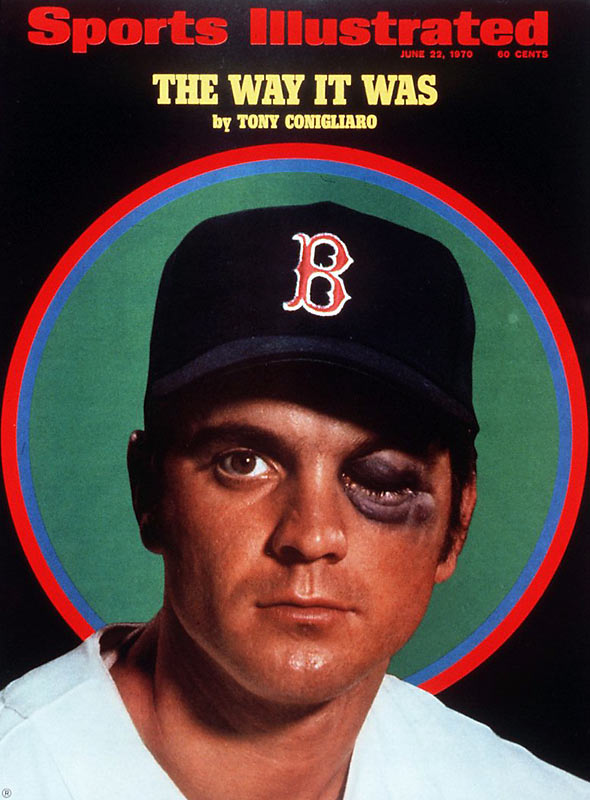 “The opportunity to showcase the adversity and accomplishments of legendary Italian American baseball players is one we welcome and relish,” said Kristen Avansino, President and Executive Director of Arte Italia. “For them, it was a way to integrate into the American way of life,” added Arte Italia Program Director Annie Turner. The exhibition brings home
the message that baseball allowed Italian Americans to assimilate into popular culture:
“This most American of sports became a quick way to counter that negative immigrant identity as an outsider.” Phil Rizzuto, Yogi Berra, Rocky Colavito, Roy Campenella, Ron
Santo, Carl Furillo, Joe Caragiola, Sal Maglie, Tony Conigliaro, Tommy Lasorda, Joe Torre, Tony La Russa, Mike Scioscia, Ken Caminiti, Craig Biggio, Mike Piazza, Mike Napoli and
former Commissioner of Major League Baseball Bart Giamatti are just some of the legendary Italian American baseball ambassadors that have etched their names into U.S. sports history forever. Italian Americans at Bat: From Sand Lots to the Major League pays tribute to their contributions, and those of over 400 others who have left their unique imprint
on the game. Currently on display in Arte Italia’s upstairs Michelangelo and Leonardo
da Vinci galleries are vintage jerseys, a plethora of memorabilia–including classic baseball cards and autographed baseballs, press clippings of career milestones, an interactive
touch screen computer database featuring memoirs, stats, and career highlights of
Italian American players and 14 World Series Championship managers as well as
over 200 archival photographs of some of the greatest moments in baseball history.

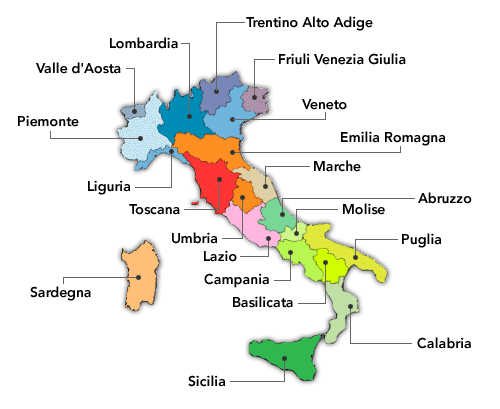
Italo-Canadese John Mariotti gives Team Italy winning spirit in 2013 World Baseball Classic
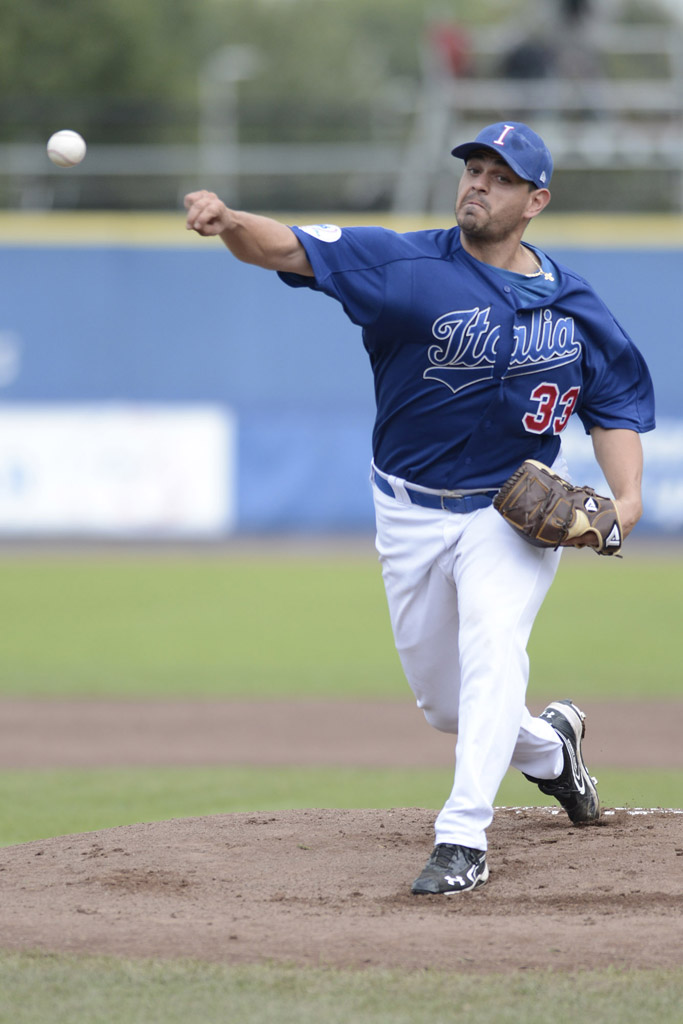

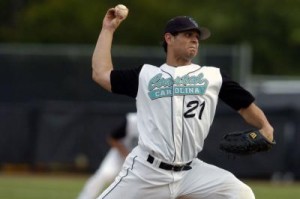
The six-foot-one right hander made his professional debut in 2007 with Orioles’ Short-Season Single-A Aberdeen and posted a 2-2 record with a 1.46 ERA. He spent his entire 2008 campaign at Single-A Delmarva. Mariotti began the 2009 season at Single-A Advanced Frederick and moved up to Double-A Bowie, where he started 13 games and compiled a 3.44 ERA. The Orioles’ farmhand was back at Frederick in 2010, when he made 41 appearances out of the bullpen and chalked up three saves.

at Chase Field (Phoenix, AZ) and Salt River Fields
at Talking Stick (Scottsdale, AZ) beginning March 7th.
 Let’s put the Italian victory over the Netherlands in the 2012 European Championship into perspective. By the Dutch winning the 2011 World Cup after upsetting a talented Cuban team in the finals, does that make Italy the new elite class of European baseball and the spoiler in the upcoming 2013 World Baseball Classic? With John Mariotti’s winning spirit, Italy has got a real shot.
Giants’ secret weapon Tyler LaTorre ready to lift Team Italy to top of 2013 World Baseball Classic

third consecutive European Championship by defeating IBAF #7 ranked Netherlands.
are now positioned at #9 in the IBAF 2012 (year-end) Men’s World Ranking.

of his hometown crowd after nearly winning Euro Championship tourney MVP honors. Eight of his 14 hits (14-for-28, .500 BA) were for extra bases (six doubles and two home runs). He absolutely raked at the plate, knocking in nine RBI and scoring nine times.
 “We had one goal and that was to repeat as European champions,”
said LaTorre. “It was awesome. I’m definitely thankful to the Giants for letting me go.” The former University of California, Davis and Aptos High School All-Star catcher has spent seven years in the Giants organization for a chance to shine in the World Baseball Classic.
 LaTorre’s Italian roots trace back to his great-grandparents in Italy. It took two and a half years for him to become eligible to play for Team Italy as a dual citizen and Italian passport holder after thorough research, documentation and tedious paperwork authenticating his Italian lineage. Adding his minor league experience plus the time served in Italian purgatory, Tyler LaTorre has waited nearly a decade to become Italy’s secret weapon in the WBC.
How does Mike Piazza not get into the hall? one of the best hitting catchers ever. @mlbnetwork twitter.com/tylerlatorre/s…
— Tyler LaTorre (@tylerlatorre) January 9, 2013
Former player and current Team Italy hitting coach Mike Piazza believes in the World Baseball Classic
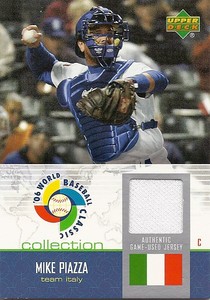
in the 2006 World Baseball Classic.

Like a gondolier in Venezia, Piazza is singing songs of praise for the World Baseball Classic. He said, “I believe in it. I think it’s great. I hope someday down the line it turns into a world-class, World Cup-type thing. I think that’s in conjunction with the way the game is evolving and changing. One of my personal mottos is: ‘If you are going to do it, don’t do it halfway.’ If they’re going to really make a concerted effort to develop the Classic, truly make it a world event.”
2013 World Baseball Classic Pool D play begins on March 7th when Italy battles Mexico at Salt River Fields at Talking Stick in Scottsdale. The Italians return March 8th to take on Canada. Team Italy travels to Chase Field in Phoenix on March 9th to face Team USA. The winner and runner-up of Pool D will advance to the second round of a modified-double elimination tourney.

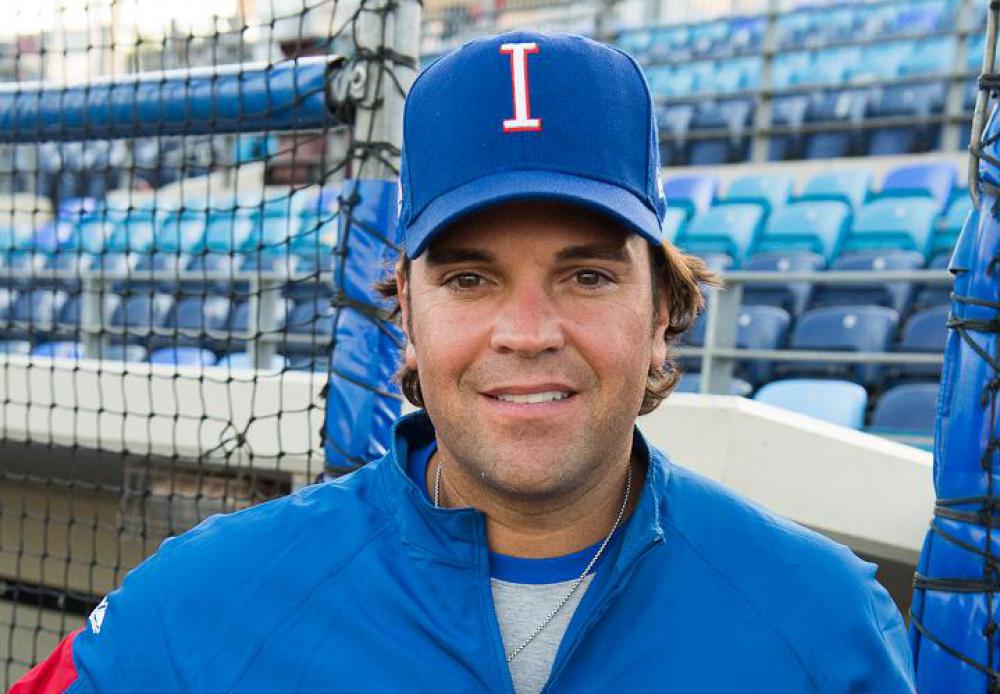
Grilli is a BIG name in Italia and in Pittsburgh, PA
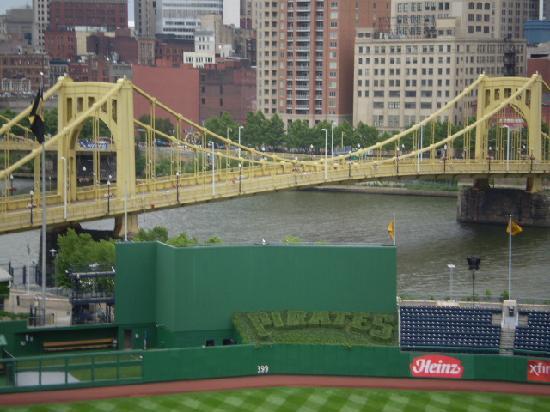

the Italian Finance Minister.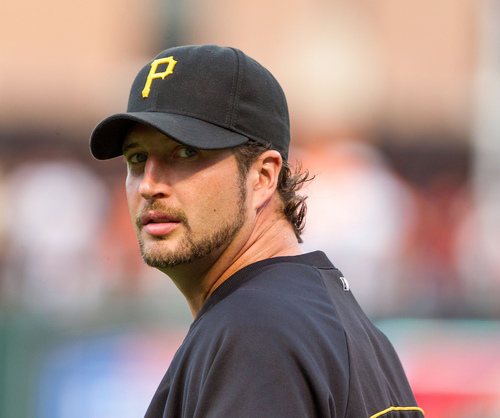
 However, Jason Grilli has earned the right to pitch wherever he chooses after picking up the win in Team Italia’s 10-0 shutout of Australia in the 2006 World Baseball Classic (WBC) and a save in Italy’s 6-2 upset over heavily-favored Canada in the 2009 WBC competition. It goes without saying that the sight of Jason Grilli wearing an Azzurri jersey brings more joy and glory to the near-bankrupt European nation than any Italian politician could ever produce.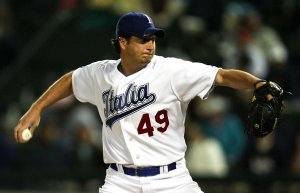
 Facing an ‘us or them’ ultimatum, the pitchers were dismissed. “I was in tears the whole way home,”
Grilli said. “The good part of it was I got to see Italy, but the worst part of it was it was a once-in-a-lifetime opportunity and I didn’t get to play.” Grilli traces his family heritage roots to Florence and Naples. He said, “I’m 75 percent Italian. My last name is every bit as Italian as you can get. The name on the front of the jersey is always more important than the name on the back, but in this case, the two go hand-in-hand.
I wouldn’t have ‘Italia’ on the front if I didn’t have ‘Grilli’ on the back. Obviously, I love the United States. But I’m also proud of my lineage.”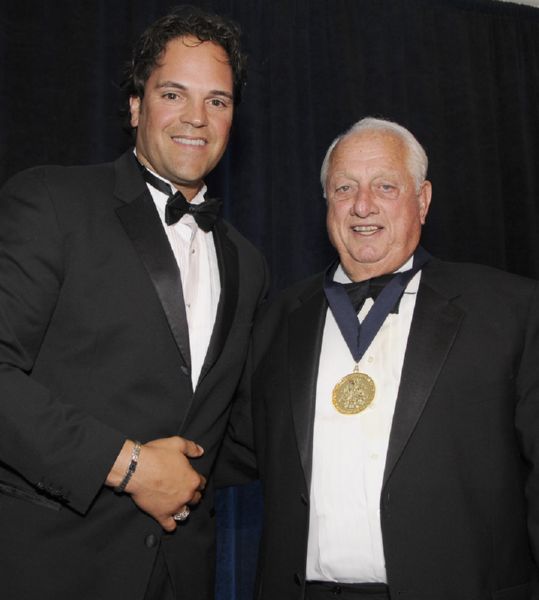
when he was presented the NIAF Lifetime Achievement Award in Sports Management
by Team Italia Coach, 12-time MLB All-Star and former Dodger catcher Mike Piazza.
said Grilli. “And that’s what I am. I’m an Italian,” said the Italian right-hander (il Italiano adopera la mano destra) who reminisced about his experience playing for Team Italia in
the World Baseball Classic. “One day Tommy Lasorda came in to talk to us. It was one of
the greatest speeches I’d ever heard. I wish I’d memorized or recorded it. He talked about the pride that comes with being Italian, with such feeling. It was a great experience.”
Having been invited to attend the 28th Annual Italian Coach Convention in Parma, Italy, Grilli is seriously considering a coaching career in Italy after he retires from Major League Baseball. “I know (former MLB All-Star and Team Italia coach) Mike Piazza has a house
(in Italy), and he goes over for a couple months every year,” Grilli said. “It‘s intriguing.”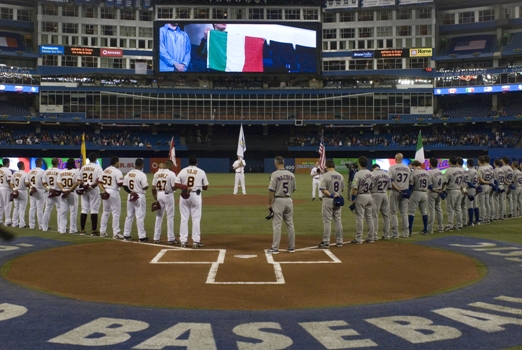
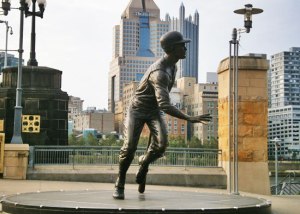
 something fitting here. It’s just a baseball town and it bugs me as much as it bugs everybody else in this city. They want this so bad.” In 2012 Grilli limited opponents to just one run in 15 of his 64 appearances and struck out at least one hitter in 56 of the 64 games. He set a franchise record for relievers by striking out at least one batter in each of his first 19 appearances in 2012. Although a bull in the pen on the mound, Jason is quite the gentlemen to members of the press. The local chapter of the Baseball Writers Association of America recently voted Grilli as the winner of the Chuck Tanner Award–an award that recognizes the player who is most cooperative with the media.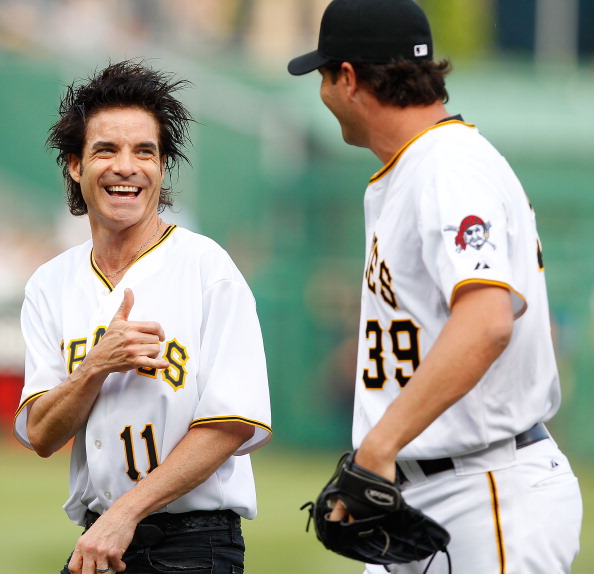
An espresso not sold at Starbucks, Italian slugger Alex Liddi jolts Seattle Mariners with power buzz


Alex Liddi–may have inspired the first Seattle-born coffee maker to venture into the Italy’s competitive playing field with the opening of retail locations in Milano, Venezia, Roma and Napoli. If that isn’t enough caffeine to combat jet lag, a double shot of Italian international baseball ambassadors–Alessandro Maestri (the first Italian-born and-raised player to have reached AA ball in MLB) along with Alex Liddi–are headed to Japan. Coming off a successful stint as the 2012 ABL Fan Choice in the Australian Baseball League, Maestri–the former Chicago Cub minor leaguer–has signed a contract to pitch for the Kagawa Olive Guyners, while Alex and the Mariners battle the Oakland A’s on March 28th and 29th in a two-game Japan Opening Series to launch the 2012 MLB season.
 Both graduates of the Federazione Italiana Baseball Softball (FIBS)-operated Major League Baseball International European Academy at the Olympic Training Center in Tirrenia, Italy, Maestri and Liddi have mentored a whole new generation of Italian youth who aspire to play baseball internationally. Six Italian-born players have appeared in the major leagues, but all of them immigrated to North America during childhood, according to Riccardo Schiroli, communications manager for the Federazione Italiana Baseball Softball and co-author of Azzuri on the Diamond: Characters and Stories. Liddi, however, was born in Sanremo, Italy, and played amateur baseball there before signing with MLB.
Alex Liddi has become so popular worldwide that there is an Alex Liddi Fan Club on Facebook. Why shouldn’t they be excited after the 23-year-old bachelor absolutely made the most of his 2012 Mariners Spring Training campaign by showcasing his defensive versatility at first and third base in addition to cranking out some very impressive offense: .429 BA/.500 OBP/.714 SLG/1.214 OPS. He led the M’s in hits (15) and doubles (7) plus his 10 RBI were only one shy of team-leading Jesus Montero (11). Liddi said, “I hit for power, but RBI–that’s my job! I’m supposed to drive in runs.” Seattle manager Eric Wedge looks to give more opportunities for the powerful 6-foot-4, 230 pound Italian slugger as a utility infielder and a secret weapon off the bench. The Mariner skipper remained optimistic before boarding his flight to Tokyo and commented, “The more versatile he is, the more quickly we might find a spot for him.”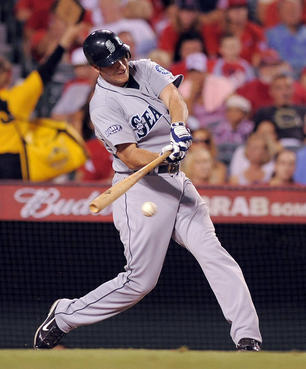
in just 40 at-bats, Alex Liddi was nothing short
of spectacular in his MLB debut in September 2011
for the U.S. Pacific Northwest's Seattle Mariners.
Having athleticism in his blood helped Liddi early on. His father, Augustine, played baseball and taught Alex the game. His mother, Flavia, played softball at a competitive level and inspired her son to love baseball at age three. In 2004, Liddi played for the Italian National Junior Team in the World Junior Championship. Signed in 2005 by Mariners’ international scout Wayne Norton and Mario Mazzotti, one of the team’s European scouts, Liddi competed in Italy up until the time of signing a professional contract at age 17.
He went on to play for the Italian National Team in the 2006 Intercontinental Cup, the 2007 European Championship and the 2009 World Championship. Alex was also a member of the Italian National Team in the World Baseball Classic (WBC) in 2009, when he hit .375 under the guidance of hitting coach and MLB All-Star great Mike Piazza. 
third base position to first base in the M's line-up.
me that I was good enough to play against some of the best. After that,
I felt like I belonged here.”

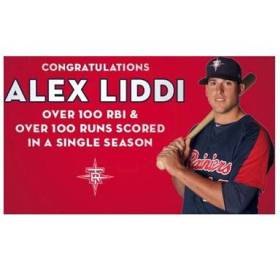 Although his 2011 Minor League season for the Triple-A Tacoma Rainiers was stellar with 30 home runs, 104 RBIs, 121 runs scored, 32 doubles and 61 walks, Liddi had his share of strike outs. However, in his second spring in Major League camp, Liddi made some adjustments at the plate with a lower leg kick. After working with M’s hitting coach Chris Chambliss, Liddi’s swing appears to have shortened–which results in him making more contact. Alex Liddi has more raw power and a better eye for walks than his main competitor–Kyle Seager–for the third base back-up job behind utiltyman Chone Figgins, who will seemingly play anywhere to accommodate Liddi’s hot bat in the Mariners’ line-up.
Overall, Liddi could not be happier with his progress at M’s camp. “Things have been really good here,” Liddi said. “I feel like I’ve improved on my contact. That’s what it’s all about. My goal is to be a .300 hitter and drive in some runs.
I don’t really care about home runs.
I care about RBI. I’m still working on it. I’m getting better.” Saying ‘sayonara’ to the Field of Dreams in Arizona and ‘ciao’ to the Land of the Rising Sun in Japan, Liddi has embarked on a remarkable journey of perseverance, dedication and validation in his first full season in MLB. Let’s enjoy the show! Buona fortuna Alex!!
Italian coaching, cuisine, and culture make Italy world-class for MLB hopefuls and European scouts

 Baseball in Italy received a Major League surprise last month when an unannounced MLB manager graced the 436 registered attendees with his presence at the Italian Coaches Convention Dinner at Castelnuovo de Garda (Verona). Tampa Bay manager Joe Maddon, a first-generation Italian-American whose father was born in Italy, was overjoyed by the warm reception received at the gala dinner which pays tribute to the coaches that make a difference in the internationalization of baseball in Italy. Madden exclaimed, “I feel at home here, because in the small city in Pennsylvania where I live there is a big Italian community.”
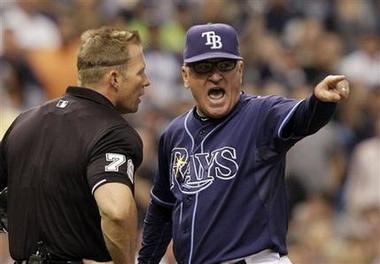
His grandparents original surname was Madonnini, but after emigrating from the Region of Abruzzo to America
their last name was shortened. Maddon continued, “It is always a pleasure for me to visit Italy. I am proud of my heritage.” The Rays were very well represented in Italy as Maddon brought along members of his coaching staff to lead instructional clinics for the delegation of Europe’s best coaches.


Riccardo Fraccari, president of the Federation of Italian Baseball and Softball (FIBS), spoke of Alex Liddi becoming the first Italian-born and developed player to play Major League Baseball and its great significance to baseball in Italy. He said, “Alex’s story is really the tip of the iceberg, and we really need to take into account the daily work of the coaches in Italy who are the base of the movement.” Liddi was signed by the Seattle Mariners after being selected to attend the inaugural MLB International European Academy in 2005 and in September 2011 became the first graduate of the MLB International European Academy to play in the Major Leagues.
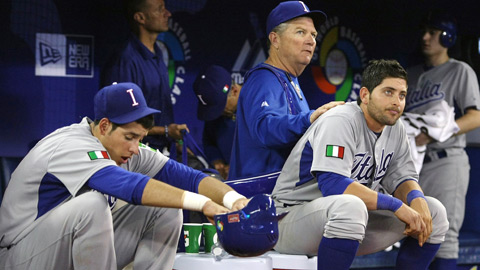

Bill Holmberg is one such coach that FIBS President Fraccari was referring to in his compelling speech. Holmberg has been living under the radar since 1989, when he came to Italy to serve as manager and technical director of the Godo baseball club for 12 years. He later became the pitching coach for San Marino as well as the Italian Junior and Senior National teams. Coach Holmberg was named Director and Field Coordinator of the MLB Italian Academy nearly a decade ago and has been instrumental in signing the best homegrown talent as a former international scout for the Chicago Cubs. Everyday he tirelessly trains the cream of the crop at an elite sports academy in the quaint beach community of Tirrenia near the Italian cultural iconic city of Pisa. Alessandro Maestri, the former Chicago Cub minor leaguer and recent Brisbane Bandit / 2012 Australian Baseball League (ABL) Fan Favorite Award recipient, was signed by Holmerg in 2006, when he became the first Italian-born pitcher ever signed by a Major League Baseball team.

the first Italian-born pitcher signed to a MLB contract. (Scott Powick / SMP Images / ABL)

Chicago Cub scout Holmberg knew early on that Alessandro was something special when he saw the young Italian play baseball for the first time. Holmberg said, “Alex can do whatever he wants to. He’s got the temperament and composure. He’s hit 95 mph, and his slider is at 86 or 87. He competes as hard as anyone out there.” Maestri still to this day works under the guidance and direction of Coach Holmberg. The Cesena, Italy
native made World Baseball Classic headlines in 2006 when his first offering to the Dominican Republic’s Moises Alou was rocketed out of the park for a home run. Despite the rocky start, he would not allow another earned run in his 4.2 combined innings in both the 2006 and 2009 World Baseball Classics.
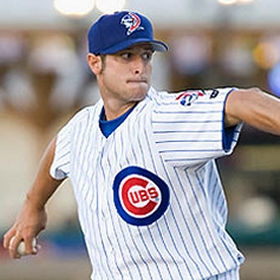
Maestri demonstrated great promise in the Midwest and Florida State leagues as a two-time All-Star. As as starter and relief pitcher in the Chicago Cubs minor league system for five seasons, he racked up a 24-17 record with a 3.75 ERA and 19 saves. The right hand throwing pitcher put away hitters with his evasive slider–which was once voted as the best slider thrown by anyone in the entire franchise. Maestri made his preseason MLB debut against the Oakland A’s during Cubs Spring Training in Phoenix on April 1, 2009 when Cub manager Lou Pinella summoned him out of the bullpen. Maestri struck out Orlando Cabrera and then he sized up against slugger Jason Giambi–who was lucky to squeak out a single through the hole. MLB All-Star

Matt Holliday was caught looking at a third strike slider for the second out, and Eric Chavez went down swinging at his Italian slider in the dirt to end Maestri’s almost perfect outing. Nearly three years later, Alessandro is still as dominant as ever as witnessed by his numbers in the most recent 2011-12 ABL season. As the workhorse and ace of the Brisbane Bandit pitching staff, Maestri led his team in wins (4) and proved to be one of the best pitchers in the league. He finished third in the ABL in innings pitched (63.2) and in strikeouts (53), fourth in the ABL in WHIP (1.16) and sixth in the ABL in ERA (3.25). In Round Eight of the regular season, he earned the Pitcher of the Week award after pitching a stellar complete game two-hitter against the Canberra Cavalry. Based on his most recent form, Maestri is worthy of a second look by international scouts to make his long-awaited MLB debut. He will always be a competitor who lives on the edge to bail his team out of pressure situations.

Bill Holmberg is committed to producing Italy’s finest athletes.
Of the frequent MLB-sponsored instructional clinics throughout Europe, none has had the impact of MLB / FIBS Academy host Coach Holmberg’s annual three and a half week summer invitational Major League Baseball International European Academy at the Olympic Training Center in Tirrenia. Designed to provide promising junior teenage players with both the environment and the instruction to reach their full potential, the European Academy brings together around 50 or more of the brightest young playing talent in Europe and Africa with the best in Major League coaching and instruction. The Academy seeks to provide a path for elite players from this region to improve their skills in preparation for the rigors of professional and international baseball. In addition to helping these bright young stars develop their skills, the Academy enables MLB Clubs to scout the best future talent. Holmberg explained, “It’s a pretty good place to see all the best players in Europe at one time. We’ve had between 18 and 20 scouts that have watched the games this past year.”
The Tirrenia baseball camp, which began in 2005, has much to do with MLB’s accelerated rate of signing the European elite to professional contracts based on the fact that the numbers have more than tripled from 2005 (2.33 average) to 2011 (9.0 average). So far 49 Academy graduates from ten countries (45 players from Europe and 4 players from Africa) have signed professional contracts with 19 different Major League Baseball franchises. Holmberg commented, “We’re not the Dominican Republic yet, but I think we might be sneaking up on Australia.”
Food for thought: Pitcher Alex Maestri–Italy’s first export to MLB imported by ABL’s Brisbane Bandits
 When asked about preparations for his Italian squad in the 2009 World Baseball Classic, the best hitting catcher in Major League Baseball (MLB) history and Team Italy hitting coach Mike Piazza replied, “We’ll have the best food.” All joking aside, Pizza commented: “You’ve got talent in Italy, think of Alex Maestri and Alex Liddi… To help talented kids you need to get them to play more games. Look at me, I didn’t really improve until I was given the possibility to play every day.”

The 26-year-old Alex Maestri made MLB history as the first Italian born pitcher to be signed by a major league club–the Chicago Cubs–in 2006. Three years later another historical milestone in baseball would take place when the Italian prospect would finally compete on the Major League level. Thinking that it was yet another day on the bench or perhaps a really good April Fools prank, April 1, 2009 would go down as a very Big League day for Alessandro Maestri. Upon reporting to a Cubs Spring Training game in Phoenix against the Oakland Athletics, Maestri was informed that he would making his first preseason Major League pitching debut, which many would consider to have been “textbook”
and as good as it could ever be.
The setting was perfect under a pleasant 71 degree warm Arizona sun for Maestri to take over for Cubs starter Carlos Zambrano and Luis Vizcaino in the fifth inning. Little did Maestri know that he would come face-to-face with some of Major League Baseball’s most feared hitters. His first strike out victim was Orlando Cabrera, who was caught looking at a fastball on the outside corner. Next up with slugger Jason Giambi, who managed to squeak out a single through the hole. Following was Matt Holliday, nicknamed “Big Daddy” for his towering six-foot-four stature and his muscular physique. Maestri dug down deep and mesmerized the intimidating Major League All-Star with a called third strike slider for out number two. The selective Eric Chavez worked the count full before swinging and faltering to Maestri’s wicked slider in the dirt for his third strikeout. Upon returning to the dugout, legendary Cubs skipper Lou Pinella congratulated the young Italian hurler.

As as starter and relief pitcher in the Chicago Cubs minor league system for five seasons, Maestri racked up a 24-17 record with a 3.75 ERA and 19 saves. A two-time minor league All-Star, the right hand throwing pitcher put away hitters with his evasive slider–which was once voted as the best slider thrown by anyone in the entire organization. Representing his native Italy in the 2006 and 2009 World Baseball Classic (WBC), Maestri dominated hitters. In the 2009 WBC, Maestri held opponents scoreless in his two plus innings–during which he got Miguel Cabrera to ground out on a fielder’s choice and Magglio Ordonez to strike out.
Since joining the Brisbane Bandits in the Australian Baseball League (ABL) this month, Maestri has been brilliant. In his first two ABL victories against the Canberra Calvary and the Sydney Blue Sox, he threw over 10 innings of scoreless ball and struck out 11. Add to that total another 8 K’s he put down on his most recent indecision versus the Melbourne Aces on November 18th, and Maestri has tallied 19 strike outs in just over 17 innings pitched. With the ABL’s fifth lowest ERA (1.56), the five-foot-eleven Italian has dished out almost nothing but zeros across the box scores. Look for Maestri to battle teammate Yohei Yanagawa–Japan’s 2011 Nippon Professional Baseball League Champion Fukuoka Southbank Hawks reliever, who has struck out 20 as a Bandits starter in over 16 innings–and Canberra Cavalry’s Michael McGuire–a six-foot-seven, 240 pound 2008 First-Year Player Draftee by the Cleveland Indians from the University of Delaware and currently a Philadelphia Phillies minor league starting pitcher, who now leads the ABL with 21 strike outs in 13 plus innings of work–to battle it out until the end for the title of 2011-12 ABL Strike Out King.

When the ABL season concludes in late January, Alex Maestri is scheduled to head to O’Flallon, Missouri to pitch for the 2010 Frontier League Champion River City Rascals after being acquired in a trade last month with the Lincoln Saltdogs–2009 American Association of Independent Professional Baseball Champions. Heralded as the premier Italian born baseball champion of Major League Baseball, Maestri has fast become a favorite in the Australian Baseball League’s appetite for imports as a leader of the Brisbane Bandits.
 mlbblogger