 Tried and tested as “Azzurri” teammates on Team Italy in the 2013 World Baseball Classic, utility infielder Nick Punto and backup catcher Drew Butera quite naturally bleed Dodger blue. Butera was reunited with Team Italy leadoff hitter Nick Punto when he was traded to the Los Angeles Dodgers on July 31, 2013. Destined to get the most from one of MLB’s finest pitching staffs, Drew is a valuable asset to the dream team of Dodger General Manager Ned Colletti. Born on August 9, 1983, the Florida-native is the son of Sal Butera—a journeyman catcher who played 359 MLB games for the Blue Jays, Twins, Reds, Expos and Tigers from 1980-1988. Drew was selected by the Toronto Blue Jays in the 2002 MLB Draft but instead opted to play college ball at the University of Central Florida (UCF). Ironically, father Sal now works as a scout for the only Canadian MLB franchise.

A big opera fan who used to listen to Andrea Bocelli and Luciano Pavarotti in the clubhouse before games while in the Mets’ minor league system, Drew was named Florida League All-Star and later promoted to Double-A ball in 2007 before being traded to the Twins—where Butera family history was made as Sal and Drew became the first father-son combination to play for Minnesota when he made his MLB debut on April 9, 2010. Known for being able


Minor League Baseball
Exclusive Interview: Former Team Italy/MLB pitcher Dan Serafini at home in the Bullpen

While pitching for Team Italy in the 2013 World Baseball Classic, lefty Dan Serafini began his 22nd season playing as a pro in America, Canada, Japan, and Mexico. With 104 MLB appearances for the Twins, Cubs, Pirates, Padres, Reds, and Rockies under his belt, the bullpen has always been a second home for the Twins’ first-round draft pick of 1992. So when when it came time for the San Francisco-born Serafini to choose an appropriate name for his new sports bar located close to the family home at 5215 Vista Blvd. in Sparks, Nevada, it was simply a case of serendipity that he call it The Bullpen at Aspen Glen.
The bullpen at aspen glen come drink kids pic.twitter.com/RxiOO0c8GJ
— Danny serafini (@dannyserafini) June 16, 2013

He was the 1992 WCAL, County and Peninsula Co-Player of the Year in addition to being named the San Mateo Times County Athlete of the Year.
 Roberto: San Mateo’s Junipero Serra High School has been known to produce their share of athletes including Barry Bonds and many sports legends. While covering the Australian Baseball League, I learned that Brisbane Bandits’ Chuck Lofgren pitched at Serra High School. Having also played there, how does it feel being surrounded by a strong Bay Area professional athlete fraternity at Serra?
Dan Serafini: Serra High School is a great baseball facility and just a great school to go to. We had a lot of great players: Jim Fregosi, Dan Frisella…even some football players: Lynn Swann, Tom Brady. We have quite an athletic history. Some really good baseball players like Gregg Jeffries have come out of my school.
Roberto: Team Italy slugger Chris Colabello followed the same minor league path to MLB playing for Double-A New Britain RockCats. While you played there, you were named to the 1995 Eastern League All-Star team after going 12-9 with a 3.37 ERA.
Dan Serafini: That was a long time ago. I can barely even remember that. At New Britain, Chris got to play in the new stadium. I played in the old Beehive Stadium, which was more like a high school stadium with a trailer park locker room. I had a good year that year, and it got me a call up to Triple-A before the season was over.
Dan Serafini: It was not an easy team to pitch against for my first time playing in the big leagues, but it was a great memory. It was kind of funny.
The Twins wouldn’t let me into the locker room before the game. They didn’t want any animosity in the locker room because they hadn’t sent anyone down (to Triple-A) yet. I had to stay in a hotel and then on game day I got to show up right before the game started so that I could get ready to play. It wasn’t the greatest experience, but it was still a good experience. I got to the big leagues!
Roberto: At least it was a home game when you had to face the intimidating New York Yankees.
Dan Serafini: Although it was a home game in Minnesota, it was still intimidating. It was the New York Yankees—no matter where you are playing them, they are intimidating. Crowd factor definitely helped. I had the crowd on my side. I loved Minnesota. It was very supportive. I had a great time.
Roberto: You also had some more playing time with the Twins in 1997 and 1998. Was it rewarding for you?
Dan Serafini: It was. I got a very brief opportunity with the Twins. You know, going back from starting to the bullpen and starting and bullpen. I was never really able to fill my niche with the Twins. It was fun. It was rewarding. I’m a Major League Baseball player. There is nothing more rewarding than that.

Roberto: The Chicago Cubs bought your contract from the Twins on March 31, 1999. You made four starts for the Cubbies and put together a 3-2 record in 42 appearances with a 6.93 ERA.
Dan Serafini: The ERA was kind of high, but in my defense I actually pitched really well until the all-star break. I think I only had a 3 or 3.50 ERA up until the all-star break. Then my big
 league pitching coach, Marty DeMerritt, wanted me to become a left-handed specialist and drop down sidearm and start pitching sidearm only. So I did that, and it completely screwed up the whole rest of my season. I was walking everybody, giving up all kinds of hits and just all kind of happened. I can’t blame him. He was just trying to help me out, but to change your pitching mechanics in the middle of the season… It’s really hard to make an adjustment to big league hitters. It hurt me pretty good.

Roberto: In the 1999 offseason you were traded to the San Diego Padres and pitched in three games in 2000. How did it feel to come back to your native California to play pro ball?
Dan Serafini: I was there for a long time. I didn’t get many opportunities.
I was mostly like a chess pawn. I just kind of sat in the dugout. I’d go a week straight without pitching in a game.
I didn’t get as many opportunities as
I would have liked to become a better player than I am today. San Diego is beautiful, and I’m from California–even though it’s Northern California where I’m from. Southern California is a beautiful place. I guess I had more fun there off the field than on the field.
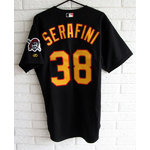 Roberto: After being traded to Pittsburgh and playing for the Nashville Sound, you had a 4-3 record with a 2.60 ERA before the call up to the Pirates on August 5, 2000 to make 11 starts.
Dan Serafini: After getting traded from San Diego, I had a really good month or so in Nashville before getting called up.
I made my first start against the San Francisco Giants and won. That could have been probably my favorite time in the big leagues–to be going back home to my hometown and beating San Francisco in San Francisco. I had a pretty good season with Pittsburgh. They were struggling and in last place. I threw well for Pittsburgh. I just didn’t fit in their books.
 Roberto: Signing with San Francisco must have been a dream come true?
Dan Serafini: I didn’t get to stay with San Francisco too long. They signed me as a big league player, but they didn’t have a roster spot. I went to Triple-A for a little bit. I was making a substantial amount of money for a Triple-A player so when they couldn’t find a spot for me I got released about a month after
I signed. So I really didn’t get much of an opportunity with San Francisco.
Roberto: You quickly signed with the Mets and played for the 2001 Triple-A Norfolk Tides, where you posted 5-2 record with a 3.31 ERA in 31 games.
Dan Serafini: I didn’t waste anytime—maybe two days later signed with the Mets. Went to Triple-A and played there a little bit. I pitched pretty well, but got into an altercation with the GM. I ended up getting released and walking on over to the other clubhouse and signed up with Milwaukee that same day.
Roberto: You finished off the 2001 season pitching for the Brewers’ Triple-A affiliate Indianapolis Indians and posted a 2-2 record with a 5.96 ERA. However,
you chose to move on from Milwaukee
and were granted free agency in October, 2001. This opened the door for other opportunities, and you ended up signing a minor league deal with the Anaheim Angels. Was that another short-term engagement by design or a matter of being released? Please clear up all the misconceptions and incorrect information the media has picked up on to make you have to stand up for yourself and clarify.
Dan Serafini: Well you know the thing is…the media–they always say you were released, you were released, you were released. But for a lot of those teams I’ve actually picked the option for my release.
I didn’t get released. They would option me down to Triple-A, and I felt that I didn’t deserve to go to Triple-A. So for a lot of those assignments I chose not to go.

Roberto: After opting out of your contract with the Angels, you tried to make a comeback in late 2002 when you signed with the St. Louis Cardinals. You began at Triple-A Memphis, but then on April 21, 2003 you were released.
Dan Serafini: I knew what was going to happen because during the offseason I signed for such a high contract to go to Triple-A. I knew they were using me to fill a spot. So I knew as soon as no one came down from the big leagues or something that I was going to get released. 
Roberto: So you expected it?
Dan Serafini: I had signed for a substantial amount of money to go and play in Triple-A. Within the first month when Kevin Ohme was sent down from St. Louis, they got rid of me the next day. I pitched okay there, but it was really hard because I have always been a starter my whole career and I kept bouncing back and forth. I was going from bullpen to starting to bullpen and starting and never got into a rhythm.  So for all these teams I played for, I had really a tough time coming out of the bullpen and learning my routine and learning to play. Unfortunately, I didn’t really prove myself that well as well.
Roberto: It sounds like the experiment on the big league level of being a sidearm specialist coming out of the bullpen went terribly wrong. It was not exactly the best training ground for trying something new.
Dan Serafini: No. The only chance I had to experiment was on the big stage, which is really difficult if you are not physically or mentally prepared for those things. I wasn’t…I was only 21 or 22 at the time. It was a difficult road for me–that’s for sure!
 Roberto: Did being disillusioned with American pro ball inspire you to head south to Mexico?
Dan Serafini: Yes, I played my first year in 2002. It was winter ball for Mazatlan. I had a great manager and a really fun time there. And they said if I ever had a problem in summer that I was more than welcome to play in Mexico. So after that St. Louis series, I went in 2003 to go play summer ball in Mexico.
Roberto: The Cincinnati Reds noticed and purchased your contract on August 25, 2003.
Dan Serafini: I ended up winning the ERA title. I set the record for the most wins in a row that season. I was a starter. I got back in the my swing of things. I got my mechanics back and pitched really well. I got called up and went straight to the big leagues in Cincinnati.

Roberto: On August 26, 2003, you started against the Milwaukee Brewers.
Dan Serafini: I believe I also started in a game versus St. Louis. Then I went back to the bullpen after I told the GM
I wouldn’t go to the bullpen and that I would only start. Because I had already 130 innings pitched in Mexico, I was tired and said I didn’t want to get up and down every day out of the bullpen. After I said I only wanted to start, the GM said that was exactly what I was summoned there to do–to start for Danny Graves because he got hurt.
 So I went there, got two starts and they stuck me in the bullpen. It was a disappointment. I know it’s a business, and I just need to man up and do it. It was just hard. I talked to Bobby Valentine in 2004, and he asked me to go down to Vegas and throw a bullpen for somebody to try out for the team he managed in Japan. I went out there and tried out for the Chiba Lotte Marines. I was hurt at the time. I had a broken collar bone because
I crashed on a motorcycle messing around with my friends. Despite being injured, I still got a good enough report from the try out to go to Japan.
Julio Zuleta charged Dan Serafini on the mound after a ball nearly hit him in Japan in 2004 .
 Roberto:: After being granted free agency and playing for Bobby Valentine’s Chiba Lotte Marines in 2004 and 2005 as well as the Orix Buffaloes in 2006 and 2007, were you treated with a little bit more respect in Japan?
Dan Serafini: It was really rewarding because I actually got treated like a player that I was. Japan did nothing but give me the highest respect. Bobby Valentine did nothing but give me the highest respect. He kept me on a routine for the full season, and I had a really good career in Japan. I still talk to Bobby off and on the internet. I was happy to see him as an Ambassador for the 2013 World Baseball Classic.
Bobby Valentine throws out the first pitch of the 2013 WBC game between China and Japan.
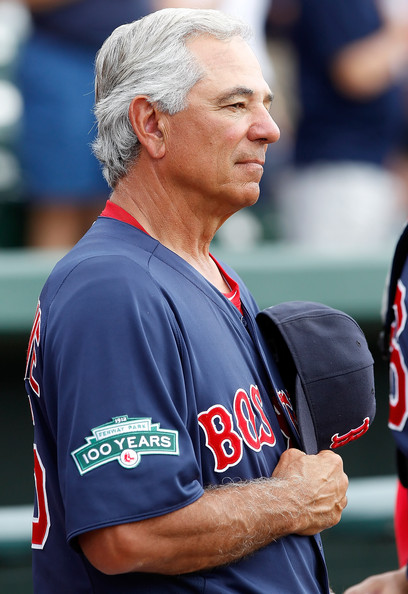 Roberto: Did you follow all the drama that surrounded Bobby Valentine last year when he managed the Boston Red Sox?
Dan Serafini: I did. In fact, before the season began I called him and asked him for a job to see if I could get a Triple-A job or a coaching/ player job. His hands were tied. He said that he couldn’t make any moves. But I followed him and saw all the disappointing articles about him and stuff from players that couldn’t handle his attitude. I thought it was ridiculous. He’s the smartest guy in baseball–hands down. He may want a little more attention than he deserves, but that’s his character.
If people don’t like it, they try to crucify him. He’s a very good man!

Roberto: It’s too bad he was the scapegoat for the Red Sox.
Dan Serafini: It really was. I know he’s done some things in his past that has rubbed people the wrong way–and we all have. It’s just the way different personalities go–especially when you have a bunch of superstars in the one locker room. It’s almost like you have to walk on eggshells around these people because they’re more sensitive than most people that are not superstars.
Roberto: When a player digs into the batter’s box and gives you a long grimacing stare, is your best response and message to the hitter simply the delivery of your next pitch?
Dan Serafini: Yes, definitely–without a doubt. There’s got to be respect both ways. For me, I’ve always been tired of being called a cheater or having a dismal career by what some reporters have said. I feel like I have fought the longest just like Bobby Valentine did to get my career to where it is right now.
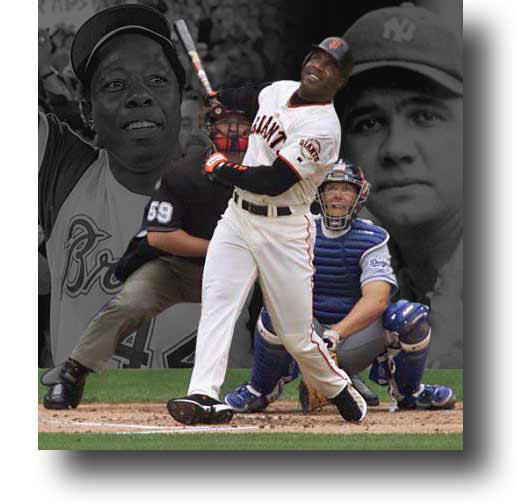 Roberto: You signed a deal with the Colorado Rockies in 2007 and pitched on September 7th against the San Francisco Giants.
Dan Serafini: It was a great feeling. I was excited. It was tough because I had just come back from Japan. I broke my hand in Japan, and they decided to release me at the last quarter of the season just because they were not going to use me anymore and had no chance of the playoffs. So they sent me home, and
I signed with Colorado. I got called up to the big leagues a couple weeks later and after four years of not having seen a major league game got to pitch to my first batter–Barry Bonds! 
Roberto: What were the odds of you facing one of baseball’s most feared hitters in your MLB comeback attempt?
Dan Serafini: It was pretty interesting. I had some butterflies.
Roberto: How did you sustain your hand injury overseas?
Dan Serafini: That happened at a game in Japan. I was pitching and lost my footing in the bullpen. It was on my glove hand.
I kind of slipped and fell over. I used my hand to stabilize myself from falling over, and I broke my ring finger, pinky and a couple bones in the middle of my hand.
Roberto: In Japan you also sustained an achilles injury which required medication to help with the healing process and eventually led to a positive test for MLB banned substances when you signed with the Rockies in 2007.
Dan Serafini: I actually got a serious injury and had surgery on my achilles. When I came back from Chiba Lotte, I tore my achilles tendon in the year we won the championship. I signed a two-year contract with the Orix Buffaloes for a substantial amount. My leg with in a cast for four months so they were shooting it up all year long trying to get it balanced back.
After my first year at Orix, I wasn’t throwing very well because my body was so out of balance that it started hurting my shoulder and back. So they told me to just take the rest of the year off and come back for 2007. I was still having problems with my leg and the way my muscles were firing in 2007. So again a doctor was giving me a medication that I didn’t think much of because I passed all of my drug tests and Olympic testing in Japan. So I didn’t even think twice about it. And that’s what it was when I got tested on the last day of the season with Colorado. It was still in my system, and I got busted for it.


Roberto: It looks like MLB used you as a scapegoat to fill their 2007 quota and deter players from using banned substances.
Dan Serafini: Yes, I think so. I mean because I tried to fight it.
I had to do a lot of things for my defense. I had to get the doctor from Japan to come and fly to New York to testify for me in court. He wanted $500,000 to do it because it would give Japan a bad name since I never failed a test in Japan. So I said, ‘Screw it, I’ll take the 50-game suspension and wear it for now.’ I didn’t think that it would be that bad, but Colorado didn’t sign me back.
 The GM at the time, Dan O’Dowd, didn’t give me my National League Championship ring. They gave me my playoff share because I was there for a short time, but they didn’t give me a ring because they were disgraced by the fact that I was a cheater and stuff like that. It was just bad. An unnamed journalist tried to say that I was trying to respark my dismal career. My response was like: ‘What’s so dismal about making over 10 million dollars?’ I don’t think that’s too dismal…
Roberto: If a man can’t look at me in the eye and share his theory to my face without the facts in hand—and instead choose to hide behind a computer desk in favor of meeting publishing deadlines, then it’s not news worthy in my book.
Dan Serafini: Exactly. You know it’s like so many people just wrote stories about me that never even asked me the details or took the details out. Even Tom Verducci and things he wrote in my 
article. I said so many things to balance and justify the difference between cheating and other kinds of uses of certain PEDs or whatever. And they don’t want to listen to that, but everybody wants to be negative and listen in to CNN nowadays.
Roberto: Not a lot of players want to comment in fear of being blackballed. But you are not afraid to speak your mind and represent Team Italia in the World Baseball Classic. It’s your time to shine and be heard.
Dan Serafini: Yes, it is. If people want to call me a jerk, whatever but you know what… I’ve been around this game for  22 years now. And I know that 90% of the people I have played with have said: ‘If I had a chance to use it and make myself better, then I would have too…’ You know, that’s what we’re here for.
Roberto: I don’t blame you for having headed south to pitch for the Monterrey Sultanes after all that nonsense.
Dan Serafini: They were a great organization. I played with them for a while and just kept bouncing back and forth. I pitched
well in Monterrey, got to the playoffs a few times and then I got traded.
Roberto: You spent 2008 and 2009 in Mexico before heading to the East Coast to play for the Bridgeport Bluefish in the Atlantic Independent League.
Dan Serafini: Yes, I did that just for a little bit so that I could get a job back in the states. I wanted more people to see me pitch, but nothing came of it.
Roberto: Yet Mexico loved you and you represented the country in several Caribbean Series.

Dan Serafini: Yes, I believe I played three Caribbean Series for Mexico–all during winter ball because the Sultanes play during the summer. In the winter I played for Yaquis de Obregón in
the 2008 Caribbean Series and then again in 2010 and 2011
I played for Mexico in the Caribbean Series.
Roberto: What’s the difference between baseball played
abroad and in the U.S.?
Dan Serafini: For one, the United States has the best players in the world in the major leagues. So it’s kind of hard to represent the United States because it has so many great players. Mexico and Italy have a lot of great players that have been overlooked by United States. It’s hard. With me representing Mexico, I am one of the better players in Mexico because that’s just where I am playing at the time. With my experience and talent, I can make those teams and play for those teams. I could possibly pitch for Team USA but that team has so many Americans from all over the country to pick from. So it’s really hard to make that team.
Roberto: How were you recruited to pitch for Team Italia?
Dan Serafini: Actually they called me in 2009 and found out
that I was Italian through my agent. After they got the background information about my Italian ancestry, they said that they would love for me to come and try out. I came down, tried out and they said that they could definitely use me as a starter or reliever because of ‘my good arm.’ So the rest is history as far as that.
Roberto: It must have a been a major personal victory for you when Team Italia upset Mexico in the 2013 WBC.
Dan Serafini: Almost everyone on Team Mexico I either played with them or against them. Team Italy asked me to write a 
scouting report on the whole team, which I did and gave to the coaches. They watched a few of their games during their exhibition games and said it was ‘spot on’ as far as the scouting report. That’s what we used, and it actually came out well. We pitched well against them. We played great defense against them, and we came out victors.
Roberto: Once Team Italia’s manager Marco Mazzieri gave me his cell phone number, I felt compelled to do the same and gave him a scouting report on Team Canada. We all had to do our part.
Dan Serafini: Well, that’s it…exactly! We’re here to win. Right 
now, I’m not an American. I’m an Italian, and I’m here to beat Team USA today. I was there to beat Canada yesterday, and I was there the day before to beat Mexico. Granted I have friends from every team from all over the world, but right now I’m just Italian. I’m here to walk all over every other team.
Roberto: How proud are you to be Italian?
Dan Serafini: I am very proud to be Italian. It’s unfortunate because I have always had a strong Italian family growing up, but Italian heritage or history was never really taught.  I never learned Italian even though my father speaks Italian and both of my grandparents only spoke Italian. I just wasn’t brought up that way. Now doing more research about Italy and possibly thinking later in my career to maybe going to play in Italy for a little bit. I’m really interested in the Italian culture and to visit all around Europe. I’m looking forward to it. Italians are a well-educated culture to begin with. Everyone on our team speaks perfect English and perfect Italian. Some speak Spanish, Italian and English. I think they are just educated people. Unfortunately
when you move to another country and are unable to speak their language fluently, you tend to get away from your native language.
I know when I played in Mexico my whole team spoke English. I didn’t have a chance to learn Spanish because people talked to me in English. So it’s not as diverse as you think. It’s a lot harder, even my wife can tell you it’s a lot harder to go there and learn a language because everyone is polite to you and tries to talk to you in your language to make you feel more comfortable. So we have a tendency to get lazy
and not try. But right now I listen to Italian tapes every night because
I want to try to learn Italian.
Roberto: That’s because everyone is trying to be hospitable 
and speak your native tongue?
Dan Serafini: Yes. I mean the Italians come right over here, and they all speak English right out of the gate. They don’t even try to speak Italian. They’re like: ‘No, we’re in America now–we’re speaking English.’ That’s what they do.
Roberto: How does having a coaching staff that includes future Hall of Famer Mike Piazza affect your approach to the game?
Dan Serafini: Mike is a great guy. Look at his story–coming from the 62nd round as a favor to his godfather Tommy Lasorda! Something ridiculous like that and becoming the best 
offensive catcher of all time…whatever his statistics are.
Being blessed enough to play against him and talk to him,
it’s a great experience. Just because we have one more
person with a ton of experience on our team. He has been
in the spotlight for what…16 seasons! You know, I’ve been
in the spotlight for seven. Grilli has been the spotlight for
eight. So it’s like we have plenty of experience. It’s nice to
have someone of that magnitude on our team helping us out.
Roberto: Mike Piazza could be doing something else with his time,
but his heart and soul are committed to Team Italia.
Dan Serafini: You’re right. It is…and we appreciate that! He could 
be doing anything with his time, and a lot of us could be but we’re all here together to represent Italy. We’re going to represent the right way this time.
Roberto: Thank you for your time today. I’m sure this story will be continued next time we get together to talk.
Dan Serafini: Yes, definitely…I’m looking forward to continuing it. I will answer any question that needs to be answered. It’s nice to be able to explain myself for a change, and hopefully one day people will look at me differently.
San Diego’s Little Italy and Sanremo’s Alex Liddi share a love for baseball and its rich Italian history


While attending Beverly Hills High School, Agostino Liddi played baseball before repatriating to Italy after graduation. It was there that he met his future wife, Flavia, who played softball competitively in Italy.
You could say that Alex was a truly a baseball baby since it was reported that Flavia played first base for the first three months of her pregnancy carrying Alex. When Alex was old enough to play, his mother coached his baseball teams. As a teenager, his father drove him long distances to compete in games throughout Italy. With the addition of their two sons, Thomas and Alex, the couple shared their love of the game to transform the Liddi’s into the archetypal Italian baseball family.

Liddi “the real ambassador of Italian baseball” after he became the first player from Italy to play in the Major Leagues since 1954 and the first-ever Italian-developed player in MLB. Liddi, the face of European baseball, has the opportunity to spur the growth of baseball back home by playing at the sport’s highest level. By watching Liddi on MLB.tv and reading the nightly box scores, young Italian athletes are now inspired to think that playing Major League Baseball is a viable option.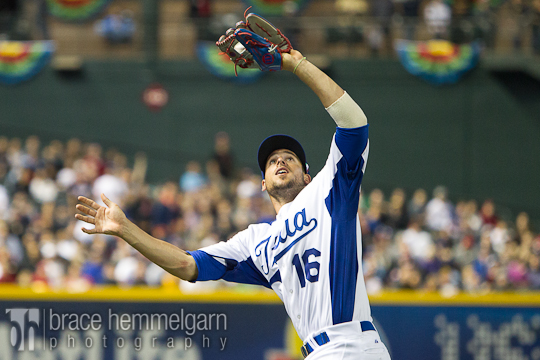

in anticipation of his return to the Mariners for his third consecutive season. Now leading the Rainiers in home runs (8), runs (34), and RBI (32), the sheer power of Italian
24-year-old Liddi will be a welcome addition to the Seattle lineup when MLB rosters expand to 40 players in September. The European baseball ambassador was kind enough to sit down for an interview at the 2013 World Baseball Classic in Phoenix.
Roberto: You were signed in 2005 by Mariners’ scout Wayne Norton and current WBC Team Spain manager Mauro Mazzotti. Isn’t that a good sign for Italian baseball when two Italian managers, Italy’s Marco Mazzieri and Spain’s Mauro Mazzotti, are leading two of Europe’s finest ballplayers in the WBC?
Alex Liddi: Yeah, I’m happy for him that he is able to participate in the World Baseball Classic with another team. I wish him the best.
Roberto: Has the journey with the Seattle Mariners organization been a good experience so far?
Alex Liddi: Yeah, I enjoy my time in Seattle and in the minor league system. I think that it’s a pretty good system. I’ve enjoyed my years playing with them. I’ve got to thank them for giving me a chance to play in the big leagues. So I’m really thankful.
Roberto: You began your professional career in 2006 with the Peoria Mariners and then were then promoted to Single-A Wisconsin. You remained there until 2008 at which time you were batting .313 and enjoyed an eight-game hitting streak when you nearly hit .500! That must have been memorable?
Alex Liddi: Yeah. At every level you go, you try to make adjustments. I was trying to show them that I could play in the states.
Roberto: In 2009 playing for Single-A Advanced High Desert, you led the California League with a .345 batting average, 23 home runs, and 104 RBI. You were selected as a Cal League All-Star. In addition, you were awarded the Cal League MVP, Topps Cal League Player of the Year, Mariners Minor League Player of the Year and MLB.com Mariners Organization Player of the Year. What an accomplishment!
Alex Liddi: Yeah, it we kind of my break out year. We had a good team that year so it was a little easier for me to put out good numbers plus it was a good hitter-friendly park. But that gave me the confidence, and it gave me the chance to keep going for the rest of that year. All these things combined made me have a really good year.
Roberto: How did it feel playing on Team Canada at the Toronto’s Rogers Centre in the 2009 World Baseball Classic and beating the home team on their own turf?
Alex Liddi: Yeah, it was a good time for me. It was probably one of the biggest memories of my life, of my career. I had the chance to beat Canada at the highest level of competition. It will always be something that I will bring with me. I am happy that I was there.
 Roberto: In 2011 you were invited to your first Spring Training camp with the Seattle Mariners. It was special because you hit back-to-back grand slams in consecutive games and produced impressive numbers: .385 batting average and a .429 on-base percentage. Your stellar 2011 campaign at Triple-A Tacoma (30 home runs, 104 RBI, 121 runs scored, 32 doubles and 61 walks) led you to your MLB debut with the Seattle Mariners on September 7. 2011. When you got to the big leagues, you hit three home runs and drove in six RBI in 40 at-bats while playing 15 games as a September call-up. Did you ever have to pinch yourself to make sure you were not dreaming anymore and come to the realization
that you were actually a big leaguer?
Alex Liddi: Yeah, for sure. I remember that I had a good spring, but I was still young.
So I had to go back down to Triple-A and develop myself a little more. But then it was getting really close to when the roster expanded to 40 in September, and I was getting really pumped. I maybe had the chance to get called up. Somebody would say ‘yes’
that I was going to get called up and somebody else would say ‘no’. Until they called
me and told me that I was getting called up. It was kind of like all the dreams came true, and it was a big day for me.
Roberto: You also played in the 2011 All-Star Futures Game. That must have been an
eye-opener playing in the front of the MLB media under the watchful eye of a worldwide televised audience.
Alex Liddi: It was a real honor. I would have never expected that to have come to me.
I was really happy to go there. It was really fun.
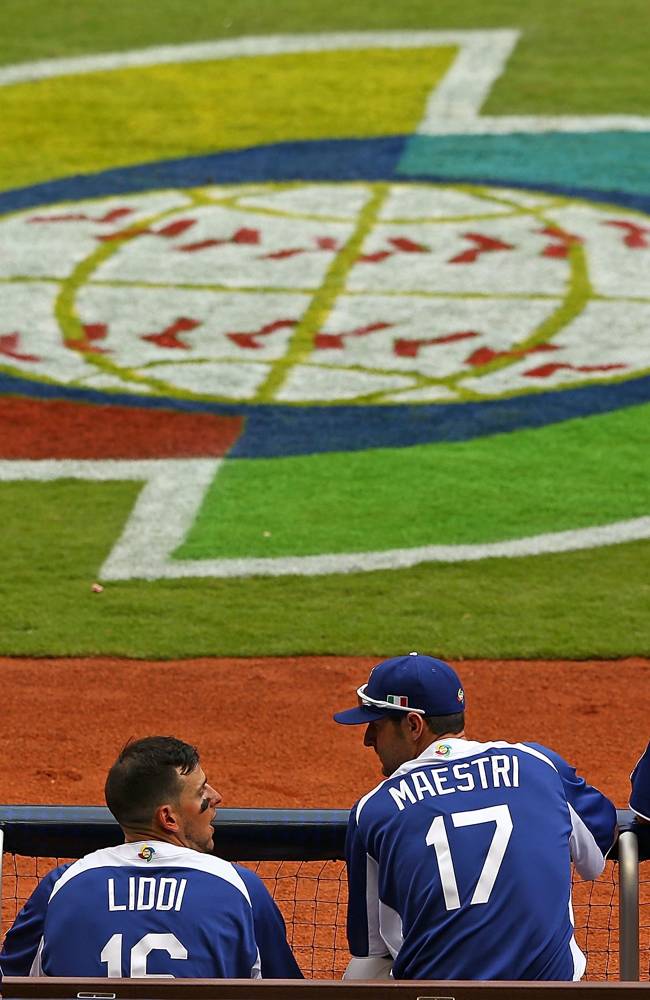
Alex Liddi: First of all, I have a lot of respect for him
as a person and as a player. He’s a really good friend
of mine and probably one of my best friends. He’s one
of those guys who always works hard and fights for everything. He never got anything easy in his life and always had to fight for it. That’s why I give him a lot of respect as a person. Plus he’s a really good pitcher with really good stuff. It was a shame when he got released by the Cubs, but at the same time I remember when I called him to tell him to keep his head up. I thought he could have pitched in the big leagues for sure, and I
still think he can. And then he got a chance to pitch in Japan and make it to the big leagues there. I’m really proud of him. Hopefully, he will have a long career.
Roberto: He actually was selected as the inaugural Fan Choice Award in the Australian Baseball League when he pitched for the Brisbane Bandits in 2011. Wherever he decides
to play, he always makes a major impact.
Alex Liddi: He has charisma. He has a really good attitude on and off the field that makes him a complete player. Good tools, good person, good teammate…so all these things combined together make him a really good player.
Roberto: What is different about Team Italia in the 2013 WBC from the previous team in 2009. What is different in the chemistry which makes the team such a dominant player in this year’s World Baseball Classic?
Alex Liddi: Last time in the World Baseball Classic we had a good team, but this time we have been playing together more. I mean we already know Chris Denorfia, Nick Punto, Anthony Rizzo–I’ve known Rizzo for a couple years now. He’s been a friend of mine since I have been playing against him for a long time. The other guys have been playing together for a while now so the team is really together now. Instead of the other teams, they might bigger names but they have never played together like we do.
Roberto: You could have a bunch of big names on a lineup card, but at the end of the day you look at the box score and the team with the biggest desire to win the game will actually succeed.
Alex Liddi: I think we showed them already that we came here to win. We’re not joking and you can see it on our face…our enthusiasm on the field. We’re playing hard right now. We’re playing real baseball so everybody has to be careful.

an invaluable Team Italia coach.
Alex Liddi: We’re playing as a team. Everybody can come up with the big hit. Nobody has got to do too much. Everybody’s got other people’s back, you know. We keep playing like this, and we’ll do a lot of damage.
Roberto: Having a stellar coaching staff which includes future Hall of Famer Mike Piazza and Frank Catalanotto, it must have a tremendous impact on your entire approach to baseball.
Alex Liddi: For sure. I mean when you have a chance to have coaches like Mike Piazza and Frank Catalanotto—guys who have been in the big leagues for a long time—it makes it fun just to be around those guys. You’re able to ask them questions and learn from them so that’s another big part of the team right there too.

Roberto: How proud are you being an Italian playing Major League Baseball and providing hope for Italian athletes that they too can play baseball professionally?
Alex Liddi: I’m really proud to have accomplished being the first Italian-born-and-raised player in the big leagues. It was something that I was always looking forward to coming up through the minors. That was my goal ever since getting signed. Getting closer to it, I could actually understand what it meant. As I got closer, and I was really excited about it. There was no pressure for me. It’s something I’m happy about that happened to me–getting to the big leagues. I’m really thankful to everybody for giving me the opportunity.
Roberto: I love what you represent to Team Italia, your family, friends and fans.
Alex Liddi: I respect this game, and I respect my family. You always got to remember where you come from. So I will always be there for my friends, and a lot of my friends are my fans too. They’re there for me so I got to be there for them. The fans are what make
the game fun. So you have got to be thankful for the fans. I really appreciate the fans. Without the fans, this game would be nothing…

Team Italy’s Chris Colabello is ready to join the Twins and kiss Minor League Baseball goodbye


try, try again…” Perhaps appropriate to sum up the life story of 29-year-old Italian American MLB hopeful Chris Colabello, the best is yet to come for this Massachusetts native. The slugger is poised to make his presence felt on the big league level this year when the Twins call him up from AAA Rochester. Colabello’s strong performance in the World Baseball Classic catapulted Team Italy into the second round of play this year. At Chase Field in Phoenix, he went 4-for-5 with a home run, four RBI and three runs scored against Canada to help Italy clinch a spot to move on to Miami and become the Chevrolet Player of the Game. While at Marlins Park, the Italians nearly posted an upset over 2013 WBC Champion Dominican Republic when Colabello clubbed a three-run bomb that rivaled any one of Giancarlo Stanton’s many web gems. The Team Italy clean-up hitter lived up to his title by finishing the WBC with a .333 BA, seven RBI and a 1.035 OPS in 18 at-bats.


nine spring games for Minnesota. He received words of encouragement from Twins stars Joe Mauer and Justin Morneau despite being sent down to Triple-A ball to begin the season. Manager Ron Gardenhire had nothing but
praise for Colabello. “He did fine,” said the Twins skipper.
“He played great for Team Italy and really well for us. First base is a place where we don’t have a ton of depth. We have Morneau and then ad-libbing from there. So if he’s down there (AAA) swing the bat good, he could go right into the big leagues after all that time (seven years) in Independent ball. So it’s a good story.” After spending seven seasons in the Can-Am Independent League, Chris Colabello was signed by the Twins and spent last season at Double-A New Britain, where he put together a .284 BA with 19 home runs and 98 RBI. In 46 games this season at Triple-A Rochester, Colabello commands a .360 BA and leads the Red Wings in hits (63), doubles (17), runs (29), home runs (12) and RBI (42).
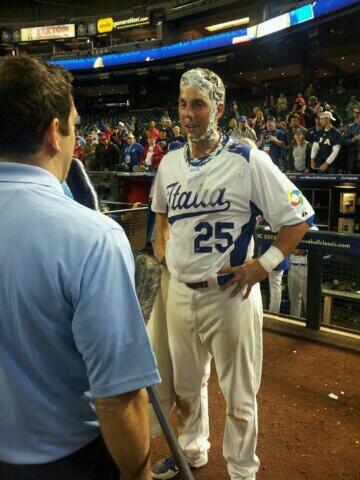
in the Canada post-game celebration.
The happiest man in baseball? Chris Colabello. Twins infielder, Mass. native, Team Italy for WBC. Story: bit.ly/15AYt6a @mlbonfox
— Jon Morosi (@jonmorosi) February 22, 2013
Who needs Disneyland when you have #Twins #MLB hopeful Chris Colabello playing for #TeamItaly in the #WBClassic? mlbbuzz.yardbarker.com/blog/mlbbuzz/a… #WBC
— Roberto Angotti (@ABLblogger) February 23, 2013
Twins win 5-4. Pablo Hernandez gets the save. Morneau with the three-run double. Colabello with game-winning hit. Attendance: 5,048
— LaVelle E. Neal III (@LaVelleNeal) February 25, 2013
Roberto: Having shadowed Justin Morneau in Twins Spring Training and having torn the leather off the ball with your hot bat, you really made a statement playing against your Canadian colleague in a Team Italia uniform during the World Baseball Classic by beating Team Canada 14-4 in a mercy rule victory.
Chris Colabello: Yeah. It’s been a pretty interesting journey to get where we are right now. Especially for me personally coming from independent ball and all that stuff. But it’s been great. I’ve been trying to take everything one moment at a time and just try to embrace it to the best of my ability. I think that when I was younger I would probably let moments that this speed up on me, and it would have been a little overwhelming. But I think with maturity comes the ability to just kind of embrace it. It’s great. I got to talk with Justin a bunch when we played him. I don’t think he’s too happy with us because of the final score that day. But it’s pretty neat and obviously a great experience for the Italian team.
Big day for Chris Colabello ( @cc20rake ) as he goes 4-5 with a 3-run HR to lead Italy past Canada. #WBC #MNTwins twitter.com/Twins_morsecod…
— Dustin Morse (@Twins_morsecode) March 8, 2013
Roberto: Showing up to Twins camp and finding out you would be rubbing shoulders with former American League MVPs Justin Morneau and Joe Mauer as a result of being assigned
a locker next to two Minnesota baseball icons must have given you goosebumps?
Chris Colabello: Yeah, for sure. I really did think my locker was in the wrong place (laughter) or they had forgotten me or something like that. It’s been really neat and obviously I’m so thankful for the organization for giving me the opportunity to get in the door last year, to be in big league camp this year and the opportunity to play up here in the WBC. In terms of stars in the Minnesota Twins for the past 15 years, you can’t really think of a guy or two that are bigger than Joe and Justin. They are just tremendous people, tremendous players. They’ve made it an easy transition for me and kind of made it a little
bit less nerve-racking than I thought it would be.
Will Mauer and Morneau be back at camp before @drewbutera and @cc20rake ???
— LaVelle E. Neal III (@LaVelleNeal) March 9, 2013
Did I just see my boy @drewbutera go deep?!?! That’s what I’m talking about..
— Ben Revere (@BenRevere9) March 8, 2013
Big day for @drewbutera as he lifts Team Italy to a win over Mexico with the clubs first HR since 2006. twitter.com/Twins_morsecod…
— Dustin Morse (@Twins_morsecode) March 8, 2013
Roberto: You also have Twins’ Drew Butera watching your back. He was outstanding in
the WBC with his two-run homer against Team Mexico. The chemistry in the Team Italia clubhouse was uncharted because at the end of the day the other team’s big league names on a lineup card didn’t translate in the game-ending box scores. Team Italia’s spirit, desire, passion, drive, and commitment to win games day-by-day under the leadership of manager Marco Mazzieri along with the coaching staff of Tom Trebelhorn, Bill Holmberg, Mike Piazza, Frank Catalanotto, Alberto D’Auria, Gilberto Gerali and Claudio Vecchi.
Chris Colabello: Yeah. It’s a testament to the staff and the organization. You know, being able to put together a group of guys that first and foremost would mesh well together. There was not a single ego in that clubhouse. It’s pretty unbelievable. We kind of embraced the role of underdog that everybody pinned on us. We certainly didn’t believe we were the underdog coming in. I think we obviously proved that to people playing strong baseball games in a row against some really good teams. Drew and I started talking when camp just opened. Every day we’d see each other at spring training. ‘Paisans’, you know, it’s kind of like that comradery came with it. Having played the European Cup last year, I saw what a great group of guys it was. It’s truly amazing to bring a guys from a big league camp and have them join with IBL (Italian Baseball League) guys and some guys from other walks of life and to have us all feel like we’ve been playing together for years is pretty amazing.
Here’s a picture of Albert Pujols and Mike Piazza during today’s BP taken by someone twitter.com/fcat27/status/…
— frank catalanotto (@fcat27) March 7, 2013

Roberto: You could not have had a better guidance than Italian MLB Academy Director and Team Italia pitching coach Bill Holmberg as well as Team Italia hitting coach Mike Piazza.
Chris Colabello: Yeah, for sure. Even on that end, you’ve got a guy who in my opinion
is a Hall of Famer in Mike Piazza, and a guy like Bill Holmberg–who is probably more prepared than any coach I have ever met in my entire life in terms of being able to scout, gather information and help guys out. Obviously, Marco is the leader of that group. It’s pretty amazing stuff because I think a line I remember hearing is ‘Attitude reflects leadership’ so it’s obviously a testament to them and the ability they go about teaching the game and helping guide us who we are.
Chris Colabello (Worcester 2005-11) receives a major-league spring training invitation from the #Twins: canamleague.com/cgi-bin/dist/n…
— Can-Am League (@CanAmLeague) December 18, 2012
Chris Colabello & Edinson Volquez are both trending worldwide @wbcbaseball #WBC @mlbnetwork
— MLB Public Relations (@MLB_PR) March 12, 2013
Roberto: How did you make the transition from Independent baseball to MLB-affiliated ball and what were the expectations that went along with it?
Chris Colabello: It was all new to me at that point. Obviously not being drafted initially kind of hurt a little bit, and I really didn’t know where the road was going to lead. Baseball is a big part of my life. Worcester was probably the best thing that ever happened to me in my career. The manager I played for, Rich Gedman and the people I was around, some of my best friends for the rest of my life are some of the guys I played with in Worcester. After that 2005 season, we had a great experience. It was our first year. The city was really excited about it. I got a real taste of how the best minor league places are run because we were certainly treated like royalty. I had the opportunity to sign with Detroit (in 2006).
I really didn’t know what to expect. It was all new to me. I had never been to Spring Training camp. I was really excited. I didn’t know how many guys there would be. Coming in as a free agent signing, I think at some point you have got to stand out. Again, I had mentioned before, when I was younger I used to let things speed up on me a little bit.
I think that was probably part of what happened in camp unfortunately. I thought I had done a pretty good job performance wise and in terms of work ethic. And I think I had some good reviews from coaches before I had left, but things didn’t work out for whatever reason it was and back to Worcester it was.
2011 Independent Leagues Player Of The Year: Chris Colabello: Chris Colabello is the 2011 Independent Leagues Pl… bit.ly/vwXlKo
— Baseball America (@BaseballAmerica) October 27, 2011
Roberto: At age 27 during your 2011 season with the Worcester Tornadoes, you put up impressive offensive numbers which earned you Can-Am League Most Valuable Player and Baseball America magazine’s Independent Baseball Player of the Year honors. How could the Minnesota Twins not take notice? They saw something special in you and shortly thereafter offered a minor league contract.
Chris Colabello: Yeah. It was kind of a whirlwind. I finished the 2010 season on a tough note. I broke my hand. I got hit with a fastball and missed the final two weeks of the season. I think I was really, really hungry at that point. So I started working a lot earlier than I normally would, especially in the cage with a good friend of mine, Bobby Tewksbary–
who is one of my best friends in the world. We‘d start getting after it in the cage…talking about timing and rhythm things, swing stuff that really changed my life (laughter). It allowed me to free myself up as a hitter a little bit which turned things around in my 2011 season. It was pretty magical in terms of finish. And of course all those nice accolades I was able to receive…I think helped me kind of break into affiliated baseball. I couldn’t be more thankful to the Twins organization for giving me that chance.
#Twins sign 1B Chris Colabello of the indy Canadian-American Association to a minor league deal:telegram.com/article/201202…
— Parker Hageman (@OverTheBaggy) February 5, 2012
“Taking a Moment to Appreciate the Underdogs” – A great look at Indi League Player of the Year Chris Colabello… fb.me/1mKQyKO9K
— Jesse Lund (@TwinkieTown) February 16, 2012
First baseman Chris Colabello is one of the reasons I enjoy covering the minors. bit.ly/IlxMtJ
— Kevin Thomas (@ClearTheBases) April 29, 2012
Rock Cats’ Chris Colabello hanging on to his major league dream. cour.at/Paz0tC
— Hartford Courant (@hartfordcourant) July 4, 2012
New Britain’s Chris Colabello, a 28-year-old rookie and refugee of independent league, is having MVP type season. twincities.com/twins/ci_21292…
— Tom Powers (@TomPowersPP) August 12, 2012
#TwitNewsNow Minnesota Twins: Aaron Hicks, Chris Colabello, Deibinson Romero make Eastern League all-star team dlvr.it/23Kq56 #MLB
— TwinsFanZone (@TwinsFanZone) August 25, 2012
Assumption baseball alum Chris Colabello ’05 sets Double AA New Britain single-season RBI mark! bit.ly/OmmWm3 #NE10 #NCAAD2
— ACgreyhounds (@acgreyhounds) September 5, 2012
Roberto: The accolades continued to mount as you were a 2012 Eastern League All-Star team selection in addition to being chosen as the Eastern League’s Most Valuable Player runner-up. You must have broken some hearts when your 98 RBI single-season club
record for Double-A New Britain in 2012 surpassed the previous 1998 record set by Doug Mientkiewicz (88). Quite an accomplishment in consideration MLB veterans and former
Rock Cats Justin Morneau, Michael Cuddyer and Jacque Jones could not reach the prior plateau during their minor league careers.
Chris Colabello: Yeah (laughter). It was a lot of fun. I think 2012 turned out to be,
I couldn’t have imagined it, just as good if not a better year than 2011. I was on a little bit of a different stage. There was little more riding on it, but it was awesome. I reminded myself about having fun and the game doesn’t change no matter where you are. Once I started having fun, things began to free up for me. In both places early, I ran into some trouble. Again that mental maturity…aging has kind of helped me along the way. It reminded me how to battle back from situations like that so the numbers turned out to be what they were. It was a lot of fun.
Roberto: You have trying to beat the odds in breaking in the big leagues your entire career with the same conviction to succeed despite getting older everyday. What keeps you moving forward in achieving your life-long dream?
Chris Colabello: Ultimately, I think if you are passionate enough about something in life it would be irresponsible not to pursue it to the fullest extent. Baseball is such a big part of my life for so long and obviously a huge part of my family, huge part of my childhood. It’s a part of me. People say baseball doesn’t define who I am. Well in a lot of ways I feel like it does for me. Obviously it doesn’t define the type of person I am, but there’s always a huge part of me that will be in love with this game for the rest of my life. I think I just got really good at not taking ‘no’ for an answer. Every time I heard someone say ‘no’, it kind of made me want it much more and maybe work for it that much more. It allowed me to do things that I could take to that next level. Here we are today. Persistence and not taking ‘no’ for an answer are the way to do it.

Chris Colabello: He’s about passion, persistence, desire. Ultimately, I don’t know what makes us different. I think
we all just have a deep-rooted love for
the game. I can’t imagine my life without the game of baseball. It’s nice to be around someone who has gone through the
same things and thinks the same way.
Roberto: You also have a very strong connection
with Team Italia pitcher Alex Maestri and his father,
Dr. Paolo Maestri. Let me get this straight. You were 14 and playing baseball in Italy when Dr. Maestri was
at the right place at the right time to save your life. Correct me if I’m wrong, but you were lounging on the back of your baseball coach’s car when your coach took off down a hill at 30 mph without seeing you in the rear. You jumped off and landed face-first, resulting in a deep gash near your mouth and severe bleeding to the point where you were choking on your own blood. Dr. Maestri helped you get the blood out so you could breathe again. What a nightmare! Thank God there was a doctor nearby to render first aid and save you.
Chris Colabello: Yeah, it was a pretty unbelievable experience. I’m very, very fortunate to (have) the Maestri family. Without them, I firmly believe that
I would not be here today.
What an incredible baseball game to be a part of! #TeamItaly #letsgo
— Chris Colabello (@CC20rake) March 8, 2013
thank you for all the support! #teamItaly #letsgo Glad to be able to share this with great people!
— Chris Colabello (@CC20rake) March 9, 2013
and on to the next one… #Round2 #Miami #TeamItaly #letsgo
— Chris Colabello (@CC20rake) March 10, 2013
So this is what charter flights to Miami are like… #TeamItaly #letsgo twitter.com/CC20rake/statu…
— Chris Colabello (@CC20rake) March 10, 2013
Thanks for all the Twitter love today… Still have work to do and a lot of heart in that clubhouse #TeamItaly #letsgo
— Chris Colabello (@CC20rake) March 13, 2013
Thank you to all the fans who supported us and to the group of guys in that clubhouse who made this experience so incredible #TeamItaly
— Chris Colabello (@CC20rake) March 14, 2013
Enjoyed my time with #TeamItaly but happy to see all the guys back at camp today #Twins
— Chris Colabello (@CC20rake) March 14, 2013

it is time for the call-up to Minnesota and his long-awaited MLB debut at Target Field. Looking ahead at their schedule, it would be ideal to bring Colabello up on May 29th when the Brewers visit the Twin Cities. That way the Italian American slugger will have the chance to share with Milwaukee’s Jeff Bianchi all the special moments that he missed. Unfortunately, the Brewers feared their infielder–who recently returned from the 15-day DL–would be injured if he played for Italia in the World Baseball Classic.
Chris Colabello (@cc20rake) Quick Update (see picture) twitter.com/TewksHitting/s…
— Bobby Tewksbary (@TewksHitting) May 8, 2013

Italy calls on pitcher Alex Maestri in 2013 World Baseball Classic win-or-go-home showdown

for the fourth time in the 2013 World Baseball Classic.
by MLB is experiencing a renaissance. The two-time MiLB All-Star spent five seasons in the Chicago Cubs system. Alex Maestri later ventured Down Under, where he would be named 2011 Australian Baseball League (ABL) Team World All-Star and given the inaugural ABL Fan Choice Award. When I first met the 27-year-old right-hander at the Italian MLB Academy near Pisa last year, he told me that the Kagawa Olive Guyners wanted him to pitch in Japan. He took on the the role of the team’s closer and was a knock out from day one. In each of the two months he played for Kagawa in 2012, he was named the indy league’s pitcher of the month.
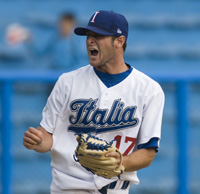
Alex Maestri averaged nearly one strikeout per inning
(49.2 innings/40 K). He was equally impressive during his 2011/12 ABL campaign. The Brisbane Bandits pitcher finished third in the ABL in innings pitched (63.2) and strikeouts (53), fourth in WHIP (1.16) and sixth in ERA (3.25). In Round Eight of the regular season, he earned Australian Baseball League Pitcher of the Week honors after throwing a stellar complete game two-hitter against the Canberra Cavalry.
 Team Italy starting pitcher Alex Maestri faces Team Puerto Rico today at 7pm (EST) in a win-or-go-home showdown televised live on the MLB Network from Marlins Park in Miami. He and his fellow Italian teammates are ready to show the world that the defending European Champions are loaded with talent ready to lock and load in the competitive 2013 World Baseball Classic.
Roberto: Welcome back to the USA!
Alex Maestri: How are doing Roberto? It’s nice to talk to you. I’m feeling good. It’s been a long journey coming here. Everything is good. I’m glad to be with the Italian national team now. I’m looking forward to this WBC tournament and this year coming up.
Roberto: After your successful campaign for the Japan Professional League’s Orix Buffaloes, the team has really stepped up its efforts in recruiting players from overseas.
Alex Maestri: Yeah, you know, every year the team signs foreign players. This year we got seven so we’re probably going to have to rotate. That’s stuff that I can’t control, but it’s going to be fun. The team looks very good. We have a lot of Japanese players that are pretty good and young so I think it’s going to be an exciting year.
Roberto: Did you enjoy the food in Japan?
Alex Maestri: The food there is great. It’s so good. I heard good things about Japanese food before I went there, and when I got there I really appreciated it. Their cuisine is not all about sushi like we think. That’s what I thought too before I went there, but they actually have a huge variety of good food. It’s all very, very good.
Roberto: Did you find a good plate of pasta there?
Alex Maestri: Actually, you know what, they are very good at cooking pasta too. They can reproduce everything very well. They are very good at learning about other cultures and making it theirs.
Roberto: The Japanese have the longest life span. So they must be doing something right.
Alex Maestri: They are doing a lot of things right.
Here is a postgame interview with Alex Maestri after his debut with the Orix Buffaloes in Japan! youtube.com/watch?v=snddjR… #MLB
— MLB Europe (@MLB_Europe) August 13, 2012
Roberto: Your Japanese YouTube video is amazing. Have you ever been in the spotlight like that before?
Alex Maestri: Not at all. That was like the first time. After the game, the player of the game gets interviewed in front of the fans in the stadium and put on the big screen. My debut was actually a great game. I got to do that right on the field. It was cool. This fan had this Italian flag with him, and he came all the way close to the dugout. He passed the flag to one of the reporters who gave it to me. So it was good, it was good seeing the colors of Italy in Japan.
I was very proud too to represent those colors in a good way.
Roberto: It almost had an Olympic feel to it.
Alex Maestri: Yeah, you see those gold medal runners walking around the track with their flags. I was just standing around though. It was a really a weird day. I really didn’t feel uncomfortable. I really didn’t know what was going on.
Roberto: It must have been an adrenalin rush.
Alex Maestri: It was during the game. Afterwards, I was just relaxed and happy. I was done pitching, and we won the game. Roberto: Tell me about what you remember most about playing Minor League Baseball.
Alex Maestri: I was here in the states for six years, and five of those six years were with the Cubs. I have a lot of great memories with that team. The game that I remember the most was a Cubs Spring Training game, and I was with the big league team against the A’s. They gave me one inning, and it was pretty good.
Roberto: And you got to face Italian American Jason “Giambino” Giambi.
Alex Maestri: Actually Giambi is the only one who actually got a hit off me. I faced four guys, and three (Orlando Cabrera, Matt Holliday and Eric Chavez) of the four were strikeouts.
Roberto: Since he is Italian, were you giving him a free pass to first base?
Alex Maestri: (Laughing) Yeah, I guess so.
Alex Maestri: Yeah, I mean in Italy we have a lot of good players. It’s a shame that there is not much money supporting baseball so it’s not easy to develop guys. But we have the Italian MLB Academy now, and you know it’s doing very good. There are some young players that are doing some really nice work. And there’s more and more scouts going down there to look at them. It’s a pleasure for me to represent the country all over the world. And even if I just play for myself on the team that I play with, I always play for my colors, I’m always proud of that.
Alex Maestri: Yeah, per sempre Forza Azzurri!
Roberto: You don’t take any prisoners when you pitch, and you proudly wear your colors on your sleeve. It shows that you pour your heart and soul every time you step on the mount to throw.
Alex Maestri: Yeah, I think that’s what you have to do on the mound. You’re not always going to succeed. But that’s the attitude you’ve got to have to pitch.
Roberto: Italy pitching coach Bill Holmberg has changed the mindsets of many on this staff for the better.
Alex Maestri: Bill has been my pitching coach forever. He has known me since I was a kid And you know I started working with him when I was 18-year-old and started to go to the Italian MLB Academy. But even before that he was working with me. He’s my main pitching coach. I always try to go the Academy during the offseason and have a few workouts with him. I really like the way he teaches pitching. I think everybody, all the pitchers that get to work with him, they appreciate his work.
Roberto: He was the one who wrote your name on a scouting report for the Chicago Cubs, and the next thing you know you were signed to MLB.
Alex Maestri: At the time he was an international scout for the Chicago Cubs, and you know I was doing pretty good. I was young and I was doing good for my team. And he said that he was going to take a chance and sign me. He said that I could make the Big Leagues. He really believed in me. He gave me a great opportunity to come over and gave me a chance to play in the states.
Alex Maestri: We really love that. It’s great to have him around in the dugout. He’s like doing this for fun. He enjoys working with us… That’s why we appreciate it so much. I think he is positively influencing the program that we have. The fact that the team is winning and improving proves it. So that’s why he keeps coming back.
Roberto: Coach Piazza helps pitchers as well, right?
Alex Maestri: Oh definitely. We always have meetings in the morning.. He comes in with Bill and always says his opinion on our pitching. He was one of the best catchers in the game so he obviously knows a lot about pitching too. It’s just great having him around.
Roberto: Being the underdog, Team Italy plays like there is no tomorrow.
Alex Maestri: I guess it’s kind of normal since baseball is not so developed in Italy. People don’t really respect Italian baseball, but you know it’s kind of like the fun part of playing. Nobody really thinks that we are strong. But I think we are a very good team actually, and we should again surprise a lot of people around the world.
Roberto: It this also an opportunity to play on the world’s stage to show MLB what they missed out on?
Alex Maestri: I don’t think I have to have any sort of revenge, I just want to play good for myself and my country. I was here in the states, and they gave me a great opportunity to play here. I had a lot of great experiences here so it’s not like I’m mad at anybody. Things just went that way. I had a tough year in 2010 so it’s normal that I got released. You know I’m still playing baseball. I’ve got a great opportunity now in Japan. I just love what I do so like I said before I am just going to play for my country and not for anybody else.
Roberto: You look healthy and happy. With this Italian team playing to win, I know you are going to give it your all.
Alex Maestri: Yeah, I think a few years back, the Italian national team just went out playing a few tournaments to kind of like participate. But now with manager Marco Mazzieri, you have a very good attitude and it rubs off on all the players. Now you have a very strong group that won two European Championships back-to-back. And now everybody is starting to feel confident about themselves. And in baseball that’s what is about—confidence. You know we got ability so we need to be confident and just go out there and play baseball.
Alex: I’ve got my pitches like everybody else. I just got to keep working on them and make them as confusing as I can for hitters.
Roberto: In prior in WBC competitions, you have been stellar. I hope that you will continue to shine in the upcoming 2013 WBC.
Alex Maestri: Yeah, you know, that’s the plan. We always try to do our best. And that’s what I’m trying to do this time around. Right now I’m getting ready and going day-by-day. It’s going to be a lot of fun, and I’ll definitely give my best effort.
Roberto: Are there any players in the WBC that you know from you days in MiLB?
Alex Maestri: The only guys that I remember is catcher Chris Robinson from Canada. We were in the same organization. We never really played together. I have played against many of the USA players like Mike (Giancarlo) Stanton and Jonathan Lucroy. It’s cool facing them again in the World Baseball Classic.
Roberto: Every pitch has to count with the WBC pitch limits in place.
Alex Maestri: Yeah, that’s kind of like the plan every time you go out. You know it’s a team sport so everybody is going to have do his own thing. I know that I will do my part with my pitching, but once I’m done with my pitches then there is someone else coming in to take over. We just all have to do this together, and it’s going to be touch. We’re playing the best teams in the world, and it’s going to be hard work. So we’re going to have to be really focused.
Roberto: You have to execute.
Alex Maestri: Yeah, you’ve got to be able to execute and if you don’t you just lose games. That’s why we play this game. You know, we enjoy that part of it.
Roberto: What does it mean to be an Italian playing baseball?
Alex Maestri: I just started to play baseball because of my brother. At the time I wasn’t really watching any baseball on TV. I started doing that later on, but it was cool seeing all those guys with Italian names written on the back of their jerseys. I just grew up hoping that one day that I would be able to take their place.
Roberto: With the influx of MLB players now joining Team Italy, how will it change the personality of La Squadra Azzurri.
Alex Maestri: I think it’s going to be the same. We have a good personality now. Those players are going to definitely improve the level. Because obviously they are Big League players and they have more experience than we do. It’s going to make the team better, but I don’t think it will change the personality of the team.
Roberto: You are representing Italy on all corners of the earth wherever you compete.
Alex Maestri: I feel like it. I always travel the world and play baseball in different countries. But my roots are always with me so I feel very proud of that. I’m sure all the other guys feel proud of that too—even the Big League players that are going to play for us. We already had a bunch of them in the World Baseball Classic, and they play as hard as we do. They want to win, and it’s just going to be great to do it all together. 
Roberto: Any favorites? Has the Dodgers’ Nick Punto lived up to his name as the shredder by tearing the jersey off walk-off heroes after Team Italy victories?
Alex Maestri: I don’t know about Punto, but another guy who had an unbelievable WBC tournament was Chris Denorfia. At the tournament, he really gave everything he had. He made some great plays defensively and had some clutch hits so it’s going to be good to see him again. Jason Grilli has been with us for the first two World Baseball Classics. He’s just a great guy. He loves to come and play for us. Alex Liddi, of course, is one of my best friends.
I haven’t seen him in a long time. I saw him the other day, and it was just great seeing him again. He’s really family. I feel like his brother. And all the other guys that are going to come are going to be very welcome.
Roberto: You will be in the capable hands of catchers Drew Butera from the Minnesota Twins and Tyler LaTorre from the San Francisco Giants. Have you ever worked with them before?
Alex Maestri: Actually not. I haven’t had the pleasure to work with them yet. It’s going to happen in the WBC. Roberto: Since you were in the same organization as the Cubs’ Anthony Rizzo, it will be sort of a Cubbie reunion with two Italians on the same team.
Alex Maestri: Yeah, I heard really a lot of good things about him. We both played for the same organization so it will be good.
Roberto: Anything else you would like to say before we sign off?
Alex Maestri: I’d like to say hi to everybody. I would like to thank the great people all over the world. I really enjoy what I’m doing now. I might not be enjoying this for the past seven years if it had not been for them. Thanks!
Roberto: I really enjoyed meeting you at the Italian MLB Academy and talking with you today here in Arizona prior to the 2013 World Baseball Classic. Thanks for your time!
Alex: Thank you very much, and thank you for the work you do for Team Italy. It’s good to have somebody who really cares about this team and tries to promote the team as much as you do. Thank you for doing that.
Roberto: Thank you. It’s my pleasure. I believe in you and Italian baseball. God bless Italia! 
WBC Exclusive: Q & A with Italy’s ace John Mariotti
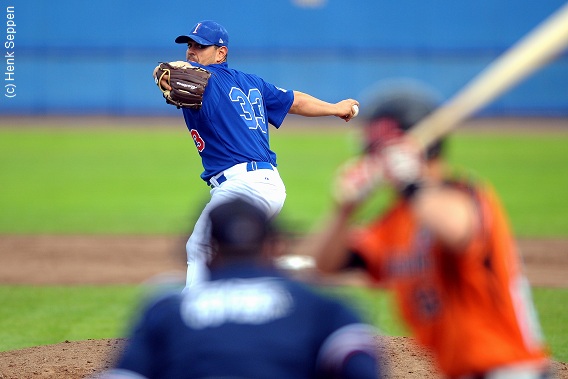
Roberto: You have a knack of being a winner and landing on winning teams. Do you truly have a winning spirit and the Midas touch?
John Mariotti: A championship team is made up of a specific group of players. Each player brings something different to the table in order to fit the mold and make up what is to be a championship team. My hard work and dedication toward baseball, I believe, are the traits that Pat Scalabrini (manager of Québec Capitales) and Marco Mazzieri (manager of Team Italy) saw, which made me one significant piece of the puzzle for their team. I am the type of player that never wants to let my teammates down and always striving to be the best.
John Mariotti: I got a call in October of 2011 by Team Italy in regards to playing in the European Championship and WBC. Immediately we began the citizenship process and in August I was on my way to Italy to prepare for the European Championship in Holland. Roberto: Did you have a choice to play for Team Canada instead of Team Italy?
John Mariotti: I did not have the option to play for Team Canada.
Roberto: Will it be difficult playing against some of the players you grew up with in Canada while pitching for Team Italy in the 2013 World Baseball Classic?
John Mariotti: I know a couple of players on Canada’s team, John Axford, Chris Leroux and Jonathan Malo. When I was in college, I hit with Joey Votto for two years when I would come home for Christmas break. It will be an awesome experience to play on the same field as these guys, but I think that it’s understood that when its game time, all feelings are set aside.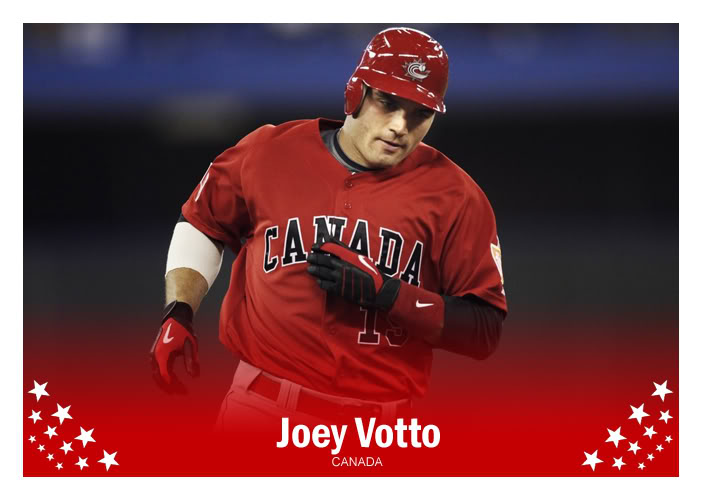
Roberto: Does Team Canada have an edge because they have seen you pitch before or do you have an advantage because you know their Achilles’ heel?
John Mariotti: In baseball, I believe the biggest advantage is experience. Most of the players on Team Canada are or have played in the Big Leagues. Nonetheless, I believe in my talent and so do the Italians and I am going to work hard so that I am able to compete at my best in order to help us win.
Roberto: Who were some of the coaches that have inspired you?
John Mariotti: Murray Marshall (Team Ontario Baseball) was one of the coaches who gave me a shot to play elite baseball. His passion to coach and love for the game was an inspiration not only to me but to all of his players. In college it was both coach Darren Mazeroski (Gulf Coast Community College) and coach Gary Gilmore (Coastal Carolina University) that had a great effect on my career. Battling elbow injuries for two years, both coach “Maz” and “Gilly” believed in my ability and that I was going to perform.” They were two coaches that saw and believed in my talent and gave me every opportunity to succeed.
I owe them a lot.


John Mariotti: Ron Wolforth at Pitching Central in Houston, Texas, in a nutshell, gave me back what I have left of my baseball career. After suffering an injury that ultimately resulted in being released and what looked like the end of my career, I went to see coach Wolforth in Houston as a last hope. What I didn’t know was that hope wasn’t an option. He was going to get me back to playing, that’s how good he is. He is the pitching guru. Working with coach Wolforth got me back into professional baseball: two Can-Am Championships, one European Championship with Team Italy, a Phillies Spring Training invite and now a chance play in the World Baseball Classic. He is a big reason for my success. Pat Scalabrini was another inspiration in my playing career. After being released by the Winnipeg Goldeyes, coach Scalabrini gave me a shot to prove myself.
I did not disappoint. The two years of winning two championships with Québec was the most fun I’ve had playing ball in a long time. It was the support and belief by coach Scalabrini that really helped me get to this point, and I can’t thank him enough. These coaches were big inspirations for me.
Roberto: What are your best pitches that you have come to depend on?
John Mariotti: I throw a sinker, changeup and slider. My sinker and changeup are my two plus pitches. As a sinkerball pitcher, my job is to keep the ball on the ground and let the defense work. My changeup is a pitch that will keep hitters honest on the sinker and is one of my out pitches in certain situations.
Roberto: How good are the Italians? What are some of the strengths of the team?
John Mariotti: The Italians are very good; we have a lot of talent on our team and a great coaching staff. Aside from that, I believe it is the passion, teamwork and the will to win of the Italians that is going to help us achieve success.

Cubs and is currently the director of the Italian MLB Academy. (MG-Oldmanagency / FIBS)
John Mariotti: Bill is one of the more knowledgeable coaches I’ve had the pleasure of playing for. Bill and I spent a lot of time together over in Europe, and he taught me a lot about pitching. He has totally changed my mentality as far as how I approach hitters. His knowledge and ability to scout teams and prepare the pitching staff with information about our opponent is impressive. He is very passionate about teaching and coaching players.
He is a key component to the coaching staff and the success of the Italians.

John Mariotti: Mike’s is a very knowledgeable person. His experience and knowledge for the game will definitely be a big factor in helping us succeed. Aside from this, he brings a certain character to the team, one that keeps the atmosphere on the bench very light and pressure free. He is a very knowledgeable person, who’s always thinking. I think Mike has helped us pitchers by preparing the catchers. Mike prepares our catchers for competition both mentally and physically and I think that by doing so, it only helps make the pitchers better.
Roberto: With the injection of more MLB-affiliated players participating in the 2013 World Baseball Classic, can Team Italy compete in Pool D and advance?
John Mariotti: No doubt. The Americans are the favorite in our pool, but as far as the rest of the teams go (Canada and Mexico) I think we have a really good shot at advancing to the second round.
Roberto: Who else would you have liked to see join Italy in the World Baseball Classic?
John Mariotti: One name that came to mind that I thought might be on the team was Mike Napoli. I’m pretty sure he is of Italian decent.
Top 40 Americans in the ABL (#1-10)
 In the final installment of the Top 40 Americans in the ABL series, we now feature the very best import players (#1-10) hailing from the U.S.A. It has been a rewarding experience interacting with players, coaches, scouts, front office staff, media representatives and baseball fans to put together this rather ambitious undertaking. Congratulations to 2013 ABL Champ Canberra Cavalry!
After trailing 7-1 v @sydneybluesox last night @canberracavalry got to 7-7, then this happened youtube.com/watch?v=VONTuU… #CHARGE #ABCStrike
— Chris Coleman (@CJ_Coleman) January 18, 2013
By clicking above, witness the resilience of Top 40 American in the ABL Honorable Mention Antonio Callaway and the thrilling comeback of 2013 ABL Champion Canberra Cavalry in the regular season against former MLB reliever Dae-Sung Koo of the Sydney Blue Sox. Special thanks to Canberra’s CHARGE TV for streaming live coverage all season long with
the excellent play-by-play commentary of ABC Grandstand’s “Strike Zone” host Chris Coleman and his team of supporters including Top American GM in the ABL Thom Carter.
We did it!!! @canberracavalry are @ableague Champions!! #CHARGE twitter.com/thomcarter/sta…
— Thom Carter (@thomcarter) February 9, 2013
2013 Australian Baseball League Champions (SMP Images) twitter.com/ABLeague/statu…
— The ABL (@ABLeague) February 9, 2013
Congratulations to our player of the game Brian Grening going 7.2 innings and recording 6 strike outs #CHARGE
— Canberra Cavalry (@CanberraCavalry) February 8, 2013


Flipped on @mlbnetwork and saw my old teammate Brian Grening dealing on the mound for the Canberra Calvary in the Australian Baseball League
— Justin Toole (@Tooleyj24) February 8, 2013

best fans in the ABL…”
Special thanks to the @sydneybluesox for the opportunity! And to all the fans that supported us the whole season! #WhoRocks #BlueSox
— James Robbins (@JRobb_021) February 2, 2013


the Detroit Tigers Single-A Advanced affiliate Lakeland Flying Tigers was summoned to play in New South Wale’s capital city. He was the most prized and highly-touted player of Sydney’s five American imports, including Top 40 Americans in the ABL J.D Williams (#29) and Tyler Herr (#23) as well as Zach Penprase (#20) and Geoff Klein (#13). 
Thank you to everyone in Australia! You guys were awesome! So much support! We all loved our time here! Thank you for the hospitality!
— James Robbins (@JRobb_021) February 2, 2013

Robbins, alongside former Sydney Blue Sox and 2012 Top 20 American in the ABL Tyler Collins (#9), led Lakeland to a Florida State League Championship after appearing in 124 games last year. The left-handed hitting DH and first baseman made his pro debut at 18 when he played for the Rookie Gulf Coast League Tigers and was ranked the 29th best prospect in the Tigers organization by Baseball America. A 30th round pick by Detroit in the 2009 draft out of Shorecrest High School in Shoreline, Washington, the 22-year-old was third for Sydney in batting average (.298), slugging (.461) and RBI (26).
Rocking retro stache #BlueJays catch prospect Jack Murphy (see @jackmurphy219) is spitting image of Bill #Buckner. No relation to #MLB bpark
— Seth Livingstone (@SethLivingstone) February 19, 2013
My mustache was a mess this morning
— Jack Murphy (@JackMurphy219) February 6, 2013
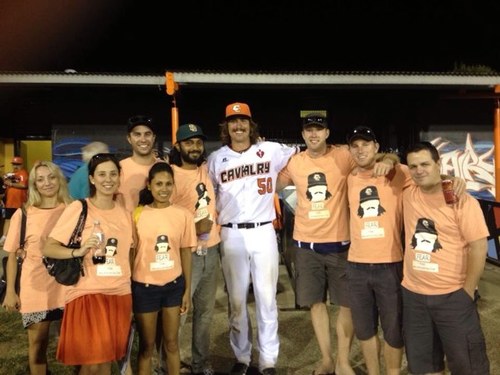
I would like to thank all the people of Canberra… It has been a great experience… Can’t thank you all enough
— Jack Murphy (@JackMurphy219) February 9, 2013
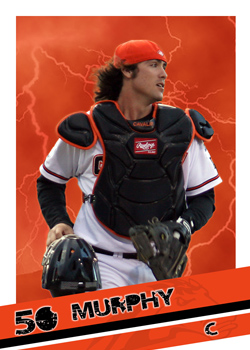
“@spektrall: GOTCHA!! @jackmurphy219 and Kody Hightower notice Josh McGee’s big lead youtu.be/mmVaaUm8qa4 #CHARGE #ablworldseries #gotheeeem
— Jack Murphy (@JackMurphy219) February 4, 2013
First plane ride on the way down under! Pretty excited #Australia #whatoffseason #goodbyeFL
— mlohlman (@mlohlman) November 2, 2012

22-year-old Ohlman and San Miguel split time between first base and catcher with the Heat. Having the best overall ABL campaign of the three Baltimore farmhands, Ohlman hit .317 with six home runs and 27 RBI in 43 regular season games and hit .467 in the postseason.
Wanted to thank the @perthheat family for welcoming me with open arms this year. I had the time of my life and hope to see everyone soon!
— mlohlman (@mlohlman) February 11, 2013
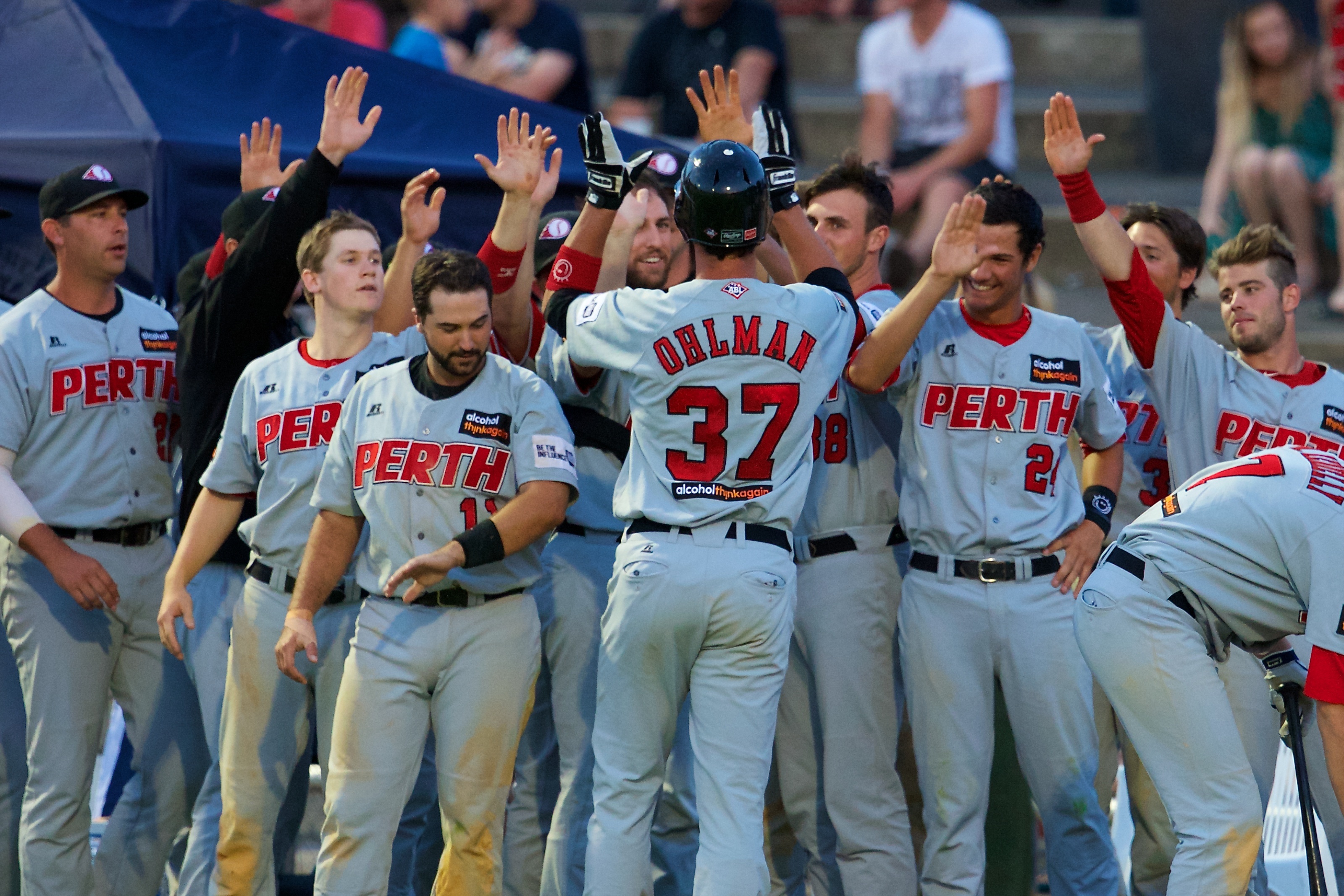
First flight of the day!! Australia bound!!! #shrimponthebarbie #downunder #kangaroojack #aussie
— Ryan Stovall (@RyanStovall9) October 16, 2012
@amberroy23 I’m going over there to play winter ball. So not to rub it in, but it’s kind of the best vacation ever!!
— Ryan Stovall (@RyanStovall9) October 17, 2012
@ryanstovall9 good luck in Australia. Or should I say Australia girls good luck cuz Stovall is coming lol
— Jonathan Gaston (@JGastonAFL) October 17, 2012
@ryanstovall9 you’re going to Australia to play baseball… That’s all pleasure lol
— Jonathan Gaston (@JGastonAFL) October 18, 2012
If this place had American music it would be close to perfect!
— Ryan Stovall (@RyanStovall9) October 23, 2012


#TwitNewsNow Diamondbacks Purchase Contract of Ryan Stovall dlvr.it/2XmmKP
— DBacksFanZone (@DBacksFanZone) November 26, 2012
Former Royals minor leaguer Ryan Stovall also is having a nice winter in Australia web.theabl.com.au/stats/stats.js… not a bad place to spend winter
— greg schaum (@Greg_Schaum) January 25, 2013

was the leader in triples (4), runner-up in slugging percentage (.582), and third in runs (32). He was rewarded for his hard work in Australia and in indy ball by getting his contract purchased by a Major League Baseball franchise. “Ryan does a lot of good things on the baseball field,” said RedHawks manager Doug Simunic. “He can play all over the field, swings the bat well and is a plus runner. Hopefully he can go to Arizona and work his way up in their organization.”
Just turned on mlb network and first person I see on the Australian League championship @ryanstovall9
— Cameron J. Gallagher (@camgally3545) February 8, 2013
Changed the channel to #MLBNetwork just in time to see @ryanstovall9 hit a bomb to right field.
— Lane Adams (@LAdamsKC) February 8, 2013
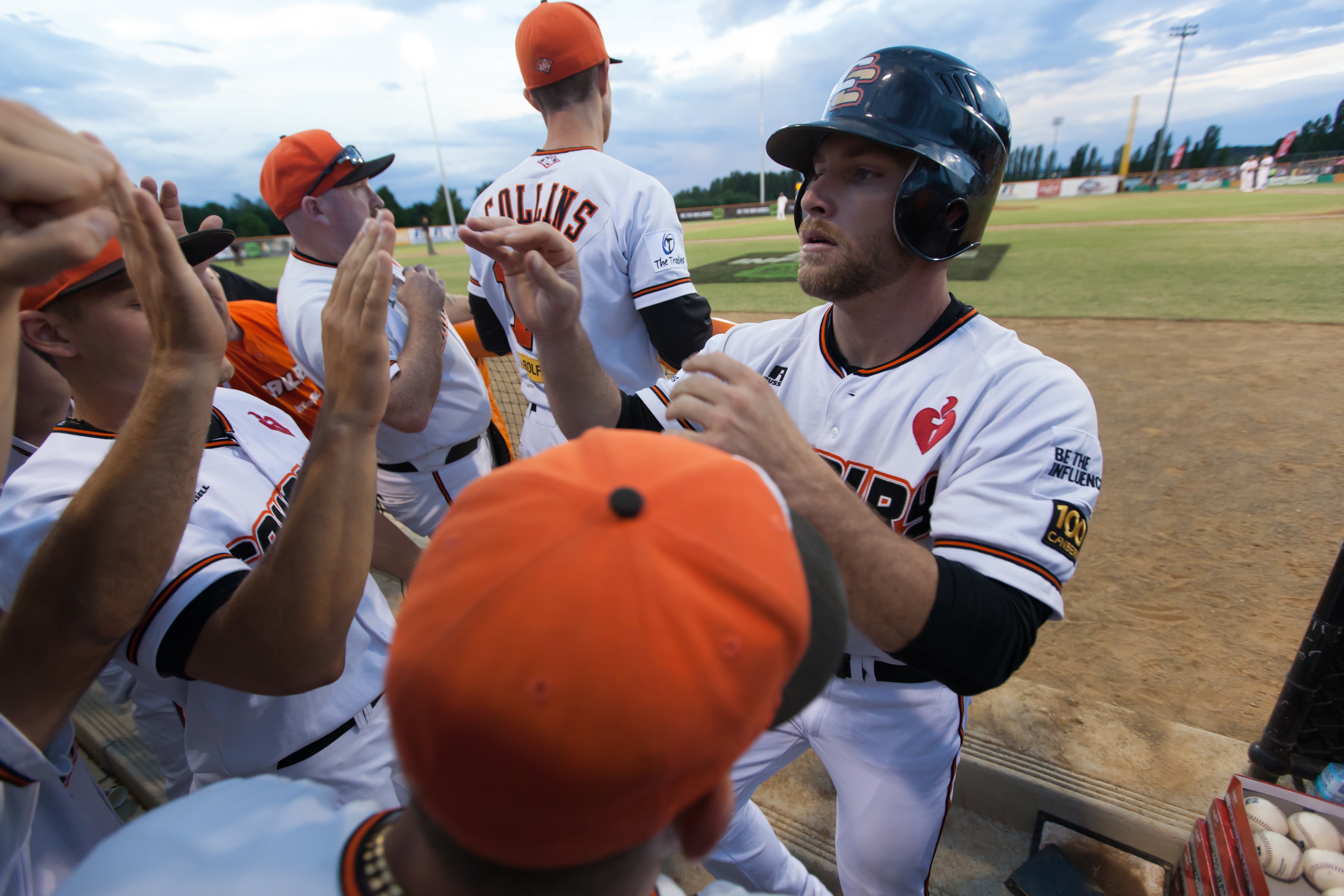
home run in ABL Championship Game 1 against the Perth Heat. (Ben Southall / SMP Images)
Kody Hightower went 5-5 with 3 doubles, 6 RBI, and 2 HR in the 9-1 win (SMP Images) #CHARGE instagr.am/p/TLSJakkPnN/
— Canberra Cavalry (@CanberraCavalry) December 13, 2012
Congratulations to Kody Hightower on winning the our ABL Fan Choice Award.He won by 7 votes over Jack Murphy.
— Canberra Cavalry (@CanberraCavalry) January 27, 2013

NAIA All-America Honorable Mention at Brevard College in North Carolina, he was named to the 2008 Southern States Athletic All-Conference team, NAIA Region 13 team, and the NCCAA All-South team in addition to being an All-American and the NCCAA South Region Player of the Year in his final two seasons at Southern Wesleyan University in South Carolina. He posted a .427 batting average with six home runs, seven triples,
16 doubles, 61 runs scored and 64 RBI in 58 games during his 2008 collegiate campaign. Despite his stellar year, he was completely ignored in the 2008 MLB June Amateur Draft.
The leadoff home run from Kody Hightower in the 1st inning of the ABL championship game clocked in at a brisk 20.62 secs. @ableague
— Tater Trot Tracker (@TaterTrotTrkr) February 9, 2013
Witness the speed of #5 Kody Hightower when he legs out this inside-the-park home run off #14 Anthony Claggett (of Top 40 Americans in the ABL fame) in 2013 ABL Championship Game 1 by clicking HERE and when he sprints around the bases after launching a leadoff homer off Detroit Tigers prospect Warwick Saupold in ABLCS Game 2 by clicking HERE.

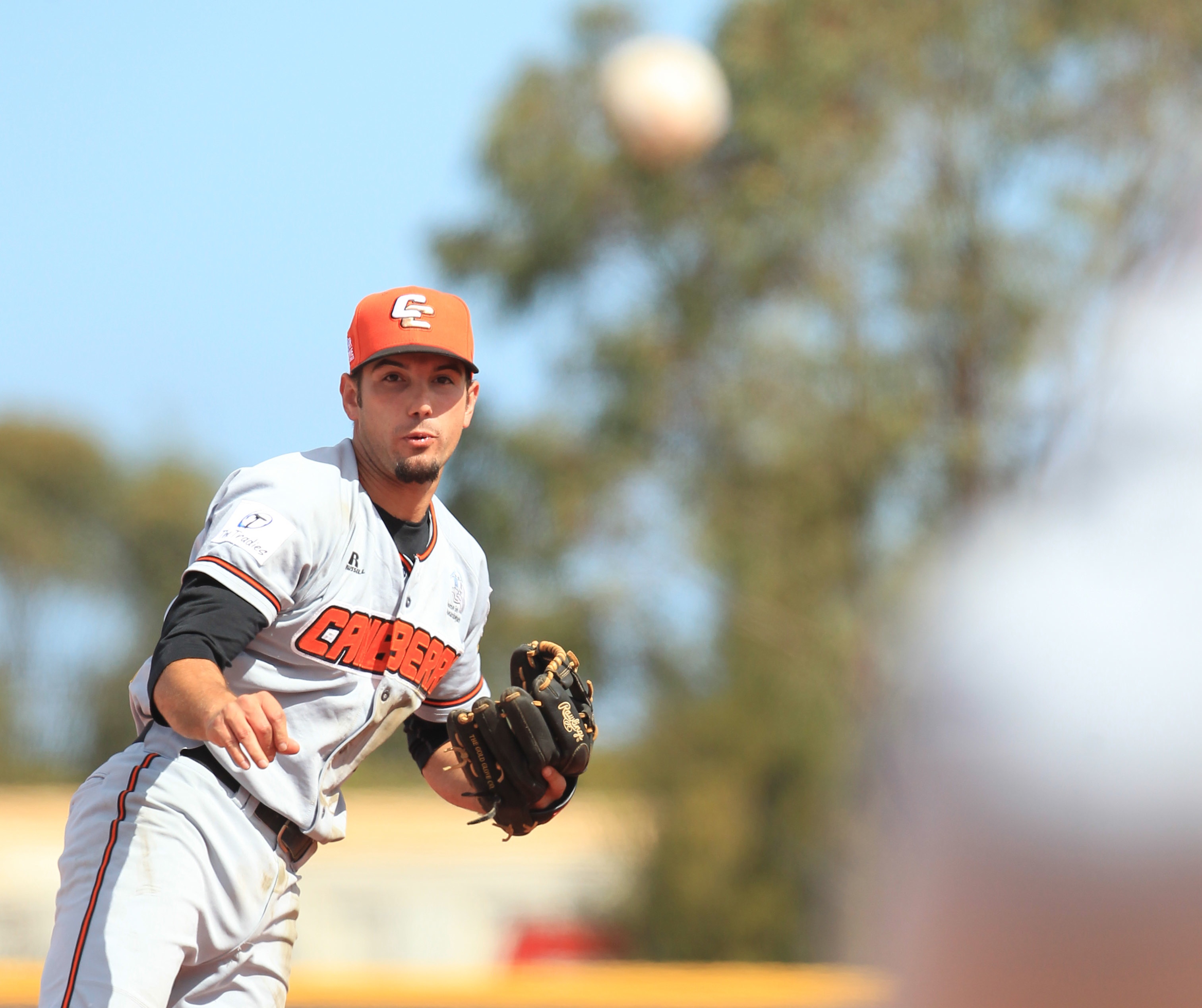
hitter in the 2012 ABL All-Star Game. (Photo courtesy of Scott Powick/SMP Images/ABL)
(Photo courtesy of Jeffrey Chang/Canberra Times)
the Cavalry and the ABL with a .406 batting average. Igniting the league’s best offense–which finished nearly thirty points higher (.295 batting average) than second place Perth (.267 batting average), the Cavalry shortstop went 11-for-17 (.647) with two doubles, two home runs, three runs scored and six RBI in four games against the Melbourne Aces during ABL Round Seven competition.
Isn’t Virgil Vasquez great?! He’s thrown 3 straight scoreless innings. Bonomi coming up in the bottom of the 3rd #ZenMaster #ABLHeatCavalry
— Perth Heat (@PerthHeat) December 28, 2012

(Photo by Adam East/ozcards.blogspot.com)
and it happened just a few days later.”
The Minnesota Twins sign Virgil Vasquez (FEATURED TWINS ARTICLE) bit.ly/XX4vfI #twins
— Twins Dugout (@twinsdugout) December 13, 2012

debut for the Detroit Tigers on May 13, 2007.
a 2.77 ERA. Picked by the Detroit Tigers in the 7th round of the 2003 MLB draft out of the University of California, Santa Barbara, the Southern Californian spent three years in the minor leagues before making his MLB debut in 2007. After signing with the Pittsburgh Pirates in 2009 and making seven starts, Vasquez was dealt to the Tampa Bay Rays in 2010. At Triple-A Durham, he went 6-2 with a 4.88 ERA in 12 starts. Signed by the Los Angeles Angels of Anaheim during the winter of 2010, Vasquez was subsequently released at 2011 Angels Spring Training. He pitched for the indy Southern Maryland Blue Crabs in 2012 before heading to Perth. Now in his 11th pro baseball season, the 30-year-old veteran hopes to start at Triple-A Rochester before gravitating toward his imminent return to MLB in Minnesota.
Hearing #Pirates in minor — very minor — trade talks with #Rays. Possibly Virgil Vasquez.
— Dejan Kovacevic (@Dejan_Kovacevic) April 2, 2010

Santa Barbara Independent)
affiliated coaches in Australia. There’s
always people watching you, and that’s
what I’ve always known and told people.
No matter where you play, just go and play
and enjoy yourself and love the game. There’s
always someone watching you, so if you play
with Heat and play with passion, if it’s meant
to be, it’s meant to be. I’m very excited, it’s
been a long fun road and I’ve enjoyed every moment. I’ve just got to thank the Heat, the organization and especially my teammates.
They’ve been behind me all the way and
without them I can’t get any outs as they
make all the plays. Fish, Lloydy and all of
the guys, even my family back home as
well–it’s been a real privilege to be here.”
reliever Graeme Lloyd to recapture his MLB form. (Photo courtesy of Theo Fakos/Perth Now)
@phoulballz @abuschini @canberracavalry thanks Jay!! Was an amazing experience!
— Jeremy Barnes (@JeremydBarnes) February 10, 2013

he said. “All I can do is put up numbers, and hopefully it happens. It can drive you crazy, but it’s all part of the business.”

Experience firsthand the power of ABL All-Star Jeremy Barnes‘ bat by clicking HERE.
Top 40 American in the ABL @melbourneaces @k_reese28 mlbforlife.com/2012/12/14/aus… eclipsed by @brisbanebandits US import @c_smitty5 15K shutout #WOW
— Roberto Angotti (@ABLblogger) December 28, 2012
Tonights game was one for the record books! @c_smitty5 set a new ABL Record tonight in Strikeouts on the way to another @brisbanebandits win
— CJ BEATTY (@cjbeatty44) December 28, 2012
I am officially signing to pitch in the New York @yankees organization. I look forward to making the journey to the big leagues!
— Christopher Smith (@c_smitty5) January 23, 2013
#Yankees also added RHP Chris Smith for their system. He was 9-6, 2.92 with Washington (Pa.) of the indy Frontier League in 2012.
— Jed Weisberger (@jedleyq) February 16, 2013

Miss Australia but it feels good to be home!
— Christopher Smith (@c_smitty5) February 7, 2013

What MLB team is going to sign Adam Buschini? Needs to happen. bit.ly/UFeu50
— Kyle Bonagura (@KyleBonagura) January 8, 2013
@c_smitty5 thanks mate! Goodluck with the Yankees. Glad I won’t be facing you in spring.
— Adam J Buschini (@abuschini) February 5, 2013

#1 Adam Buschini of the Canberra Cavalry–was not named to Team World in the 2012 ABL All-Star Game. Yet, Buschini was awarded the first-ever ABL Triple Crown for his heroic 2012-13 ABL regular season. The Triple Crown–awarded to a player who has the highest batting average, the most home runs and driven in the most runs in a season–is one of the game’s rarities. The Triple Crown has only been achieved 16 times in over 130 years of MLB history. The 25-year-old Northern California-based slugger claimed the ABL Triple Crown with a .363 batting average, a league record-tying 15 homers, and an ABL record-breaking 50 RBI in just 45 games. He was named ABL Player of the Week twice. In ABL Round 10 action, Buschini went 8-for-17 (.471) with a double, three home runs and 9 RBI. As if that was not impressive enough, he exploded in ABL Round 13 when he went 9-for-15 (.600) with four homers and 9 RBI to help the Cavalry claim the top playoff spot.
Congratulations to Adam Buschini @abuschini who won the #ABL Triple Crown (.363 AVG, 15 HR, 50 RBI)! @canberracavalry
— The ABL (@ABLeague) January 27, 2013
See ABL Triple Crown Winner and #1 Adam Buschini in action by clicking HERE and HERE. 

homers against the Adelaide Bite on January 26, 2013. (Ryan Schembri/SMP Images/ABL)
Thank you to all my teammates, coaches, and FANS from @canberracavalry. Had an amazing experience and loved my time down under. #CHARGE
— Adam J Buschini (@abuschini) February 10, 2013

Congrats to my boy @abuschini for getting picked up by the #Padres. #keepgrindin #hardworkpayingoff
— Bud Norris (@BudNorris20) February 5, 2013
@abuschini ready for you mate twitter.com/yepimhayden/st…
— Hayden Beard (@yepimhayden) February 19, 2013

Top 40 Americans in the ABL (#11-20)

 While America’s exports to Australia amounts to over $27.5 billion, baseball is a priceless Aussie favorite. No matter how many machines, engines, pumps, vehicles, aircraft, spacecraft, gems, precious metals, coins, pharmaceuticals, plastics, rubber and chemical goods make their way Down Under, these were some of the Top 40 American imports (#11-20) in the thriving
2012-13 Australian Baseball League.
Thanks to all the @sydneybluesox fans for a great season and making al the imports feel at home. #WhoRocks
— Zach Penprase (@pachzenprase) February 2, 2013

of MLB scouts while experiencing unrivaled Aussie hospitality in the ABL, the 27-year-old Southern California native signed up to play ball in the state capital of New South Wales.

.365 on-base percentage.
One last thank you from all the way across the globe to all Aussies and especially to @sydneybluesox for never saying a bad word about me.
— Zach Penprase (@pachzenprase) February 12, 2013


(Ryan Schembri/SMP Images/ABL)
Finally off to Australia! Lets hope this flight goes by fast! 😒
— Brenden Webb (@BrWebb24) December 27, 2012


Heading back to the states. Thanks @perthheat for the amazing time. The great fans and people is what makes Perth so special to me.
— Brenden Webb (@BrWebb24) February 10, 2013

New Cavalry star KC Hobson named @ableague player of the week. web.theabl.com.au/news/article.j… @bluejays #CHARGE
— Canberra Cavalry (@CanberraCavalry) November 6, 2012
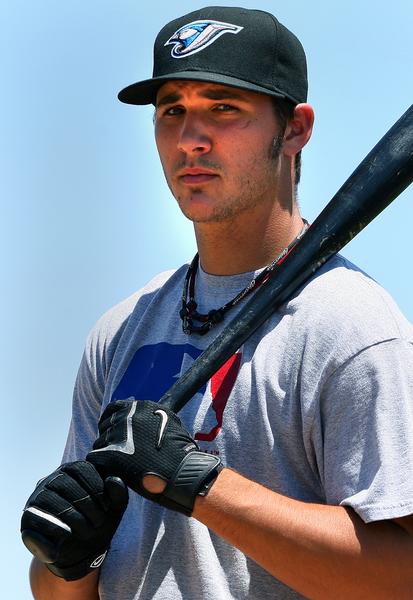
KC Hobson continues to be Canberra’s most reliable batter – The Australian dlvr.it/2cD3dN #Canberra #Queanbey
— Australia News (@AustraliaFlash) December 9, 2012

 #16 Jim Schult of the Brisbane Bandits was named the 2011 Division III National Player of the Year while playing at Eastern Connecticut State University. A First Team All-American Collegiate Pitcher, Schult joined the Can-Am NYSL Federals in 2011 and the Frontier League’s Joliet Slammers in 2012. With unlimited potential and a bright baseball future ahead, the 23-year-old New Yorker made a great debut pitching in the ABL with a superb 4-2 record and will be welcome back.
Melbourne Australia – 3 months, cya
— Zach Arneson (@ZachArneson) October 24, 2012

(Photo courtesy of Brett Crockford / SMP Images)
and has since moved up the ranks
rapidly to Single-A Charleston.
All-Star Game, Japanese friends twitter.com/ZachArneson/st…
— Zach Arneson (@ZachArneson) December 16, 2012

@zacharneson In Melbourne 3 months and already know who runs this City. You just claimed your Victorian citizenship mate!
— SpazzyPC (@SpazzyPC) January 7, 2013

the New York Yankees and also played that same season for the Pittsburgh Pirates.
Beautiful day for baseball in Perth #perthheat
— anthony claggett (@aclaggs10) December 14, 2012
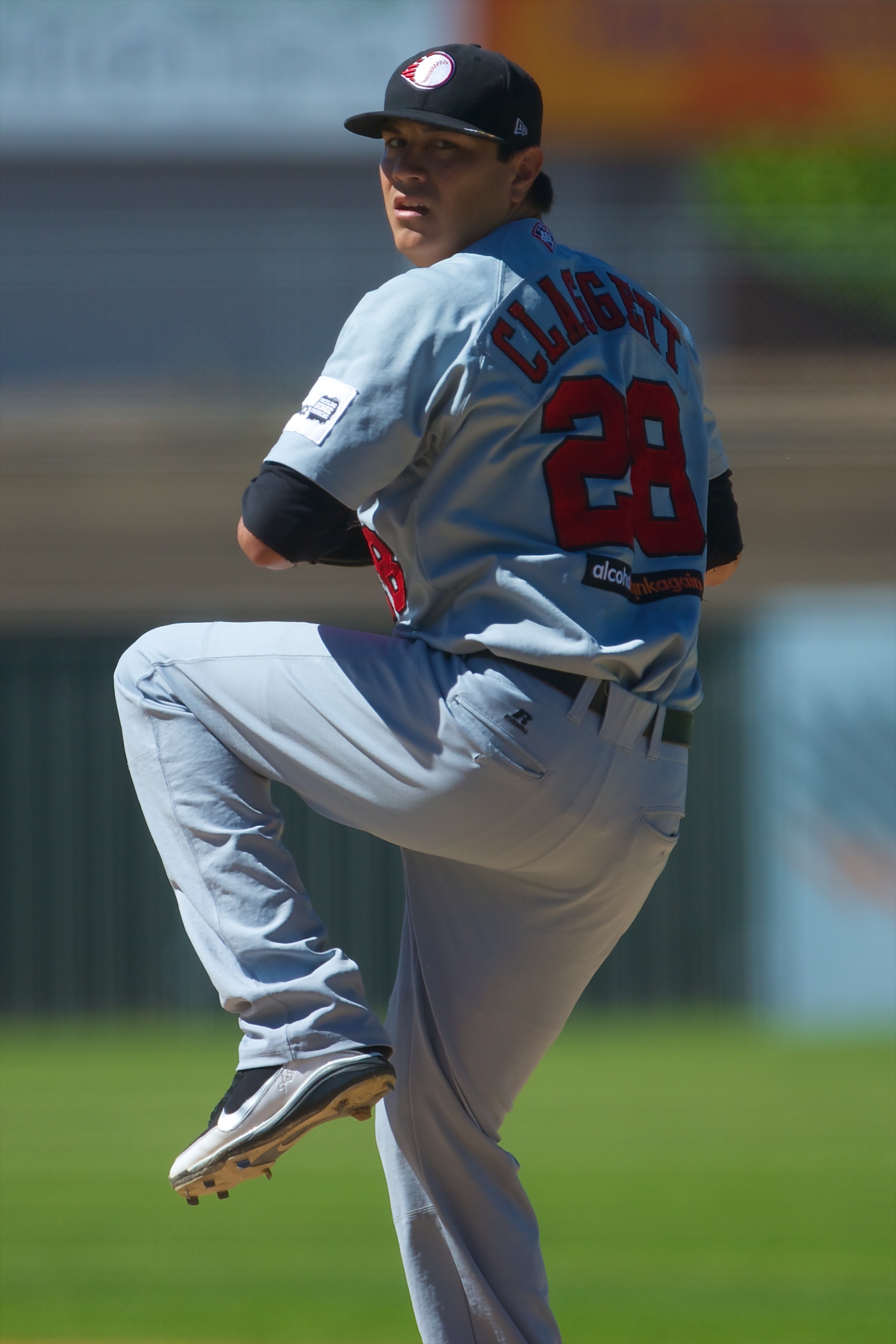
Ryan Schembri / SMP Images)
I’m very happy to be apart of the #perthheat family. We’re going to the ship #Heat3Peat
— anthony claggett (@aclaggs10) February 3, 2013
Officially back in California. Thank you Australia for all the good times #perthheat.
— anthony claggett (@aclaggs10) February 17, 2013

I’d like to thank the fans, my teammates, and staff of the @sydneybluesox for making my winter ball experience memorable. Unreal journey
— Geoff Klein (@Kleinburger27) February 2, 2013

the Blue Sox pitching staff was the ABL’s best with the league’s lowest ERA (2.91) and WHIP (1.20). He also produced offensively for the squad–ranking third in doubles (10) and walks (20) and fourth in hits/runs (43) and RBI (21).
Last day in Oz. Bittersweet, leavin behind a lot of good mates and great experiences but can’t wait to get home and back to the grind #2013
— Geoff Klein (@Kleinburger27) February 5, 2013

of the second annual ABL Fan Choice Award. Italy’s Alex Maestri won in 2012.
Thanks to everyone that voted for my mate Carlo Testa.He came out on top as the ABL’s Fan Choice Awards.Well done my man! #goaces
— Travis Blackley (@Travis_Blackley) February 7, 2013

the 26-year-old Midwestener was the driving force behind the ABL’s last place offense by leading the Ace’s regulars in nearly every category including: doubles (11), home runs (6), stolen bases (10), batting average (.294), on-base percentage (.394), and on-base plus slugging percentage (.835).
Big homer by Cody Clark to send the storm chasers to another win!!
— Johnny Giavotella (@Gio2bKC) May 6, 2012


ABL Team World All-Star. (Photo by Brett Crockford/SMP Images/ABL)
in 2007. A fixture at the Triple-A level ever since, the versatile catcher got a lot of action in 13 games at Royals Spring Training last year. Clark was 6-for-18 for a .333 average, and he drew four walks to give himself a healthy on-base percentage of .435. Despite rubbing shoulders with the elite and handling major league pitching at camp, his MLB debut still eludes him to this day. However, his seasoned level of play in the ABL would make one think he had broken into the Bigs
a long time ago. In addition to being an ABL Team World All-Star, the Brisbane backstop was named ABL Player of the Week for Round Four. During the four-game series against the Adelaide Bite at the Norwood Oval, Clark went 8-for-15 with two home runs, two doubles, two walks, two runs scored and nine RBI. There was nothing bush league about the Bandits’ leader in hits (50), runs (25), doubles (13), and RBI (28) or nothing minor about his .299 batting average.
Top 40 Americans in the ABL (#21-30)

 It is believed that baseball was introduced to Australia by American gold miners in the Victorian gold rush of the 1850s. Back then miners would play baseball on the gold fields when they received time off for rest. The first reports of organized baseball teams appeared in Ballarat, Victoria in 1857. So it should come as no surprise that Americans are still playing
ball in places like Melbourne, Sydney, Brisbane, Adelaide, Canberra and Perth as participants in the Australian Baseball League. Let’s look at some of the Top 40 Americans in the ABL.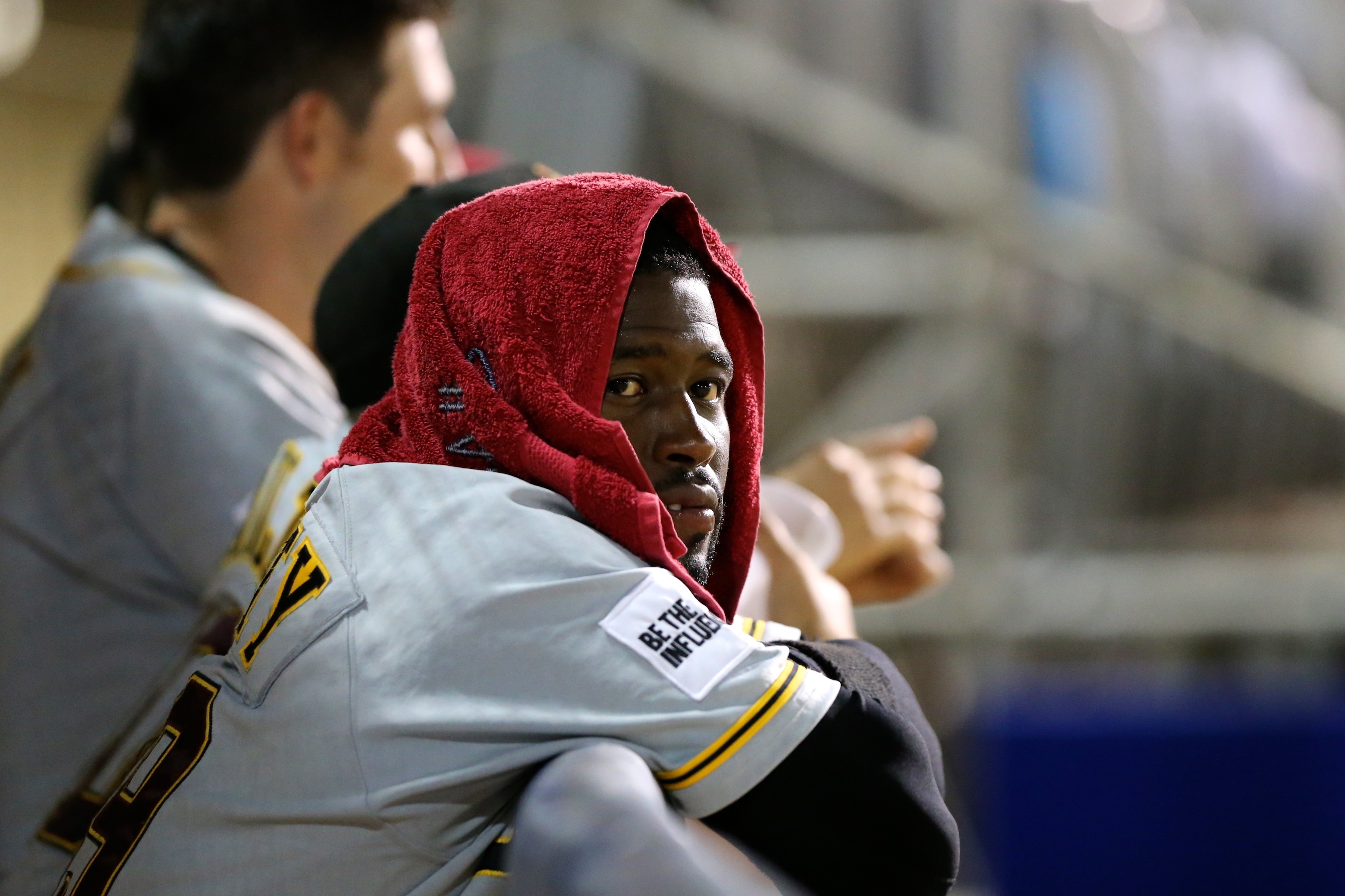

in his final ABL game on January 26, 2013 in Sydney.
(Photo courtesy of Joe Vella / SMP Images / ABL)

in the North American League (San Angelo, Edinburg, and Fort Worth)
and the American Association League (Lincoln), the 24-year-old North Carolinian relished his time in the ABL playing third base for the Brisbane Bandits. He earned the ABL Round 11 Player of the Week title after a multi-home run game in which he drove in five of the Bandits’ six runs. The former St. Louis Cardinals farmhand had hits in all four games of the Bandits’ Round 11 series, going 6-for-11 (.667) with three homers and eight RBI. Beatty led Brisbane in both slugging percentage (.483) and on-base plus slugging percentage (.845) while batting .252 during 2012-13. 
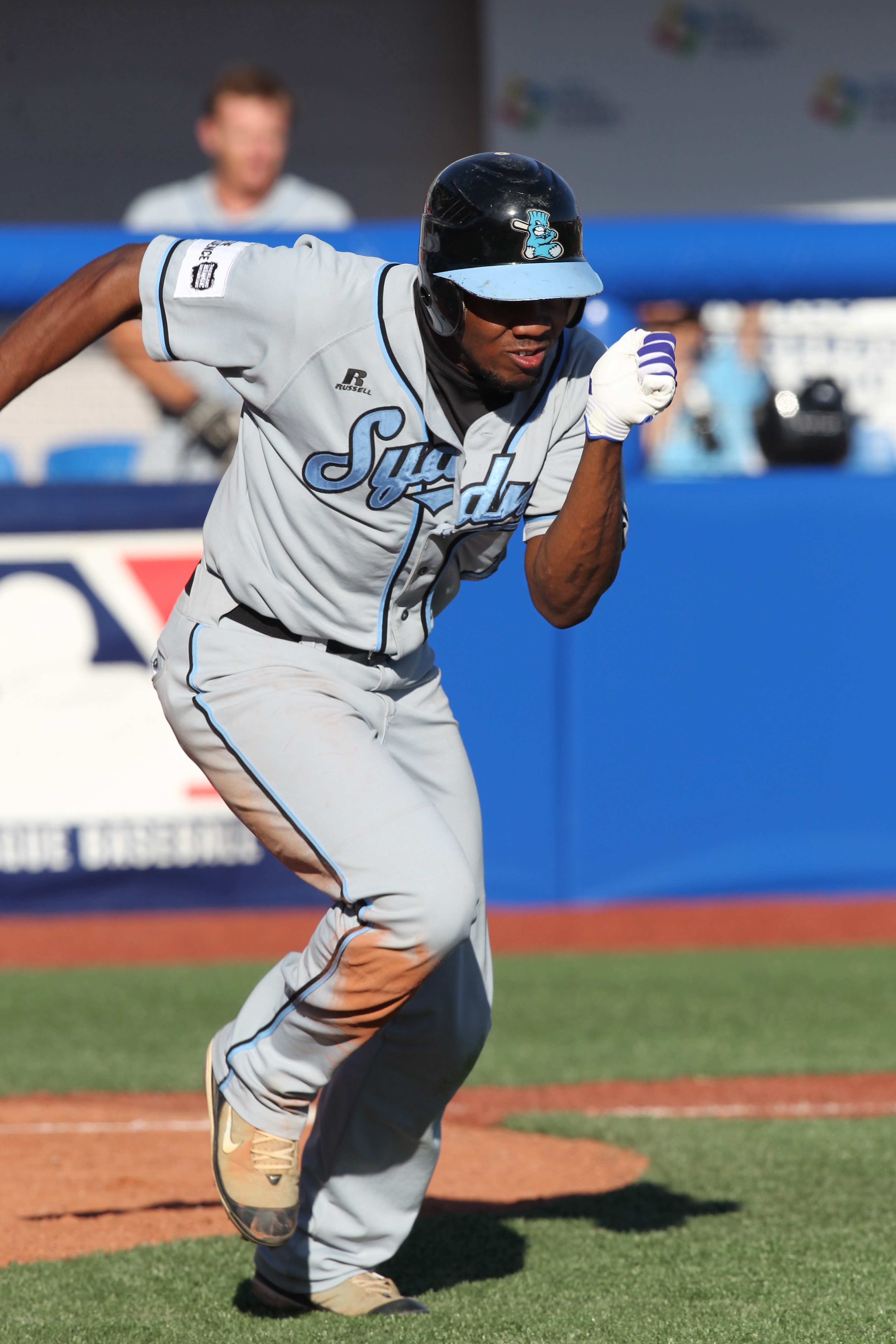
(Brett Crockford / SMP Images)


the Canberra Cavalry (@JonJones707 on Twitter)
@abuschini Thanks bro. Give me a call when you get back to the Bay.
— Jonathan Jones (@JonJones707) January 6, 2013
 “I believe that Twitter is a great tool. It gives the fans access to follow their favorite players and see what they are doing, learn their likes and dislikes, and even get to see photos. It allows fans to feel like they have a personal relationship and for the athletes, and in return, it allows us to see all the fans’ love and support.”
@nate_melendres you need to step up your twitter game! #tweetsfromdownunda #classy #eeeeeeertttttaaaahh
— Andrew Kittredge (@amkittredge) October 25, 2012

his time at Single-A Advanced High Desert, Single-A Clinton and the Arizona Rookie League. However, he got his work in this off-season in 26 ABL contests. With a .245 batting average, five extra-base hits and five homers to his credit while in an Adelaide Bite uniforn, Melendres made his impression felt
in Australia and excited the Mariners’ faithful.


of Alonso regardless of his chosen career path. “Wherever Carlos goes, whatever he decides to do beyond baseball, whether he plays baseball for a career professionally, or goes into the business sector of the world, no matter what part of the country he’s in, he’s always going to be perceived as a class individual,” Sherman said. “I think people are just going to gravitate towards him.” Ranked #25 in Bleacher Report‘s 2012 Phillies Top 25 Positional Prospects, the righty infielder played 93 games for Single-A Advanced Clearwater and racked up a respectable .278 batting average.

the 25-year-old Phillies farmhand is valuable commodity for any team manager. While in Australia, Alonso anchored the Brisbane Bandits infield at third base. Bandits manager Kevin Jordan said, “Like a lot
of guys, Carlos got out here and you’re learning the whole league overnight, literally. You get thrown in the fire. For him, it is what
it is. I told him what was going to happen, that he was going to be thrown into it, that he was going to have to pretty much learn all
the pitchers; where to play guys defensively, on the fly and he’s starting to come around, especially with the bat.” Alonso ended the 2012-13 ABL season with a .209 batting average and seven doubles.

of Ryan Schembri / SMP Images / ABL)
St. Louis Cardinals in the 44th round of the June 2010 Amateur Draft from Cal Poly San Luis Obispo. After completing his third season
in the Cardinals organization and putting up good 2012 numbers (126 games, .278 batting average, 10 home runs, 35 RBI) at Double-A Springfield, Melker was reunited with former Perth Heat manager and current Corvallis Knights skipper Brooke Knight–who took his 2011-12 Aussie champion Heat to South Korea to represent Australia in the 2012 Asia Series. Prior to arriving in mid-October to play for Perth in the ABL, the left-handed hitting slugger exuded excitement. “I’m really excited,” said Melker. “I’ve heard baseball in Asia is extremely good so I’m looking forward to the challenge. Some time off this winter would have been nice, but I couldn’t turn down and opportunity to play baseball on two other continents…”
Melker remained with the Heat until mid-December and then
returned to the United States. “I would have liked to have stayed longer,” he said. “But I needed some time off that
I could dedicate to strength training and get 100% healthy before I headed off to spring training in March.” During
the 22 ABL games Melker played in the Perth outfield,
he contributed to the Heat’s early season offensive attack
with a .247 batting average–including two doubles, two
triples, one home run, six RBI and one stolen base.
a 2011 Gulf Coast League game in Fort Myers, FL. (Photo by Kevin Johnson / Newport News)


(4 games played, 9-for-14 for a .643 batting average, 4 doubles, 4 RBI, and 6 runs total) sustained an elbow injury and had to return to America for surgery. In his last nine games prior to his departure, the left-handed hitting 25-year-old Bite first baseman/ DH was on a roll–going 15-for-35 with five doubles and five RBI–but left with a down-to-earth .266 batting average.
Drafted by the Pittsburgh Pirates in
the 24th round of the 2010 MLB June Amateur Draft from University of New Mexico in Albuquerque, Justin Howard has successfully been promoted each of his three seasons for the Buccos. The native Texan hit .283 with two homers and 29 RBI in 83 games for Single-A Advanced Bradenton prior to playing in the ABL. He will certainly be welcome to return to the Adelaide Bite next season.
It’s been amazing Adelaide. Sorry for the early departure but gotta get the elbow cleaned out. Back to the great state of Texas in 15 hours
— Justin Howard (@JHowey_11) December 18, 2012
Top 40 Americans in the ABL (#31-40)
 The Australian Baseball League’s 2012-13 season did not disappoint the sleep-deprived stateside fans and families of American ballplayers who stayed up all hours of the night to watch a slew of talent with MLB potential. MLBblogger salutes the many American volunteers that worked tirelessly behind the scenes long before the start of the ABL season so that Aussie baseball could prosper.

In addition to showcasing last season’s Top 20 Americans in the ABL, we have previously announced many of the 2012-13 Top 40 Americans in the ABL. Click on the highlighted player’s name to access the Top 40 American in the ABL feature article: #40 Dustin Loggins, RHP Canberra Cavalry; #39 Caleb Cuevas, RHP Sydney Blue Sox; #38 Greg Van Sickler, RHP Perth Heat; #37 Chuck Lofgren, LHP Brisbane Bandits; #36 Kevin Reese, RHP Melbourne Aces; #35 Gabriel Suarez, OF/INF Adelaide Bite; #34 Chris Motta, RHP Canberra Cavalry. 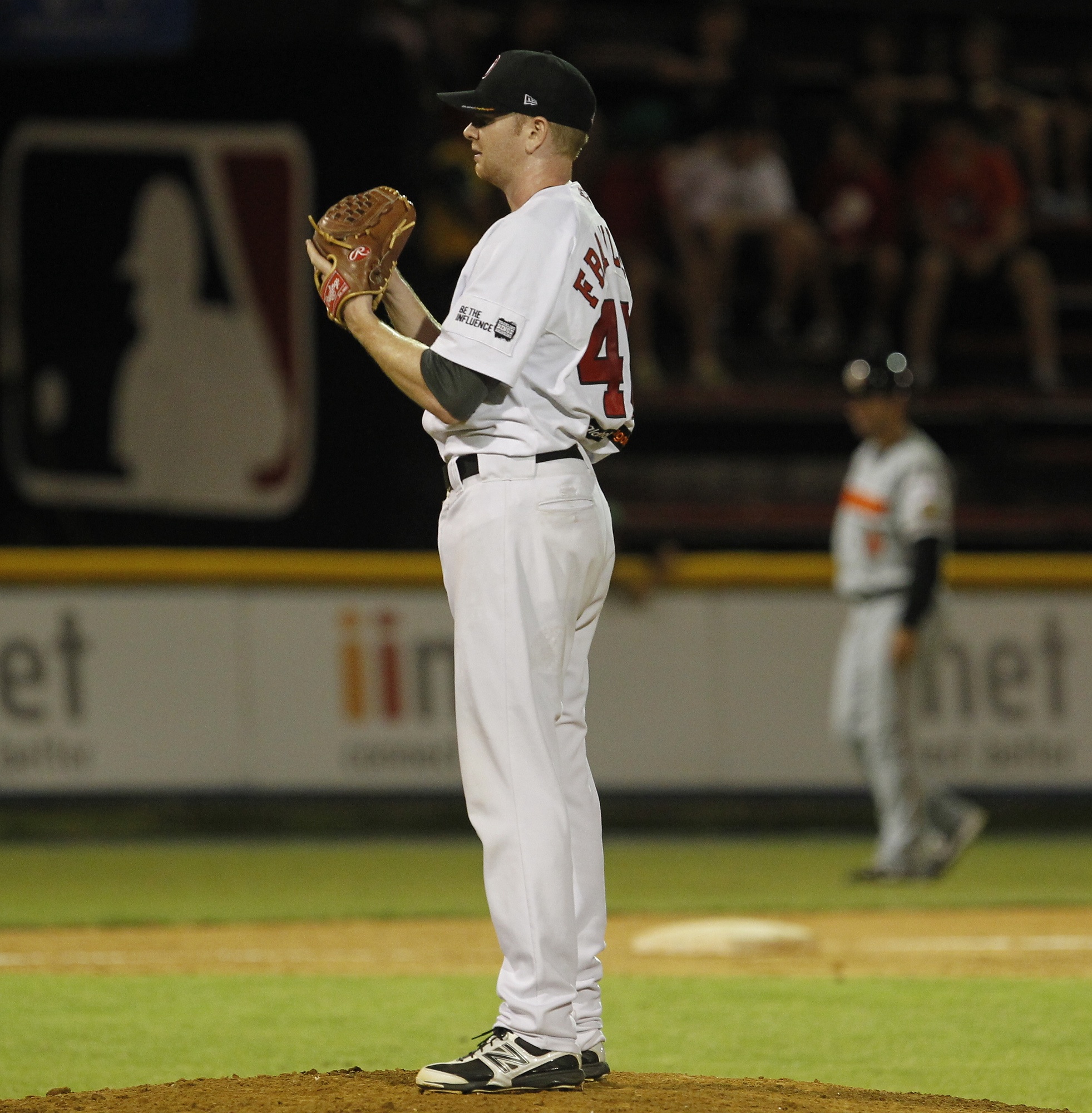
(photo by Theron Kirkman / SMP Images / ABL)
#33 Jack Frawley of the Perth Heat was the winning pitcher in last year’s 13-inning marathon ABL Championship title victory over the Melbourne Aces. He hopes to help the Heat go down in Aussie baseball history with a never seen before three-peat in the ABL Championship Series against the top-seeded Canberra Cavalry. The 27-year-old once again came through in the clutch on the regular season’s final day to clinch the Heat’s third straight ABL postseason berth. Making his first start and fifth overall appearance this season (3-1, 1.21 ERA), the Cleveland-born right-hander earned ABL Round 13 Pitcher of the Week honors by throwing eight shutout innings and limiting the Melbourne Aces to just three hits.

A 24th-round draftee by the Colorado Rockies in 2005, #32 Sean Toler was signed by Canberra after playing with Cavalry teammates Steven Kent, Brian Grening and Dustin Loggins on the American Association of Independent Professional Baseball’s Kansas City T-Bones in 2012. The Missouri State baseball star was one of seven Cavalry players represented in the 2012 ABL All-Star game. Recently voted iiNet relief pitcher of the year, the 26-year-old Canberra closer was also named ABL Pitcher of the Week for Round Six play. Toler (2-0, 2.84 ERA) was second in the ABL with 11 saves. The six-foot-five hurler loves closing games out for a team he believes could be the next ABL champion. ”Yeah, I think we can (win the title),” Toler said with confidence.

Last day in Perth. Thanks to @perthheat fans and especially my teammates for welcoming me to Australia. Gonna miss my Aussie family.
— Ryan Khoury (@RyKhoury) February 12, 2013
 mlbblogger