
some sound advice to Anthony Granato in the 2010 European Baseball Championship Finals.
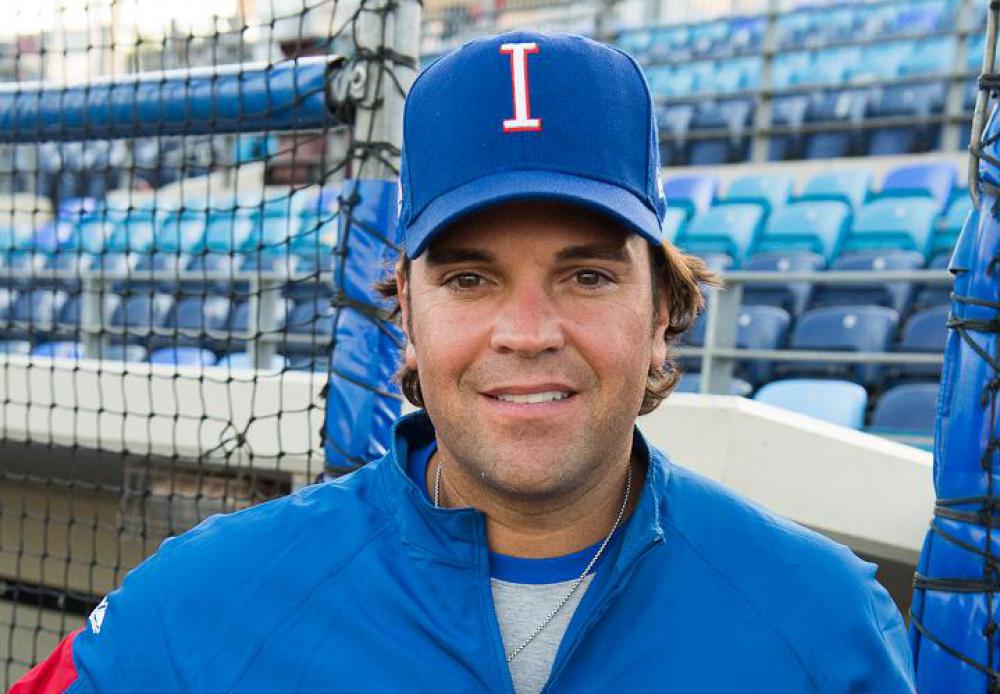
Rediscovering his ancestry in Italy and helping to make baseball relevant there are big priorities for the 12-time MLB All-Star. However, Piazza won’t deny his American upbringing. “I do not pretend to say what is not true,” he admitted. “I grew up as an American boy. Now, getting older, I understand the value of my heritage and I want to give some-thing back to Italy. I just got back from Italy, and I am doing a lot of research on my family roots from Sicily. During your baseball career, you really can’t focus on things like that because you are concentrating on playing. I’m not trying to reinvent my identity and say I’m doing the reverse Christopher Columbus thing.”
The all-time leading catcher with 427 home runs (.308 batting average) over his 16-year career and future Baseball Hall of Famer was coached by some of MLB’s best. The proud Team Italy coach Piazza said, “When I was coming up with the Dodgers I learned from Reggie Smith, and he was a direct disciple of Ted Williams. I really benefitted a lot from good coaching, so I feel I can impart my knowledge, and that is my way of giving back to the game. You can tell, obviously with our success and winning two European Championships since I’ve been there, it works…”
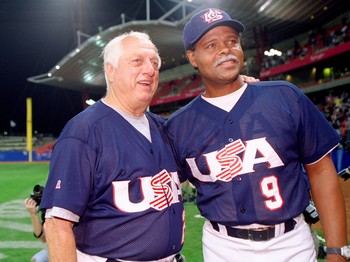
from 1999 to 2008. Piazza hopes to emulate Smith’s coaching excellence with Team Italy. He said, “The players really listen, and it’s fun for me. I get a lot of joy from doing that. I’m not a huge ‘change a guy’ type of coach, I keep it simple. I’m not very autocratic. I don’t try to pound my system into guys. To me, hitting is personal.”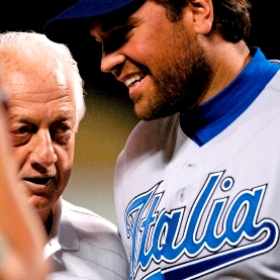
like many other Italians near the turn of the 20th century, came here from the Abruzzi region south of Rome seeking relief from the rough winters and hard terrain. However, unlike Lasorda–who wore the red, white and blue–Mike Piazza gives back to “La Squadra Azzurri” Team Italy as a fitting tribute to his grandfather Rosario from Sicilia and faces Team USA in the 2013 World Baseball Classic at Chase Field in Phoenix on March 9th. 
Italia
“Italian Americans at Bat” is a must-see before attending the 2013 WBC Finals in San Francisco

Americans have played baseball in the majors
since 1897? The San Francisco Bay Area produced many of baseball’s pioneers and originated the
sandlot playing field in the 1860s. In fact, the
earliest West Coast games were played downtown
on a sandlot where San Francisco City Hall stands today–nearly a century before the Giants and
Dodgers arrived in 1958. So it’s most appropriate Italian Americans at Bat: From Sand Lots
to the Major Leagues, a lavish documentary
exhibition of baseball memorabilia celebrating
the vast contributions of Italians Americans to
baseball, be on display for FREE in Reno, Nevada
at the magnificent Arte Italia through May 19th.
Located at 442 Flint Street, Arte Italia is open
Thursday through Sunday from noon to 5 PM
(www.arteitaliausa.com). The chronologically-
arranged exhibition was originally curated by
the Museo Italo Americano, the Italian American Museum of San Francisco, which explains why
there is a strong emphasis on Bay Area teams. However, it plays out perfectly for the climactic
finish to the showcase: an autographed cap
and jersey worn by 2012 World Champion
San Francisco Giants’ lefty starter Barry Zito,
who won the opener of the 2012 World Series.
The exhibit’s co-curator, writer and historian Lawrence DiStasi of Bolinas, has loved the game since rooting for the New York Yankees as a child and playing baseball in the streets of Connecticut. In addition to writing all the text panels for the exhibition, DiStasi weaves together ideas, stories and statistics to depict the Italian American experience. There is a timeline of the years 1845 to 2012, which includes historical points of baseball and Italian immigration into the United States–and most importantly when those two histories intersect. The exhibition highlights several decades: the early days of redefining cultural stereotypes, transcending national barriers in the 30s and 40s, improbable triumphs of the 50s, 60s and 70s, the pride of the modern era, and a dominant presence in the Hall of Fame. Joe DiMaggio is the coveted star of the exhibition, and his 56-game hitting streak in 1941 is accented by DiStasi’s text panels which document each hit recorded in the “Dimag-o-Log” that SF Chronicle ran in the Sporting Green every day. Joe DiMaggio, along with his brothers–
Dom and Vince, Tony Lazzeri, Frank Crosetti, Babe Pinelli, Ernie Lombardi, Rugger Ardizoia, Billy Martin and Jim Fregosi are among the celebrated Italian American players with strong baseball roots to the Bay Area.

perhaps just as poignant is the profound
effect baseball has had on the Americanization of Italians. Faced with Italian-born parents who opposed his participation in pro baseball and regarded the sport as juvenile as well as not the wisest career choice–Ed Abbaticchio, probably the first person with an Italian surname to play professionally in 1897, was offered a hotel by his father if he would stop playing baseball. Despite the temptation, the ballplayer refused the bribe and pursued his passion for the game. However, some could not withstand the pressure and caved in to discriminatory bias and the constant ridicule sports writers bestowed upon Italian names. Among them was Francesco Pezzolo, who chose a California mining town as his name-sake and became Ping Bodie–the big league center fielder who played from 1911 to 1921.

slick with water. He never reeks of garlic and prefers chicken chow mein to spaghetti.” After Japan bombed Pearl Harbor on December 7, 1941, the United States declared war
and began targeting those of German, Italian or Japanese descent. The Italians were the largest immigrant group in the U.S. at the time and about 600,000 of the country’s five million Italian immigrants who had not yet naturalized were forced to register as enemy aliens. Required to carry photo ID booklets and surrender flashlights, shortwave radios, guns, binoculars, cameras and other “contraband,” Italian enemy aliens were subject to FBI raids and nightly house arrest with a curfew from 8 PM to 6 AM. Noncitizens could not travel more than five miles from home without a permit. Lawrence DiStasi, author of “Una Storia Segreta: The Secret History of Italian American Evacuation and Internment during World War II”, reports that 10,000 Italians in California were evacuated, mostly from coastal areas and sites near power plants, dams and military installations. Ironically, the half-million Italian Americans serving in the U.S. armed forces at the time of the crackdown were the largest ethnic group in the military. Of the 257 Italians put in internment camps for up to two years, 90 were from California. Fishing boats were seized, and thousands of fishermen lost their jobs. In San Francisco, 1,500 people–including Joe DiMaggio’s parents–were idled. 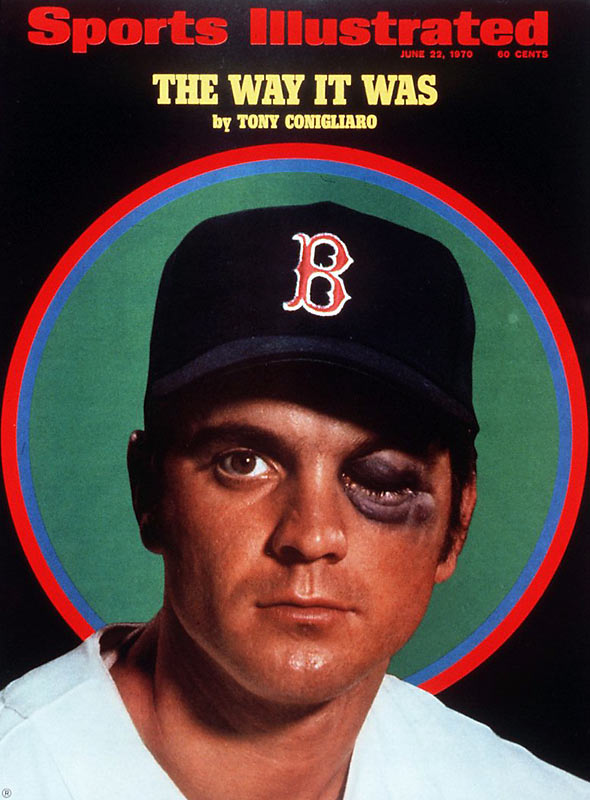 “The opportunity to showcase the adversity and accomplishments of legendary Italian American baseball players is one we welcome and relish,” said Kristen Avansino, President and Executive Director of Arte Italia. “For them, it was a way to integrate into the American way of life,” added Arte Italia Program Director Annie Turner. The exhibition brings home
the message that baseball allowed Italian Americans to assimilate into popular culture:
“This most American of sports became a quick way to counter that negative immigrant identity as an outsider.” Phil Rizzuto, Yogi Berra, Rocky Colavito, Roy Campenella, Ron
Santo, Carl Furillo, Joe Caragiola, Sal Maglie, Tony Conigliaro, Tommy Lasorda, Joe Torre, Tony La Russa, Mike Scioscia, Ken Caminiti, Craig Biggio, Mike Piazza, Mike Napoli and
former Commissioner of Major League Baseball Bart Giamatti are just some of the legendary Italian American baseball ambassadors that have etched their names into U.S. sports history forever. Italian Americans at Bat: From Sand Lots to the Major League pays tribute to their contributions, and those of over 400 others who have left their unique imprint
on the game. Currently on display in Arte Italia’s upstairs Michelangelo and Leonardo
da Vinci galleries are vintage jerseys, a plethora of memorabilia–including classic baseball cards and autographed baseballs, press clippings of career milestones, an interactive
touch screen computer database featuring memoirs, stats, and career highlights of
Italian American players and 14 World Series Championship managers as well as
over 200 archival photographs of some of the greatest moments in baseball history.

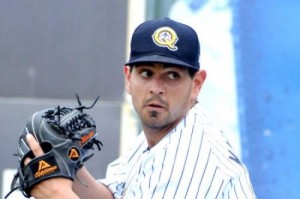
Italo-Canadese John Mariotti gives Team Italy winning spirit in 2013 World Baseball Classic
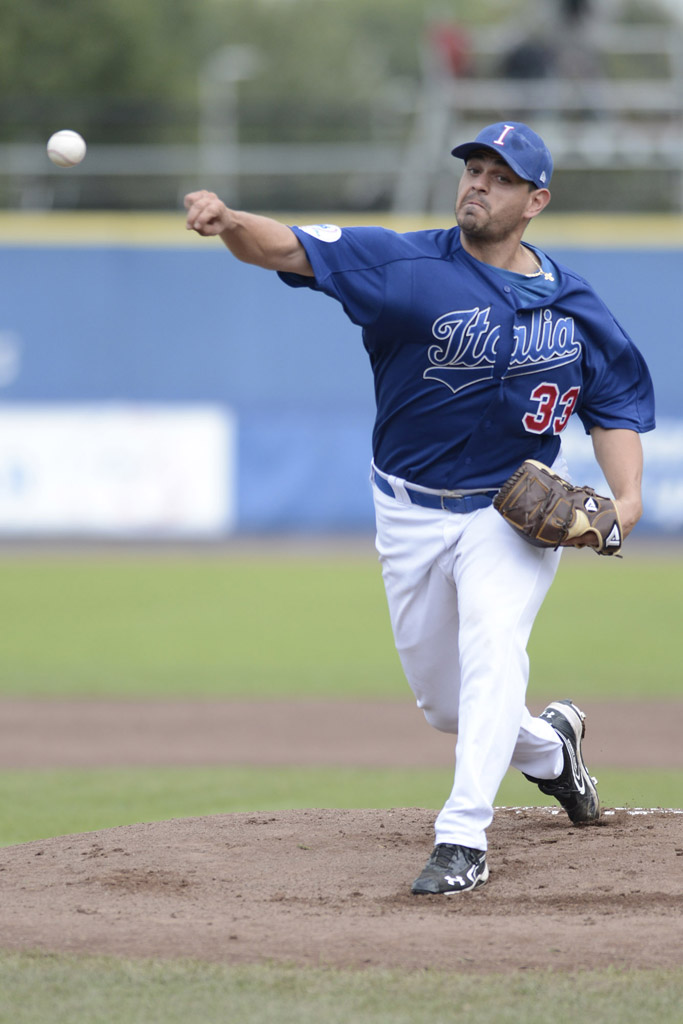

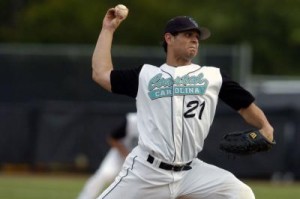
The six-foot-one right hander made his professional debut in 2007 with Orioles’ Short-Season Single-A Aberdeen and posted a 2-2 record with a 1.46 ERA. He spent his entire 2008 campaign at Single-A Delmarva. Mariotti began the 2009 season at Single-A Advanced Frederick and moved up to Double-A Bowie, where he started 13 games and compiled a 3.44 ERA. The Orioles’ farmhand was back at Frederick in 2010, when he made 41 appearances out of the bullpen and chalked up three saves.

at Chase Field (Phoenix, AZ) and Salt River Fields
at Talking Stick (Scottsdale, AZ) beginning March 7th.
 Let’s put the Italian victory over the Netherlands in the 2012 European Championship into perspective. By the Dutch winning the 2011 World Cup after upsetting a talented Cuban team in the finals, does that make Italy the new elite class of European baseball and the spoiler in the upcoming 2013 World Baseball Classic? With John Mariotti’s winning spirit, Italy has got a real shot.
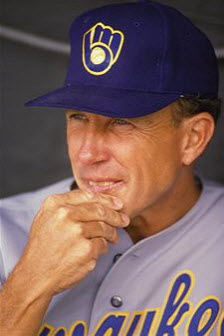
2009 Team Italy coach Tom Trebelhorn reflects on the global aspect of the World Baseball Classic
and the Chicago Cubs in 1994.
hands when they speak, but 2009 Team Italy coach Tom Trebelhorn (who is of German descent) has
been chastised by Cubbie fans for speaking his mind. To the dismay of the Chicago faithful, the former
MLB manager was awarded the #1 quote in Bleacher Report‘s “Best Baseball Quotes of All Time” (which includes memorable quotes from Italian American Baseball Hall of Fame Legends Joe DiMaggio and
Phil Rizzuto). However, Trebelhorn would much
prefer being remembered in baseball history for
his invaluable contribution in preparing the Italian team for the 2009 World Baseball Classic. “I think
the global aspect of baseball is very exciting,” said
the seasoned 65-year-old baseball veteran. He loves the international platform that the World Baseball Classic provides. Trebelhorn commented, “It gives
the game terrific exposure. To be able to hopefully
help the Italian Baseball Federation in their attempts
to enrich baseball as a sport in Italy is intriguing.”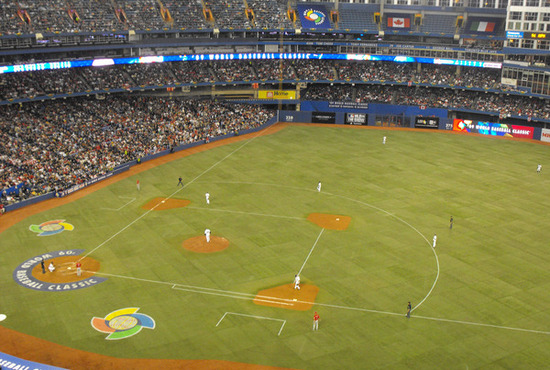

he said in retrospect to Italy’s 6-2 upset and elimination of
host Canada. “That was an embarrassment to them.” Named 1986 Manager of the Year by Baseball America after posting
an impressive 91-71 in his first season as the Milwaukee Brewers’ skipper, Trebelhorn managed the Brew Crew through 1991. After managing the 1994 Chicago Cubs, he signed on as coach for the Baltimore Orioles and remained with the franchise for 12 years. An unlikely alliance between the O’s and the Italian League’s Grosseto Baseball Club began after Baltimore County and the Italian Province of Grosseto became Sister Counties.

Syd Thrift announced in 2001 that Grosseto Baseball
Club manager Marco Mazzieri and several of his players were invited to Orioles’ Spring Training to observe team workout and training methods. He said, “We believe
this will help advance the game of baseball in Italy and throughout Europe. I’ve been to Grosseto and have
seen the enthusiasm they have for the game of baseball.” Italian manager Mazzieri and O’s coach Trebelhorn were two sound baseball minds from different sides of the Atlantic, and their common love for the game brought them together around the same time every year. They became close friends in no time and looked forward to their annual reunion. Trebelhorn said, “I used to have
him come to spring training and work with us in Florida.”
 When Federazione Italiana Baseball Softball (FIBS) President Riccardo Fraccari revealed that Mazzieri would be manager for Team Italy in the 2009 World Baseball Classic, the Italian baseball icon knew he needed some reinforcement with extensive MLB experience behind him. Upon hearing
of his appointment Mazzieri said, “I am really happy and not overconfident.
I am aware of the fact that I need to rely on the experience of a coach who has spent time in the Big Leagues.” Mazzieri summoned Trebelhorn. “He got the job as the head guy and asked if I would help him out,” said Trebelhorn nonchalantly. As the saying goes:
“A friend in need is a friend indeed.”
Giants’ secret weapon Tyler LaTorre ready to lift Team Italy to top of 2013 World Baseball Classic

third consecutive European Championship by defeating IBAF #7 ranked Netherlands.
are now positioned at #9 in the IBAF 2012 (year-end) Men’s World Ranking.

of his hometown crowd after nearly winning Euro Championship tourney MVP honors. Eight of his 14 hits (14-for-28, .500 BA) were for extra bases (six doubles and two home runs). He absolutely raked at the plate, knocking in nine RBI and scoring nine times.
 “We had one goal and that was to repeat as European champions,”
said LaTorre. “It was awesome. I’m definitely thankful to the Giants for letting me go.” The former University of California, Davis and Aptos High School All-Star catcher has spent seven years in the Giants organization for a chance to shine in the World Baseball Classic.
 LaTorre’s Italian roots trace back to his great-grandparents in Italy. It took two and a half years for him to become eligible to play for Team Italy as a dual citizen and Italian passport holder after thorough research, documentation and tedious paperwork authenticating his Italian lineage. Adding his minor league experience plus the time served in Italian purgatory, Tyler LaTorre has waited nearly a decade to become Italy’s secret weapon in the WBC.
How does Mike Piazza not get into the hall? one of the best hitting catchers ever. @mlbnetwork twitter.com/tylerlatorre/s…
— Tyler LaTorre (@tylerlatorre) January 9, 2013
Former player and current Team Italy hitting coach Mike Piazza believes in the World Baseball Classic
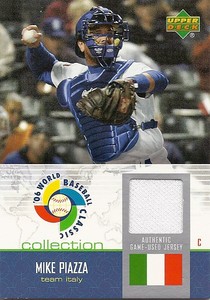
in the 2006 World Baseball Classic.

Like a gondolier in Venezia, Piazza is singing songs of praise for the World Baseball Classic. He said, “I believe in it. I think it’s great. I hope someday down the line it turns into a world-class, World Cup-type thing. I think that’s in conjunction with the way the game is evolving and changing. One of my personal mottos is: ‘If you are going to do it, don’t do it halfway.’ If they’re going to really make a concerted effort to develop the Classic, truly make it a world event.”
2013 World Baseball Classic Pool D play begins on March 7th when Italy battles Mexico at Salt River Fields at Talking Stick in Scottsdale. The Italians return March 8th to take on Canada. Team Italy travels to Chase Field in Phoenix on March 9th to face Team USA. The winner and runner-up of Pool D will advance to the second round of a modified-double elimination tourney.

 mlbblogger