“Italian Americans at Bat” is a must-see before attending the 2013 WBC Finals in San Francisco

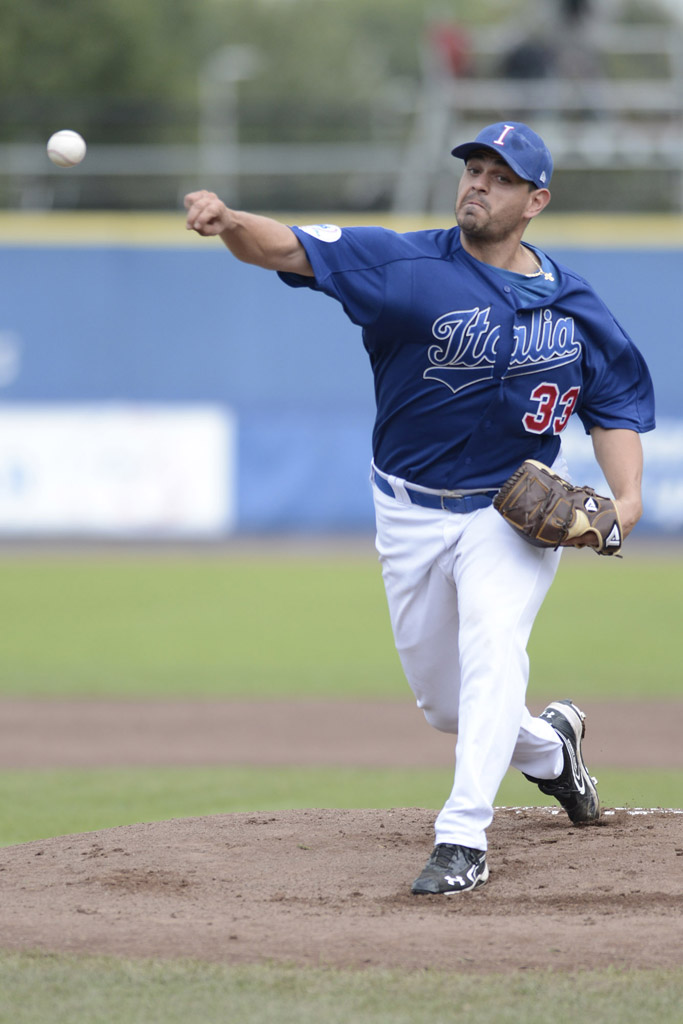
Italian American pitcher Barry Zito
Who would have guessed that at least 454 Italian
Americans have played baseball in the majors
since 1897? The San Francisco Bay Area produced many of baseball’s pioneers and originated the
sandlot playing field in the 1860s. In fact, the
earliest West Coast games were played downtown
on a sandlot where San Francisco City Hall stands today–nearly a century before the Giants and
Dodgers arrived in 1958. So it’s most appropriate Italian Americans at Bat: From Sand Lots
to the Major Leagues
, a lavish documentary
exhibition of baseball memorabilia celebrating
the vast contributions of Italians Americans to
baseball, be on display for FREE in Reno, Nevada
at the magnificent Arte Italia through May 19th.
Located at 442 Flint Street, Arte Italia is open
Thursday through Sunday from noon to 5 PM
(www.arteitaliausa.com). The chronologically-
arranged exhibition was originally curated by
the Museo Italo Americano, the Italian American Museum of San Francisco, which explains why
there is a strong emphasis on Bay Area teams. However, it plays out perfectly for the climactic
finish to the showcase: an autographed cap
and jersey worn by 2012 World Champion
San Francisco Giants’ lefty starter Barry Zito,
who won the opener of the 2012 World Series.
Ed Abbaticchio, probably the first person with an Italian surname to play professionally broke into Major League Baseball in 1897.
Ed Abbaticchio was probably the first person with an Italian last name to play professionally when he broke into the major leagues in 1897.

The exhibit’s co-curator, writer and historian Lawrence DiStasi of Bolinas, has loved the game since rooting for the New York Yankees as a child and playing baseball in the streets of Connecticut. In addition to writing all the text panels for the exhibition, DiStasi weaves together ideas, stories and statistics to depict the Italian American experience. There is a timeline of the years 1845 to 2012, which includes historical points of baseball and Italian immigration into the United States–and most importantly when those two histories intersect. The exhibition highlights several decades: the early days of redefining cultural stereotypes, transcending national barriers in the 30s and 40s, improbable triumphs of the 50s, 60s and 70s, the pride of the modern era, and a dominant presence in the Hall of Fame. Joe DiMaggio is the coveted star of the exhibition, and his 56-game hitting streak in 1941 is accented by DiStasi’s text panels which document each hit recorded in the “Dimag-o-Log” that SF Chronicle ran in the Sporting Green every day. Joe DiMaggio, along with his brothers–
Dom and Vince, Tony Lazzeri, Frank Crosetti, Babe Pinelli, Ernie Lombardi, Rugger Ardizoia, Billy Martin and Jim Fregosi are among the celebrated Italian American players with strong baseball roots to the Bay Area.
San Francisco-born Francesco Pezzolo changed his name to Ping Bodie to escape ridiclule for Italian surnames.
San Francisco-born Francesco Pezzolo changed his name to Ping Bodie to avoid bias and ridicule for Italian last names.
Undoubtedly Italian Americans have made important contributions to the game, but
perhaps just as poignant is the profound
effect baseball has had on the Americanization of Italians. Faced with Italian-born parents who opposed his participation in pro baseball and regarded the sport as juvenile as well as not the wisest career choice–Ed Abbaticchio, probably the first person with an Italian surname to play professionally in 1897, was offered a hotel by his father if he would stop playing baseball. Despite the temptation, the ballplayer refused the bribe and pursued his passion for the game. However, some could not withstand the pressure and caved in to discriminatory bias and the constant ridicule sports writers bestowed upon Italian names. Among them was Francesco Pezzolo, who chose a California mining town as his name-sake and became Ping Bodie–the big league center fielder who played from 1911 to 1921.

Italian American Joe DiMaggio was subjected to bias throughout his career.
Overcoming cultural bias throughout his career, Joe DiMaggio was the first Italian American to be inducted into the Baseball Hall of Fame in 1955.
Italian Americans at Bat: From Sand Lots to the Major Leagues traverses the U.S. cultural landscape and documents an ethnic group’s rise from adversity by celebrating its triumphs in breaking into a sport dominated by English, Irish and German immigrants. However, even the game’s greatest stars had to contend with deep-rooted prejudices and stereotypical misnomers. A May 10, 1939 Life magazine cover story on Joe DiMaggio was laced with gross innuendos: “Instead of olive oil or smelly bear grease he keeps his hair
slick with water. He never reeks of garlic and prefers chicken chow mein to spaghetti.”
UNA STORIA SEGRETAAfter Japan bombed Pearl Harbor on December 7, 1941, the United States declared war
and began targeting those of German, Italian or Japanese descent. The Italians were the largest immigrant group in the U.S. at the time and about 600,000 of the country’s five million Italian immigrants who had not yet naturalized were forced to register as enemy aliens. Required to carry photo ID booklets and surrender flashlights, shortwave radios, guns, binoculars, cameras and other “contraband,” Italian enemy aliens were subject to FBI raids and nightly house arrest with a curfew from 8 PM to 6 AM. Noncitizens could not travel more than five miles from home without a permit. Lawrence DiStasi, author of “Una Storia Segreta: The Secret History of Italian American Evacuation and Internment during World War II”, reports that 10,000 Italians in California were evacuated, mostly from coastal areas and sites near power plants, dams and military installations. Ironically, the half-million Italian Americans serving in the U.S. armed forces at the time of the crackdown were the largest ethnic group in the military. Of the 257 Italians put in internment camps for up to two years, 90 were from California. Fishing boats were seized, and thousands of fishermen lost their jobs. In San Francisco, 1,500 people–including Joe DiMaggio’s parents–were idled. tonyconigliaro “The opportunity to showcase the adversity and accomplishments of legendary Italian American baseball players is one we welcome and relish,” said Kristen Avansino, President and Executive Director of Arte Italia. “For them, it was a way to integrate into the American way of life,” added Arte Italia Program Director Annie Turner. The exhibition brings home
the message that baseball allowed Italian Americans to assimilate into popular culture:
“This most American of sports became a quick way to counter that negative immigrant identity as an outsider.” Phil Rizzuto, Yogi Berra, Rocky Colavito, Roy Campenella, Ron
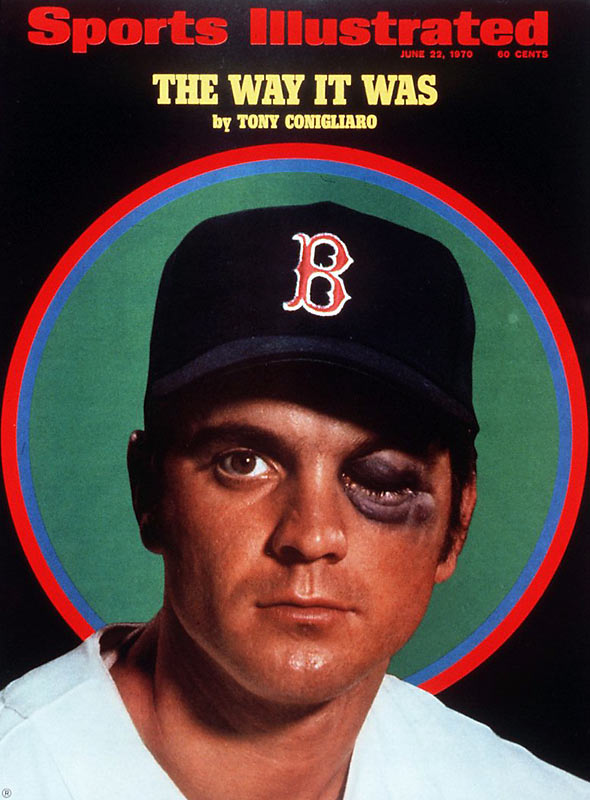
Santo, Carl Furillo, Joe Caragiola, Sal Maglie, Tony Conigliaro, Tommy Lasorda, Joe Torre, Tony La Russa, Mike Scioscia, Ken Caminiti, Craig Biggio, Mike Piazza, Mike Napoli and
former Commissioner of Major League Baseball Bart Giamatti are just some of the legendary Italian American baseball ambassadors that have etched their names into U.S. sports history forever. Italian Americans at Bat: From Sand Lots to the Major League pays tribute to their contributions, and those of over 400 others who have left their unique imprint
on the game. Currently on display in Arte Italia’s upstairs Michelangelo and Leonardo
da Vinci galleries are vintage jerseys, a plethora of memorabilia–including classic baseball cards and autographed baseballs, press clippings of career milestones, an interactive
touch screen computer database featuring memoirs, stats, and career highlights of
Italian American players and 14 World Series Championship managers as well as
over 200 archival photographs of some of the greatest moments in baseball history.
In celebration of the upcoming April 2013 paperback release of his book "Beyond DiMaggio" author and 2006 WBC Team Italy interpreter Lawrence Baldassaro visited the Italian American at Bat Exhibition.
In celebration of the upcoming April 2013 paperback release of his book “Beyond DiMaggio: Italian Americans in Baseball” (University of Nebraska Press) author and 2006 World Baseball Classic Team Italy interpreter Lawrence Baldassaro visited the Italian Americans at Bat Exhibition.
The 2013 World Baseball Classic Championship Round begins March 17th at AT&T Park in San Francisco.
The 2013 World Baseball Classic Championship Round begins March 17th at AT&T Park in San Francisco, CA.
With game one of the WBC Semifinals beginning Sunday evening, March 17 at San Francisco’s AT&T Park, fans have plenty of time to see the Italian Americans at Bat Exhibition at Arte Italia. You might even find Team Italy downstairs eating an inspirational pre-game meal prepared by Master Chef Paolo Sari, who has created three distinct regional menus reflecting the culinary traditions of Joe DiMaggio (Sicilia), Tony Lazzeri (Toscana) and Frank Crosetti (Lombardia). Buon appetito! Forza Italia!! Forza Azzurri…Italy_Map

Italo-Canadese John Mariotti gives Team Italy winning spirit in 2013 World Baseball Classic

In the 2012 European Championship against the Netherlands, Team Italia winning pitcher John Mariotti limited the Dutch to three hits and one earned run while striking out six.
In the 2012 European Championship final, Team Italia winning pitcher John Mariotti limited the Netherlands to three hits and two runs (one earned) while striking out six in six innings of work.
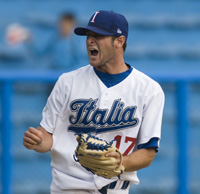
Italia celebrates after defending the 2012 European Championship
Italian players celebrate after successfully defending the throne and winning its third consecutive European Championship and 10th title win in history since 1958.
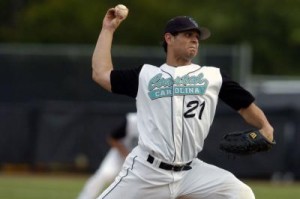
Having been previously drafted twice by the Los Angeles Angels of Anaheim after graduating from Toronto’s Chaminade College School in 2003 and again in 2004 while attending Florida’s Gulf Coast Community College, the third time was the charm for the Baltimore Orioles as their 18th round 2007 draft pick John Mariotti. He signed on the dotted line and began his pro ball career after leading the nationally-ranked Coastal Carolina University Chanticleers to Big South Conference prominence and compiling an impressive 13-2 career record.
2007 Coastal Carolina graduate John Mariotti
Coastal Carolina University pitching ace John Mariotti led the Chanticleers to the top in 2006 and 2007.

The six-foot-one right hander made his professional debut in 2007 with Orioles’ Short-Season Single-A Aberdeen and posted a 2-2 record with a 1.46 ERA. He spent his entire 2008 campaign at Single-A Delmarva. Mariotti began the 2009 season at Single-A Advanced Frederick and moved up to Double-A Bowie, where he started 13 games and compiled a 3.44 ERA. The Orioles’ farmhand was back at Frederick in 2010, when he made 41 appearances out of the bullpen and chalked up three saves.

The Quebec Capitales won their fourth consecutive Can-Am League Championship in 2012.
Italo-Canadian John Mariotti now pitches closer to home for the Québec Capitales, winners of their fourth consecutive Can-Am League Championship title in 2012.
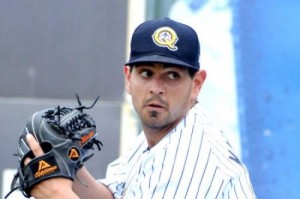
Quebec Capitols' John Mariotti
Québec Capitales’ starting pitcher John Mariotti has found his groove in the Independent Can-Am League.
The Woodbridge, Ontario MiLB expat was a welcome addition to the 2011 Québec Capitales‘ starting pitching rotation. Mariotti went 11-1 in the regular season with 2.74 ERA in 108.1 innings of work before going undefeated in the postseason with a 1.98 ERA. The Philadelphia Phillies came calling for Mariotti as he was signed to a minor league contract and invited to 2012 Spring Training. The hype was short-lived, and he retreated to comfy Les Capitales de Québec, where he tallied a 10-1 record in 98.1 innings with a 4.03 ERA in 2012.

Representing the "Azzuri" Team Italy, John Mariotti will face Mexico, USA and Canada in the 2013 WBC.
Representing the “Azzuri” Team Italy, John Mariotti will face Mexico, USA and Canada in the 2013 WBC
at Chase Field (Phoenix, AZ) and Salt River Fields
at Talking Stick (Scottsdale, AZ) beginning March 7th.
Under the leadership of manager Marco Mazzieri, pitching coach Bill Holmberg, hitting coach Mike Piazza, third base coach Alberto D’Auria and first base coach Claudio Vecchi, Team Italy remained undefeated (9-0) in the 2012 European Championship by outscoring opponents 45-4 during the first five games of Pool A competition and then continued with their winning ways by outscoring others 18-6 in the remaining four games of the medal round. By defeating the Netherlands twice back-to-back on their home turf during the final two days of the 2012 European Championship, Team Italy demonstrated its resilience against a squad which was the biggest surprise of the 2009 World Baseball Classic. Remember the Dutch defeated the Dominican Republic twice and moved on to the second round of play.

Event_WBC Let’s put the Italian victory over the Netherlands in the 2012 European Championship into perspective. By the Dutch winning the 2011 World Cup after upsetting a talented Cuban team in the finals, does that make Italy the new elite class of European baseball and the spoiler in the upcoming 2013 World Baseball Classic? With John Mariotti’s winning spirit, Italy has got a real shot.

2009 Team Italy coach Tom Trebelhorn reflects on the global aspect of the World Baseball Classic

Tom Trebelhorn managed the 1986-1991 Milwaukee Brewers and the Chicago Cubs in 1994.
Tom Trebelhorn managed the 1986-1991 Milwaukee Brewers
and the Chicago Cubs in 1994.
Italians have often been criticized for using their
hands when they speak, but 2009 Team Italy coach Tom Trebelhorn (who is of German descent) has
been chastised by Cubbie fans for speaking his mind. To the dismay of the Chicago faithful, the former
MLB manager was awarded the #1 quote in Bleacher Report‘s “Best Baseball Quotes of All Time” (which includes memorable quotes from Italian American Baseball Hall of Fame Legends Joe DiMaggio and
Phil Rizzuto). However, Trebelhorn would much
prefer being remembered in baseball history for
his invaluable contribution in preparing the Italian team for the 2009 World Baseball Classic. “I think
the global aspect of baseball is very exciting,” said
the seasoned 65-year-old baseball veteran. He loves the international platform that the World Baseball Classic provides. Trebelhorn commented, “It gives
the game terrific exposure. To be able to hopefully
help the Italian Baseball Federation in their attempts
to enrich baseball as a sport in Italy is intriguing.”
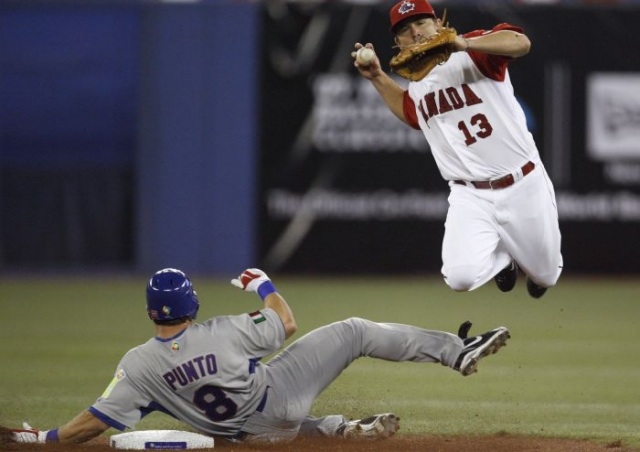
Birds eye view of the Italy and Canada 2009 WBC game at Toronto's Roger Centre.
Bird’s-eye view of the 2009 WBC game between Italy and Canada at Toronto’s Roger Centre.
'09 World Baseball Classic
’09 World Baseball Classic
Every minute with the Italians in the 2009 World Baseball Classic at Rogers Centre was special for Trebelhorn. “A great experience. The team played with a lot of passion and heart,”
he said in retrospect to Italy’s 6-2 upset and elimination of
host Canada. “That was an embarrassment to them.” Named 1986 Manager of the Year by Baseball America after posting
an impressive 91-71 in his first season as the Milwaukee Brewers’ skipper, Trebelhorn managed the Brew Crew through 1991. After managing the 1994 Chicago Cubs, he signed on as coach for the Baltimore Orioles and remained with the franchise for 12 years. An unlikely alliance between the O’s and the Italian League’s Grosseto Baseball Club began after Baltimore County and the Italian Province of Grosseto became Sister Counties.
Grosseto's Sister City relationship with Baltimore County was instrumental in bringing together Grosseto native and Italy manager Marco Mazzieri and Baltimore Orioles coach Tom Trebelhorn.
The Sister Counties relationship between Baltimore and Grosseto blossomed as a result of the friendship between Orioles coach Trebelhorn and Grosseto native/Italian manager Mazzieri.
Team Italy manager Marco Mazzieri
Italian manager Marco Mazzieri
The late and great Orioles vice president of operations
Syd Thrift announced in 2001 that Grosseto Baseball
Club manager Marco Mazzieri and several of his players were invited to Orioles’ Spring Training to observe team workout and training methods. He said, “We believe
this will help advance the game of baseball in Italy and throughout Europe. I’ve been to Grosseto and have
seen the enthusiasm they have for the game of baseball.” Italian manager Mazzieri and O’s coach Trebelhorn were two sound baseball minds from different sides of the Atlantic, and their common love for the game brought them together around the same time every year. They became close friends in no time and looked forward to their annual reunion. Trebelhorn said, “I used to have
him come to spring training and work with us in Florida.”italy_wbc_press_release2009_WBC When Federazione Italiana Baseball Softball (FIBS) President Riccardo Fraccari revealed that Mazzieri would be manager for Team Italy in the 2009 World Baseball Classic, the Italian baseball icon knew he needed some reinforcement with extensive MLB experience behind him. Upon hearing
of his appointment Mazzieri said, “I am really happy and not overconfident.
I am aware of the fact that I need to rely on the experience of a coach who has spent time in the Big Leagues.” Mazzieri summoned Trebelhorn. “He got the job as the head guy and asked if I would help him out,” said Trebelhorn nonchalantly. As the saying goes:
“A friend in need is a friend indeed.”italy_usa_friendship

Giants’ secret weapon Tyler LaTorre ready to lift Team Italy to top of 2013 World Baseball Classic

Team Italy catcher Tyler LaTorre was instrumental in the Italians' conquest of their third consecutive European Championship.
Team Italy catcher Tyler LaTorre was instrumental in the Italians’ conquest of their
third consecutive European Championship by defeating IBAF #7 ranked Netherlands.
SF Giants managerial assistant Tom Trebelhorn
SF Giants managerial assistant Tom Trebelhorn encouraged Tyler LaTorre to play for Team Italy.
Inspired by the power of suggestion from 2009 Team Italy bench coach and current Giants’ Spring Training / Short Season Single-A affiliate Salem-Keizer Volcanoes managerial assistant Tom Trebelhorn to join the Italian national team, 29-year-old catcher Tyler LaTorre takes his strong 2012 campaign for Triple-A Fresno Grizzlies and Team Italy in the European Championship into the 2013 World Baseball Classic beginning March 7th. After winning their third consecutive European Championship, the Italians
are now positioned at #9 in the IBAF 2012 (year-end) Men’s World Ranking.

The WBC Championship Round begins March 17th at AT&T Park in San Francisco.
World Baseball Classic Championship Round play begins March 17th at AT&T Park in San Francisco.
Nothing would make the Santa Cruz-born LaTorre more excited than Italy advancing to his home turf in the Bay Area for the World Baseball Classic Championship Round at AT&T Park in San Francisco. The Giants prospect, who signed as a free agent in 2006, has earned the right to play in front
of his hometown crowd after nearly winning Euro Championship tourney MVP honors. Eight of his 14 hits (14-for-28, .500 BA) were for extra bases (six doubles and two home runs). He absolutely raked at the plate, knocking in nine RBI and scoring nine times.
Tyler LaTorre playing for the Triple-A Fresno Grizzlies on May 24, 2011.
Giants minor leaguer Tyler LaTorre catching for the Triple-A Fresno Grizzlies on May 24, 2011.
Euros-Logo-2012 “We had one goal and that was to repeat as European champions,”
said LaTorre. “It was awesome. I’m definitely thankful to the Giants for letting me go.” The former University of California, Davis and Aptos High School All-Star catcher has spent seven years in the Giants organization for a chance to shine in the World Baseball Classic.

italy flag LaTorre’s Italian roots trace back to his great-grandparents in Italy. It took two and a half years for him to become eligible to play for Team Italy as a dual citizen and Italian passport holder after thorough research, documentation and tedious paperwork authenticating his Italian lineage. Adding his minor league experience plus the time served in Italian purgatory, Tyler LaTorre has waited nearly a decade to become Italy’s secret weapon in the WBC.Worth The Wait

Former player and current Team Italy hitting coach Mike Piazza believes in the World Baseball Classic

Mike Piazza played for Team Italy in the 2006 World Baseball Classic.
Mike Piazza played for Team Italy
in the 2006 World Baseball Classic.
Mike Piazza’s double and Jason Grilli’s near-perfect 4.2 innings of pitching, which prompted a standing ovation from the sold-out crowd at Lake Buena Vista’s Walt Disney World Resort in Florida during Team Italy’s 10-0 win over Australia in the first round of the 2006 World Baseball Classic, may have something to do with it. Perhaps the perks of being an Italian ballplayer including the sweet aroma of the delicious post-game Sicilian cuisine-inspired victory celebrations in the club house was appetizing enough for Piazza to make what seemingly could become a lifetime commitment to one’s country of ancestry. With over five years of service to date under his belt, the one-time Marlin and current Team Italy hitting coach Mike Piazza is a big catch for the Federazione Italiana Baseball Softball (FIBS) by inspiring a whole new generation of Italian athletes and furthering baseball’s reach in Europe. “The biggest thing for me is trying to promote the game in Europe,” Piazza said.
Mike Piazza (left) celebrates with Team Italy after the Italians won their third consecutive European Championhip.
Mike Piazza celebrates with Team Italy after the Italians beat the Netherlands to win their third consecutive European Championship since 2010.

wbc_phoenix_logo

Like a gondolier in Venezia, Piazza is singing songs of praise for the World Baseball Classic. He said, “I believe in it. I think it’s great. I hope someday down the line it turns into a world-class, World Cup-type thing. I think that’s in conjunction with the way the game is evolving and changing. One of my personal mottos is: ‘If you are going to do it, don’t do it halfway.’ If they’re going to really make a concerted effort to develop the Classic, truly make it a world event.”

2013 World Baseball Classic Pool D play begins on March 7th when Italy battles Mexico at Salt River Fields at Talking Stick in Scottsdale. The Italians return March 8th to take on Canada. Team Italy travels to Chase Field in Phoenix on March 9th to face Team USA. The winner and runner-up of Pool D will advance to the second round of a modified-double elimination tourney.

WBC Finals at AT&T Park
Italy hopes to make it to the WBC Finals at AT&T Park in San Francisco, CA.
The two teams will play the winner and runner-up of Pool C (which includes Venezuela, the Dominican Republic, Spain and host Puerto Rico) beginning March 12th at Marlins Park in Miami. The winner and runner-up of the stiff competition will move on to the WBC Championship Round starting March 17th at AT&T Park in San Francisco. Not only does Piazza believe in the WBC, but he also has faith in Italian baseball. Having already coached Team Italy to two of its three consecutive European Championships and hinting of a WBC title, he said: “Our dream one day is to have this team be a champion.”Piazza.2012

Grilli is a BIG name in Italia and in Pittsburgh, PA

The Roberto Clemente Bridge leads Grilli and Pirates fans to PNC Park in downtown Pittsburgh.
Italian Finance Minister Vittorio Grilli
Vittorio Grilli is currently
the Italian Finance Minister.
“I told the cab driver, just rolling up over the Clemente Bridge and going around the corner, I said, this is my office space,” said Pittsburgh’s new closer Jason Grilli after signing his two-year, $6.75 million contract through 2014 with the Pirates. “This is how I do my best work. There’s sometimes not enough money that can be a good tradeoff to being comfortable and to know what to expect.” Despite leaving money on the table and taking far less than the free agent market offered to stay in Pittsburgh–much to the disliking of Italian Finance Minister Vittorio Grilli, 36-year-old pitcher Jason Grilli remains a Pirate.
In his 2012 campaign for the Pittsburgh Pirates, reliever Jason Grilli established career highs in appearances (64) and strikeouts (90)
Jason Grilli established career highs in appearances (64) and strikeouts (90) with a career-best 2.91 ERA while holding opposing hitters to a .207 batting average in 2012.
ItaliaHowever, Jason Grilli has earned the right to pitch wherever he chooses after picking up the win in Team Italia’s 10-0 shutout of Australia in the 2006 World Baseball Classic (WBC) and a save in Italy’s 6-2 upset over heavily-favored Canada in the 2009 WBC competition. It goes without saying that the sight of Jason Grilli wearing an Azzurri jersey brings more joy and glory to the near-bankrupt European nation than any Italian politician could ever produce.
Jason Grilli pitching for Team Italia in the 2006 World Baseball Classic.
Jason Grilli pitching for Team Italia in the 2006 WBC.
Yet, politics somehow infiltrated into Italian baseball during the 1996 Olympics. After being invited by the the Italian Baseball Federation to join the country’s Olympic team while playing college ball at Seton Hall, Grilli stood proud and was honored with a parade in his hometown of Syracuse, New York. When joining the team with another Italian American pitcher, they did not receive a warm reception. The other players on the Italian squad that qualified for the Olympics without the two imports threatened a boycott.

italian_american_ Facing an ‘us or them’ ultimatum, the pitchers were dismissed. “I was in tears the whole way home,”
Grilli said. “The good part of it was I got to see Italy, but the worst part of it was it was a once-in-a-lifetime opportunity and I didn’t get to play.” Grilli traces his family heritage roots to Florence and Naples. He said, “I’m 75 percent Italian. My last name is every bit as Italian as you can get. The name on the front of the jersey is always more important than the name on the back, but in this case, the two go hand-in-hand.
I wouldn’t have ‘Italia’ on the front if I didn’t have ‘Grilli’ on the back. Obviously, I love the United States. But I’m also proud of my lineage.”

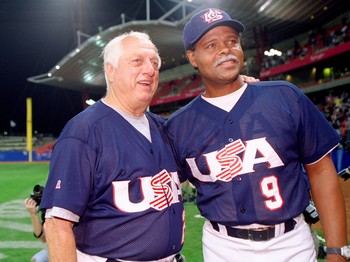
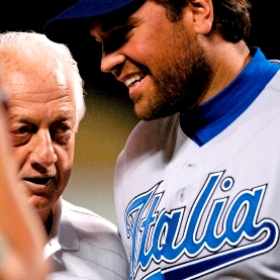
Tommy Lasorda was honored in 2011 by the National Italian American Foundation when he was presented the NIAF Lifetime Achievement Award in Sports Management by Team Italia Coach and former Dodger Mike Piazza.
Tommy Lasorda was honored in 2011 by the National Italian American Foundation
when he was presented the NIAF Lifetime Achievement Award in Sports Management
by Team Italia Coach, 12-time MLB All-Star and former Dodger catcher Mike Piazza.
“You know, they say the more you hang around Italians, the more Italian you become,”
said Grilli. “And that’s what I am. I’m an Italian,” said the Italian right-hander (il Italiano adopera la mano destra) who reminisced about his experience playing for Team Italia in
the World Baseball Classic. “One day Tommy Lasorda came in to talk to us. It was one of
the greatest speeches I’d ever heard. I wish I’d memorized or recorded it. He talked about the pride that comes with being Italian, with such feeling. It was a great experience.”
Having been invited to attend the 28th Annual Italian Coach Convention in Parma, Italy, Grilli is seriously considering a coaching career in Italy after he retires from Major League Baseball. “I know (former MLB All-Star and Team Italia coach) Mike Piazza has a house
(in Italy), and he goes over for a couple months every year,” Grilli said. “It‘s intriguing.”
Grilli and Team Italia stand at attention during the playing of the Italian National Anthem before facing Venezuela in the 2009 WBC.
Grilli and Team Italia stand at attention during the playing of the Italian National Anthem before being eliminated by Venezuela in the 2009 World Baseball Classic at Rogers Centre.
Team Italian Major Leaguers Jason Grilli, Alex Liddi and Francisco Cervelli celebrate after Grill held Canada scoreless for three innings and picked up the save in the 2009 WBC in Toronto.
Team Italia Major Leaguers Jason Grilli, Alex Liddi and Francisco Cervelli celebrate after Grill held host Canada scoreless for three innings and picked up the save at the 2009 World Baseball Classic in Toronto.
Selected by the San Francisco Giants in the first round of the 1997 First-Year Player Draft (fourth pick overall), Grilli made his MLB debut with the Florida Marlins in 2000 and has made 330 career appearances during his 10 seasons in the big leagues. The Pirates signed Grilli as a free agent on July 21, 2011, and he has posted a 2.76 ERA with 127 strikeouts in 92 appearances over the last two seasons. He hinted at comfort and a heightened sense of excitement for Pittsburgh’s resurgence to Clemente-era dominance as top reasons for re-signing. “I’ve been on 10 different teams,” Grilli said. “The grass is never always greener. It’s really all the same. There’s just Piratessomething fitting here. It’s just a baseball town and it bugs me as much as it bugs everybody else in this city. They want this so bad.” In 2012 Grilli limited opponents to just one run in 15 of his 64 appearances and struck out at least one hitter in 56 of the 64 games. He set a franchise record for relievers by striking out at least one batter in each of his first 19 appearances in 2012. Although a bull in the pen on the mound, Jason is quite the gentlemen to members of the press. The local chapter of the Baseball Writers Association of America recently voted Grilli as the winner of the Chuck Tanner Award–an award that recognizes the player who is most cooperative with the media.
Train lead singer Patrick Monahan shares a laugh with Pirates' closer Jason Grill.
Train lead singer Patrick Monahan shares a laugh with Pittsburgh Pirates’ closer Jason Grilli.
Roberto Clemente statue at PNC Park.
Roberto Clemente statue at PNC Park in Pittsburgh.
Jason Grilli wants to bring back the World Series glory days to Pittsburgh. As a proud Italian, he supports MLB’s initiative to foster baseball’s popularity in Italy through the Federazione Italiana Baseball Softball (FIBS)-sponsored MLB Italian Academy and international games like the World Baseball Classic. Grilli said, “I’m in the books in Italian baseball, and that’s good. Major League Baseball wants the game to grow globally, and I’m happy to be a part of that.”

Top 40 Americans in the ABL: #35 Gabriel Suarez of the Adelaide Bite and 2013 WBC Qualifier Spain

35SuarezMinor league journeyman Gabriel Suarez, whose grandfather was of Spanish descent, was one of the reasons why Spain won the recent 2012 World Baseball Classic Qualifier in Jupiter, Florida to move on to the 2013 WBC in March. Going 6-for-12 with a .667 slugging percentage and .647 on-base percentage during the four-game tournament, Suarez was a pleasant surprise for underdog España.Adelaide_Bite

Selected by the Montreal Expos in the 26th round of the 2004 MLB June Amateur Draft out of Phoenix’s South Mountain Community College, the Denver-born Gabriel Suarez has played in the minor leagues with stints in the independent and international baseball leagues since turning pro. The 28-year-old Adelaide Bite outfielder has played every position but catcher in his career.

Adelaide Bite's Gabriel Suarez (Ryan Schembri / SMP Images)
28-year-old Gabriel Suarez brings invaluable pro ball experience to Adelaide.(Ryan Schembri/SMP Images)
Debuting in the Montreal Expos/Washington Nationals farm system in 2004-05, Suarez has been affiliated with the Baltimore Orioles (2006), Colorado Rockies (2006), Cincinnati Reds (2006-07), Pittsburgh Pirates (2007-08), San Francisco Giants (2009), Houston Astros (2009), Philadelphia Phillies (2010) and Los Angeles Dodgers (2012). Before being signed by the Dodgers organization in July, Suarez played in the Mexican Leagues for Vaqueros Laguna and Delfines de Ciudad del Carmen as well as in the Independent Freedom League for the Montezuma Federals. Prior to making his way to the Australian Baseball League, the free agent spent time with Dodgers Single-A affiliates Great Lakes and Rancho Cucamonga.

Gabriel Suarez of the Adelaide Bite
The well-traveled utility player has twice found
his way back into the minor leagues by way of independent league baseball. Currently playing
for the 2012-13 Adelaide Bite, Suarez has put together a .235 batting average with one double, four RBI and one stolen base. At the completion of his Aussie baseball expedition in the ABL, Suarez will be focused on the World Baseball Classic. After winning the WBC Qualifier in Florida to advance to the 2013 World Baseball Classic, Spain’s second baseman Gabriel Suarez was already thinking about what was next. “We’re looking forward,” said Suarez. “Dream come true. We came here for this.” Spain overcame the odds with little time to prepare and beat a talented Israel team in the WBC Qualifier Final to earn the right to play against Pool C host Puerto Rico along with powerhouses Venezuela and Dominican Republic in San Juan beginning March 7, 2013.

Spain players celebrate their 9-7 win after 10 innings against Israel in the World Baseball Classic Qualifier Final in Jupiter, Florida on 9/23/12. (AP Photo/Alan Diaz)
Gabriel Suarez and his Spain teammates celebrate their 9-7 win in extra innings against Israel in the World Baseball Classic Qualifier Final in Jupiter, Florida on 9/23/12. (AP Photo/Alan Diaz)

Giants’ Roberto Kelly manages Team Panama with fast track to World Baseball Classic in March 2013

Giants coach Roberto Kelly was very instrumental to
San Francisco’s 2010 and 2012 World Championships.
The San Francisco Giants have never been big in the larceny department. The 1986 team holds the franchise record with 148 stolen bases. After guiding Giants’ baserunners to a 67.5% success rate in swiping bags during his first four seasons, first base coach and baserunning instructor Roberto Kelly turned up the heat to 75% in 2012. Now as manager of host Panama in the World Baseball Classic Qualifier, Kelly hopes to parlay his World Championship magic to lead Panama’s best to a ticket to the WBC competition beginning March 7, 2013.
Roberto Kelly tries to calm down the emotionally-charged Angel Pagan, who led the 2012 Giants in triples and steals.
The 2012 Giants ranked tenth overall in MLB with 118 stolen bases, a vast improvement from last year’s 24th ranking and 85 steals. The team identified baserunning as an area that needed work this past season after their NL-low 2011 run total of 570. Led by outfielders Angel Pagan, Gregor Blanco, Hunter Pence and shortstop Brandon Crawford, instincts and speed made a difference when taking an extra base or advancing from first to third. Reflecting on winning the 2012 World Series and the sudden increase in offense, coach Kelly said: “First of all, we had the guys to do it with. Second, we had to score more runs.” Despite having a more mobile lineup than ever, third baseman Pablo Sandoval and catcher Buster Posey possessed less than optimal speed on base. “Obviously we’re not going to ask those guys to steal 20 bases,” Kelly said. “But they can get bigger leads and let the pitcher know they’re there. Getting a bigger lead’s going to allow you to have a better chance of going from first to third.”
Manager Bruce Bochy is delighted to have such a fine future MLB managerial candidate as Roberto Kelly.
Gregor Blanco saves Matt Cain’s perfect game with his leaping catch on June 13, 2012 and credits his coach Roberto Kelly for his defensive excellence.
San Francisco skipper Bruce Bochy recalled why the Giants recruited the two-time MLB All-Star and successful minor league manager Roberto Kelly in 2008. “The teams he managed had a lot of speed and used it well,” Bochy said. “He has a great way about him, he’s very professional, and he had a successful career in the big leagues. He’ll help the runners to read pitchers, work on their jumps, their secondary leads — all the things that help you take an extra base.” Kelly also has worked with Giants outfielders and helped them post a .989 fielding percentage–third-best in MLB since 2008. Gregor Blanco credits his aggressive outfield approach in making web gem catches throughout the season and his precise bunt stop mere inches fair on the infield dirt in the World Series to coach Kelly. Blanco said, “I was joking with Roberto Kelly when I got to first base. We practiced that. That was a perfect bunt.” When the Hall of Fame asked for the glove that saved Matt Cain’s perfect game, he obliged. Blanco said, “I’m happy to be able to accomplish that,
26-year-old MLB journeyman Luis Durango, who recently signed with the Kansas City Royals, will be Panama’s spark plug against Brazil, Colombia, and Nicaragua in the World Baseball Classic Qualifier.
and I’ll be able to see my glove in Cooperstown. It’s a great deal for me. That comes from hard work and working with the guys, with Angel Pagan, with Roberto Kelly. I have to give credit to them.” Coach Kelly also likes Pagan. “He’s a great talent and has been great for us on both sides of the field,” Kelly said. “He’s been fine for us and in control. He’s very aggressive.” Switch-hitting Luis Durango is Panama manager Roberto Kelly’s answer to Pagan. The speedy outfielder recently signed with the Kansas City Royals after hitting .289 with a .352 OBP and 46 steals for Triple-A Gwinnett Braves in 2012.
Clocked running from home plate to first base on a bunt in 3.4 seconds, Luis Durango replaced injured Michael Bourn on the 2011 Houston Astros roster.
Leadoff hitter Luis Durango was one
of the few bright spots in Panama’s two losses during the 2009 World Baseball Classic Pool D competition in San Juan, Puerto Rico. In game one against host Puerto Rico, Durango singled, walked twice and stole one base. In Panama’s follow-up contest
in which they were eliminated by the Dominican Republic, he went 2-for-3. Hitting .600 in the 2009 World Baseball Classic, Durango was second in the international games in batting average and on-base percentage. Panama’s 48-year-old manager will use Durango’s ability to get on base, steal a bag or two and ultimately score to win the 2012 WBC Qualifier games beginning November 15th at Panama City, Panama’s Rod Carew Stadium.
Roberto Kelly is very gracious with his time and sponsors many youth baseball clinics in Panama.
A positive role model for Panama’s next generation of MLB stars, Roberto Kelly is committed to the growth of baseball in his native homeland and is looking for ways to teach the youth about the game and life’s lessons. After enjoying a solid 14-year Major League playing career and compiling a lifetime .290 batting average with 241 doubles, 124 home runs, 585 RBI and 235 stolen bases over 1,337 games, Kelly is now a two-time World Champion MLB coach and manager of Panama’s national team. An inspiration for many on how hard work and dedication can bring success, Panama looks to Kelly
Roberto Kelly and Panama outfielder Rubén Rivera

to lead the country to greatness by advancing to the 2013 World Baseball Classic. He will not be alone in this special assignment as former MLB outfielder Rubén Rivera (1995-2003) will be there by his side every step of the way. Although his cousin–New York Yankees closer Mariano Rivera–has never participated in the World Baseball Classic, Rubén will be making his third WBC appearance for Panama. Still playing ball and in excellent shape at age 39, Rubén is very much the heart and soul of this Panama squad.
Giants first base coach Roberto Kelly and 2012 World Series MVP Pablo “Panda” Sandoval
With over 3.5 million Panamanians cheering on their national baseball heroes in the World Baseball Classic Qualifier, there’s a good chance that the sense of excitement in Panama City will equal that of the recent enthusiasm at the 2012 World Series Champion Giants celebratory parade in the streets of downtown San Francisco. The common link to key both of these teams is Giant coach and Panama manager Roberto Kelly. With his expertise and his roster of very talented players, Panama is destined to party hard after a win of the
WBC Qualifier Final on November 19th.

Panama’s Rubén Tejada may be small in stature but a big factor in decisive World Baseball Classic


Despite being labeled “The Rookie” for his his small size dating back to his childhood living across the street from Panama’s Omar Torrijos Herrera Stadium, Mets shortstop Rubén Tejada has big league intelligence and baseball embedded in his DNA. The Santiago de Veraguas native wants victory for his country. Host Panama battles neighboring Colombia, Brazil, and Nicaragua in the upcoming World Baseball Classic Qualifier beginning November 15th at Panama City’s renovated Rod Carew Stadium. “The only reason we are here is to win and clinch a spot on the Classic,” Tejada said. “The main thing is move on to the Classic, and God willing, everything will go our way. I come with more experience, so hopefully everything will come out as planned.”

Panama’s secret weapons: Rubén Tejada (on right) and speedster Luis Durango of the Kansas City Royals
The winners from the Panama and Taiwan qualifying pools will join Spain and Canada in the first round World Baseball Classic competition against Australia, China, Cuba, Dominican Republic, Italy, Japan, Korea, Mexico, Kingdom of the Netherlands, Puerto Rico, United States and Venezuela March 7-10, 2013 at Chase Field in Phoenix, Arizona and Salt River Fields at Talking Stick in Scottsdale. Proud to be representing his country again after showcasing his talent in the 2009 World Baseball Classic and having matured into an everyday player for the Mets, 23-year-old Rubén Tejada brings an innate understanding of the game which rivals that of a seasoned veteran or manager twice his age.
Rubén Tejada in 2009 WBC action in Puerto Rico
However, his interpretation of the strike zone sometimes gets lost in translation. In young Rubén’s case, patience at the plate came with a price for the right-handed hitter, who until 2012 had struggled for playing time since making his MLB debut on April 7, 2010. With the strike zone in Panamanian youth leagues being bigger than it is in America, Tejada was trained to swing at pitches that would be called balls in the USA. With this international anomaly, he had
the tendency to swing early at-bat.
Rubén Tejada hit .289 as the 2012 Mets’ leadoff hitter and everyday shortstop with the departure of 2011 National League Batting Champion Jose Reyes.
At age 20, Tejada was the youngest position player on the Mets Opening Day roster since Tim Foli in 1971. Mets hitting coach Dave Hudgens implemented a more disciplined approach to Tejada’s at-bats by making pitchers work. Since then, Rubén now works the count in search of his pitch. “He can hit,” said ex-Mets scout Ismael Cruz–who signed Tejada in 2006. “People don’t give him credit for hitting. He’s not flashy, he’s not making noise, but he’s a guy who can hit .270, .280. I’ll take that any day. And he’ll jack one every so often.”
Rubén Tejada slides head first to score on a hot summer August 2012 night in San Diego.
2011 Mets teammates Jose Reyes and Rubén Tejada faced each other on opposing teams for the first time.
With a career-high 25 doubles, a .289 batting average and a .333 on-base percentage in 112 games played during the 2012 season, Rubén Tejada had a breakout year despite missing nearly six weeks in May and June with a strained groin muscle. Serving as the replacement for 2011 Mets shortstop Jose Reyes, who took the the $10 million bait lured by the 2012 Miami Marlins, Tejada proved to be worth his weight in gold–earning a fraction of Reyes’ salary ($491,000).
Mets’ Rubén Tejada completes a routine double play regardless of Brandon Phillips’ attempt to break it up.
Perhaps what was most impressive about Tejada in 2012 was his defense. The 5-foot-11 Panamanian made spectacular web gem worthy plays and ironically finished the season with six fewer errors than Jose Reyes. The two former teammates remain best of friends and workout buddies. After the WBC Qualifier, Tejada will return to a Garden City, Long Island, New York training facility for his annual post-season pilgrimage with MLB All-Star Reyes. For now the business at hand is in Panama. “I’m very happy to be here, especially to be healthy and ready to do all that is needed to help the team,” said Tejada. “First we will try to win our pass, then we will start thinking about the 2013 Classic.”
Panama’s Carlos “Chooch” Ruiz ready for 2013 Philadelphia Phillies and World Baseball Classic

Thanks to a clubhouse joke played by pitcher Antonio Alfonseca–who in a 2008 television interview referred to Ruiz as “chucha” (a Colombian slang term for “underarm odor”)–teammates, the media and baseball fans have since referred to the Panamanian MLB All-Star catcher by his beloved nickname “Chooch”. The sweat rebels sacrificed over a century ago which gave Panama independence from Colombia is reminiscent to that of national hero Carlos Ruiz’s in his improbable “I Think I Can” MLB ascent.

“The Panamanian Express” Allan Lewis stole 116 bases for the ’66 Leeburg A’s before playing six seasons in MLB.
Having passed on the 5-foot-8 Ruiz in two prior 1998 tryouts–once as a pitcher and a second time as an infielder–Phillies’ Panamanian scout Allan Lewis (AKA “The Panamanian Express” for being the 1967-73 Athletics’ pinch-running specialist) insisted on new international scouting director Sal Agostinelli fly to Ruiz’s hometown in David, Panama to give the Phillies organization one last look before giving up on this natural-born talent with an outstanding bat. While Agostinelli was having trouble considering Ruiz an infield prospect during the 1998 work out, Lewis suggested they try him out at catcher. After a few drills behind the plate with former Phillies Minor League catcher Agostinelli, it was apparent that Ruiz possessed enough athleticism, physical arm strength and promise to suggest it might just work. In what appeared to be a long shot $8,000 signing bonus in converting a second baseman to a position he had never played before, Philadelphia offered Ruiz a pro contract and an invitation to the Phillies Dominican Baseball Academy to become a catcher.
Phillies scout Sal Agostinelli signed MLB All-Star Catcher Carlos Ruiz in 1999.

When Ruiz shared the news with his schoolteacher mother that he had been offered a $8,000 signing bonus with the opportunity to play in the Dominican Republic to start his professional baseball career in the Phillies organization, Inocenicia Rios was a bit nervous. After all, her 19-year-old son would be dropping out of school and abandoning his college coursework toward a degree in physical education for little money to beat the odds of making it to the Big Leagues at a position he was unfamiliar with.

Carlos Ruiz’s parents (shown above) knew how important it was for their son to pursue his dream of playing MLB and ultimately supported him.
Nearly a decade later when her son caught the final pitch of the 2008 World Series to give the Phillies their second championship in franchise history, Panamanian President Martin Torrijos called Ruiz’s mother to congratulate her for supporting Carlos’ decision to realize his dream. Call it Panamanian pride or unconditional love for her son in what seemingly was a futile trip to the Dominican catching baseballs… In the end, the journey to MLB was definitely worth the 2008 World Series ring and the subsequent Presidential Ceremony honoring the Phillies catcher at President Torrijos’ residence at Palacio de las Garzas. When Ruiz was caught between a rock and a hard place having to decide whether to report early to 2009 Phillies Spring Training to work with the Philadelphia pitching staff or represent his country in the 2009 World Baseball Classic, President Torrijos sealed the deal for Team Panama with a personal phone call to encourage the isthmuth nation’s eighth ranked all-time leader in hits to participate in the international competition.
Panama’s Rubén Rivera, left, jokes around with Carlos Ruiz during a training session before the 2009 World Baseball Classic in San Juan, PR. (AP Photo/Andres Leighton)
Howard, Halladay and Ruiz celebrate
the 20th perfect game in MLB history.
Although Ruiz has been heralded as one of baseball’s best hitters today, his skills behind the plate are top-notch. He has taken the initiative to study as much as he can about hitters by reading countless scouting reports on players. As he began to notice things take place on the field, Ruiz learned about which situations required certain strategies. By seeing the adjustments hitters were making, he adapted by calling pitches to counteract them. His confidence to call pitches and to control the pace of the game garnered him the trust of the Phillies pitching staff. Ruiz’s natural leadership skills and keen understanding of the game has made him perfectly suited to playing catcher. Perhaps the true testament to Ruiz’s mastery came and went twice when he caught Roy Halladay’s perfect game during the 2010 regular season and Doc’s no-hitter encore in the 2010 postseason.
Panama’s Carlos “Calicho” Ruiz & “El Hombre Araña” Rubén Rivera.
Phillies cleanup hitter Carlos Ruiz
It was recently announced that the Phillies picked up the $5 million club option on Ruiz’s contract for the 2012 All-Star catcher to return next season. That’s a good move for the rebuilding organization–considering that in 2012 Ruiz posted an all-time career best .325 batting average, which put him in a tie for seventh-best in the league among players with at least 400 plate appearances. His 32 doubles, 16 home runs, 68 RBI and a .935 OPS in 114 games kept Philadelphia alive in the NL wild card hunt late in the season. Despite a lagging foot injury in August which kept Chooch out of the lineup for some time, Carlos Ruiz hit cleanup for the 2012 Phillies in 32 games and fifth for another 32 games. However, Ruiz absolutely raked in the four hole, batting .365 with a .587 slugging percentage and 1.008 OPS in 138 plate appearances.
If Philadelphia doesn’t acquire a big right-handed slugger during the offseason, the Phillies may very well use Ruiz again in 2013 as their cleanup hitter.
Panamanian flags will be waving during the World Baseball Classic Qualifier on November 15-19
at Panama City’s Rod Carew Stadium. Host Panama, Nicaragua, Colombia and Brazil compete
in a modified double-elimination tournament with the winner qualifying for the 2013 WBC.
The pride of Boquerón–Carlos Ruiz will undoubtedly give host Panama an edge over neighboring Colombia, Brazil, and Nicaragua in the upcoming World Baseball Classic Qualifier on November 15-19 at the newly renovated Rod Carew Stadium in Panama City. If you can’t make it there in person, MLB Network will televise the final Qualifier game live from the Panama City, Panama pool on Monday, November 19th beginning at 5 PM (PST). The WBC Qualifiers, which expanded the competitive field of the tournament from 16 to 28 countries, has already seen Spain and Canada advance to the main tournament.

The winners from the Panama and Taiwan qualifying pools will join Spain and Canada in the first round WBC competition against Australia, China, Cuba, Dominican Republic, Italy, Japan, Korea, Mexico, Kingdom of the Netherlands, Puerto Rico, United States and Venezuela March 7-10 at Chase Field in Phoenix, Arizona and Salt River Fields at Talking Stick in Scottsdale. Second round WBC games will be held March 12-16 at Marlins Park in Miami, while the WBC Semi-Finals and Final take place March 17-19 at San Francisco’s AT&T Park. MLB Network will televise all 39 games of the 2013 World Baseball Classic. iViva el Béisbol!

Carlos Ruiz is mobbed by his Phillies teammates after hitting a walk-off home run in May 2010.