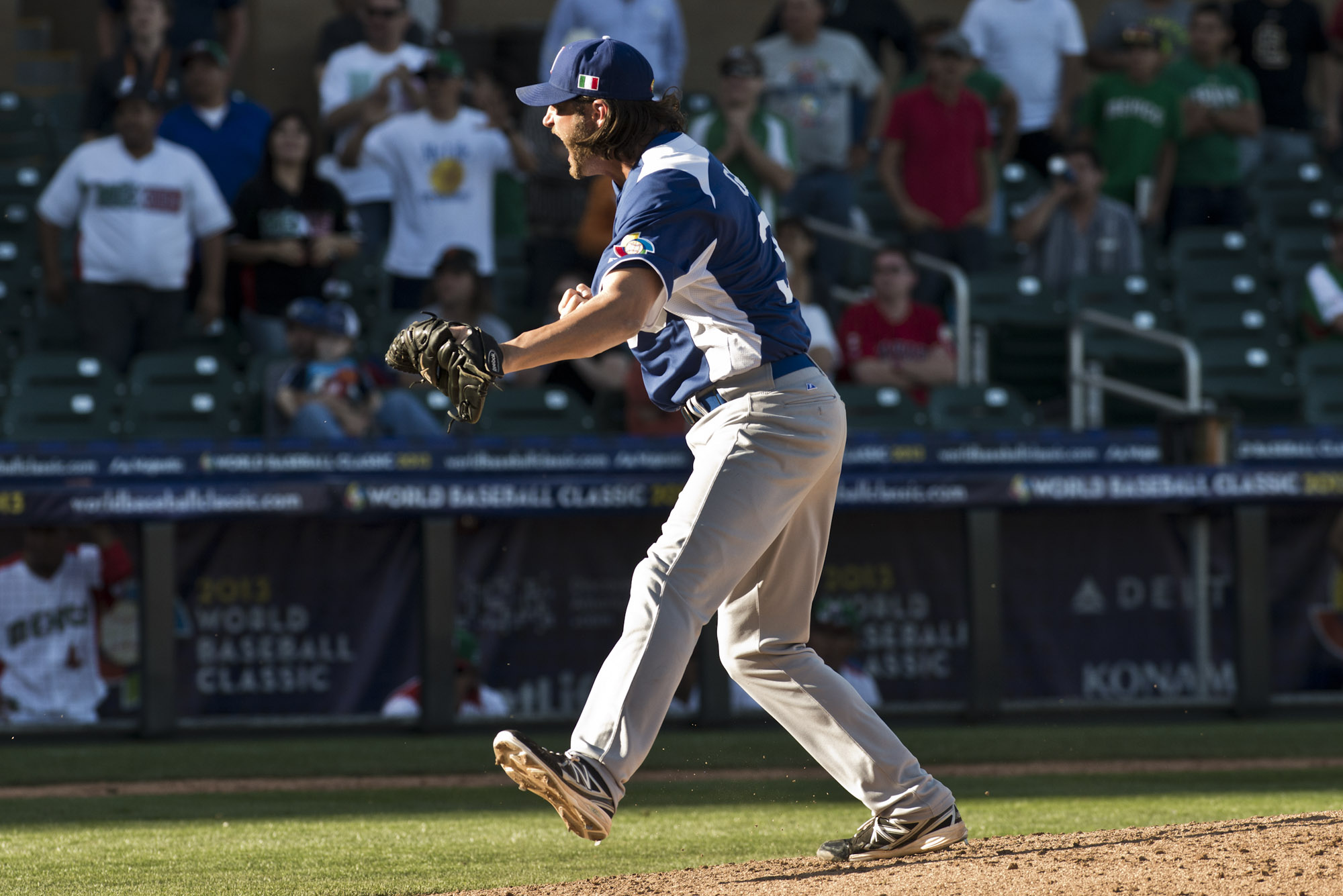
Team Italia’s Alex Liddi will have no trouble wearing Dodger Blue in Los Angeles (Photo by Nicolo Balzani).Alex Liddi, Major League Baseball’s first Italian-born-and-developed player, has arrived at LA Dodgers’ Triple-A affiliate in Albuquerque with hopes of joining fellow Team Italia teammate Drew Butera when MLB rosters expand in September. Liddi will be in good company in New Mexico, where the close-knit Italian-American community in Albuquerque will welcome him. Italians flocked to Albuquerque when the transcontinental railroad arrived.Having a strong presence in Albuquerque since the transcontinental railroad first arrived in the city in 1880, the Italian Americans will now have the opportunity to relish over Italy’s pride and joy and San Remo’s hometown hero as the latest addition to the Isotopes roster this summer. Similar to that of early Italian immigrants’ journey, struggle, and perseverance after leaving their motherland in Italy for better lives in America, Liddi has also endured his own personal and treacherous MLB roller coaster ride up-and-down the ranks in the Seattle Mariners, Baltimore Orioles and Chicago White Sox organizations prior to signing a minor league contract with the LA Dodgers. With most of his Big League experience defensively at first and third, Liddi is a versatile player who can play shortstop and the outfield. Having played in 61 regular season games since making his MLB debut in 2011, the 25-year-old slugger is anxious to prove himself worthy of a trip out west to LA.Alex Liddi’s father, Augustine Liddi, graduated from Beverly Hills High School in 1970.LA’s Italian Hall was built between 1907 and 1908. Alex Liddi has a strong connection to Los Angeles since his father, Agostino (Augustine), graduated from Beverly Hills High School in 1970. Agostino’s parents left Italy shortly after World War II to work as tailors in America. While attending Beverly Hills High School, Agostino Liddi played baseball before repatriating to Italy after graduation. It was there that he met his future wife, Flavia, who played softball competitively in Italy. Alex was literally weaned on baseball by his father and mother. You could say that Alex was a truly a baseball baby because it was reported that Flavia played first base for the first three months of her pregnancy carrying Alex. When Alex was old enough to play baseball, his mother coached his teams. As a teenager, his father drove him long distances to compete in games throughout Italy. With sons, Thomas and Alex, the couple shared their love of the game to transform the Liddi’s into Italy’s premier baseball family.Alex Liddi’s mother, Flavia, traveled all the way from San Remo to support her son playing for the Italian national team during the 2013 World Baseball Classic in Phoenix and Miami.
Alex Liddi wants to play in LA.What made Team Italia so heavenly to watch in the WBC was due in part to manager and Dodgers’ European Scout Marco Mazzieri’s faith in Alex Liddi. Mike Scioscia’s Los Angeles Angels became believers in a WBC warm up exhibition game in Tempe prior to the start of the 2013 international competition. Liddi went 2-for-3 with a double, a two-run home run and 3 RBI against the Halos. The Italian cleanup hitter continued his hot-hitting ways and played stellar defense at third base during the first two WBC games against Mexico and Canada. He literally wrecked havoc on opposing pitchers by going 4-for-7 with two walks, three runs and three RBI. The two wins ensured Team Italia’s advancement to the next round of action with USA against WBC Champion Dominican Republic and runner up Puerto Rico. If Liddi can rediscover his offensive prowess while in Albuquerque, then the face of European baseball will be a big name in Little Italy and Chavez Ravine.
Jason Grilli shuts the door and gets the save for Team Italia against Mexico in the 2013 WBC.Jason Grilli’s Just My Game, co-written by Todd Civin, is mandatory reading for baseball lovers worldwide.Not only do both former MLB All-Stars share a common first name, but coincidentally they have published two new must-read books at the same time. 2013 National League All-Star / Pittsburgh Pirates’ closer Jason Grilli and seasoned veteran catcher Jason Kendall are best-known for their delivery on the mound and calling the game behind home plate. However, let the world know that they also possess a knack for writing good stories. Initially, Grilli was reluctant to share with fans his personal journal which eventually turned into a book.Pittsburgh Pirates manager Clint Hurdle wrote the foreword for Jason Grilli’s new autobiography.Grilli said, “I kind of was keeping it for them when I thought my career was over in 2010 when I ruptured my quad tendon and thought I would never play baseball again. So I just started writing. It was therapeutic, and I didn’t want to forget things—the good things, the bad things. My career had flashed before my eyes so I just started writing. Here we are three years later writing a book… I didn’t finish college, and I promised my mom that I would. At least I wrote a book so she will be happy.” Asked what readers can expect to get out of his book, Grilli responded: “I think overall there are a lot of flashbacks: the good, the bad and the indifferent. If there is anything to take from it, it’s a feel good
story. It’s more about, if you quit then you lose.” Without a doubt, this 215-page book is quite an accomplishment. Grilli discounted the praise and said: “They are short pages, double-spaced. You know all the tricks to make your 10-page paper longer. Maybe that is what it is…a lot of insert pictures in the middle. If you don’t want to read the book, at least look at the pictures.” Just My Game chronicles Grilli’s love of the game of baseball and highlights his incredible and trusting relationship with his best friend and father, former MLB pitcher, Steve Grilli. Just My Gametakes readers through the highs and lows of the Team Italia pitcher’s career including his 18 strikeout performance as a junior at Seton Hall, his selection as the #4 first-round pick in the 1997 draft, life in the minor leagues, and his recovery from several near career-ending injuries leading up to the Pittsburgh Pirates’ remarkable Jason Grilli and secret admirer Mike Tyson2013 playoff run. Jason Grilli will be making several book signing appearances in the coming months in support of the launch of his long-awaited autobiography. Be the first to purchase Just My Game before it goes on sale to the public by visiting Jason Grilli’s Facebook. Readers will be pleasantly surprised to find the eloquent foreword to Grilli’s book written by 2013 National League Manager of the Year and Pirates’ skipper Clint Hurdle. Known to be a proponent of the power of positive thinking, Hurdle is the perfect setup man for Grilli’s autobiography.
Hurdle has been busy of late reading Jason Kendall’s Throwback, which was co-written by sportswriter Lee Judge.
Jason Kendall was the Pirates’ #1 draft pick in 1992.When asked if fans should buy Jason Kendall and Lee Judge’s Throwback, Hurdle responded: “Give this book a read. I’ve known Lee Judge for over 20 years. He has an unquenchable thirst for ‘Why’ questions and a passion for the game. He doesn’t just want the answers. He wants understanding. I’ve spent time with him in Minor League and Major League cities and clubhouses, and we are still friends! There is a sincere effort and old school way this book has been put together, and it is deserving of your time. You will laugh. You will learn. You will leave with a greater understanding and appreciation for the game we love.” Prince Fielder holds back an emotional Jason Kendall.America’s favorite pastime has always left fans and amateur players alike yearning for the answers to questions about how pros play the game. Have you ever wondered about pre-game rituals, what is being said at home plate, the signs a catcher uses to communicate with the pitcher, how a team silently communicates and the right way to hit a batter or what goes on behind closed clubhouse doors? All-Star catcher Jason Kendall is more than qualified to shed some light on the subject using his 15-years playing behind home plate with the Pittsburgh Pirates, Oakland Athletics, Chicago Cubs, Milwaukee Brewers, and Kansas City Royals as a true testament. Toronto Blue Jays manager John Gibbons summed it up nicely when he characterized Kendall and his new book as winners. Vladimir Guerrero collides with Jason Kendall.Gibby said, “Jason Kendall is the ultimate competitor, a modern-day gladiator. If you had nine Jason Kendalls, you could never lose.” Undoubtedly, Throwback provides readers an opportunity to gain an insider’s view of the game from a true-grit player’s perspective. Coupled with Jason Grilli’s new offering of Just My Game, baseball fanatics now have a winning combination of required reading guaranteed to bring hours of enjoyment and a fonder appreciation of what makes these players truly inspirational.
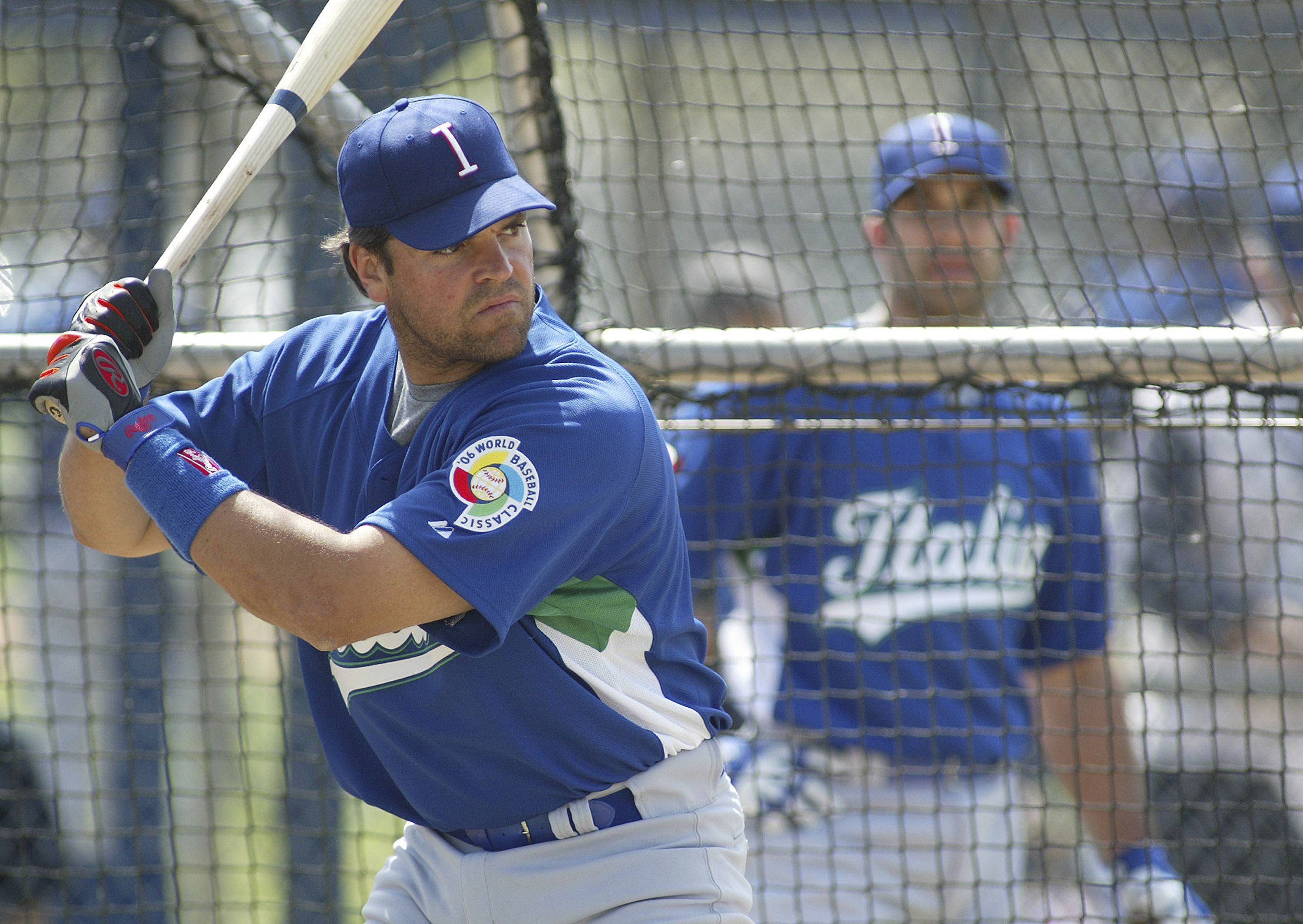
After playing for Team Italia in the 2006 WBC, Mike Piazza became the country’s hitting coach. Future Hall of Famer Mike Piazza has been fueling the fire of the Italian baseball revolution for nearly a decade. Since joining Team Italia in the 2006 World Baseball Classic, the proud Italian American has had a profound effect on the growth and development of baseball in Italy. Working in tandem with Italian MLB Academy Director and Team Italia pitching coach Bill Holmberg, Piazza has helped Italy become the superpower of European baseball in light of the recent KC Royals signing of five-tool Italian-born prospect Marten Gasparini for $1.3 million. Kansas City Royals prospect Marten Gasparini signs his $1.3 professional baseball contract
while Italian MLB Academy Director and Team Italia coach Bill Holmberg (far right) looks on.Mike Piazza was inducted into the Mets’ Hall of Fame on September 29, 2013. One statistic often overlooked in validating Mike Piazza’s rightful place in the Baseball Hall of Fame is Career Runs Created by a catcher. Based on the 1,378 Runs Created by Piazza–which ties Hall of Famer Carlton Fisk–Team Italia’s hitting coach was the BEST hitting catcher of all-time (Mike Piazza 1,378; Carlton Fisk 1,378; Ted Simmons 1,283; Yogi Berra 1,265; Joe Torre 1,259; Johnny Bench 1,239; Gary Carter 1,184; Bill Dickey 1,164; Gabby Hartnett 1,161 and Jason Kendall 1,112). Defensively Piazza was the BEST catcher of his time in handling his pitchers. In his career behind the plate, pitchers had a 3.80 ERA when he was catching. Checking the stats for all the other catchers who caught the same pitchers in the same year that Piazza did, they allowed a 4.34 ERA. With 12-time MLB All-Star Mike Piazza coaching Italian ballplayers, the BEST has yet to come for Team Italia.
Mike Piazza is a baseball immortal regardless of what a pack of bitter, jealous sports writers think. Everyone knows he was The Man.
19-year-old catching prospect Alberto Mineo, who signed for $500,000 with the Chicago Cubs, was under the guidance and direction of mentor Mike Piazza during Team Italia’s 2014 Spring Training Exhibition Series at Dodgertown in Vero Beach, Florida. (Photo by Claudio Vecchi)
Just spent amazing week at Dodgertown with @FIBSpress Italian National team preparing to defend European title. Thank you @Mets for tix 2day
Team Italia hitting coach Mike Piazza and legend Tommy Lasorda (Photo by Jon SooHoo/LA Dodgers)“We just want to continue to draw attention to the fact that we believe baseball is marketable in Italy. We think it’s viable. We think there’s a lot of upward growth. We can produce players over there. I’m convinced of it,” said Piazza. 17-year-old switch-hitting shortstop Marten Gasparini–compared to a young Derek Jeter–and 19-year-old lefthanded-hitting catcher Alberto Mineo lead the charge of the Italian baseball revolution spurred by Dodgers scout/Team Italia manager Marco Mazzieri and coaches Holmberg and Piazza.
Grazie di nuovo @FIBSpress! Had an amazing time in Veneto. Great coaches convention. Forza Italia!
Italian Americans Sal Varriale and Mike Piazza at the 29th Annual Italian Coaches ConventionMike Piazza’s “Science of Hitting” was a highlight at
the 29th Annual Coaches Convention in Veneto, Italy.International baseball ambassador Mike Piazza traveled to Veneto, Italy recently to speak to an enthusiastic audience at the 29th Annual Coaches Convention. Piazza said, “We all overteach and overanalyze hitting. Everyone has their own opinion, but in actuality–just as Ted Williams explained in his book The Science of Hitting--the number one rule is to get a good ball to hit. Gaining an understanding of the strike zone and what you can and can’t hit is the key. Simply spoken, you can’t hit what you can’t see.” Twelve years ago in 2002 Piazza met FIBS President Riccardo Fraccari while visiting Italy on a MLB International mission to help the game develop in Europe. Fraccari asked Piazza if he would be interested in representing Italy in international competition, and the proud Italian American responded that it would be privilege to play for the Italian national team in honor of his Sicilian ancestry. During a 2006 World Baseball Classic press conference, Piazza addressed reporters who questioned why he chose to join Team Italia and said, “You may not understand it, but for Italian Americans getting a chance to finally play for Italy is like a duck chick getting close to the water for the first time.”After reaching Double-A ball in the Chicago Cubs organization, Team Italia pitcher Alessandro Maestri ventured abroad and had great success in Australia and Japan.Alex Liddi has carried the Italian flag from the minute he signed with the Mariners in 2005 until now playing for the White Sox. The Italians have since fared well in the World Baseball Classic, nearly upsetting 2013 WBC Champion Dominican Republic and runner-up Puerto Rico. Piazza’s influence swayed Cubs’ slugger Anthony Rizzo to play for Team Italia alongside other MLB Italian Americans including Padres’ Chris Denorfia, A’s Nick Punto, Twins’ Chris Colabello and Pirates’ Jason Grilli. Piazza’s power of persuasion even impacted the Team Italia coaching staff as former MLB journeyman Frank Catalanotto joined the Italian baseball revolution. Team Italia’s homegrown talent held its own and contributed to the overall chemistry of the squad. Alessandro Maestri–the first Italian-born-and-developed pitcher signed by MLB in 2006 and infielder Alex Liddi–the first Italian-born-and-developed player to make his MLB debut in 2011 have benefitted greatly from Piazza’s guidance and mentorship. Former Team Italia catcher Francisco Cervelli visits with manager Marco Mazzieri at Dodgertown during 2014 Spring Training (Photo by Claudio Vechi)
Maestri said, “It’s great to have him around in the dugout. He’s like doing this for fun. He enjoys working with us… That’s why we appreciate it so much. I think he is positively influencing the program that we have. The fact that the team is winning and improving proves it. So that’s why he keeps coming back.” Liddi echoed the sentiment and said, “When you have coaches like Mike Piazza and Frank Catalanotto—guys who have been in the big leagues for a long time—it makes it fun just to be around them. You’re able to ask them questions and learn from them.”Team Italia coaches Bill Holmberg, Mike Piazza, Frank Catalanotto with closer Jason Grilli
Piazza has been a proponent of uplifting and preserving his Italian cultural heritage by supporting the efforts of the National Italian American Foundation (NIAF), George Randazzo–founder of the National Italian American Sports Hall of Fame and Roberto Angotti–curator of the Artists’ Tribute to Italian Americans in Baseball Exhibition. Piazza befriended Angotti during the two weeks Team Italia spent in Phoenix preparing for the 2013 World Baseball Classic. When Hall of Famer Tommy Lasorda dropped in on Team Italia’s practice at Dodgers’ Spring Training Camp in Glendale to address the team, Roberto knew he was on the frontline of the Italian baseball revolution. Lasorda’s emotionally-driven speech coupled with Piazza’s serious commitment inspired Angotti to share the experience with others through a traveling exhibit paying tribute to Italian American baseball.
Piazza said,”This commitment I have with the Italian Federation is something I really care about. I feel a strong tie to Italy, since my heritage is there. My grandfather Rosario came from Sciacca, Sicily, to the United States and my father grew me up following the Italian tradition pretty much. I think it’s in our DNA to strive to work hard and persevere. Most our ancestors came over to the United States with just the clothes on their back. I think that was the case with my grandfather, who had nothing in his pocket to start a life here in the U.S. When we have the strength and pride of the Italian family with the support we can give one another, it builds character and allows us to achieve our true potential. I don’t think there are a lot of Italian American families that don’t have strong support behind them. I do not pretend to say what is not true, I grew up as an American boy. Now, getting older, I understand the value of my heritage and I want to give something back to Italy.”
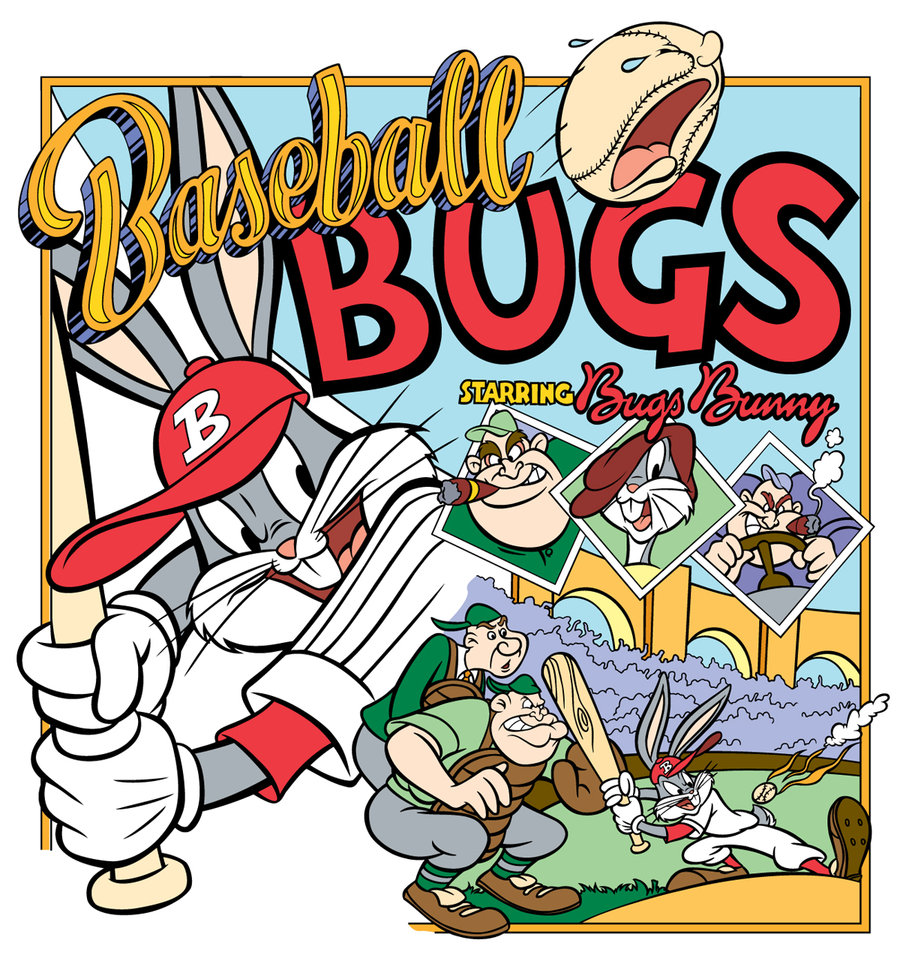
Bugs Bunny is considered by many insiders including Nomar Garciaparra as baseball’s best all-time player.(Photo courtesy of Warner Bros./MLB Productions) There is absolutely nothing looney about recently selected Boston Red Sox Hall of Fame inductee Nomar Garciaparra being Bugs Bunny’s biggest fan. As one of the best shortstops in the game in 1997, Garciaparra won AL Rookie of the Year honors with a 30-homer, 98-RBI season. Nomar was an All-Star in five of his nine seasons in Boston (1996-2004) and was a runner-up for AL MVP in 1998 after hitting .323 with 35 homers and 122 RBI. The Whittier, California native and St. John Bosco High School All-Star standout knew early on that he wanted to be like the talented and versatile rabbit: Bugs Bunny is the star in “Baseball Bugs” (1946).(Baseball Bugs appears courtesy of Warner Bros.)“Back then, my idol was Bugs Bunny, because I saw a cartoon of him playing ball – you know, the one where he plays every position himself with nobody else on the field but him? Now that I think of it, Bugs is still my idol. You have to love a ballplayer like that…” Nomar is not alone in the Wascally Wabbit Fan Club. Proud Italian American Tommy Lasorda marched with Bugs Bunny and Daffy Duck in a 2008 LA holiday parade and said, “Bugs would be an excellent baseball player. He’s more than just an ordinary steak sauce, a heckuva lot more!”Warner Bros. Senior Production Artist Kim Reynolds produced this Baseball Bugs poster.In the 1946 “Baseball Bugs” cartoon, Bugs Bunnys says: “Watch me paste this pathetic palooka with a powerful paralyzing perfect pachhydermas percussion pitch!” Otherwise known as “the Bugs Bunny Changeup”, many MLB pitchers today including Justin Verlander and Johan Santana rely on this pitch to make hitters look silly while helplessly striking out. (Created by Friz Freleng/Courtesy of Warner Bros.)Trevor Hoffman was a promising college shortstop who had trouble hitting in Minor League Baseball. Converting to a pitcher, Hoffman was never the same in MLB after shoulder surgery eliminated his 95 mph fastball in 1994 and 1995. He learned the changeup, which was so good it earned the nickname of “Bugs Bunny” because of the cartoonish swings it would induce from hitters. Giants manager Bruce Bochy said, “When I think of Trevor Hoffman, I think of his virtually unhittable changeup. They called it the Bugs Bunny changeup. Basically, it stopped at home plate. Guys hadn’t seen a pitch like that, and they couldn’t adjust to it. He pitched so well off his fastball they couldn’t just sit on it every pitch. But even if they did, they hadn’t seen a pitch like that so they didn’t know how to hit it.”Artist Kim Reynolds of Warner Bros. has contributed his Lasorda illustration to the Tribute to Italian American Baseball Exhibit. Despite Detroit pitcher Justin Verlander being compared to Bugs Bunny by MLB Network analyst Dan Plesac, it’s Tiger teammate Austin Jackson who aspires to have the superpower of the Looney Tunes character. The speedy outfielder said, “If I was a cartoon character, I think I’d be Bugs Bunny. I’d be the baseball Bugs Bunny, because I’m kind of sneaky a little bit.” Warner Bros. Management came up with a pretty sneaky idea for a retirement present to Dodger manager Tommy Lasorda in 1996 by giving a little bit of Looney Tunes love from Bugs Bunny and Daffy Duck kissing Lasorda in a customized one-of-a-kind illustration. Warner Bros. Senior Production Artist Kim Reynolds said, “Bugs has always been tied into baseball with ‘Baseball Bugs’ released in 1946 so it was only fitting. It has always been a fan favorite. Daffy was added just to finish it. We decided on a newer uniform to give the piece a updated look.” Kim Reynolds’ Daffy Duck, Tommy Lasorda and Bugs Bunny illustration is on display at the Artists’ Tribute to Italian Americans in Baseball Exhibition through the end of March at Convivio Center, 2157 India Street in San Diego’s Little Italy (photo courtesy of Warner Bros.).Legendary Baseball Hall of Famer Tommy Lasorda in San Diego celebrating his 86th birthday and the Grand Opening of the Artists’ Tribute to Italian Americans in Baseball Exhibit with curator Roberto Angotti on September 21, 2013. (Photo by Donato Resta) The multi-talented artist Reynolds spoke enthusiastically about Lasorda’s reaction to receiving the retirement gift from Warner Bros. “As far as I know, Lasorda loved it! It’s always fun doing dedication projects, but it was especially fun doing this for Lasorda. I’ve always been a Dodger fan and it was a real pleasure creating this art for him.” Fans can see the piece in the Artists’ Tribute to Italian Americans in Baseball Exhibit at the Convivio Center in San Diego through March 30. The traveling exhibition will soon pass through Orange County and Los Angeles to coincide with the beginning of the 2014 MLB Season. More cities will be announced in the near future. Due to popular demand, the Artists’ Tribute to Italian Americans in Baseball Exhibit has been extended through March 30 in San Diego. Visit http://www.ConvivioSociety.org for more details.
Although Orange County’s Jessie Rees Foundation and Cincinnati’s Reid Rizzo Foundation run their organizations some 2200 miles apart, these nonprofits have one common goal of helping pediatric patients and their families when they need it most. Created in loving memory of Jessie Rees–who at 12 encouraged patients to Never Ever Give Up on beating cancer–and Reid Rizzo–who at 20 played baseball Without Fear after being diagnosed with cardiomyopathy as an infant and told by doctors that he would never be able to participate in sports, family and friends of Jessie and Reid decided to start their respective groups after their loved ones were granted wings to heaven in 2012. Reid Rizzo in 2010 Recently Cincinnati Reds’ Skip Schumaker, Oakland Athletics’ Nick Punto and Colorado Rockies’ Nolan Arenado held a three-day winter baseball camp benefitting the Jesse Rees Foundation at Saddleback College in Mission Viejo. Overseen by Gauchos’ head coach Sommer McCartney and Olympic Gold Medalist swimmer Kaitlin Sandeno–who serves as the National Spokesperson for the Jessie Rees Foundation, area youth had the opportunity to learn the basic fundamentals of playing the game from some of MLB’s best while supporting one of California’s favorite children charities. In addition, two lucky families won the auction for four packs of on-field meet-and-greet VIP ticket packages for upcoming Reds and A’s games graciously donated by Schumaker and Punto.
Closing in on 300,000 ‘likes’ on facebook, the Jesse Rees Foundation is asking everyone to give a holiday gift to Jesse with a ‘like’ and ‘share’ while visiting https://www.facebook.com/JessieReesFoundation. The mission of the Jessie Rees Foundation is to ensure every child fighting cancer has the resources and support to Never Ever Give Up! Tweet them HERE.
More likes = more awareness = more JOY for kids fighting cancer!! http://t.co/ud5kzDnlTc
The Reid Rizzo Foundation mission is to raise awareness of pediatric heart disease and support young patients and their families in dealing with the financial hardship of costly medical care. The Reid Rizzo Foundation’s goal is to help children live long and healthy lives while reaching their full potential Without Fear. Reid defied the odds of his prognosis and led a very normal childhood playing sports like baseball, football, basketball and ice hockey.“Reid Rizzo: Without Fear” portrait by Cincinnati sports artist/coach Chris Felix Nobody outside of Reid’s immediate family knew that he was living with cardiomyopathy. It wasn’t until after his passing that his condition was made public knowledge. Theologian Harold Kushner believes that although death may take a person physically from us, it cannot remove him from our souls and his presence will continue to educate and serve as a model to follow. Reid was an organ donor and his heart was donated to Cincinnati Children’s Hospital Heart Institute to be utilized for medical research. Former coach Steve Fowler said, “Reid was fine young man who fought a handicap– for a guy who had heart problems since he was born. He cheated the odds for 20 years and had a huge heart for the game, loved playing. He refused to let it be a handicap to him. It has really inspired us to play with a lot of heart and dedication.”
Setting records at La Salle High School in Cincinnati, shortstop Reid Rizzo received a scholarship
to play at Lake Erie College in Ohio. Coach Fowler revealed what Rizzo’s college coach had told him about the 5’9″ ballplayer before Reid showed up to play summer league in 2012. “He told me: Reid loves the game and you are going to love him. He was a dirt hog who was always laying out for balls.” Often compared to Dodgers’ 2013 Heart and Hustle Award winner Nick Punto for his physical physique and hard play, Reid’s parents at first cautiously tried to steer their son away from the game, but Reid would have none of it. From the time he was four years old when he was hanging out in the dugout with baseball all-star father Tim, it was too late as Reid had baseball in his blood and was determined to pursue his dream of playing MLB. Embracing Jessie Rees’ “Never Ever Give Up” attitude, Reid was a fighter from day one. The Reid Rizzo Foundation lives on with the same approach. Visit https://www.facebook.com/ReidRizzoClassic to learn how you can do your part in helping pediatric heart patients and further cardiomyopathy studies. Please join the Reid Rizzo Foundation on Saturday, January 4th at Convivio, 2157 India Street in San Diego. Visit http://www.ConvivioSociety.org or call 619-573-4140 for more details on this special night.
San Diegans were given a Christmas present with artists Vincent Scilla and Christopher Paluso in town. The holidays may be over but San Diego is still celebrating since two of the most influential artists behind the Artists’ Tribute to Italian Americans in Baseball Exhibition are speaking this weekend in America’s finest city. Traveling all the way from New York’s Greenwich Village is internationally-renowned sports artist Vincent Scilla. San Diego Hall of Champions resident artist and local favorite educator Christopher Paluso will host the visiting East Coast cultural icon on Sunday, January 12th at the Convivio Center in Little Italy.Vincent Scilla’s critically-acclaimed book “BASEBALL” was published by London’s MQ Publications.Artist Vincent Scilla speaks on the Italian American Experience on Sunday, January 12, 2014 at Convivio, 2157 India Street in San Diego’s charming Little Italy. He will be joined by San Diego Hall of Champions resident artist Christopher Paluso. Admission is free. As a multi-talented painter, filmmaker, and photographer, Vincent Scilla has come a long way since graduating from college at the University of Michigan. During his illustrious four decade career, he has garnered countless accolades, grants, and honors for his fine craft. Beginning as a photographer, Scilla’s works were first showcased at the Detroit Institute of Art in 1969 as part of the prestigious Michigan Artists show. His images have graced the pages of the New York Times and the Village Voice. The experimental filmmaker and director of “Thunder in the Afternoon” and “Flyin’ No-Low Altitude” received numerous awards and noteworthy praise at popular film venues including the Collective Living for Cinema and the Ann Arbor Film Festival.Vincent Scilla’s “Pizza Lombardi” pays tribute to Baseball Hall of Famer Ernie Lombardi and America’s first full-fledged pizzeria–Lombardi’s–which was established in New York in 1905.Vincent Scilla’s “Pope Sun-Ripened Tomatoes” was painted in 1990. Industrial and agrarian meet as the country boy leaves the farm and comes to town.Despite being a prolific artist in multimedia formats, Scilla’s artwork–particularly his baseball paintings–has received the most amount of notoriety. Measuring at 8.4″ x 10″ and printed using archival inkjet print on somerset velvet paper, Vincent’s baseball paintings highlight his subjects by utilizing popular advertisements to serve as the backdrop with a true vintage feeling. Ads from popular brands such as Krispy Kreme, Mercury Paint, Cracker Jack, Mobil Oil, White’s Dairy Bar and Ragu are included and used for various backdrops in some of the most unique baseball art anywhere.Vincent Scilla’s “Rocco Loved Ragu” was painted in 1989. All eyes are on the player in this Italian opera as the catcher circles under a pop-fly at center stage. Although Vincent Scilla often fuses commercial advertising and baseball in his artwork, he has some strong feelings on the branding of our national pastime. In his personal blog, Scilla wrote: “Contrary to what MLB thinks, baseball does not belong to them. It’s not their property. It is the property of generations of Americans dating back nearly 200 years. It’s our mythology and legends. I don’t need Mastercard telling me that.” Having his work displayed in the pages of various books– including “Diamonds Are Forever”, “Treasury of Baseball”, “Baseball Postcard Box”, and “Top of the Ninth”–as well as at some of the best galleries and ballparks in America, the great Italian American artist Vincent Scilla is undoubtedly in a league of his own. See for yourself at Convivio.Christopher Paluso designed the Artists’ Tribute to Italian Americans in Baseball banner.Christopher Paluso is a proud Italian American.Christopher Paluso is a native San Diegan, an internationally recognized sports artist, illustrator and educator. Entrusted to create the images of their honored members, he is the Official Artist of the San Diego Hall of Champions’ Brietbard Hall of Fame, the San Diego Holiday Bowl Hall of Fame, the Hawthorne Race Course Jockey Hall of Fame, the Missouri Valley Conference Hall of Fame, and the National Italian American Sports Hall of Fame. Known for his ability to capture a strong real life likeness of his prized subjects, he has gained a massive amount of respect within the world of sports as well as kudos from insiders within the aerospace and entertainment industries.Legends Magazine cover featuring Joe DiMaggio and Don Mattingingly by Christopher Paluso Paluso’s artworks of Muhammed Ali, Mickey Mantle, Joe DiMaggio, Wayne Gretzky, and Michael Jordan are among his most sought-after pieces. His art has been seen on everything from magazine covers to limited edition collector plates and lithographs. In addition to being one of top Italian American artists of our time, Paluso shares his craft with San Diego youth and adults working as an instructor teaching art at area public schools and the Convivio Center. Paluso’s love for his Italian heritage is apparent in his illustrations in the Artists’ Tribute to Italian Americans in Baseball exhibition.Christopher Paluso poses with CBS News Anchor Carlo Cecchetto at the Grand Opening of the Artists’ Tribute to Italian Americans in Baseball at the Convivio Center on September 25, 2013. Perhaps one of Christopher Paluso’s most memorable moments took place when he was privately commissioned to create a painting of Joe DiMaggio for a lithograph project in 1992. Paluso consulted with DiMaggio to get his vision depicting him as the complete ballplayer that he had been known and loved for. Just before the great Joe D passed away, he saw the image on the cover of the National Italian American Sports Hall of Fame magazine “Red, White & Green”. According to those close to DiMaggio, it was reported that he was very pleased with the design.Christopher Paluso designed this cover for the National Italian American Sports Hall of Fame.The Convivio Center serves as the home for lovers of all things Italian in San Diego. Paluso is offering an eight-week “Drawing Italian Style” class at the Convivio Center beginning Monday, January 6th at 7 pm. Borrowing from Italian Renaissance masters da Vinci, Michelangelo, and Raphael, students will learn about art history while discovering their individual creativity and unleashing the Italian in all of us. In addition to drawing shapes, using the value scale, proportions, and experimenting with one- and two-point perspective drawing, the very popular artist and illustrator will provide step-by-step instruction in the foundations of drawing, elements and principles of design as well as in the creation of classic-style drawings. For more information on the drawing class and the Vincent Scilla/Christopher Paluso meet-and-greet on Sunday, January 12th at 6:30 pm, visit http://www.ConvivioSociety.org or phone 619-573-4140.
The late and great Italian American Reid Rizzo photographed shortly before his passing in 2012
while playing for the Madisonville Tradewater Pirates.The San Diego arts and Italian American communities are coming together by supporting the ongoing efforts of the Reid Rizzo Foundation in assisting pediatric heart patients and their families while meeting one of the creative forces behind the Artists’ Tribute to Italian Americans in Baseball Exhibit at the Convivio Center in Little Italy. The annual fundraiser will take place on Saturday, January 4th when San Diego Italian American heart surgeon Dr. John Lamberti is honored for his miraculous work in saving lives and Cincinnati-based artist Chris Felix is recognized for his remarkable talent and valuable contribution to the very popular exhibition at the Convivio Center.Meet artist Chris Felix at Conivivio on January 4th.
In addition to commenting on his illustrations of Phil Rizzuto, Joey Votto and Reid Rizzo, internationally renowned sports artist Chris Felix will deliver a fascinating multimedia presentation on Italian American baseball prospect Reid Rizzo–whose life and promising MLB career were cut short by a heart condition known as cardiomyopathy. As the former basketball and baseball coach for Rizzo, Chris has incredible insight into Reid’s inner strength and determination to live life without fear while defying the odds of competing against his peers.Chris Felix’s depiction of Reds’ Joey Votto (2012)
Having curated “Rooted Deep In the Soil of Cincinnati…A Passion for Baseball, Art and Inspiration” at Cincinnati’s Art on the Levee Gallery, Ohio native Chris Felix is no stranger to traveling exhibitions. His artwork has been featured at the Annual Art of Baseball Exhibition at the George Krevsky Gallery in San Francisco and has graced the walls of the James Fiorentino and Friends Exhibition at the National Art Museum of Sport in Indianapolis among other places. He has been
a freelance fine artist since 1997.
New painting just finished for upcoming book titled CINCINNATI REDS LEGENDS. Scheduled release 2015 pic.twitter.com/3NWSRCs9T1
Chris Felix captures Cincinnati’s Joey Votto (2007).
Well-known for his acrylic sports paintings, the graduate of the College of Art Advertising in Cincinnati first received recognition for his craft as a sixth grader at
St. William School when his pencil sketch of Johnny Bench won him
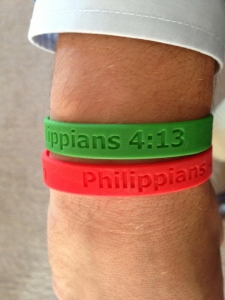
a Cincinnati Reds autographed baseball in a department store’s “Draw Your Favorite Reds Player” contest. Felix’s illustrious art career has included being a graphic designer, a scenery painter for major amusement parks, and a commissioned artist for Hasbro, Warner Brothers, the Topps Card Company and the Cincinnati Reds.Artist Chris Felix at work Featured in sportswriter Mike Shannon’s books–“Willie Mays: Art in the Outfield” and “Coming Back to Baseball: Cincinnati Astros and the Joys of Over 30 Play”–Felix’s artwork will be included in the upcoming “Cincinnati Reds Legends” book set for release in 2015. San Diegians will have a rare appearance to meet the gifted artist at the Convivio Center (2157 N. India Street) on Saturday night, January 4th at the Reid Rizzo Foundation’s Project 144 Fundraiser. Admission is free to the public for this special event featuring Chris Felix and Dr. John Lamberti. For more information, please visit http://www.ConvivioSociety.orgVisit Convivio during the holidays and help heart patients and their families with your donation.Reid Rizzo had Philippians 4:13 tattooed on his bicep, which his family did not realize until after his passing. His father Tim found great comfort in the passage.Those who cannot attend the event are encouraged to visit Convivio anytime during normal operating hours to participate in the Project 144 Fundraiser. In the spirit of giving during the holiday season, guests are encouraged to select an envelope numbered 1-144 and donate the corresponding dollar amount for a most worthy cause. Those living outside Southern California can also give to the Reid Rizzo Foundation by clicking HERE.
If you wish to mail a tax-deductible donation, make your check payable to: Reid Rizzo Foundation, P.O. Box 737, Harrison, Ohio 45030-0737.
Italian American Dr. John Lamberti joins the Reid Rizzo Foundation for
a celebration of life at San Diego’s Convivio Center on January 4, 2014. Reid Rizzo was a baseball player at La Salle High School in Cincinnati, Ohio. He was born with a heart condition known as cardiomyopathy. His father Tim Rizzo said, “He really lived life and played sports without fear. He dealt with this heart condition in life and it never slowed him down. He never made excuses. He just went after his goals and lived his life to the fullest.” Two years ago after Reid reported to his collegiate baseball summer league team in Western Kentucky, he passed away in his sleep at the age of 21. His parents agreed to allow former La Salle baseball coach Chris Booth establish the Reid Rizzo Foundation to teach kids the game that their son loved most. Booth said, “He wasn’t the tallest and he wasn’t the biggest guy but I tell you what, people say he had the biggest heart. He played the game the right way.” In addition to helping families in need, the Reid Rizzo Foundation raises money for student scholarships at La Salle and cardiomyopathy research at Cincinnati Children’s Hospital.On display at Convivio Center’s Artists’ Tribute to Italian Americans in Baseball Exhibition,
“Reid Rizzo: Without Fear” is truly a masterpiece by renowned Cincinnati sports artist Chris Felix.Defying the odds, former LPGA player Mac Kline pursued her dreams because of savior Dr. Lamberti.Over 2200 miles west of Cincinnati, another believer of Philippians 4:13 (“I can do all things through Christ who strengthens me”) by the name of MacKenzie Kline inspired young women athletes around the world with her miraculous story courtesy of Dr. Lamberti. “She was born with a heart defect that 30 years ago, we didn’t have good treatment for,” said Dr. Lamberti, surgeon at Rady Children’s Hospital in San Diego. Born with heterotaxy syndrome–meaning MacKenzie’s heart has one ventricle instead of two, without a spleen, and a transverse liver, Dr. Lamberti was her best chance of survival. He performed the first of three open heart surgeries on her when she was 11 weeks old with a follow-up at 23 months old and a third procedure as a teenager.
Bracelets from the Reid Rizzo Foundation It appears that the MacKenzie Kline story is just a tip of the iceberg for all of the families deeply indebted to Dr. Lamberti. On August 4, 2013, Luanna Kent McDowell wrote: “My daughter had an enlarged heart, and her aorta valve was barely working. She went into cardiac arrest and was rushed to San Diego Children’s Hospital on September 12, 1985. Four days later, Dr. Lamberti saved her life by doing a ‘NEW’ surgery called ‘the flap’ creating her a new aorta. He was a bit of a risk taker and saved her life. My daughter has not ever had another surgery because he used a new technique (28 years ago). She is now a teacher and has brought joy to all of the lives she has touched. No words can ever describe the gratitude I feel toward Dr. Lamberti. I thanked him then and thank him everyday as I pray for my daughter.”
Here is yet another true life testimonial on Dr. Lamberti. On May 23, 2013, Andrew Bayron wrote: “Dr. Lamberti saved my son’s life. Dr. Lamberti performed heart surgery that included addressing a hole in the heart and rebuilding it using cadaver donated heart tissue. My son was three months old and is presently running around my office at six years old. A modern miracle worker I can’t give better praise to such a man. Forever in his debt.” Dr. LambertiDr. Lamberti leads Rady Children’s Combined Pediatric Cardiac Surgery Program, serving as the Eugene and Joyce Klein Director of the Heart Institute, as well as the Director of the combined Division of Pediatric Cardiac Surgery for Rady Children’s Hospital San Diego, Children’s Specialists of San Diego, and the University of California, San Diego. With over four decades of experience, Dr. Lamberti has often been referred to as ‘A True Life Savior’ as he was on April 16, 2012, when a patient’s father wrote: “Fantastic doctor and a fantastic human being. He has always cared for my daughter over the past 11 years and she has done great ever since. He has performed open heart surgery on her twice, and she has always done fantastic.”
Perhaps the most moving story comes from a patient’s mother who acted on behalf of her husband’s wishes to honor the great Dr. John Lamberti. When Marcy Ohrnstein’s husband Matthew passed away at 57 on April 30, 2013, she wrote: “In lieu of flowers, we ask that you make a donation to Rady Children’s Hospital https://www.helpsdkids.org/sslpage.aspx?pid=208. In the designation section, please choose ‘Heart Institute’ and in
the comments section indicate ‘at the discretion of Dr. Lamberti.’ Steven OhrnsteinDr. Lamberti is the surgeon who conducted our son Steven’s five heart surgeries. The kids and I agreed this is what Matthew would have wanted.” Patient Steven Ohrnstein, a graduate of San Diego State University, graciously offered his personal experience with Dr. John Lamberti. “It is a honor to even be thought of out of the tens of thousands of lives Dr. Lamberti has impacted. For it not for him–operating on me five out of five surgeries ranging from one day old to 21 years old–I most assuredly would not be here today. I’m a big advocate of Dr. Lamberti, Rady Children’s Hospital and helping other families get through what seems to be impossible.”
Two cities–Cincinnati and San Diego–have come together to raise awareness of pediatric heart disease while raising funds for patients and their families to combat the financial hardship of medical care so that recipients can live long and healthy lives while reaching their full potential. The traveling Cincinnati contingency includes Reid Rizzo’s parents, members of the Reid Rizzo Foundation, Dr. Michael Leadbetter, sports artist Chris Felix, and social media pro Lisa Siegal. The San Diego Italian American and Medical Professional Communities will host and honor the contributions of Dr. John Lamberti on this evening of fact, faith and hope at Convivio (2157 N. India Street in Little Italy) with the extraordinary Artists’ Tribute to Italian Americans in Baseball Exhibit providing an inspirational backdrop on Saturday, January 4, 2014. Admission is free. For more information, visit http://www.ConvivioSociety.org.
After agreeing to take Manny Ramirez’s roster spot midseason on the EDA Rhinos, 2005 Arizona Diamondbacks #1 draft pick Matt Torra embarked on an overseas baseball journey he will never forget. After pitching for Team Italia in 2013 World Baseball Classic, it appeared the right-handed hurler’s curiosity and appetite for international competition and world-class cuisine had peaked. With wife Jessica and daughters Isabel and Mia in tow, the young Torra family flew from Boston to Tokyo before landing in Taiwan to begin their adventure in Kaohsiung City, where the EDA Rhinos played their home games. In his 12 starts in the Chinese Professional Baseball League, Torra was one of the league’s finest best control pitchers–allowing just five walks in 78 innings of work. In his final start for the EDA Rhinos in the 2013 Asia Series against the Canberra Cavalry, he once again demonstrated his control of the strike zone by issuing only one walk in 8.2 innings pitched. Canberra slugger Michael Wells spoke of Torra and said, “The guy throwing up there threw some very good pitches, it was tough at times.” Yet the toughest walk for Torra was the one back to the airport, where Torra and his family had time to organize their thoughts before heading back to America. Facing an uncertain future ahead with the season now over, Torra’s agent Jim Masteralexis still aspires to get his once highly-prized client to join the game’s elite and make it to MLB. With over 578 innings pitched in Triple-A ball under his wing while playing in the Diamondbacks, Rays and Nationals organizations, Torra has been on the cusp of the big leagues. With his recent success on the EDA Rhinos, this 29-year-old Italian American is poised to follow the footsteps of Team Italia teammate Chris Colabello in getting to the show. After speaking with current free agent Matt Torra, it is apparent that he is more than ready.Matt Torra and his family spent the last part of 2013 in Taiwan with the EDA Rhinos.Matt Torra was a 2005 first-round pick by the Arizona Diamondbacks.Roberto: You were a 2005 MLB first-round draft pick alongside Ryan Braun and Jacoby Ellsbury. You must have felt pretty good knowing you were the Diamondbacks #1 selection. Matt Torra: That day was a great experience. It was a day I will never forget. The only thing close to that was pitching for Team Italia in the 2013 World Baseball Classic. Roberto: You pitched at the University of Massachusetts at Amherst, where you led the Atlantic 10 Conference with 111 strikeouts and the entire country with the nation’s lowest 1.14 ERA in 2005. What was the transition like from college ball to professional baseball? Matt Torra: For me it was a big transition. I went from college ball, only got 10 innings of pro ball before I got hurt and had to have surgery on my shoulder. And then coming back not only was I trying to adjust from college ball to pro ball, but I also had to try to figure out and learn how to pitch again after surgery. For me it took me about half
of a season in 2007 to try to start getting a feel again
for the ball. Once I started to do that, I found success
again, and every year I have just continued to build
on it. Just take stuff that I have learned every year
and try to apply it into my pitching repertoire.
#Rays acquire RHP Matt Torra from Arizona for cash considerations, send him to Triple-A Durham
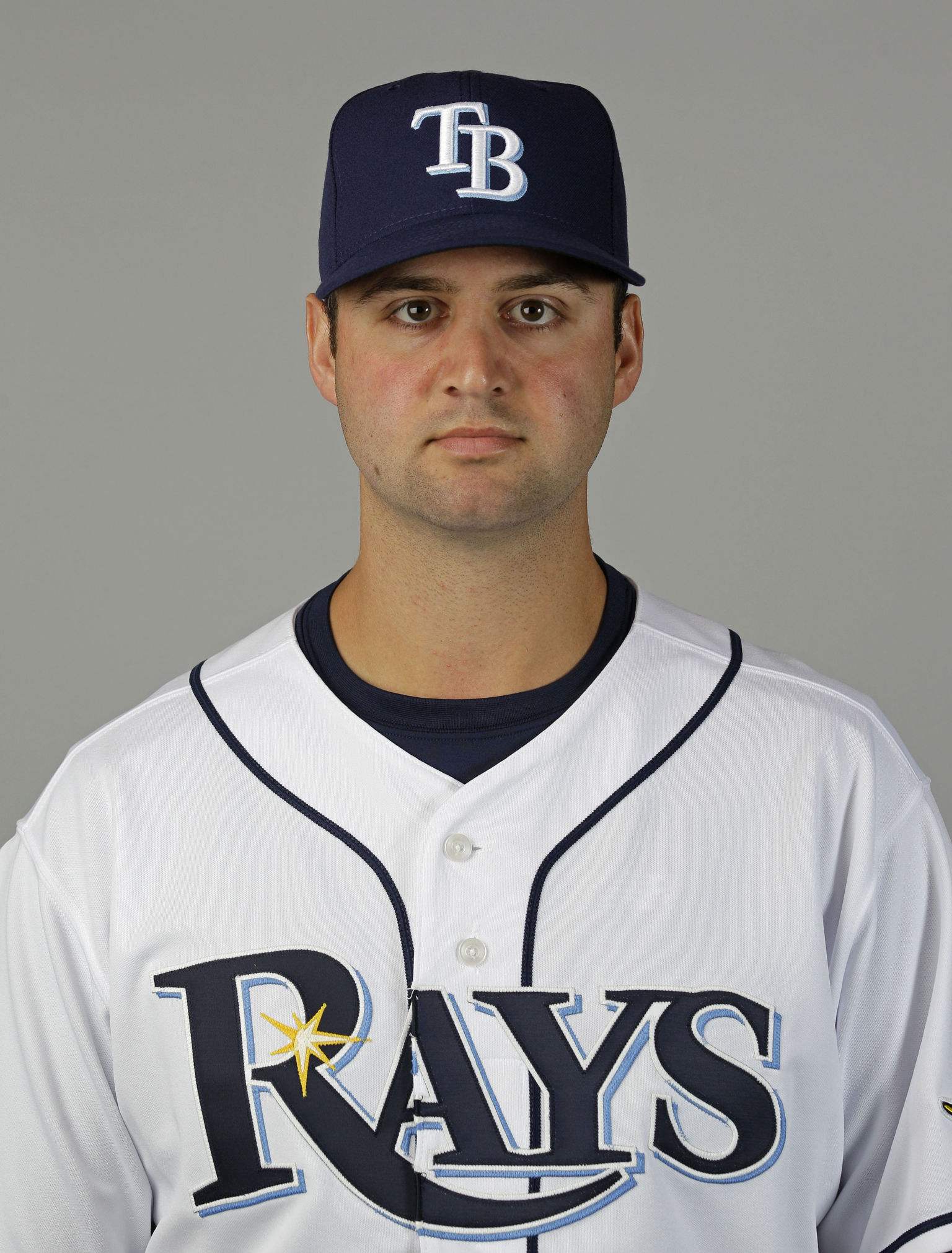
Pitcher Matt Torra was acquired by the Tampa Bay Rays organization in 2011.
Roberto: You were dealt to the Tampa Bay Rays in 2011 and worked under the guidance of Italian American manager Joe Madden. How was that experience? Matt Torra: I got to meet him for the first time at 2012 Rays Spring Training. He was a great person to be around. He’s polite to everybody. You know, he said hello to everybody. He never singled-out anybody. So to be around him and to be around that organization at the time was great. Everybody welcomed you from the top to the bottom of the organization. And they treated you very well. It was definitely a good experience for me. They treated everyone with respect. Obviously someone in my position as a non-roster invitee coming into camp, you definitely show respect to the more veteran guys and everything. But everyone said hello to you. It was nice just being in there. They all wanted you around the guys. It was a good experience.
The #Nats have signed RHP Matt Torra and 3B Mike Costanzo to Minor League deals. #MLB
Roberto: How was your experience with the Washington Nationals? Matt Torra: I was really excited to getting back on with Mike Rizzo, who drafted me with the Diamondbacks as the scouting director. And jumping on with Mark Scialabba, who is the head of the minor leagues there. I thought it was going to be a great opportunity with a great organization. I was in the best shape of my career coming out of the World Baseball Classic. But it was frustrating because I got hurt with an oblique strain coming off the WBC. I missed the first couple of months. By the time I reached Triple-A Syracuse, I was more than a month behind the other pitchers in the Chiefs’ rotation. I jumped into the season quickly, without much prep.
Roberto: When you finally got healthy and got into stride, it looked like you had turned the corner and were on the rebound. But all of a sudden you were let go when least expected. Matt Torra: To get released after I think I finally got my groove going was unexpected. In the long run, it was for the best and it allowed for the Taiwan opportunity to come up. Roberto: Coming off the heels of paying tribute to your Italian heritage by playing for Team Italia in the 2013 World Baseball Classic, it doesn’t get better than that. Matt Torra: Yeah, that was a great experience. I began working with the team on February 20th to prepare for the WBC, which began in early March. Everybody was very welcoming. Manager, pitching coach, players, everybody–they were all polite and energetic about the game. It was a great experience. Roberto: Do want to pinch yourself to make sure that you are not dreaming as you make an imprint in the Italian baseball history books as a contributer to Team Italia in the WBC? Matt Torra: You try to take it all in and experience it. But you also don’t want to get overcome by it. You need to stay focused when you get a chance to pitch in a game. You don’t want it to overwhelm you, but at the same time you want to remember every single second of it. And know that it was a blessing to come and do this. I started two years ago tracking my ancestry to obtain dual citizenship and everything. For some reason, I just happen to start that and the fact that I could jump on the team was great. Everything just came together for a reason. It was just an amazing trip.
Roberto: You must be a proud Italian American ballplayer. Matt Torra: I felt like everybody on the Italian team was definitely playing for the team on the front of the jersey. They were playing for Italia. I think that is why we had success in the first two games (defeating Mexico and Canada) and why Italia will continue to have success in the future. But at the same time for a lot of guys it was a great opportunity to showcase what they had. To come out and compete I want to help this team as best I can–whether it’s one batter or three innings–whatever they need me for. I want to go out there and do that. As you know, there are some of us that have not been in the big leagues that don’t get that much exposure on TV. So to have a tournament like the WBC is great for a lot of people. We just got to go out there and stay focused. Once again, don’t let it overwhelm you and know that as you go out there and make a good pitch or as a hitter go out there and execute what you are trying to do. Try not to do too much, and you are going to be successful. Roberto: As a pitcher, you then have to wipe the slate clean after every at-bat regardless if you just gave up a home run or struck out the hitter. You must remain focused on the pitch you are about to deliver. Matt Torra: Every pitch matters, especially in a short tournament like the WBC when it matters even more. No matter what happens you can’t change what has already happened. You need to bear down, focus and just execute every pitch. And just worry about that next pitch you are going to throw. Have a good game plan, stick to it and trust the stuff. Trust all the hard work you’ve put into it and know you have the ability to get guys out. Roberto: So by staying in the present moment and not living in the past? Matt Torra: What has happened in the past or what will happen in the future doesn’t matter. It’s really one pitch at a time on offense and defense. The team that executes, the team that makes the least amounts of mistakes is going to come out on top. I believe with the talent that I have seen on Team Italia that we have the ability to come out on top in the very near future.
I am proud to be part of team Italia. Tough way to go down but it was an honor being part of the team. #italia.
Roberto: Having a coach like future hall-of-famer Mike Piazza on Team Italia must have been inspirational for all the ballplayers? Matt Torra: It was… When you get to be around guys like that, you pick their brain as much as you can. With Mike Piazza as a hitting coach and a catcher for all those years, as a pitcher you want to pick his brain. What did he see when he was calling a game? As a hitter, what was he looking for going up to the plate? So anytime you have the opportunity to gain some knowledge from a coach, you should definitely take it. You write it down, or you just remember it. And then it will be there and you’ll be on the mound at some point and all of a sudden you’ll remember–hey, so and so said this, let’s apply it and boom–it works! So you have got to take any time you have a chance to pull information, you have got to do it. Roberto: It’s obvious that the coaching dynamic duo of Mike Piazza and Frank Catalanotto helped Team Italia players offensively to be very productive at the plate. Matt Torra: They were outstanding. From one to nine and even guys coming off the bench, they all did an excellent job. Mike and Frank brought a lot of confidence to Team Italia. We were on a roll and had the type of energy of being aggressive to execute on both sides of the game to make something good come out of it. Roberto: So would you consider your time with Team Italia to be your most memorable moment of your baseball career to date? Matt Torra: In my career so far, participating in the World Baseball Classic with Italia was pretty amazing. Seeing a team come together in a way Team Italia did was unbelievable.
I think me getting that call up to the big leagues will be a great moment for me as well.
I haven’t experienced it yet so I can’t tell you what it feels like. But I know the feeling on the field celebrating after beating Mexico and Canada was something special. It was a special group of guys. We had the right combination of players and the heart and desire to win. Yes, we had some big league players on Team Italia, but we had a lot of guys people didn’t know about. Even myself…where there are some people who know about me, but I am not a big name guy in Major League Baseball. We left our hearts out there. It was big for us. When you’re on the field celebrating, I don’t know if you can get that feeling anywhere else. It was up there. Obviously when my kids were born, you have a great feeling. Getting married and stuff…but that feeling you have celebrating with 28 guys on the field is unbelievable.
Third only to my son's birth and yesterday's #TeamItaly's comeback win in the #WBClassic, today was one of the best days of my life. #Italia
Roberto: I couldn’t agree with you more…I remember tweeting something like: third to my son’s birth and Team Italia’s upset over Mexico, it was one of the best days of my life. Matt Torra: It was pretty amazing…to celebrate twice too on the field back-to-back. I think family events as far as marriage, birth, stuff like that…relationship with God–that’s in one category. I don’t think stuff outside of that can really surpass that. But as far as baseball stuff, what I experienced with Team Italia was unbelievable. It was a great experience, and
I think a lot of the guys on the team felt the same way. Roberto: Team Italia demonstrated their heart and soul in the WBC. Every person wearing an Italian uniform wore it proudly each game. Matt Torra: Everybody was in sync and in tune and watching every single pitch. We were focused and ready to go every game. We wanted to do something special. Roberto: You had a special chemistry and a ‘never say die’ fighting spirit on Team Italia. Matt Torra: Yeah, you could say we were the underdog. But it came down to who wanted it more. You could definitely see the heart, the will and the desire. You could see it on every single one of the Italian players. It made us persevere and confident. We were focused and determined to make something happen. Roberto: How proud are you to be an Italian American and a part of Team Italia? Matt Torra: It’s a great honor for me. It started two years ago when I began to research and find my great grandfather Giuseppe Torra’s birth certificate from Valenza, Italy and my great grandmother’s birth certificate. And find their marriage license from 1920, and then find the ships they came over on and everything. Once you start researching, you start seeing where you are from and everything. It’s an incredible feeling. It’s a great honor, and I’m very proud to have represented Italia in the WBC. Roberto: It shows and I wish you the best in your career. Rest assured I will be there when you make your MLB debut. God bless you and your family. Thank you for your time today.
I look forward to meeting up with you again soon. Matt Torra: Anytime…let me know. Thank you very much.
#CPBL Matt Torra ha oggi lasciato gli Eda Rhinos per tornare negli USA. Il suo contratto è scaduto (fine stagi… http://t.co/skmzZ2HLN8
Italy’s Nick Pugliese made four appearances during the 2013 World Baseball Classic, yielding two hits and one run while striking out two in two innings of relief.With Italy trailing by one run in the 2013 World Baseball Classic opener at Salt River Fields at Talking Stick, Mexico’s Adrian Gonzalez singled in the bottom of the seventh inning. Manager Marco Mazzieri needed Italian American Nick Pugliese to get his team out of a jam to end the inning and keep Italy in the game. The Florida native got Mexico’s Jorge Cantu to ground out and end the scoring threat. The former Angel minor leaguer held Mexico scoreless in the eighth to set the table for closer Jason Grilli, who saved Pugliese’s first WBC win after Italy scored twice on Sergio Romo. Italian American Nicholas Pugliese served as the setup man for 2013 National League All-Star closer Jason Grilli closer during the World Baseball Classic.During the course of his three other appearances in the 2013 WBC tournament, Nick Pugliese faced an MLB All-Star cast including USA’s Ryan Braun, Dominican Republic’s Edwin Encarnacion, Nelson Cruz, Hanley Ramirez, Carlos Santana and Puerto Rico’s Yadier Molina. Now the closer for the Italian Baseball League’s Fortitudo Bologna, winner of the 2013
Euro Cup and Europe’s first-ever representative in the Asia Series, Pugliese takes on the champions from the pro leagues in Japan, Chinese Taipei, Korea and Australia.Pictured here winning the 2012 European Cup, Unipol Bologna has won back-to-back Euro Cups.
Siamo ancora una volta CAMPIONI D'EUROPA!!
Foto: Simone Amaduzzi Photographer http://t.co/YdsT5hAjE0
Both Unipol Bologna manager Marco Nanni and Team Italia manager Marco Mazzieri are truly committed to expanding the game’s reach in Italy so that the defending European Champions can become baseball’s next international superpower.
We spoke with Bologna’s closer prior to the start of the Asia Series in Taiwan (which runs from November 15-20). Roberto: Having experienced MLB-affiliated ball with the Angels organization, you were a welcome addition to the Italian baseball fraternity. Explain the transition from Fortitudo Bologna to Team Italia. Nicholas Pugliese: When I got the call to go to Bologna to play, I shot right over. I didn’t waste any time. I saw it as an experience to travel and to play on an international level. It’s kind of given me a second life in terms. Because I would never be in this position if I wasn’t involved with Italy to begin with. Team Italia manager Marco Mazzieri would have never seen me so I have nothing but good things to say to my GM that found me, Christian Mura, and Marco Mazzieri for giving me a shot to play on this team.LA Angels’ Tom Kotchman signed Pugliese in 2008. Roberto: After pitching at Lake Sumter College, you transferred to Steton University and made the 2008 All-Conference team after issuing only 11 walks in over 65 innings. Although you were not drafted, you still managed to be signed by the Los Angeles Angels. Nicholas Pugliese: It was awesome. Tom Kotchman of the Angels gave the opportunity to play some professional baseball. I am forever grateful for that. I loved the three years I played for them. It was a great organization. I learned a lot, and I give a lot of credit to them for where I am right now actually. Since joining Unipol Bologna in 2011, Nicholas Pugliese has consistently been one of the most dominant relief pitchers in the Italian Baseball League.Roberto: Having played at Tempe Diablo Stadium during Angels Spring Training and later return to play against your former organization as a member of Team Italia must have been a homecoming. Nicholas Pugliese: It was a homecoming because I hadn’t seen these guys in a couple years. You’re talking about 300 guys! We all got close, we worked together, we played together. The whole coaching staff I got to see when we played the Angels. It was an awesome feeling. To see their faces light up when they saw me. Not expecting to ever see me out here again. It was a great experience. Roberto: Through the blessing of Italian baseball, you have received a new lease on life. Out of all the minor leaguers that you played with in the Angels organization, how many of them can say they have pitched against MLB All-Stars at Chase Field and Marlins Park in the World Baseball Classic? Nicholas Pugliese: Not a whole lot. They actually all called me and told me how jealous they were. It’s kind of bittersweet how things turned out, but I wouldn’t trade in this experience for anything. It was unbelievable. Roberto: Getting the win against Mexico must have been one of your most memorable moments in baseball. Nicholas Pugliese: The whole tournament was the highlight of my whole baseball career obviously. It was short, but it was amazing. The competition we were able to see, the guys we were able to meet. We proved that we can play with anyone.Roberto: Let’s talk Italian heritage. Nicholas Pugliese: I’m sort of split between an Italian father and a German mother. My dad’s side is the strong Italian side. It’s always been about family and cooking. It actually goes back all the way to my great grandparents, who were born in Italy. So the actual paperwork wasn’t easy to find to go back and get all that stuff going. My Italian heritage will always be there, and I’m proud to play on this team. Roberto: Did your mindset and pitching philosophy change when you crossed the Atlantic? Nicholas Pugliese: It changed a little bit. International baseball…the whole set, the rules, the hitters…everything changes a little bit. So you adapt. You either adapt fast or die pretty much. But you’re constantly adapting. That’s what baseball is all about anyways. Coming back to the World Baseball Classic, we had to constantly change to these hitters from country to country, team to team.. I mean you learn to adapt fast or none of us would be here in the first place. Roberto: What was the initial reaction by the Italian-born players to have an Italian American like you join their team? Nicholas Pugliese: Playing on Team Italia is a little different because I have been playing for the Italians for two years in row now. I’ve gotten to know a lot of these guys since we’ve been playing together for a while. Initially coming to this team was a little standoffish. You know, these American guys coming in. And it would be the same way the other way around. But as long as you are there to win, and you’re giving your all then they take you in. That’s how it should be. Roberto: Playing for the Italian National team, you have assumed the role of closer when Italia won the 2012 European Championship. Nicholas Pugliese: It started out where Alessandro Maestri was the guy to go to in the ninth, and him being away in Japan kind of opened that role for me. It kind of just worked out, and I’m glad that I could fill the spot at the time. For Team Italia in the World Baseball Classic, I set up for Grilli. I got a long way to go before I take his spot…Roberto: What was the vibe like in the clubhouse when the MLB-affiliated players
(Punto, Denorfia, Liddi, Rizzo, Colabello, Grilli and others) joined the Italian National
team for practices in preparation for the World Baseball Classic? Nicholas Pugliese: It was a totally different energy when they showed up. We were practicing for about a week without them. We were working hard and everything. But as soon as they could all come, it was just a total new energy. We’ve meshed obviously and you could see how we play the game. We’ve meshed very well. A quick mesh..which is important. That’s why a lot of these teams got upset because they hadn’t played together, and they were kind of playing selfish. I mean instantly we played well together…we meshed. You can see the result from that. What it really comes down to is baseball is universal. Whether you were born in Italy or you were born here, you speak Italian or not, it’s universal. You have a passion for the game. I mean you are going to give it your all. Everyone sees that. It’s easy to come together and win some games. Roberto: Easier said than done. Look at Team USA in the WBC. Team Italia literally gifted them a win so that they could qualify for the second round in Miami. Nicholas Pugliese: We had a chance to take them. We had them shaking in their shoes a little bit. It was just one bad swing. We did take it a little different. It wasn’t a must-win for us. We kind of used it as an opportunity to get all our guys in, get the experience going. If it really came down to it into a must-win situation, the outcome might have been a little different. But I mean for what it was worth, we played them tough and they were playing really tight for a while. Roberto: Having already qualified for the second round prior to game time against Team USA, you have got to admit Team Italia was playing for fun. Nicholas Pugliese: We definitely had a big weight lift our shoulders. We had a lighter energy going in there, but at the same time when it comes down to it we’re going to grind it out. It was good. We had a good time.Team Italia closer Jason Grilli (Photo: N. Balzani)Roberto: Especially with Jason Grilli around… Nicholas Pugliese: I picked Grilli’s brain a lot. He’s probably sick of me by now. But every chance I had to go up to him and ask some questions, I’m just all ears. I’m a sponge with him. I love talking to him. He’s got a lot of awesome knowledge. He’s a great guy to be around. All the pitchers really look up to him. I mean I don’t have the stuff that someone like Grilli has out there. I don’t have the 96 mile per hour fastball so I have to just go with straight aggression and go after these guy–not wasting any time and pitching to contact. That’s my game plan, and that’s what I’m going to go out with there every single time. I’m just hoping that I can help the team keep moving on. Roberto: While interviewing Mike Scioscia, I asked if he would consider joining the Team Italia coaching staff, and he said that would be dependent on how the Italians played. Nicholas Pugliese: I don’t know how many more stars we can add to this coaching staff, but adding him would be amazing. I don’t know what else he wanted to see from us at this tournament. All he had to do was turn on the TV and enjoy his Italian heritage. It would be awesome to see Scioscia on the staff at any time.Team Italia coaches Bill Holmberg, Mike Piazza, Frank Catalanotto along with Jason GrilliRoberto: I feel that Team Italia is blessed to have such a talented coaching staff featuring Bill Holmberg, Mike Piazza and Frank Catalanotto to take Italian baseball to the next level so that the team can compete with the game’s elite in MLB. Nicholas Pugliese: Pitching coach Bill Holmberg has always been great. Mike Piazza has been awesome. He is just one of those special guys. He and Frank Catalanotto, you see them on TV and you look up to them. The next thing you know you’re in the dugout making jokes with them like everyone else. It’s awesome that they can relate to us on that type of level and share their knowledge with us. Roberto: Team Italia is a very special team. In fact, two of your Italian teammates–Juan Carlos Infante and Alessandro Vaglio–will be joining you on Unipol Bologna in the Asia Series. What are your chances of doing what Team Italia did in the 2013 World Baseball Classic? Nicholas Pugliese: I know all the Asian teams will be coming off of their seasons and will not only be baseball ready but highly talented. So it would be nice to head out there and surprise some guys with a few sneaky wins. Roberto: Best of luck to you, the team and manager Marco Nanni. Thank you for your time! Nicholas Pugliese: Thank you Roberto! Unipol Fortitudo Bologna manager Marco Nanni likes his team’s chances in the Asia Series.Nick Pugliese is ready to turn heads in Taiwan. Home team Unipol Fortitudo Bologna hosts Korea’s Samsung Lions, winner of the 2011 Asia Series, in the opener of the 2013 Asia Series on November 15 at Taichung Inter-continental Baseball Stadium in Taiwan. Local Taiwanese favorite
Uni-President 7-Eleven Lions of Tainan welcome visitor Unipol Fortitudo Bologna on November 16. The European Cup Champions will get a well-deserved day of rest on November 17 before continuing on in the tournament should they qualify for the semi-final and final rounds of action with competition ending November 20. Italian supporters will have the opportunity to listen to Radio Arena Sportiva live broadcasts of the 2013 Asia Series with host Daniele Mattioli by clicking HERE.
























 mlbblogger