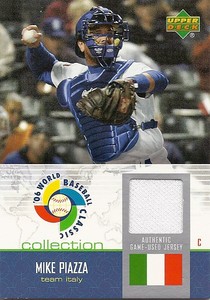
Mike Piazza played for Team Italy
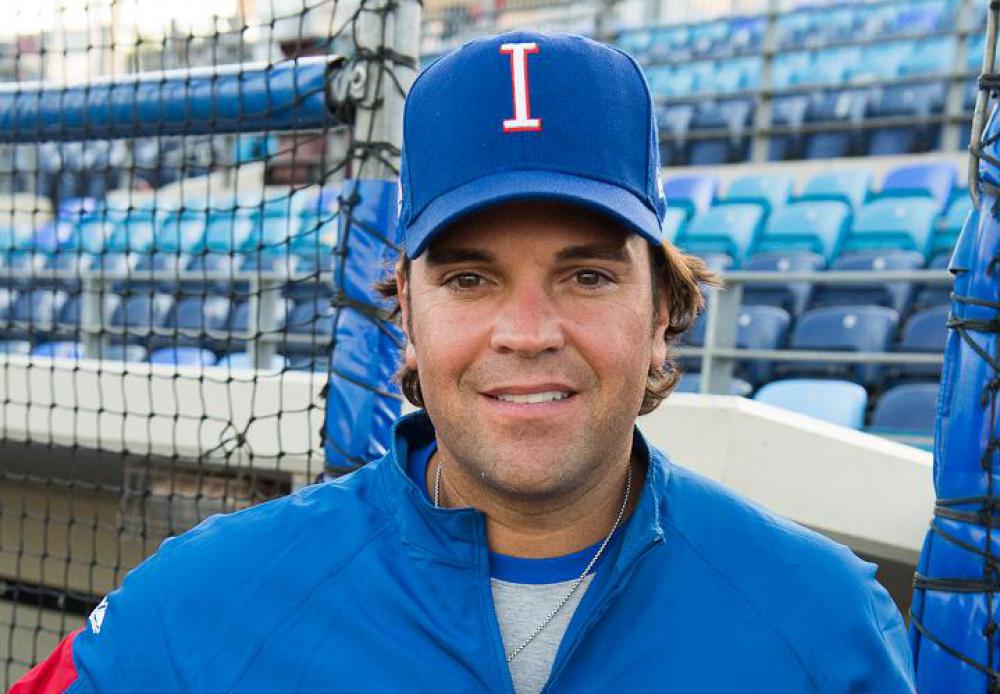
in the 2006 World Baseball Classic.Mike Piazza’s double and Jason Grilli’s near-perfect 4.2 innings of pitching, which prompted a standing ovation from the sold-out crowd at Lake Buena Vista’s Walt Disney World Resort in Florida during Team Italy’s 10-0 win over Australia in the first round of the 2006 World Baseball Classic, may have something to do with it. Perhaps the perks of being an Italian ballplayer including the sweet aroma of the delicious post-game Sicilian cuisine-inspired victory celebrations in the club house was appetizing enough for Piazza to make what seemingly could become a lifetime commitment to one’s country of ancestry. With over five years of service to date under his belt, the one-time Marlin and current Team Italy hitting coachMike Piazza is a big catch for the Federazione Italiana Baseball Softball (FIBS) by inspiring a whole new generation of Italian athletes and furthering baseball’s reach in Europe. “The biggest thing for me is trying to promote the game in Europe,” Piazza said.Mike Piazza celebrates with Team Italy after the Italians beat the Netherlands to win their third consecutive European Championship since 2010.
Like a gondolier in Venezia, Piazza is singing songs of praise for the World Baseball Classic. He said, “I believe in it. I think it’s great. I hope someday down the line it turns into a world-class, World Cup-type thing. I think that’s in conjunction with the way the game is evolving and changing. One of my personal mottos is: ‘If you are going to do it, don’t do it halfway.’ If they’re going to really make a concerted effort to develop the Classic, truly make it a world event.”
2013 World Baseball Classic Pool D play begins on March 7th when Italy battles Mexico at Salt River Fields at Talking Stick in Scottsdale. The Italians return March 8th to take on Canada. Team Italy travels to Chase Field in Phoenix on March 9th to face Team USA. The winner and runner-up of Pool D will advance to the second round of a modified-double elimination tourney. Italy hopes to make it to the WBC Finals at AT&T Park in San Francisco, CA.The two teams will play the winner and runner-up of Pool C (which includes Venezuela, the Dominican Republic, Spain and host Puerto Rico) beginning March 12th at Marlins Park in Miami. The winner and runner-up of the stiff competition will move on to the WBC Championship Round starting March 17th at AT&T Park in San Francisco. Not only does Piazza believe in the WBC, but he also has faith in Italian baseball. Having already coached Team Italy to two of its three consecutive European Championships and hinting of a WBC title, he said: “Our dream one day is to have this team be a champion.”
The Roberto Clemente Bridge leads Grilli and Pirates fans to PNC Park in downtown Pittsburgh.Vittorio Grilli is currently
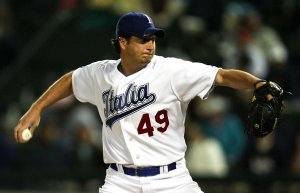
the Italian Finance Minister.“I told the cab driver, just rolling up over the Clemente Bridge and going around the corner, I said, this is my office space,” said Pittsburgh’s new closer Jason Grilli after signing his two-year, $6.75 million contract through 2014 with the Pirates. “This is how I do my best work. There’s sometimes not enough money that can be a good tradeoff to being comfortable and to know what to expect.” Despite leaving money on the table and taking far less than the free agent market offered to stay in Pittsburgh–much to the disliking of Italian Finance Minister Vittorio Grilli, 36-year-old pitcher Jason Grilli remains a Pirate.Jason Grilli established career highs in appearances (64) and strikeouts (90) with a career-best 2.91 ERA while holding opposing hitters to a .207 batting average in 2012.However, Jason Grilli has earned the right to pitch wherever he chooses after picking up the win in Team Italia’s 10-0 shutout of Australia in the 2006 World Baseball Classic (WBC) and a save in Italy’s 6-2 upset over heavily-favored Canada in the 2009 WBC competition. It goes without saying that the sight of Jason Grilli wearing an Azzurri jersey brings more joy and glory to the near-bankrupt European nation than any Italian politician could ever produce.Jason Grilli pitching for Team Italia in the 2006 WBC. Yet, politics somehow infiltrated into Italian baseball during the 1996 Olympics. After being invited by the the Italian Baseball Federation to join the country’s Olympic team while playing college ball at Seton Hall, Grilli stood proud and was honored with a parade in his hometown of Syracuse, New York. When joining the team with another Italian American pitcher, they did not receive a warm reception. The other players on the Italian squad that qualified for the Olympics without the two imports threatened a boycott.
Facing an ‘us or them’ ultimatum, the pitchers were dismissed. “I was in tears the whole way home,”
Grilli said. “The good part of it was I got to see Italy, but the worst part of it was it was a once-in-a-lifetime opportunity and I didn’t get to play.” Grilli traces his family heritage roots to Florence and Naples. He said, “I’m 75 percent Italian. My last name is every bit as Italian as you can get. The name on the front of the jersey is always more important than the name on the back, but in this case, the two go hand-in-hand.
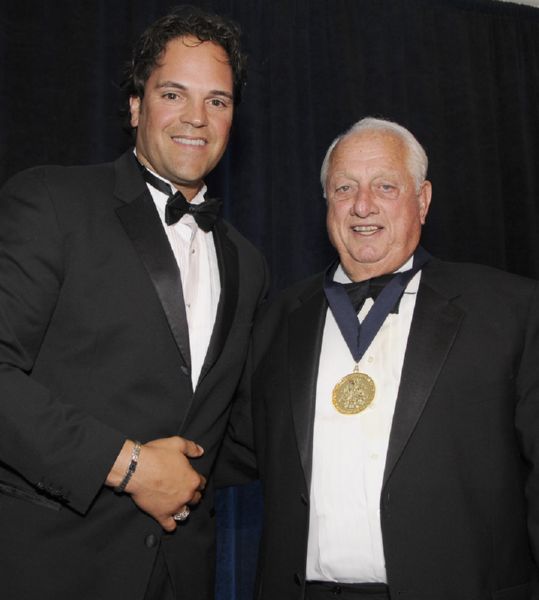
I wouldn’t have ‘Italia’ on the front if I didn’t have ‘Grilli’ on the back. Obviously, I love the United States. But I’m also proud of my lineage.”Tommy Lasorda was honored in 2011 by the National Italian American Foundation
when he was presented the NIAF Lifetime Achievement Award in Sports Management
by Team Italia Coach, 12-time MLB All-Star and former Dodger catcher Mike Piazza. “You know, they say the more you hang around Italians, the more Italian you become,”
said Grilli. “And that’s what I am. I’m an Italian,” said the Italian right-hander (il Italiano adopera la mano destra) who reminisced about his experience playing for Team Italia in
the World Baseball Classic. “One day Tommy Lasorda came in to talk to us. It was one of
the greatest speeches I’d ever heard. I wish I’d memorized or recorded it. He talked about the pride that comes with being Italian, with such feeling. It was a great experience.”
Having been invited to attend the 28th Annual Italian Coach Convention in Parma, Italy, Grilli is seriously considering a coaching career in Italy after he retires from Major League Baseball. “I know (former MLB All-Star and Team Italia coach) Mike Piazza has a house
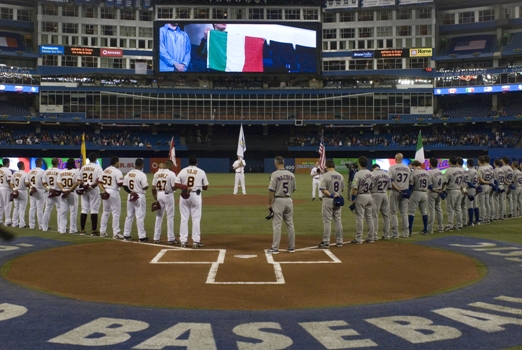
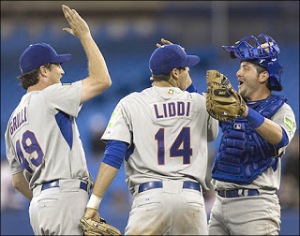
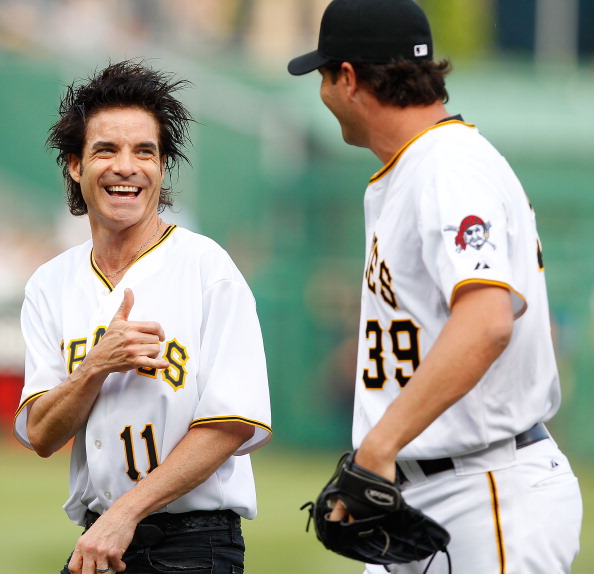
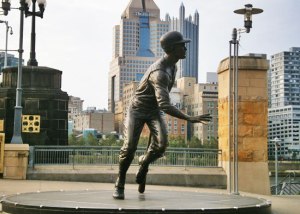
(in Italy), and he goes over for a couple months every year,” Grilli said. “It‘s intriguing.”Grilli and Team Italia stand at attention during the playing of the Italian National Anthem before being eliminated by Venezuela in the 2009 World Baseball Classic at Rogers Centre.Team Italia Major Leaguers Jason Grilli, Alex Liddi and Francisco Cervelli celebrate after Grill held host Canada scoreless for three innings and picked up the save at the 2009 World Baseball Classic in Toronto.Selected by the San Francisco Giants in the first round of the 1997 First-Year Player Draft (fourth pick overall), Grilli made his MLB debut with the Florida Marlins in 2000 and has made 330 career appearances during his 10 seasons in the big leagues. The Pirates signed Grilli as a free agent on July 21, 2011, and he has posted a 2.76 ERA with 127 strikeouts in 92 appearances over the last two seasons. He hinted at comfort and a heightened sense of excitement for Pittsburgh’s resurgence to Clemente-era dominance as top reasons for re-signing. “I’ve been on 10 different teams,” Grilli said. “The grass is never always greener. It’s really all the same. There’s just something fitting here. It’s just a baseball town and it bugs me as much as it bugs everybody else in this city. They want this so bad.” In 2012 Grilli limited opponents to just one run in 15 of his 64 appearances and struck out at least one hitter in 56 of the 64 games. He set a franchise record for relievers by striking out at least one batter in each of his first 19 appearances in 2012. Although a bull in the pen on the mound, Jason is quite the gentlemen to members of the press. The local chapter of the Baseball Writers Association of America recently voted Grilli as the winner of the Chuck Tanner Award–an award that recognizes the player who is most cooperative with the media.Train lead singer Patrick Monahan shares a laugh with Pittsburgh Pirates’ closer Jason Grilli.Roberto Clemente statue at PNC Park in Pittsburgh. Jason Grilli wants to bring back the World Series glory days to Pittsburgh. As a proud Italian, he supports MLB’s initiative to foster baseball’s popularity in Italy through the Federazione Italiana Baseball Softball (FIBS)-sponsored MLB Italian Academy and international games like the World Baseball Classic. Grilli said, “I’m in the books in Italian baseball, and that’s good. Major League Baseball wants the game to grow globally, and I’m happy to be a part of that.”
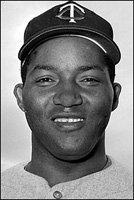
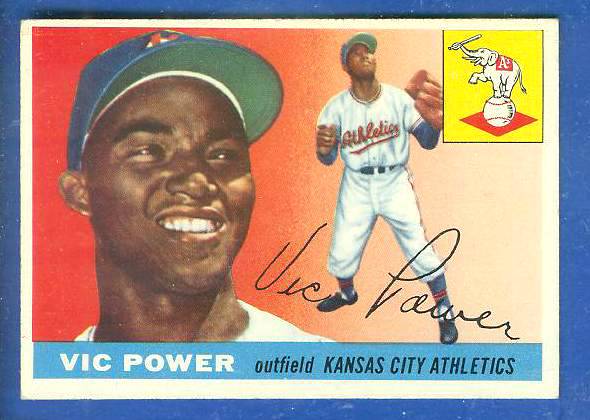
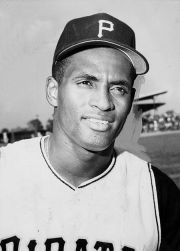
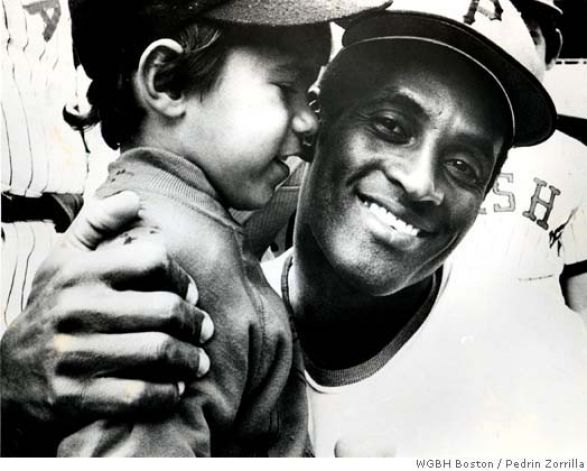
Victor “Vic Power” Pellot was the 1962 Twins MVP.The Great One “El Magnifico” Roberto Clemente was both black and Latino, one who sought equality despite the disparity between Puerto Rico’s easygoing acceptance of all and America’s hardline segregation regarding race, language and culture during the 50’s. The first black Puerto Rican to play in the American League was Clemente’s friend “El Gran Senor” Vic Power, the flashy-fielding Kansas City Athletics outfielder–who was dragged off the team bus one spring by the local authorities for buying a Coke from a whites-only gas station. Roberto despised the humiliation, internalizing it as if it were his own. Power tried to calm Clemente down with his wit and humor by recalling a conversation he had with a server at a Jim Crow-esque restaurant. “We don’t serve Negroes,” said the waitress. Power was relieved and replied, “That’s okay. I don’t eat Negroes. I just want rice and beans.”“El Magnifico” Roberto Clemente was elected posthumously into the MLB Hall of Fame in 1973.As a Spanish-speaking black man from Puerto Rico, Clemente battled against discrimination from day one
in America and was outspoken about the inequities
he faced. During his first seven years at Pirates Spring Training in Florida, he was not afforded the comfortable amenities a downtown hotel offered. Instead, Clemente was confined to living with a black family in the Dunbar Heights section of Fort Myers. When the Pirates held its annual spring golf tournament at the local country club, Roberto and the other black teammates were excluded.
As if that was not enough disrespect, while his white teammates dined at roadside restaurants on Grapefruit League road trips, Clemente would have to remain on
the team bus. Fed up with such atrocities, he finally coerced the Pittsburgh Pirates front office management
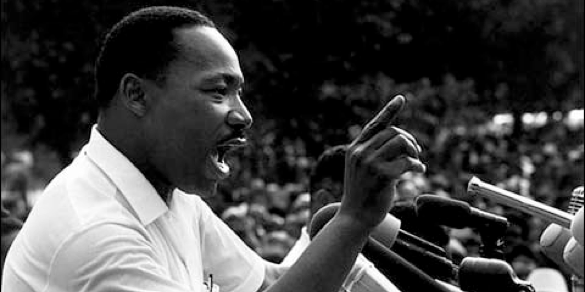
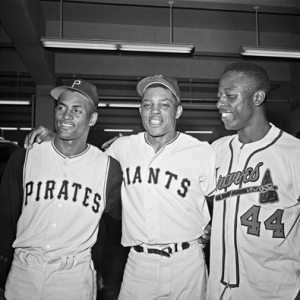
to allow the black players to travel in their own station wagon. Clemente said that enduring the unjust racial divide during spring training was like being in prison.Dr. Martin Luther King, Jr. spoke at Universidad Interamericana de Puerto Rico in February 1962.1961 National League All-Stars Roberto Clemente, Willie Mays and Hank Aaron celebrate their victory
after Clemente was named Most Valuable Player. Roberto Clemente’s admiration for
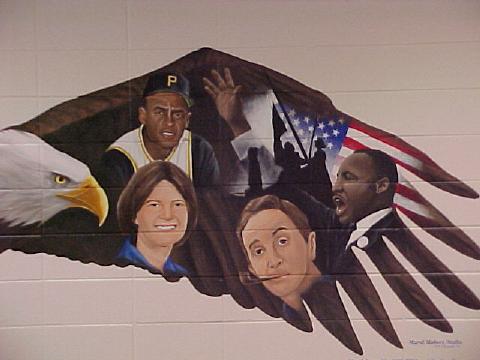
Dr. Martin Luther King, Jr. and his participation in the civil rights movement was spurred by the racism he experienced in the United States. During his professional career from 1954 to 1972, he saw significant change in both Major League Baseball and American society. Clemente was an intelligent and politically-charged activist who marched in the street protests of the 60’s and spent time with the Reverend Martin Luther King, Jr. when the civil rights leader visited him at his farm in Puerto Rico. He
had a strong connection to King as
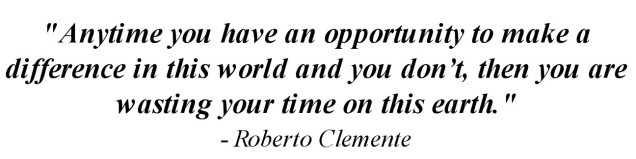
the humanitarian witnessed firsthand the black freedom struggle from the Montgomery Bus Boycotts to the urban ghetto rebellions and from Rosa Parks to the Black Panthers. When Dr. Martin Luther King, Jr. was assassinated in Memphis on April 4, 1968, Pittsburgh Pirates All-Star Roberto Clemente was devastated by the news. However, out of respect for the slain leader, he gathered up his teammates for a meeting to prevent the Pirates and Astros from opening their season on April 8th–the day before King’s burial. He convinced his fellow Pirates, which included 11 African-Americans, to stand with him in unity. As a result of his extraordinary call to action in honoring his fallen hero, Pirates 1968 Opening Day was postponed and moved back to April 10th in observance of King’s memorial service. Like Dr. King, Clemente was a passionate believer of social and economic justice. Clemente once said, “If you have the chance to make things better for people coming behind you and you don’t, you are wasting your time on earth.”
David Maraniss quotes Clemente about being warned before speaking out on American injustice in his 2005 biography of the Hall of Fame outfielder: “They say, ‘Roberto, you better keep your mouth shut because they will ship you back.’ [But] this is something
from the first day I said to myself: I am in the minority group. I am from the poor people.
I represent the poor people. I represent the common people of America. So I am going
to be treated like a human being. I don’t want to be treated like a Puerto Rican, or a black, or nothing like that. I want to be treated like any person.” Clemente had a profound social conscience and drive for justice. Toward the end of his career, Clemente felt he had made some headway against prejudice. “My greatest satisfaction comes from helping to erase
the old opinion about Latin Americans and blacks,” he said.On April 3, 1968 Dr. Martin Luther King, Jr. gave a speech saying, “I would like to live a
long life. Longevity has its place. But I’m not concerned about that now. I just want to do God’s will. And He’s allowed me to go up to the mountain. And I’ve looked over. And I’ve seen the promised land. I may not get there with you. But I want you to know tonight,
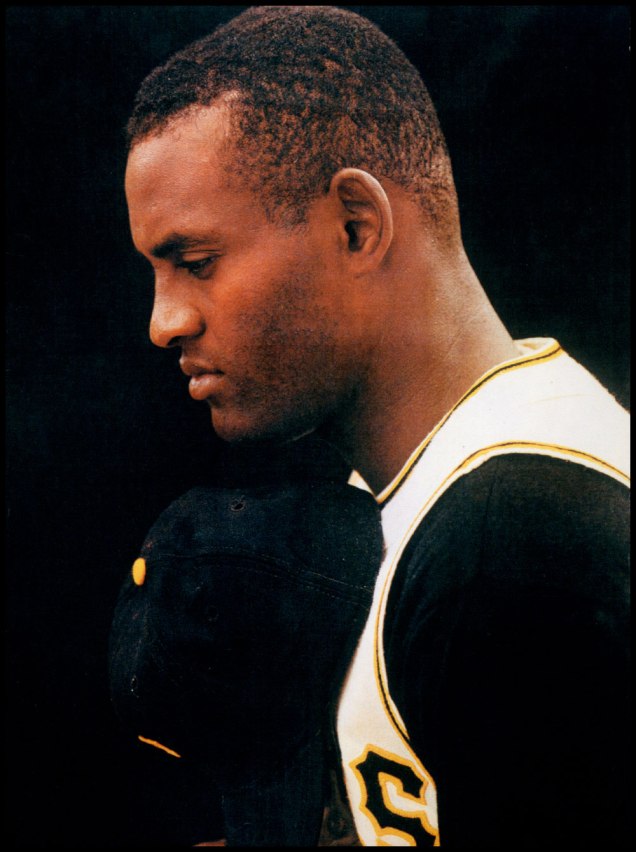
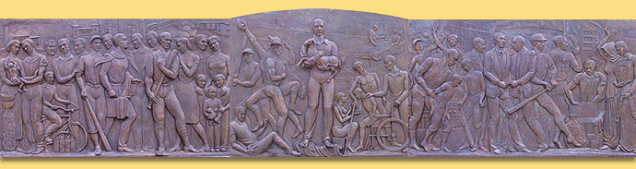
that we as a people will get to the promised land.” Clemente shared Dr. King’s personal fatalism and always believed that he would die before his time. His widow Vera remembered, “He always said he would die young that this was his fate.” Born on August 18, 1934 in Puerto Rico just outside of Carolina’s sugar cane fields–where today nearby stands a 30-foot-long cenotaph which encapsulates the life and death of the Puerto Rican legendary hero–Roberto Clemente boarded an ill-fated overweight DC-7 aircraft attempting to fly from San Juan to earthquake-stricken Nicaragua with relief supplies and died when the humanitarian mission flight went plunging into the sea shortly after take off on New Year’s Eve, 1972. Roberto Clemente is regarded with the reverence of a saint, a perspective reflected by the 30-foot-long cenotaph in Carolina, Puerto Rico. The center panel portrays Clemente holding a lamb.Clemente’s body was never found so the cenotaph designed by José Buscaglia is a heartfelt tribute to the Puerto Rican hero. Traditionally, cenotaphs are funerary monuments dedicated to heroes whose bodies are not recovered from the field of battle. So the very genre of Buscaglia’s work honors Clemente as one who gave all for his country. In the center panel, the lamb in Roberto’s arms is the lamb from the Puerto Rican coat of arms. In his life and death, Roberto lifted Puerto Rican identity to a new level in the world. The monument’s inscription reads “Son of Carolina, Exemplary Citizen, Athlete, Philanthropist, Teacher, Hero of the Americas and the World. Believing the promised land was more than a vision, both Clemente and King sacrificed everything to help set into motion a righteous path toward peace, equality and justice for oppressed people throughout the world. On the door of the room Clemente used during Pirates Spring Training is a plaque that reads Roberto’s final wish: “I want to be remembered as a ballplayer who gave all he had to give.” Indeed, not only would that quote suffice as an appropriate epitaph but also accurately depicted the consummate good samaritan that Clemente was in being of service to all.
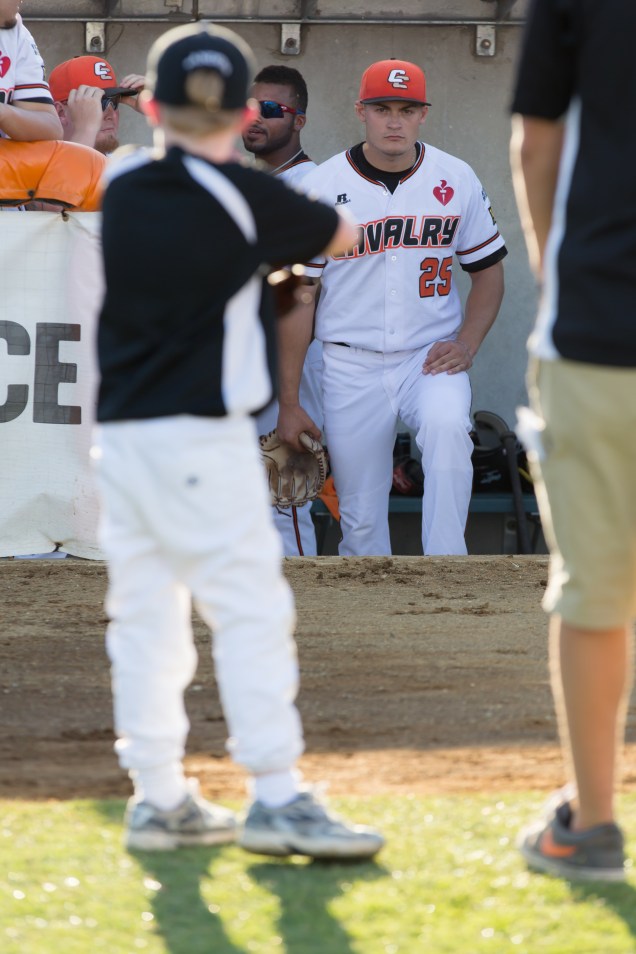
Growing up a hometown Bronx bomber fan and idolizing Yankee Derek Jeter, 22-year-old Concordia College grad Chris Motta never pictured himself pitching professionally in the Australian Baseball League. However, a twist of fate for this six-foot-two converted right-handed pitcher while training in Florida led the former catcher to the starting rotation for the Canberra Cavalry.Catcher-turned-pitcher Chris Motta of the Canberra Cavalry (Colleen Petch / Canberra Times) After volunteering to pitch so that the regular but weary Concordia Clippers‘ arms could get some rest, Motta was spotted on the mound by a visiting scout–who suggested he abandon his everyday catching duty in favor of pitching on the hill permanently. A two-way player at Concordia, Motta transitioned to a full-time pitcher during his final two years of college. Taking the scout’s advice to heart and leaving the comforts of mother’s home cooking, he headed south to Jack Russell Stadium in Clearwater, Florida–former home to Philadelphia Phillies Spring Training and current Probound USA Baseball training headquarters–to work religiously on pitching and develop into a hard-throwing prospect. Former Cavalry manager Steve Schrenk couldn’t help but notice Motta’s mid-90’s fastball, excellent mechanics and control. Although Schrenk did not return to Canberra this season as the manager, he played an integral part in the recruitment of valuable imports this season. Motta met with Schrenk, who encouraged the New Yorker to head to Australia to play for the Cavalry so that he could get the exposure necessary to take his pitching to the next level professionally.Chris Motta in the ABL (Ben Southall/SMP Images)The young and versatile athlete spent the 2011 summer switching off between catcher and relief pitcher for the the Niagara Power, a faith-based baseball team affiliate of the Fellowship of Christian Athletes with a 40-game schedule that includes competing in the New York Collegiate Baseball League–one of the best summer wood bat leagues in the U.S.–as well as playing against other top-ranked collegiate teams. The hard work is paying off for Motta in the Australian Baseball League as his 3-3 record, 5.83 ERA and 34 strikeouts in his 57.2 innings pitched for the Canberra Cavalry speaks volumes about his true potential. In each of the American’s 12 starts, he has progressively become more dominant.Chris Motta facing the World Baseball Classic Qualifier-bound New Zealand Diamondblacks on November 9, 2012 (Ben Southall/SMP Images)“Gotta Hava” Lobster Ravioli is Chris Motta’s favorite.Schrenk’s recommendation of adding “Gotta Hava” Motta to his list of recruits was a sound move, and the Cavalry have since catapulted to top of the ABL standings as a result. An added bonus to the Canberra roster, Motta’s mother will add her culinary flair to the already delectable lineup of talent when she joins her son and his teammates in Australia to cheer on the Cavalry down the stretch in 2013. With the injection of his favorite homemade dishes brought into the mix, the best of Chris Motta and his mom’s world-class cooking will undoubtedly arouse the senses of MLB scouts savvy enough to scoop up this irresistable combo while the servings to the dish are hot and the free agent is available.Chris Motta prior to taking the field on December 22, 2012. (Ben Southall / SMP Images)
Minor league journeyman Gabriel Suarez, whose grandfather was of Spanish descent, was one of the reasons why Spain won the recent 2012 World Baseball Classic Qualifier in Jupiter, Florida to move on to the 2013 WBC in March. Going 6-for-12 with a .667 slugging percentage and .647 on-base percentage during the four-game tournament, Suarez was a pleasant surprise for underdog España.
Selected by the Montreal Expos in the 26th round of the 2004 MLB June Amateur Draft out of Phoenix’s South Mountain Community College, the Denver-born Gabriel Suarez has played in the minor leagues with stints in the independent and international baseball leagues since turning pro. The 28-year-old Adelaide Bite outfielder has played every position but catcher in his career. 28-year-old Gabriel Suarez brings invaluable pro ball experience to Adelaide.(Ryan Schembri/SMP Images) Debuting in the Montreal Expos/Washington Nationals farm system in 2004-05, Suarez has been affiliated with the Baltimore Orioles (2006), Colorado Rockies (2006), Cincinnati Reds (2006-07), Pittsburgh Pirates (2007-08), San Francisco Giants (2009), Houston Astros (2009), Philadelphia Phillies (2010) and Los Angeles Dodgers (2012). Before being signed by the Dodgers organization in July, Suarez played in the Mexican Leagues for Vaqueros Laguna and Delfines de Ciudad del Carmen as well as in the Independent Freedom League for the Montezuma Federals. Prior to making his way to the Australian Baseball League, the free agent spent time with Dodgers Single-A affiliates Great Lakes and Rancho Cucamonga.
Gabriel Suarez of the Adelaide Bite The well-traveled utility player has twice found
his way back into the minor leagues by way of independent league baseball. Currently playing
for the 2012-13 Adelaide Bite, Suarez has put together a .235 batting average with one double, four RBI and one stolen base. At the completion of his Aussie baseball expedition in the ABL, Suarez will be focused on the World Baseball Classic. After winning the WBC Qualifier in Florida to advance to the 2013 World Baseball Classic, Spain’s second baseman Gabriel Suarez was already thinking about what was next. “We’re looking forward,” said Suarez. “Dream come true. We came here for this.” Spain overcame the odds with little time to prepare and beat a talented Israel team in the WBC Qualifier Final to earn the right to play against Pool C host Puerto Rico along with powerhouses Venezuela and Dominican Republic in San Juan beginning March 7, 2013.
Gabriel Suarez and his Spain teammates celebrate their 9-7 win in extra innings against Israel in the World Baseball Classic Qualifier Final in Jupiter, Florida on 9/23/12. (AP Photo/Alan Diaz)
Ace pitcher Kevin Reese, who will on his home away from home turf as part of the World Team pitching staff in the 2012 ABL
All-Star Game at Melbourne Ballpark, would probably not think twice about crediting the Aussie lifestyle for his recently rejuvenated confidence and positive outlook. “I have to pay tribute to the Australian lifestyle, where everybody is very laid back,” Reese said.
“The biggest thing I learned out here was to trust your ability because you’re always one pitch away. There was a relaxed mindset
with runners on base. It’s nothing new that the coaches haven’t told me. It just kind of clicked. The lifestyle rolled into baseball.”
After being named to the 2010 Frontier League All-Star Team pitching for the Traverse City Beach Bums and blowing away opponents in the Baseball Victoria Summer League as the Malvern Braves’ import, the 27-year-old right-hander earned the right to be the 2011 Melbourne Aces’ Opening Day starter. Asked to return for an encore and pitch during the 2012-13 ABL season, the Pennsylvania native is a lot better than his 2-5 record and 3.81 ERA reflects. 2012 ABL All-Star and Melbourne Ace starting pitcher Kevin Reese (Ryan Schembri / SMP Images / ABL)
Currently ninth in the ABL with 51 strikeouts during his 59 innings of work and 11 starts, Reese is highly regarded by Melbourne Ace manager Phil Dale. Following an unlucky loss to the Canberra Cavalry on December 13th, Dale said: “He still gave us a chance, it was a quality start and from him that is all we can ask for.” The six-foot pitcher was one of 11 members of the Melbourne Aces chosen for 2012 ABL All-Star game. Reese suited up for the World All-Stars–which included players from the United States, Korea and Japan–and faced Team Australia. The former East Stroudsburg South High School, Blair Academy and Lafayette College standout played for the Atlantic League’s Somerset Patriots in 2011 and the Camden Riversharks in 2012. Notable Riversharks in the ABL have included Mike McGuire and Brian Burgamy from the 2011-12 Canberra Cavalry and Sean Jarrett from 2011-12 Brisbane Bandits. Click HERE to see Reese, McGuire, Burgamy and Jarrett talk about their Aussie experience in this video produced by Alexis Brudnicki (@baseballalexis). Reese filled every role in the Camden Riversharks pitching staff. He started out in the long relief role, helping to save the bullpen when starters couldn’t go deep into ball games. Later he was added to the rotation, allowing the starters an extra day of rest with six men in the rotation. Then after he was put back into the bullpen, Reese was immediately called on to fill Sean Jarrett’s spot in the rotation when he went on the disabled list and proved to be invaluable for the remainder of the season.Liam Bedford, Elliot Biddle and Kevin Reese of the Melbourne Aces (Brett Crockford / SMP Images / ABL)
Perhaps Reese’s best Melbourne Ace pitching moment came in possible elimination game
two of the best-of-three 2012 ABL Championship Series against the Perth Heat on February 11th. Entering the do-or-die game in the 11th inning with the score tied at 2-2, the American hurler tossed three scoreless innings to get the victory as the Aces scored the winning run in the top of the 13th to force a game three contest. Unfortunately, Melbourne came up short 7-6 and lost to the defending champion Heat in the series’ deciding game on the following day. This season the Aces hope to turn the tables and bring home the ABL championship to Victoria. There is a feeling in Australia that the best has yet to come for Kevin Reese, and he will come through in the clutch again when everything is on the line
for the 2012-13 Melbourne Aces.Melbourne Aces’ USA imports Kevin Reese and Bubbie Buzzachero (Brett Crockford / SMP Images / ABL)
Prior to joining the Brisbane Bandits, the closest lefty pitcher Chuck Lofgren ever came to Australia was in 2010 when Aussie teammate Trent Oeltjen from the Nashville Sounds, Triple-A affiliate for the Milwaukee Brewers, introduced him to Vegemite. It was during this time period that the Wild Wild West California Country boy, who always wears boots on days that he pitches, got a chance to meet his idol Garth Brooks at the superstar’s Teammates for Kids Foundation Fundraiser at the Country Music Hall of Fame in Nashville. Brooks later summoned Lofgren from his sixth row seat at the Country Music Hall of Fame’s Ford Theater to join the band onstage.
Chuck Lofgren made his big league singing debut with Country legend Garth Brooks
and his band in Nashville after many years of playing in minor league cover bands. Click HERE to see his live performance. “Besides being drafted, that was the best thing I ever did,” said Lofgren, who plays a Seagull six-string guitar in a Country music cover band. “When you’re playing tiny mom and pop shops and dive bars, it’s a lot different than getting up there with him.” It’s been a long road for the former 2004 Cleveland Indians fourth round draft pick, who was heralded in the Baseball America 2006 Handbook “as one of the top lefthanders in the minors.” The Baseball America 2008 edition speculated that Lofgren “could make his big league debut later in the year.” However, his MLB debut eluded him after an extended stay at Triple-A Columbus did not warrant a call-up.
Chuck Lofgren in the 2007 All-Star Futures Game When the Cleveland Indians left Lofgren exposed in the Rule 5 draft, the Brewers claimed him in 2009. After a 2010 season-long Nashville audition, which included his unrehearsed performance with Garth Brooks at the Country Music Hall of Fame, Milwaukee set him free.
The South Bay native grew up watching his favorite player, Will “The Thrill” Clark, play at nearby Candlestick Park, and it was always a childhood dream to play for the San Francisco Giants. It was a family affair for Lofgren as his father was a 35-year veteran of the San Francisco Police Department and worked on-field security near the dugout during Giants games. He signed as a minor league free agent with the Giants’ organization in 2010. Lofgren pitched in 2011 at Single-A San Jose, Double-A Richmond and Triple-A Fresno–posting a 5-3 record with a 4.31 ERA, 1.45 WHIP, 6.8 K/9 rate, and 5.2 BB/9 rate. The Giants were looking for more from their local cowboy so Lofgren dug deep to his baseball roots when he was a successful two-way player and made the transition from lefty pitcher to first baseman and outfielder with his bat.Brisbane Bandits’ Chuck Lofgren in 2012 ABL action (Scott Powick / SMP Images)
As a teenager, he was named to the AFLAC All-American High School Baseball Classic in 2003 for his precise pitching and consistent hitting after three consecutive years as a two-way player for the USA Baseball team in Mexico (Gold Medal Winners), Venezuela and Curacao, Netherlands Antilles. When Lofgren was drafted by Cleveland in 2004, he was so good offensively that his contract allowed him to pitch and hit. Unfortunately, a home plate collision quickly ended his hitting career as the Tribe did not want their star pitching prospect getting hurt. Yet, after eight years of pitching in the minor leagues Lofgren was willing to lay it all on the line as a hitter for the San Francisco Giants when he re-signed as a minor league free agent for the 2012 season. If current free agent Rick Ankiel had successfully made the transition from pitcher to hitter in MLB, why couldn’t Lofgren do the same? The six-foot-four, 220 pounder was encouraged by the support of the Giants’ front office–especially Vice President Bobby Evans, who reportedly liked Lofgren’s swing and wanted to work with him.Childhood baseball idol Will Clark inspired Bay Area fan Chuck Lofgren to play for the San Francisco Giants. The Giants had the lowest 2011 run total in the National League and as a result had little patience for Lofgren’s offensive transformation. On March 12th
San Francisco trimmed down its roster in preparation of 2012 Spring Training and had to part ways with
the once-heralded baseball prospect. In a classy response to his release, Chuck Lofgren (@chuckylof) tweeted: “Got released today by the Giants always thankful for the opportunity from the team that I grew up watching and loving. One door closes…” Although not a Major League Baseball club, American Association of Independent Professional Baseball’s Amarillo Sox happily opened the door for the multi-talented player. Since it is a rarity in baseball to find a starting pitcher who can serve as the team’s designated hitter on most pitching off days, Lofgren was a welcome addition to the 2012 Amarillo Sox roster. In his 200 at-bats, Lofgren compiled a .245 batting average with eight doubles, two triples, three homers, 32 walks and 25 RBI. Making 20 starts and working 119.2 innings, the veteran pitcher compiled a 4-6 record with a 4.36 ERA.
Chuck Lofgren’s (@chuckylof) twitter profile photo 2012-13 Brisbane Bandits pitcher Chuck Lofgren (4-3, 3.05 ERA) appears to have found his groove again playing in the Australian Baseball League. His most impressive
start on December 7th against the Perth Heat yielded 11 strikeouts
and was by far his best outing yet. Lofgren said, “Coming out you always want to face Perth. You hear that they’re the team to beat.” The 26-year-old American import went 6.2 innings and limited the reigning ABL champion Heat to just one earned run, seven hits and one walk. Lofgren may just have to sing Garth Brooks’ “Much Too Young (To Feel This Damn Old)” again for MLB as a reminder that he still has a lot of game left in him despite being written-off prematurely.
If you can’t beat them, join them. After Baseball Western Australia State All-Star Pitcher Greg Van Sickler held Perth scoreless and struck out five in his four innings of perfection in the Heat’s 3-2 loss to the BWA All-Stars in a Spring Training exhibition game on October 20th, the three-time All-American Van Sickler made quite an impression on the two-time reigning Australian Baseball League champions. So much in fact that Perth wasted little time in calling him up from the Carine Cats, member of the 12-team WA State League, to join the Heat.
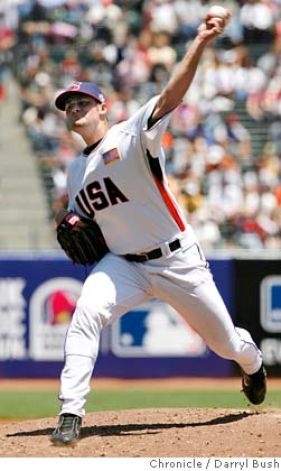
From Virginia to Australia by way of Belgium, Perth Heat pitcher Greg Van Sickler has ventured on the road less traveled in pursuit of his dream in playing baseball professionally. After a stellar season playing for Belgium’s Premier League Namur Angels of the Ligue Francophone Belge de Baseball et Softball, the Virginia native is now on an Aussie baseball odyssey in Perth.Van Sickler represented Team USA on America’s Independence Day while playing in Europe.Greg Van Sickler made his ABL debut for the Perth Heat against the Brisbane Bandits on December 7th. (Theron Kirkman/SMP Images) Greg Van Sickler, the first player in the USA South Conference history to be named both the Player and Pitcher of the Year in the same season, was 11-1 on the mound for 2011 Shenandoah University Hornets while batting .390 with seven homers and 46 RBI from the three hole in the batting order to earn first-team accolades at the utility position. The Division III All-American led the team to the NCAA Division III College World Series twice and was named 2010 and 2011 Virginia state Player of the Year by the Virginia State Sports Information Directors Association (VaSID). Van Sickler was a four-time VaSID All-State selection who earned All-America honors during his final three seasons. In both 2010 and 2011, he was a first team All-America honoree by both D3baseball.com and the American Baseball Coaches Association.
The six-foot-two 23-year-old tipped off his talent early on while playing baseball at Winchester, Virginia’s James Wood High School, where he was named team captain and MVP twice as well as 2007 Northwestern District Player of the Year. Over five years later, Greg Van Sickler finds himself nearly 12,000 miles away from home playing for the defending ABL champs Perth Heat. In his 6.2 innings of bullpen relief, the
Top 40 American has been dominant with seven strikeouts and a 1.35 ERA. Perth Heat relief pitcher Greg Van Sickler in 2012 ABL action (Theron Kirkman/SMP Images)
When Oakland A’s closer Grant Balfour talks, people listen…especially when your father is the Australia Baseball League’s Sydney Blue Sox General Manager! Coming back from Tommy John surgery and beginning his rehab during the 2011-12 offseason, pitcher Caleb Cuevas enlisted Balfour as his workout partner to train with in Clearwater, Florida. The Aussie sent his father, Blue Sox General Manager David Balfour, an email detailing the skills Cuevas possessed. Balfour described the young American pitcher as a “flamethrower”–quite the comment from a reliever who himself lights up the radar gun with triple digits.
Oakland Athletics’ closer Grant Balfour lends a hand to the Sydney Blue Sox at Blacktown Olympic Park.Not only did Balfour serve as a mentor to the 24-year-old North Carolina native, but he also recommended that the Sydney Blue Sox sign Cuevas. Caleb spoke highly of Grant Balfour and his positive reinforcement post-surgery. “Grant helped me a whole lot, particularly with my recovery and my off-speed pitching,” Cuevas said. “He was real supportive not just of
me getting back to 100%, but how
I could be an even better pitcher
once I returned completely.”
Hard-throwing reliever Caleb Cuevas is looking
to make his impression felt while on the Sydney
Blue Sox pitching staff. (Joe Vella /SMP Images)
Although the right-handed hurler officially began his first professional season in the Can-Am League with the 2012 Newark Bears, Cuevas got his first MLB test while on the Coastal Carolina University squad when facing some big guns on the Texas Rangers lineup in an April 2012 exhibition game. Click HERE to watch him take on the likes of Napoli, Borbon, Kinsler, and Andrus. The six-foot-two pitcher was a two-time All-Western Athletic Conference pick at West Henderson High School prior to playing for Louisburg College, the Outer Banks Daredevils and Coastal Carolina.Caleb Cuevas is the wildcard on the Blue Sox. (Joe Vella / SMP Images)He began the 2012 season as a starter in Indy
League play before moving to the Newark Bears bullpen. In his final 14 appearances as a reliever, Cuevas posted a 2.38 ERA over 15.1 innings
of work, allowing 17 hits, six walks and four
earned runs, while striking out 18. Blue Sox
manager Jason “Pops” Pospishil took notice
of his good numbers and immediately thought
how valuable the young import could prove to be
for Sydney while echoing the sentiment shared by Oakland Athletics’ Grant Balfour. “His numbers out
of the bullpen were extremely impressive and he
also has some experience as a starter, so he will
be a flexible piece to add to our pitching staff,”
said Pospishil. The Blue Sox skipper believes that
with Cuevas’ versatility he could play various
pitching roles for Sydney this season. During his
10 ABL appearances and 10.2 innings of relief,
Cuevas has given up opponents ten runs (8.44 ERA).
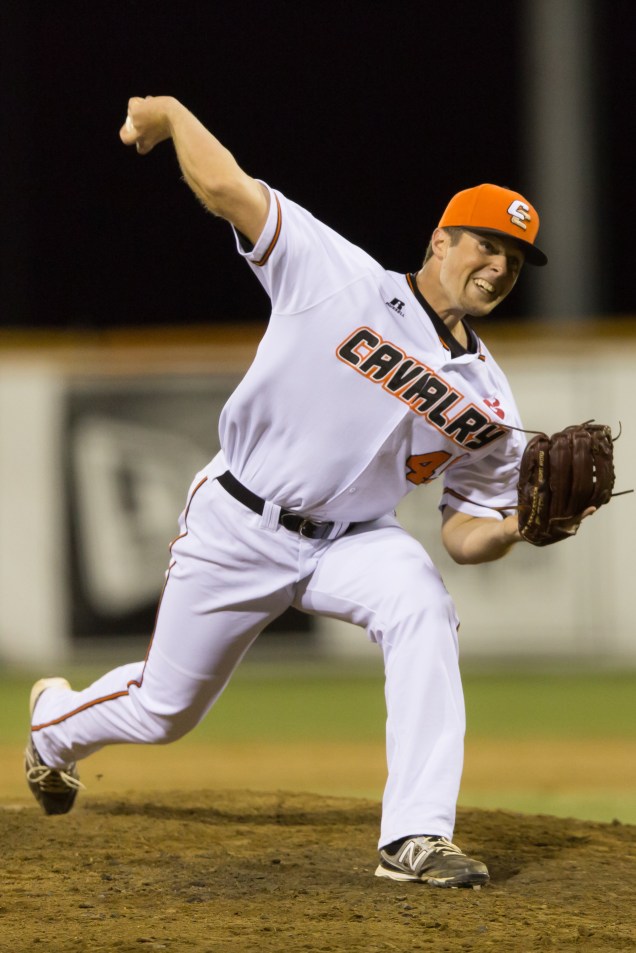
Recent College of the Ozarks graduate Dustin Logginsis the youngest of four Kansas City T-Bones pitchers, who currently serve as the nucleus of the Canberra Calvary pitching staff–including teammates Steven Kent, Brian Grening and Sean Toler. The six-foot-five right-handed Missouri native was named to the 2012 All-Midlands Collegiate Athletic Conference First Team after posting career bests in wins, strikeouts, and ERA during his final season of his four years playing for the Bobcats. Before joining the T-Bones, Loggins pitched 37 1/3 innings and struck out 43 with a 2.89 ERA for the Ozark Generals of the MINK Midwest Summer Collegiate Baseball League.22-year-old Cavalry pitcher Dustin Loggins (Photo courtesy of Ben Southall / SMP Images) Converting from a starting pitcher in college to a reliever professionally has helped his velocity touch the mid-90’s. In his 21 ABL relief appearances so far, Loggins has logged 23.1 innings and has struck out 31. With a 4-2 record, 2.31 ERA, and one save under his belt, the 22-year-old will be the Cavalry’s stopper late in games to ultimately halt the ABL reigning champion Perth Heat from a never seen before three-peat.






















 mlbblogger